During a summer evening discussion on the porch, my family pondered the status of vaccinations around the world. The term “First World Countries” came up, which prompted all of us to wonder, why do we call some countries “First World” and others “Third World”? And what about the “Second World” countries?
The “three worlds” model of geopolitics
Back in the 1950s, during the Cold War, French demographer Alfred Sauvy described the world in terms of three factions. In the article “Three Worlds, One Planet” which appeared in L’Observateur, Sauvy described “First World Countries” as the United States and its allies in The Cold War. That included most of Western Europe, Japan, and Australia. Second world countries were the Soviet Union, its Eastern European satellites, and other communist nations. Third World countries were those not allied with either side, including most of Africa, Asia, the Middle East, and Latin America. Those countries also frequently were former colonies of Europe and were poor.
As time went on, The Cold War alliances were forgotten, and “First World Countries” described wealthy, developed countries. The term “Third World Countries” characterized poor, developing nations. We don’t hear anyone talk about “Second World Countries” any more because the term died with the Soviet Union.
Problems with labeling countries
Since the terms “First World” and “Third World” started during The Cold War, many academics dismiss them as outdated. People studying or writing about poor nations use “developing countries” or “low and middle income countries” more often.
Some people like the “developing” descriptor. It suggests opportunity and potential for improvement. Others criticize the term for the underlying message of hierarchy. “Developed countries” suggests superiority, even though many “developed countries” have serious social issues, including pockets of severe poverty.
The World Health Organization categories countries based on statistics about Gross Domestic Product. This system classifies countries as low, middle, or high income. However, this label is problematic because its hard to get accurate data from all countries.
I found an interesting alternative to the 1-2-3 classification: Majority World. This term reminds us that the West is but a small fraction of the globe. I was shocked to learn that about 80% of the world lives on less than $10 a day. Yikes. I live in the global minority indeed.
Once again, we have an example of why labels fall short in describing the complexity of a situation or group of people. The articles I read suggested if you are talking about a country or group of countries, just use their names to describe them. Sounds like good advice to me, for lots of situations.
If you’d like to learn more about the three worlds model, check out these articles:
We are watching entirely too much TV these days. It’s summer! We should be outside. But by 8:30 on most nights, I’m toast. I try to encourage game and puzzle nights, even “let’s read together on the porch” nights, but frequently my son and husband opt for TV. Their latest find, a show on Apple TV called Mythic Quest. It’s about the creative team behind a video game called Mythic Quest and the struggle to keep it popular. It’s basically The Office, except the characters are selling a game, not paper. In a recent episode, the engineer character mentioned haptics.
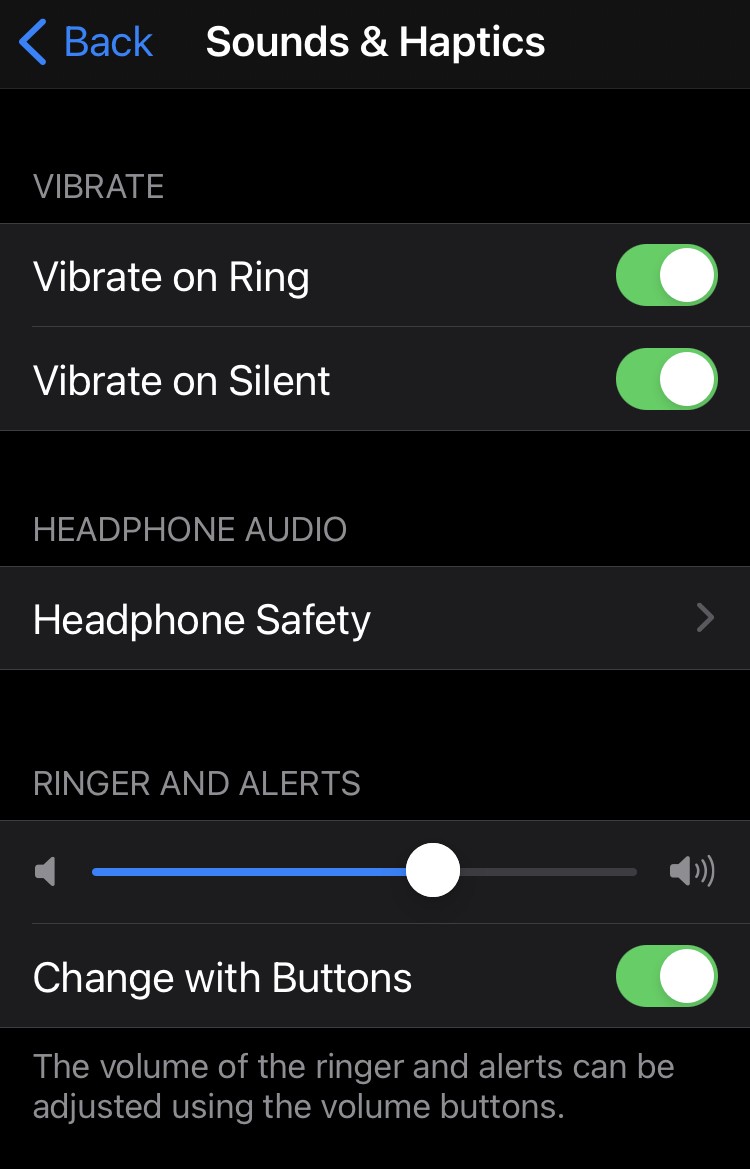
Haptics? My ears perked up. When I got my new iPhone SE 2020, I had to choose a “Home Button Haptic”. I really couldn’t tell a difference between the three options, but went with #3. I’ve also noticed my iPhone vibrates or pops when certain things happen, like I hold down on a picture or successfully upload a check for mobile deposits. That, my Word Nerd friends, is haptics.
Etymology
Haptic comes from the Greek haptesthai, meaning “to touch”. It entered English in the late 19th century as a medical synonym for “tactile.” According to Merriam-Webster, in the 20th Century it gained popularity as a psychological term to describe people whose perception depended primarily on touch rather than sight. Currently, Merriam-Webster defines haptic as:
relating to or based on the sense of touch
2, characterized by a predilection for the sense of touch
Even better info on haptics
This article on Ultraleap, a website about making digital worlds more human, gives even better information about haptic feedback, or haptics for short. It explains that haptics is a method of giving feedback or communicating more so than a specific technology.
Many digital / tech devices communicate with us primarily through sound and video. Haptic feedback provides information and interaction via touch. Different types of vibrations, usually felt by our hands, are the most predominant type of haptics used today. Consumers experience them with smart phones, game controllers, and even their cars. (My steering wheel vibrates when my car detects I’ve moved out of my lane.)
I guess it’s good that devices are incorporating other methods of communication besides visual and audio stimuli. However, this sentence in the article made me a little nervous:
Not only can you touch a computer or other device, but the computer can touch you back.
So, now that you know what haptics are, or maybe you already did, can you share other examples of haptic feedback? Also, are there any other tech terms you’re curious about?
The new season of Ted Lasso releases today, and my family can’t wait to indulge. I’m a late comer to the Ted Lasso craze. Although I’d heard talk about Ted Lasso in podcasts, I didn’t take much interest. The show runs on Apple TV, a streaming platform I don’t normally use. Besides, how compelling can a show about a guy named Ted be?
Very.
A friend who loves the show shared it with me, and we binged the entire first season in two nights. Then my oldest son, a former soccer player and forever soccer fan, watched it in about the same time. I couldn’t wait to share it with my husband and youngest son. You know a show is good when youngest son, who is at the age when everything is just “OK”, literally smiles for the entire 30 minutes of running time.
So, what’s all the hype about and do you need to be a soccer fan to enjoy?
Ted Lasso is a show with complex characters who have faults and learn from them. It’s so refreshing to watch a dramedy that challenges stereotypes and champions optimism, respect, and accountability. I wouldn’t call it a family show- the language is quite “fruity”- but it has great things to say.
You do not have to be a soccer fan to enjoy Ted Lasso. In fact, oldest son thinks there isn’t ENOUGH soccer in the show. He’s hoping this season will include more of the game as a vehicle for inspiring interest and understanding of the sport we Tomiaks love. We’ll see.
The Premise
Ted Lasso is a division two American football coach who brought his unknown Kansas college team from the bottom of the rankings to a national title in one season. He gets hired by a disgruntled football club owner in the UK who has recently divorced her husband and is trying to destroy the only thing he ever truly loved – his soccer club. She thinks choosing Ted, a coach with zero soccer experience, to lead the team she has recently acquired from her ex-husband will bring it to ruins. Little does she know the affect Ted will have on her team… or her.
What I love
The dialogue is quick and witty. The relationship between Ted and his assistant, Coach Beard, is fun and endearing. At a time when most rhetoric in our society seems focused on tearing people down, Ted Lasso is a character hell bent on building people up. Even arrogant, obnoxious super stars. Even bitter, spiteful divorcees.
One of my favorite characters is Keely Jones, a crass, at times superficial actress/model who I would probably never aspire to befriend- until I realized how insightful and strong she actually is.
What I don’t like
The language is rough, and I could do without some of the sexual innuendo. But, true to the show’s themes, you can’t judge Ted Lasso solely on appearance and/or fruity language.
Some of my favorite lines
Sometimes you’re so busy thinking you are one in a million, you forget that you’re one of eleven.
He’s like a raven haired golden retriever
Be curious. Not judgmental.
All right, fellas, you gotta remember, your body is like day-old rice. If it ain’t warmed up properly, something real bad could happen.
When it comes to locker rooms, I like ’em just like my mother’s bathing suits. I only wanna see ’em in one piece.
How about you? Have you watched Ted Lasso and are you excited for the second season? What are some of your favorite parts of the show?
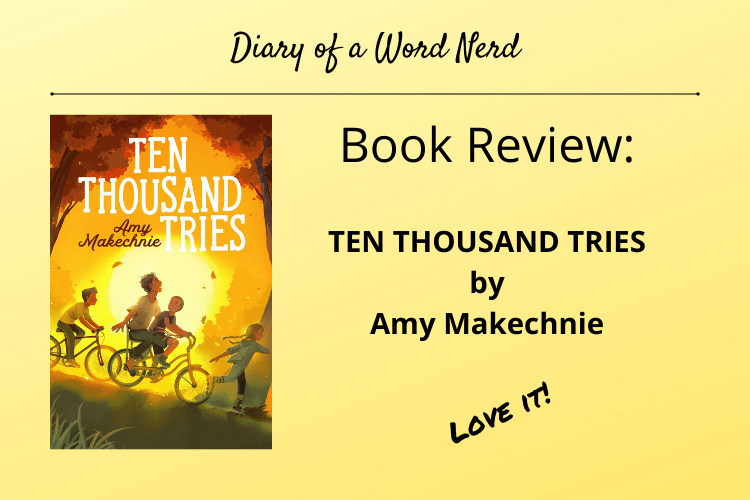
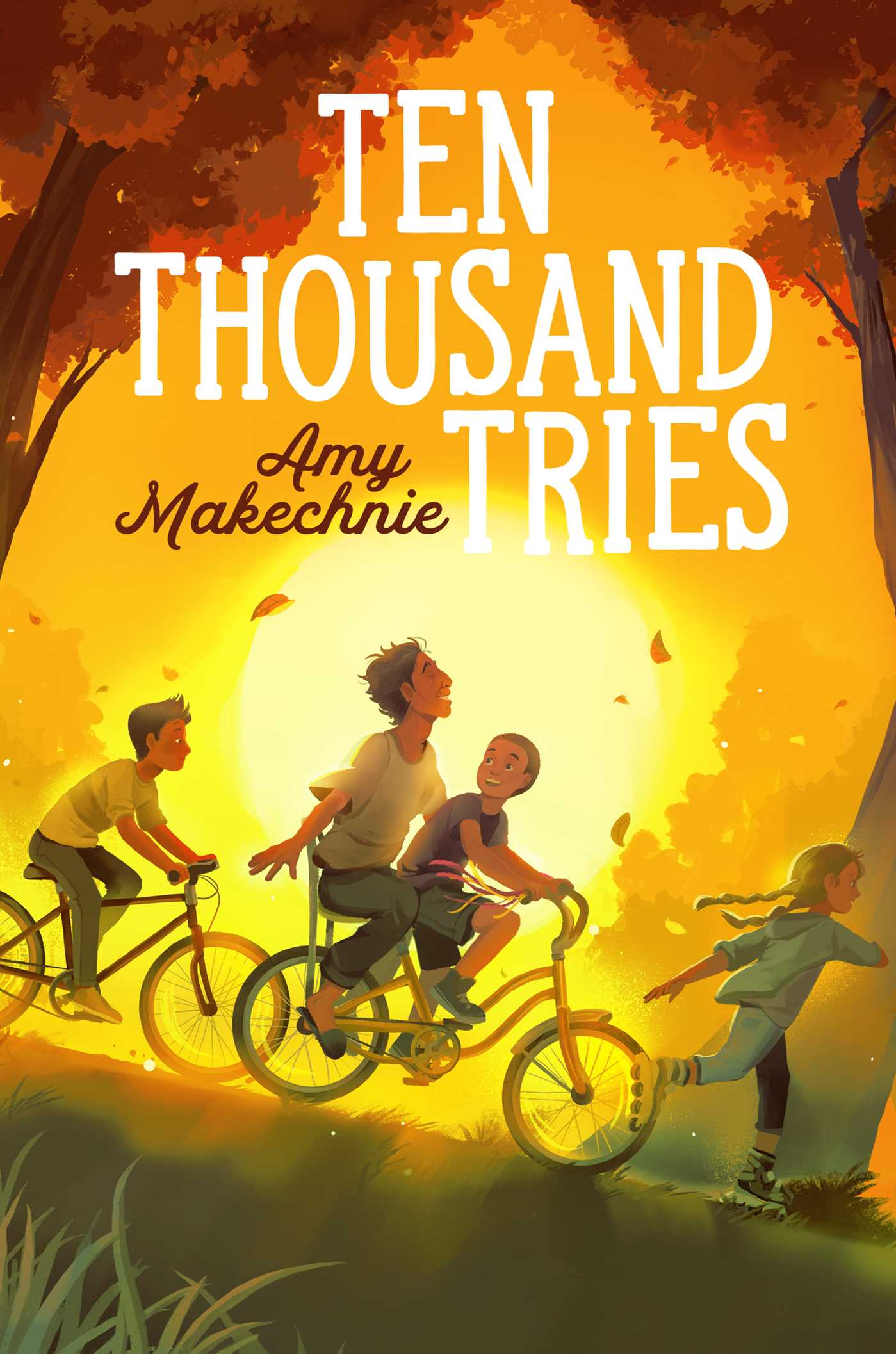
My friend Amy’s latest book, Ten Thousand Tries, launches today! It’s a lovely middle grade contemporary about Golden Maroni. He’s striving to emulate his soccer idol, Lionel Messi, and lead his middle school team to the championship. At the same time, he needs to come to terms with the fact that ALS is stealing his father’s ability to walk, eat, and worst, coach soccer.
Amy and I met years ago via our blogs, and I’m so glad I found her. Amy has four kids; I have four kids. Amy loves running; I love running. Amy loves and coaches soccer; I love and have coached soccer. Amy dabbles in art; I dabble in art. Amy loves to write… you get it.
We check in every Monday to encourage our writing habits as well as commiserate and consult about parenting, middle age, faith, and staying positive. I’m so thankful for this friendship. We’ve never met in person, but one day I hope to do a book promotion tour with her. Until then, let me tell you about her latest book. She’s given me some thoughtful insight into the characters and story of Ten Thousand Tries.
I LOVE this cover!
My review of Ten Thousand Tries
Warm and witty, Ten Thousand Tries tackles difficult subjects- ALS, loss, middle school- with just the right blend of humor, silliness, and sentiment. It’s a great book for helping middle grade readers of all ages think about how to handle disappointment and that annoying kid on your soccer team who always kicks your ball away.
Golden, the main character, is funny and realistic. He has a great voice, makes some big mistakes, and learns from them. I could relate to him on many levels, but especially because when I was Golden’s age, my mother was in a wheelchair too. The struggles Golden’s family tackles as it manages an ALS diagnosis are presented accurately and thoughtfully. If you like books about friendship, family, soccer/sports, and the challenges of growing up, you will love TEN THOUSAND TRIES.
Interview with the author, Amy Makechnie
Me: In your acknowledgements, you say Golden is inspired by your son, Nelson, who was obsessed with Messi in middle school. (And rightly so!) How much of you is in Golden’s mom?
Amy: Ha! You are totally on to me. Coach/Mom aka “the Hulk” was definitely a character inspired by my experiences coaching the 7th and 8th grade middle school team where all four of my children have now played on. It was very easy to get into Coach’s head on the field and in the car and on those long bus rides (yippee!). It was harder as the wife of a man living with ALS. I could only imagine – and write from what I had witnessed as a friend.
Me: Your depictions of living with ALS felt very real. When I was young, my mother had a different progressive neurological disease, but I experienced a lot of the same emotions that Golden does. How did you create such an accurate depiction of living with chronic debilitating disease? What are you hoping readers will take away from this book?
Amy: My good friend Eric was diagnosed with ALS when our children were in middle school together. I once asked Eric’s wife, Heide, if there were any silver linings to such a terrible disease. She immediately said, “Oh, yes!” I knew what she meant because Eric and Heide didn’t shy away from the world after the diagnosis. They opened up their home and let their friends and family into a very intimate and painful situation – like teaching us how to feed Eric through his stomach after he couldn’t drink through a straw. The end result was a closeness that could not have been experienced any other way. I hope readers walk away feeling that life is precious and in the end, it is their relationships and faith that gets them through this life. I don’t know a better way.
Me: A lot of the names in this book are different and silly – Golden, Lucy Littlehouse, Jaimes (how do you pronounce that, by the way?). Where did you get ideas for these names?
Amy: I’m always on the lookout for a great name. I heard the name “Golden” somewhere and scribbled it down knowing I would HAVE to use it somewhere – what better place than a fictional middle school where you’ll be attacked for such a thing? Jaimes is pronounced “James” like the name typically given to boys; one of my soccer girls was named “Jaimes” and I liked it. “Littlehouse” was also just something I heard once and loved the alliteration! The character Slick? Well, it just suited him! If you’ve got any good ones, send them my way.
Me: I was glad that Golden’s dad’s death wasn’t a big scene in the book. Golden just talks about “Dad’s last day”. Why did you choose to keep Dad’s death small?
Amy: I struggled with this one, but usually it just lands better to say a lot with a little. The reader didn’t need to see it or read it – they knew it was coming. What I wanted to focus on was the time Golden had with his dad, esp the happy, funny, poignant moments.
Me: Ten Thousand Tries deals with a heavy subject – ALS and loss- yet the book has a lot of humor and doesn’t feel depressing. How did you find that balance?
Amy: I’m glad to hear that! I absolutely did NOT want to write a depressing story. Here’s what I know about kids: they deal with a lot but they’re also my favorite humans to be around. They’re funny, hopeful, resilient, and always make me laugh. Middle school is hard on so many levels, but I guess I’m like Golden – an optimist. Everything tends to work out okay.
Don’t you love Amy’s outlook? If so, I think you will also love this book. Give Ten Thousand Tries a try. 😉
What you need to know about Ten Thousand Tries
“A heart-tugging and uplifting story about never giving up—on the soccer field, on loved ones, and on life.”
– Kirkus Reviews – starred review, June 2021
“A touching tale about family, love, and grief….Whether or not they are a fan of soccer, this title is sure to make readers laugh and cry. An excellent read-alike for Gary D. Schmidt’s Pay Attention, Carter Jones, 2019.”
Booklist – starred review, June 1, 2021
“A warm-hearted sports story about a kid learning to accept the painful limitations and also unexpected glories of passionate determination.”
Bulletin of the Center for Children’s Books, July 2021
I will give a copy of Ten Thousand Tries to one person who comments here or on my social media profiles. Let me know if you plan to read this awesome book!
Recently, the International Swimming Federation (FINA) rejected an application to officially recognize swim caps designed to accommodate thick, curly natural black hair. Soul Cap, a British company, filed the application. It hoped that swim caps designed specifically for the needs of black swimmers would make the sport more accessible to them. However, thanks to FINA’s ruling, black athletes cannot use Soul Cap products at this summer’s Olympic games, or in any other swimming competitions.
Soul Cap told the BBC that FINA rejected the application because the caps “do not conform to the shape of the head.” This prompted Molly Wood, a host of one of my favorite Podcasts, Make Me Smart, to claim the rejection was based on “phrenology”.
In the midst of my concern about a ruling that so clearly inhibits black swimmers, I was also disappointed I didn’t know what phrenology meant. Enter Merriam-Webster.
What is phrenology?
phrenology,derived from the Greek Greek phren-, phrḗn “seat of the passions, mind, wits” + o + logy; the study of the conformation and especially the contours of the skull based on the former belief that they are indicative of mental faculties and character
Bias against black swimmers
Yikes. I’m not sure FINA made its decision based on phrenology, but I am concerned this ruling will continue to limit black access to the sport. My daughter swam for years with a USA swimming team, and, the sport, at least in Virginia, is decidedly white. With a smattering of Asians.
People with natural black hair must braid it, or use special oil, to get the regular, smaller swim caps on. If their hair gets wet, they must condition it and comb it out, a time consuming process. According to the story on BBC.com, British swim coach Tony Cronin says the FINA decision reveals “misunderstanding and and ignorance. “
CBS.com reported that Soul Cap recently partnered with Alice Dearing, the first black British swimmer to qualify for the Olympics. Dearing said in a Soul Cap sponsored post on Instagram:
{Soul Cap is] always looking for ways to improve their caps, making sizes for all and dispelling the myth that swimming equipment cannot be inclusive. You CAN find a cap which will fit your braids, locs, ‘fro, curly hair in; feels good to be able to say that.
Alice Dearing, Olympic swimmer, team Britain
Dearing co-founded the U.K.’s Black Swimming Association. She has been trying to increase awareness and accessibility to swimming for years. FINA’s ruling has disappointed her and many other black swimmers.
What word from recent news stories has you stumped? And how do you feel about this ruling?
I live in a mostly white town in the mountains of southwest Virginia. In the past year I’ve made an effort to learn more about life from the perspective of people of color, but that’s kinda hard when there aren’t many people of color around me. Enter books!
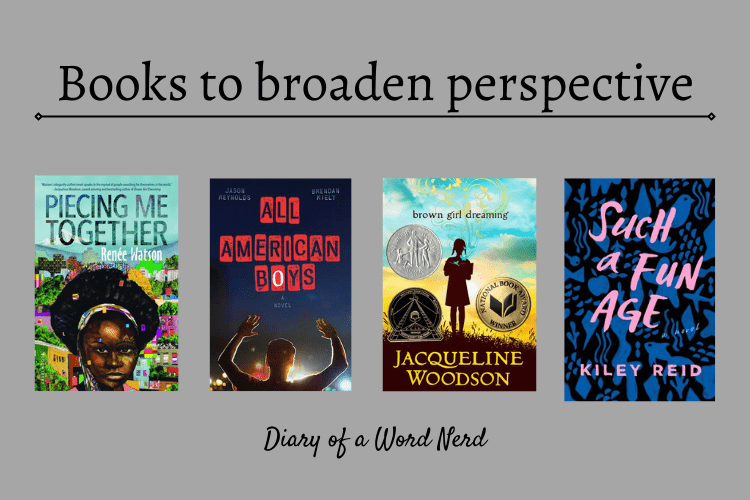
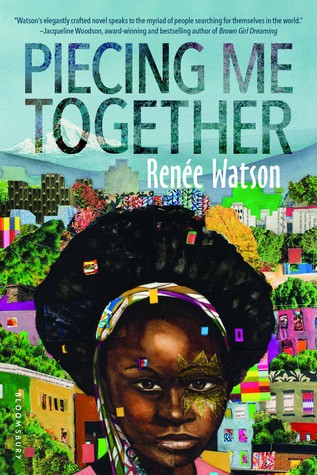
Piecing Me Together (young adult contemporary) tells the story of Jade, a smart and talented artist who specializes in collage. She lives in a “bad neighborhood” of Portland with her mother and uncle and can’t wait to get out. When she earns a scholarship to attend a private, mostly white, high school, she gains access to several opportunities for “at risk” girls. Unfortunately, these opportunities are more demeaning than helpful. Even Jade’s mentor, a black woman who graduated from the same high school, has trouble seeing how her good intentions hurt more than help. Jade’s story is woven together with the motif of collage making that underscores the theme that people are made up of different, mismatching pieces.
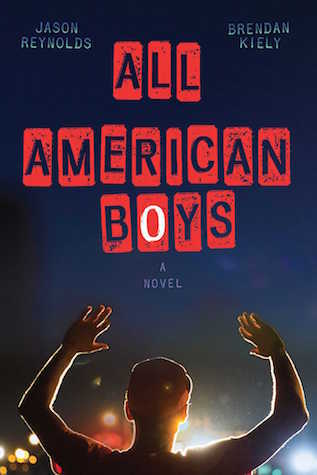
All American Boys by Jason Reynolds and Brendan Kiely
All American Boys (young adult contemporary) uses two alternating points of view to tell the story of a brutal police arrest and its aftermath. When Rashad, a black teen, accidentally trips over a white woman in a convenience store, he is accused of stealing and resisting arrest and is savagely beaten by the arresting officer. Quinn, a white teen, witnesses the event and recognizes both Rashad as his high school classmate and the arresting officer – who happens to be a man he has looked up to for years – his best friend’s older brother. Reynolds and Kiely do an excellent job of describing different viewpoints of the same event and exploring the assumptions, backgrounds, and personal history that build perspective.
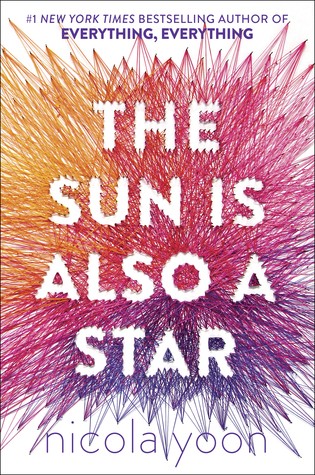
The Sun is Also a Star by Nicola Yoon
The Sun is Also a Star (young adult contemporary) describes a day in the life of Natasha and Daniel. Natasha is a Jamaican born undocumented immigrant trying to prevent her family from deported the next day. Daniel is a Korean American trying to escape a college interview and the plans his parents have for his future (which include Yale and medical school- Daniel wants neither). Daniel, a poet and dreamer, is convinced fate brought Natasha to him, and they are meant to be together. Natasha, a scientist and realist, thinks Daniel is ridiculous. But she can’t deny her attraction to him.
The story balances humor with thoughtful descriptions of family dynamics. It includes deep thoughts about life, fate, and what brings people together and what pushes them apart. It also explores the science of falling in love and how the actions of one person can affect others. At times I found the romance of Daniel and Natasha melodramatic, (similar to Eleanor and Park), but overall I enjoyed the story and its themes. The audio book is well done, with different actors reading for Natasha, Daniel, and the narrator.
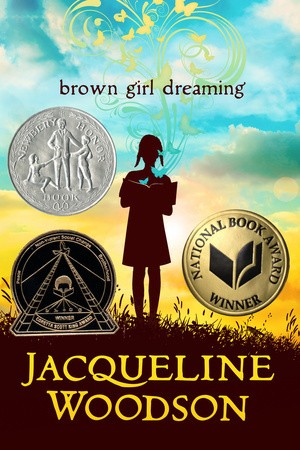
Brown Girl Dreaming by Jacqueline Woodson
Brown Girl Dreaming is a memoir in verse in which Woodson describes growing up as an African American in the 1960s and 1970s. She spent her time split between South Carolina and New York and never felt quite at home in either place. Her poems cover everything from her grandfather and his declining health to her family’s religion (Jehovah Witness) to the Civil Rights Movement. Descriptive and moving, the verses of Brown Girl Dreaming gave me a better understanding of a life so different from my own.
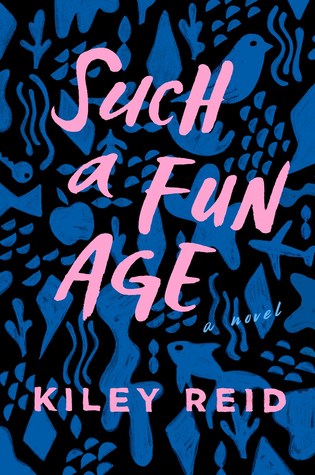
Such a Fun Age by Kiley Reid
Such A Fun Age (adult contemporary) was a Good Reads Choice Award winner for 2020. It tells the story of Emira, a black college grad in her mid 20s trying to figure out what she wants to do with her life. She knows she needs a job with good pay and health benefits, but until she finds one, she’s babysitting for a white, wealthy family in Philadelphia. Emira loves her charge, a thoughtful two year old named Briar, but is wary of her boss, Alix (pronounced Ah-leeks) who asks a lot of questions.
When Emira is accused of kidnapping Briar one night at a gucci grocery store, it sets off a complicated chain of events propelled by race, privilege, and good intentions falling short. Such a Fun Age is an interesting commentary on relationships and relating, and the audio book is well done.
Do you have any other book suggestions that are good for broadening perspective? Please share them in the comments!