Politicians often toss around big, multi syllable words. I’m not sure if they do this to sound smart or important or to deliberately confuse, but I thought I’d review a few such politically charged words so we can be smarter consumers of media. 😉
In a recent editorial that ran in our local paper, US Representative Morgan Griffith (of the 9th Congressional district of Virginia) criticized China for hiding information about the origin of the virus that causes COVID-19 infections. Griffith is on a congressional committee investigating the issue. In his editorial, Griffith said, “From the outset, China’s Communist oligarchy covered up the true danger of COVID-19 as well as its extent. The rest of the world paid the price for their fecklessness.”
My son doubted fecklessness was actually a word. “What is feck?” He asked. “What makes something feckless?” Turns out, the dictionary had a clue.
Oligarchy: noun from the Greek oligoi “few” and arkhein “to rule”; definition: government by the few; a government in which a small group exercises control especially for corrupt and selfish purposes (more at dictionary.com)
Fecklessness: noun from Scots and northern English dialect feck from effeck, a variant of effect, and less; definition: weakness, ineffectiveness (from Dictionary.com)
Fecklessness has satisfying “f” and “k” sounds, yet it is cumbersome to say. Can you think of a better word to describe the ineffectiveness Griffith is addressing? Please share it in the comments.
Are there any other politically charged words you’d like to learn more about?
Inspired by yesterday’s Space X launch of a Dragon spacecraft to deliver supplies to the International Space Station, we are going to examine a grammar question. When, if ever, do you capitalize Earth?
This is also inspired by a Face Time call I received about a month ago from my daughter. She wanted to prove to her boyfriend, who apparently hadn’t realized how seriously we Tomiaks take our grammar, that Earth must be capitalized in certain situations. He doubted her logic. She called me in for back up.
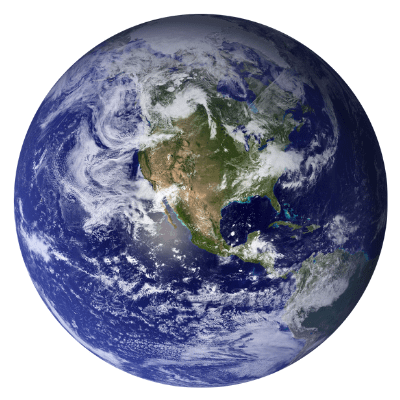
According to Dictionary.com, when you are referring to Earth as a proper noun, as a specific heavenly body, you capitalize it. You also usually omit “the”. For example, “Following an on-time liftoff, the Falcon 9’s first stage will return to Earth.” Proper nouns, which name a specific person, place, or thing, are always capitalized.
However, if you are using earth as a common noun, as in the ground or soil, you keep it lowercase. For example, “The job will be expensive because there is a lot of earth to move on the site.” You can also use lowercase earth when you are referring to it as the planet we live on, e.g. “The earth rotates on an axis.”
So, should you capitalize Earth? Like so many things in life and grammar, it depends on the situation. 😉
And if you haven’t, check out the article about the launch. The SpaceX Dragon carried all kinds of interesting things to the International Space Station, including kidney stones and squid paralarvae!
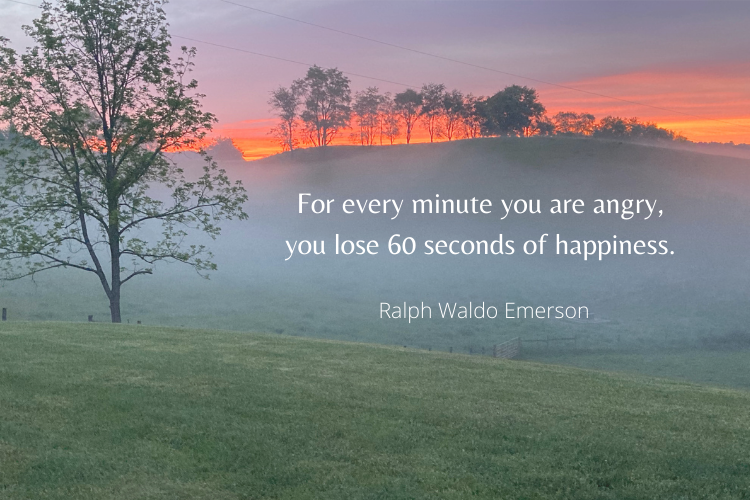
I’m still climbing my way out of grief and exhaustion, trying hard to get back to the things that fill my soul. When I hit moments of frustration, I remind myself of this quote. I hope it serves you well too.
For every minute you are angry you lose 60 seconds of joy.
Life has gotten in the way of my writing, but now writing is going to help me process life.
For the past several months, I’ve been dealing with a family situation that occupied much of my time and energy. In the past few weeks, that situation has dominated my days. Finally, I am emerging from the fog, and in the process, trying to revive my creativity, because I know from past experience that creativity heals me and strengthens my mental health.
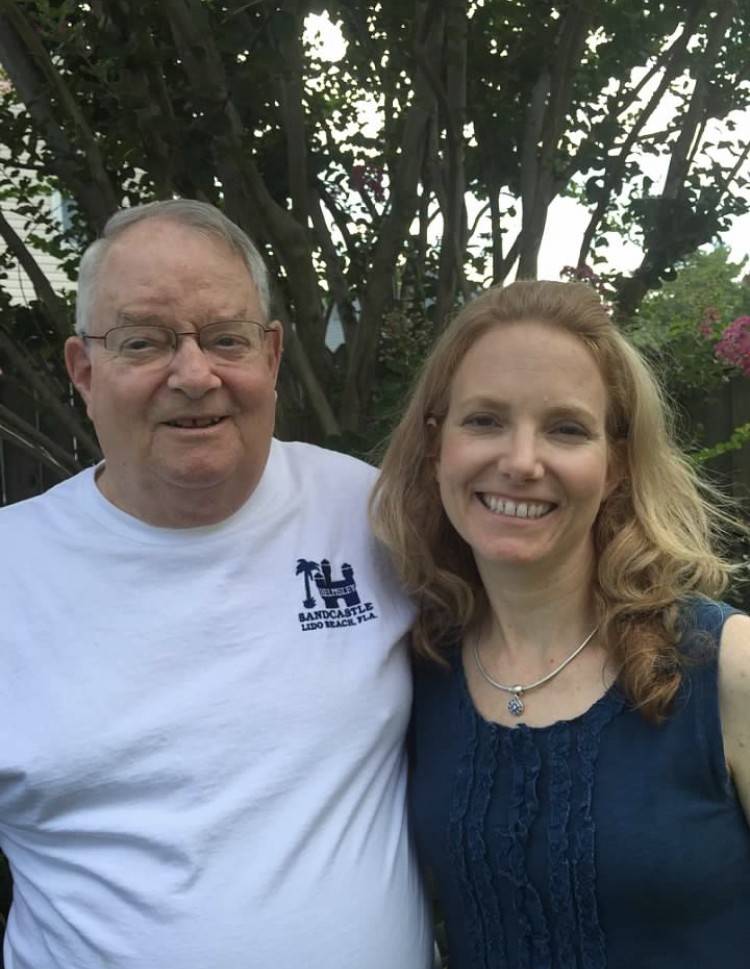
Me and my dad
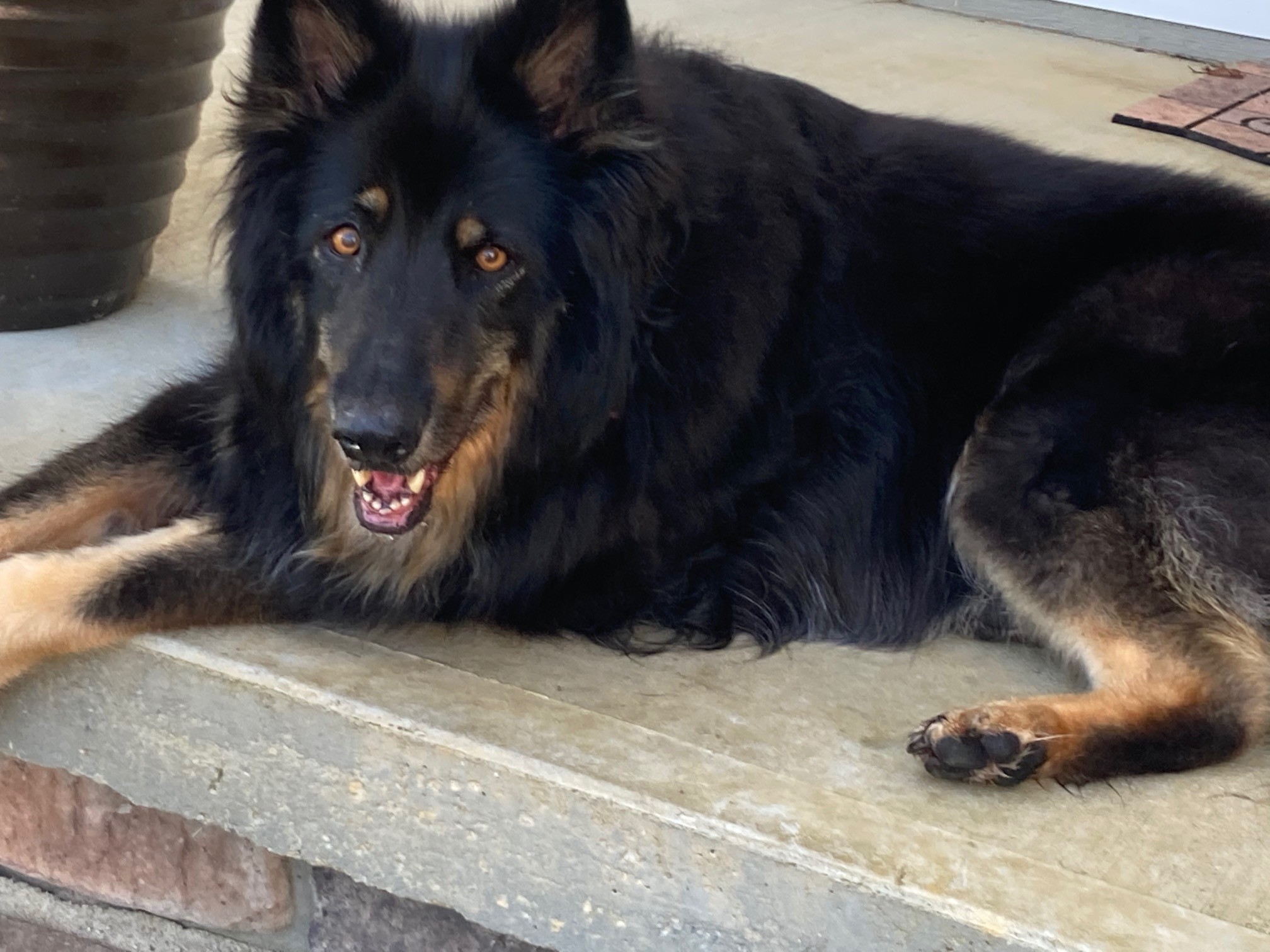
I do not wish to share too many details about my situation, but I’m willing to say this: I’ve lost many nights of sleep to worry and uncertainty. I’ve lost many hours to packing and driving and drive-thru meals. I’ve lost my father, a man I didn’t always understand but still dearly miss. I’ve lost my beloved dog, who came to me years ago when I was grieving and left me with more to grieve.
But even in the haze of grief and fatigue, I am growing. I’ve learned that managing change is always hard, but especially so when that change involves facing our own mortality. I’ve learned that while I thrive on “to do” lists and crossing items off of those lists, grief does not fall neatly into bullet points, and the affairs of one person’s life are not so easily categorized and concluded.
I’ve learned that while I’ve lost much, I possess even more. I’ve been surrounded by kind words and cooked meals, virtual hugs and physical affection, cards of encouragement and calls of comfort. While I sat in a hard wooden pew listening to “Amazing Grace” and studying my father’s dress blue uniform hanging at the front of a funeral chapel, I glanced to my right and left and found strength and comfort in my grown children, one bearded and all much taller than me, as well as dear friends and family who traveled many miles to be by my side. Now back home on my farm, which is too quiet without the deep throated bark of my German Shepherd, I no longer take for granted the warm, soft fur and happy tail wags of our small, neurotic but adorable, Poomeranian.
My Roxie, the best dog ever.
The past few months have reminded me once again of a lesson I know but too often neglect, that I must appreciate the present, with all of its smells, sounds, and feels. That I must invest in the people who are important to me. And that I must continue to run and breathe and stretch myself out on my yoga mat. The author Margaret Atwood recently said on Kelly Corrigan Wonders (a podcast fav), “There is no ‘the rest of our life’. There is today, tomorrow, and the rest is unknown.” I agree, and am learning to embrace uncertainty, but I feel pretty sure that running and yoga will help me with whatever unknown awaits me.
Facing one’s mortality, and the mortality of those we love, doesn’t have to shut us down. It should inspire us to rise.
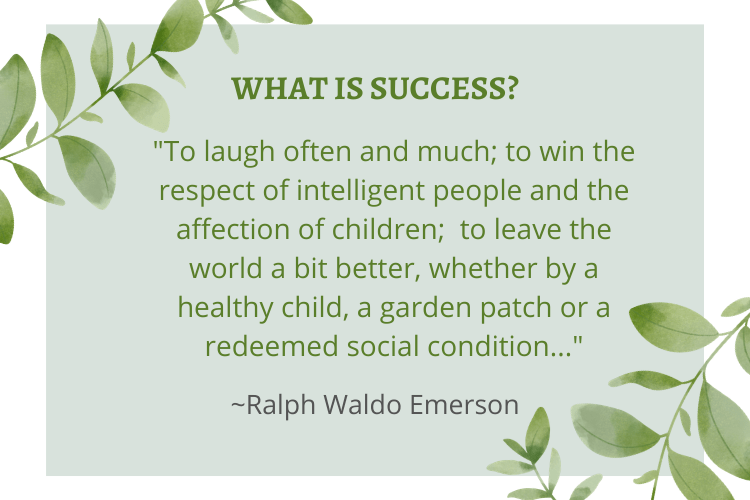
At my father’s service, the pastor gained my immediate respect when he quoted Emerson’s comments on success. I’d like to share them here.
“What is success? To laugh often and much; to win the respect of intelligent people and the affection of children; to earn the appreciation of honest critics and endure the betrayal of false friends; to appreciate the beauty; to find the best in others; to leave the world a bit better, whether by a healthy child, a garden patch Or a redeemed social condition; to know even one life has breathed easier because you have lived. This is to have succeeded!”
Ralph Waldo Emerson
What are the things that inspire you to rise and to appreciate the present?
First, “fungible” caught this Word Nerd’s attention. Is that a real word? Yes, actually. More on that later. Second, I wanted to understand this latest craze in trading and cryptocurrency, especially since some believe non-fungible tokens, or NFTs, can be a way for creatives to finally get proper compensation for the work they produce.
Explaining NFTs
Let’s start with the word fungible. According to Merriam-Webster, fungible is an adjective meaning “being something (such as money or a commodity) of such a nature that one part or quantity may be replaced by another equal part or quantity in paying a debt or settling an account”. It also means flexible. Since NFTs are non-fungible, it means they cannot be replicated or replaced.
But what exactly is an NFT? According to a Reuters explainer article and Morning Brew, an NFT is a digital asset, such as an image, a GIF, a video clip, a piece of digital art, or even a Tweet (!) that has a unique digital signature and therefore cannot be replicated. When one buys an NFT, either with cryptocurrency or dollars, they don’t get anything physical. However, their proof of ownership exists on a blockchain, which is a public record or ledger of the asset’s authenticity and ownership.
Word Nerd note: a blockchain is a kind of database. Information is entered in blocks and added to previous blocks, creating a irreversible timeline of data. A blockchain is decentralized, meaning no bank or entity owns it. The information exists as encrypted bits on various computers.
Some examples of digital assests that have sold as NFTs:
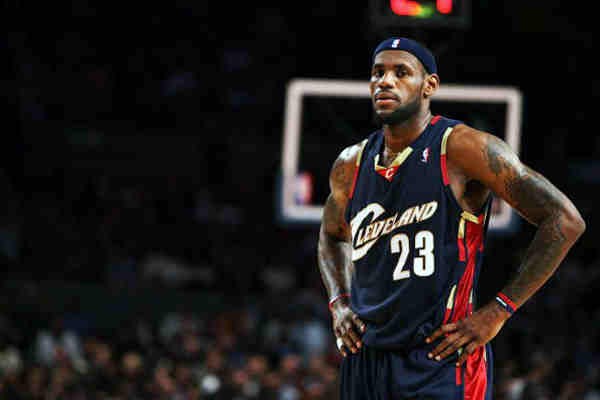
NFTs have been around since at least 2017, but they have gained popularity in the past year, perhaps because the pandemic has forced people to stay home and spend more time on the Internet. Some people also have more money to spend because they aren’t doing things like attending concerts, dining out, and traveling. NFTs are also another way to invest and make money; NFTs can be bought and resold, and their value has been spiking. A LeBron James slam dunk sold for $208,000 back in February 2021, and in March, bids on Jack Dorsey’s tweet hit $2.5 million. At the end of March, the American artist Beeple sold a digital piece for $69.3 million.
Some people believe that NFTs will be the future of ownership – that all property, such as homes and cars, will be “tokenized” in this way. For artists, NFTs offer a way to monetize digital work. One benefit of NFTs for creators is that each time an NFT is traded, the producer of the piece gets a royalty. This is good news for musicians, artists, and writers who have seen their work devalued in an increasingly digital world.
However, NFTs are a bit of a fad, and people who invest in them assume some risk. Anyone can make an NFT, so as the novelty wears off, their value may drop. Also, NFTs exist in a market in which many participants use pseudonyms, so there is increased risk of fraud.
Kai Ryssdal and Molly Wood, the hosts of Make Me Smart, one of my favorite podcasts to get quick information about current events, technology, and the economy, think NFTs are a quirky trend that will fall apart quickly. Says Wood, “it’s the monetization of FOMO… the practice of selling scarcity, selling exclusivity, and selling the idea that you own a thing.” They don’t think it can last.
Have you heard of NFTs, and can you add to this explanation? Have you or anyone you know purchased one? Are there any other tech trendy words you’d like me to explore?
It’s spring – time to spruce up your home and especially your book shelves. Here are some suggestions from my guest Sarah Hollenbeck for adding diversity and interest to your shelves… and your reading habit.
When you look at your bookshelf, what types of books do you see the most of? Are there a lot of romance novels and mysteries, or are you more of a historical fiction fanatic? A bookshelf should reflect your interests, but it can also be a place of inspiration, (millennials know this well — they read the most books after all!) a place where you store books that can help you become a different person. And if you are looking at your bookshelf and seeing very few of these types of books, it’s time to take action.
Non-fiction books focused on education and hobbies are great ways to scratch that reading itch while learning something new. And there are a wide variety of hobby books you can try out, meaning you can still make sure your bookshelf reflects who you are as a person. If you have always wanted to make your home more green, try out some books on gardening or houseplant care. Or if you are a budding woodworker, you could buy a few books on how to tackle home improvement projects.
To help you find the best books to start a new hobby and update your home, the team at Hippo Insurance has put together an infographic highlighting 12 books every homeowner is sure to love. Check out the list below and get started on diversifying your bookshelf and your post-work activities!
Can you add some hobby books to this list? Please do so in the comments!