Vocabulary from Frozen: Fractals

wondrous memeWelcome to Wondrous Words Wednesday, a great way to learn new vocabulary.  Visit Kathy at Bermuda Onion for links to more interesting words from books and life.

My word today comes from the movie Frozen.  Perhaps you’ve heard of it, even if you don’t have children who watch it five times a week?  My daughter and I didn’t see it until a month ago. (Shocking, I know!)  We were put off by the princesses, but now, Frozen is my favorite Disney movie ever, because it shatters all the typical stereotypes:

  • The apparent “Prince Charming” turns out to be a jerk.
  • The apparent “Prince Charming” gets punched by one of the princesses. (My daughter’s favorite part.)
  • The act of true love involves one sister sacrificing for the other- not a broad chested knight on a powerful steed.
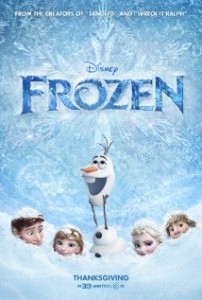
FrozenThe most popular song from Frozen, called “Let It Go”, has a word that perplexes me and my children: fractals.

My power flurries through the air into the ground

My soul is spiraling in frozen fractals all around.

My daughter thinks it means particles, but I decided to look it up.  Good thing I did.

fractal \’frak-təl\ noun; from French fractale and Latin fractus meaning broken; any of various extremely irregular curves or shapes for which any suitably chosen part is similar in shape to a given larger or smaller part

Whew.  That’s a mouthful.  Here’s another more succinct definition from the Fractal Foundation website:

A fractal is a never-ending pattern. Fractals are infinitely complex patterns that are self-similar across different scales.

Fractals have to do with math and patterns, and we can find them readily in nature.  My guess is that the “frozen fractals” from the song are the repeating patterns in snow flakes. (Note the clever use of “flurries” as a verb in the preceding line.)  I love the idea that nature has mathematically predictable patterns- it reinforces my belief that a higher power created our world with a plan in mind.
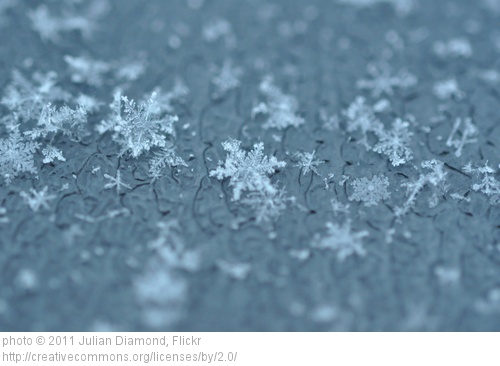
Frozen fractals- or repeating patterns

Word Nerd Workout

Think of where you have seen, or might see, fractals.  Turn to nature to help you.  Where are there repeating patterns that look similar in different sizes?  Share them in the comments.

Also, thinking ahead to summer, check out the Fractal Foundation website for some cool math fractivities.

If patterns interest you, check out my post on tessellations.

For some words to make you smile, visit Eli at Coach Daddy; today is Honest Day, but he’s collected some six word lies (about chocolate, bacon, exploding diapers and housework) that will have you chuckling!

Thanks for getting nerdy with me today!

Julia 
Tweet: What are the frozen fractals Elsa sings about in “Let It Go”? @juliatomiak, word nerd, explains. #Frozen http://ctt.ec/GatRZ+


Why You Should Read The Eighth Day

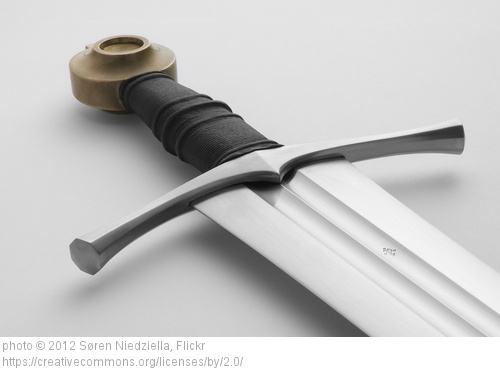
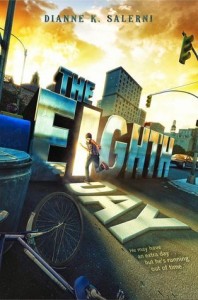
The Eighth DayI’ve always had a thing for stories about King Arthur.  The cute guy who sat next to me in my Arthurian Legends class at UVA definitely encouraged my interest.  But the old language of the classic tales has kept my kids from sharing my excitement about King Arthur and his knights – until now.

The Eighth Day, by Dianne K. Salerni, brings the mythology and magic of King Arthur to 21st century kid lit.  If inquisitors, honor blades, and sorcerers grab your attention, this book is for you.

The Premise

The Eighth Day is often compared to Rick Riordian’s The Lightening Thief series.  It has a similar blend of modern and magical, except the mythology is Arthurian in The Eighth Day, instead of Greek.

The main character, Jax Aubry, lives with his seemingly irresponsible guardian, 18-year-old Riley Pendare.  Jax is lonely and miserable, until his thirteenth birthday.  Then he discovers a mysterious eighth day wedged between Wednesday and Thursday when everyone seems to disappear, except for a strange girl in the house next door.

Jax also learns that he has the magical ability to make people answer his questions, whether they want to or not!  (A power I wish I could have.  Who broke the piano bench?)  His guardian Riley can force people to do his bidding with the magical ability to command.  (Again, why can’t I have this power?  Put away your laundry.  That would be handy with four kids!)

With Jax’s new found power comes knowledge of a secret magical world, where the descendants of Merlin, Arthur, and the Lady of the Lake battle against greedy and powerful enemies.   And it turns out that Riley is much more than just a sloppy teen who forgets to pay the electric bill.  Jax must quickly figure out who to trust if he – and the “normal” world – is going to survive.

swordWhat the Kids Say

I enjoyed the blend of action and mythology in The Eighth Day, and I’m glad Dianne included some visual aids to explain lineage!  But don’t take my word for it; my three oldest kids read it too and shared their thoughts.  (Note: The Eighth Day is labeled “middle grade”, which means it’s targeted to kids aged 8-12.)

  • My 13-year-old son thought it was good because it used a new idea that he hadn’t seen in other books.  (And he’s read A LOT of books.)
  • My 12-year-old daughter liked that the plot wasn’t all action but included character building scenes.  She also liked Evangeline, another main character, because she was smart and strong and wasn’t afraid to stand up to the evil guys.
  • My 10-year-old son liked the action at the end but wished it had “more stuff going on” in the beginning and middle.  Early in the book, Jax spends a lot of time learning about the magical world and the history behind it.

I agree with my daughter’s assessment, as I prefer a balance of action and story development like you find in the Harry Potter series.  I only read the first book in The Lightening Thief series because there was too much action and not enough meat. The Eighth Day feels more like Harry Potter, and I’m looking forward to following Jax and his friends in the rest of the series.  I’m hoping that in later books, Dianne includes even more mythology about Arthur.

You can find out more about The Eighth Day and Dianne Salerni by visiting these links:

Do you like stories with magic and mythology?  Do you think you’ll give The Eighth Day a try?

Julia

Tweet: The Eighth Day brings Arthurian myth and magic to modern #kidlit! A must read from @diannesalerni #amreading http://ctt.ec/f4485+

What Does Modicum Mean?

wondrous memeWelcome to Wondrous Words Wednesday, the weekly meme hosted by Kathy at Bermuda Onion.  Stop by Kathy’s blog to join the word nerd party!

My word today comes from the fantastic (in more ways than one) world of Artemis Fowl.  I’m now listening to book number eight, the last one in the series.  Sniff. I’m sad that it’s almost over.  If you have kids who like adventure stories, and you’re looking for good audio books for long car rides, Artemis is the evil genius turned hero that you need!

Since I was listening to an audio book, I can’t quote an exact sentence.  But here’s a close approximation:

Artemis couldn’t find a modicum of comfort in the cramped fairy shuttle.

modicum \’mä-di-kəm; also mō-\ noun; from Latin modicus moderate and modus measure; a small amount.

I think it implies disappointingly small amount, like My kids share only a modicum of their Easter candy stash with me.  

Word Nerd Workout

Webster’s Online Dictionary lists several humorous synonyms for modicum.   Can you think of one?  My example: iota.

My son only put an iota of asparagus in his mouth and immediately started gagging.

Thanks for getting nerdy with me today!

Julia
Tweet: Word Nerd Word: modicum = disappointingly small amount; my kids shared only a modicum of candy via @juliatomiak http://ctt.ec/KmuIH+

What is Jazz Poetry?

There has always been a strong musical component in poetry.  In some cases, like Jazz Poetry, music plays a huge role.  Please welcome my guest, poet and fellow Wordsmith Studio Member Michelle Pond, as she introduces us to Jazz Poetry.

Swinging is not a word that most people associate with poetry. Those of us who enjoy jazz poetry do.

As noted in “A Brief Guide to Jazz Poetry“, this genre is poetry that is informed by jazz. The poet may be inspired by the history of the music, the lives of musicians or elements of the music itself.

Jazz and jazz poetry grew up together in the early 20th century. During the Harlem Renaissance, Langston Hughes began to incorporate elements of the music such as rhythm, syncopation and improvisation into his work. In the link above, you may read an excerpt from his piece, “The Weary Blues”, which is the title poem of his collection published in 1926.

The Beat poets of the mid-20th century also were influenced by the jazz musicians of their time. In fact, Jack Kerouac recorded an album entitled “Poetry for the Beat Generation”. Kerouac read his poetry and was accompanied by Steve Allen on piano. Allen was the first host of the Tonight Show.

Jazz poetry also had a strong presence in the Black Arts Movement of the 1960’s and ’70’s. This link includes audio of Gwendolyn Brooks reading and discussing her poem “We Real Cool”.

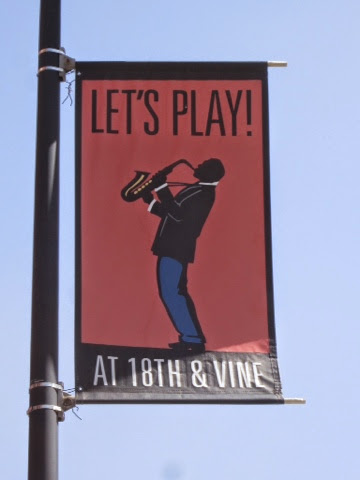
My interest in jazz poetry began when I attended a workshop facilitated by Glenn North, the poet in residence at the American Jazz Museum. I attended out of curiosity more than anything else, but I became a fan of both the music and the poetry.

Certainly, the fact that I live in Kansas City, which has a rich jazz history and is home to the museum, is a factor. I am only minutes away from the great programming at the museum and music in the Blue Room.

Although I did not consider myself a fan of jazz when I took the workshop, I had seen many of the jazz greats on television during my childhood. Most were near the end of their careers. My new-found interest in jazz has allowed me to meet these people when they were young and understand the role they played in the evolution of the music.

Jazz poetry has been a springboard to learning about other art forms that are influenced by the music. I have been introduced to painters, photographers and textile artists who have created work inspired by jazz. I have even written some poetry inspired by their work.

I’ll close with a quote from Langston Hughes:

Jazz is a heartbeat-it’s heartbeat is yours. You will tell me about its perspectives when you get ready.

Are you familiar with jazz music and/or jazz poetry? How have you seen jazz reflected in various art forms? Thanks Michelle!


Michelle PondMichelle Pond is a poet and photographer who likes sports, jazz and art inspired by other art. She also volunteers with a bereavement support group. Her poetry has appeared in Thorny Locust, rusty Truck ezine and Salon, an anthology from Kansas City’s longest running open mic.  You can read her work at http://www.mapoetpoems.blogspot.com.


Vocabulary for the Exhausted: Logy

Wondrous Words Wednesday

wondrous memeWelcome to another round of Wondrous Words Wednesday!  Visit Kathy at Bermudaonion to learn more fun words.

As you are reading this, I am traveling across the state of Virginia with 120 fourth graders to visit Richmond, Williamsburg, Jamestown, and (my favorite!) Monticello.  All in less than 48 hours.  We start at 4:30 am Tuesday and get home by midnight Wednesday.

I think by Wednesday evening I’ll be feeling logy.


logy \LOH-ghee\ adj, from the Dutch word log, meaning heavy; marked by sluggishness and lack of vitality

Word Nerd Workout

Think of a synonym for logy and share it here.  If you can make it comical, all the better.  I’ll need something to make me smile.  🙂

Thanks for getting nerdy with me!

Julia 


How Poetry Keeps Us Connected

Please welcome my guest, J. Lynn Sheridan, a poet and fellow Wordsmith Studio member.   Read on to learn about the lasting power of poetry and a new poetry site, The Slow Forget, for people caring for someone with Alzheimer’s.  

No doubt, if you ask your favorite poet what’s happening this April, s/he will spout off a few alien acronyms or wordplays—NaPoWriMo, PAD, 30/30, PYP.

April is National Poetry Month and that means an abundance of poeming challenges.

National Poetry Monthba1969

The blogosphere will be buzzy with prompts, free-verse, cinquains, sestinas, and sonnets. Poetry will be dripping from our eyeballs by National Oatmeal Cookie Day on April 30, when we’ll all need a few cookies and a nice mug of milk to wind down from all the meter, iambs, and metaphors.

If you decide to participate, I’ve prepared a few tips on my poetry blog, Writing On the Sun.  It’s a loosely structured site chronicling my responses to various poetry prompts plus a sprinkling of biographical sketches.

The Slow Forget 

A few months ago, I launched a new poetry blog that is more focused, combining two emotive concepts—Poetry and Dementia/Alzheimer’s.

It’s no secret that the topic of poetics evokes either a twinge of fear or a thrill of anticipation.

It’s always one or the other response.

It’s also no secret that dementia never elicits a thrill of anticipation. It’s a dreaded disease that affects over 5 million Americans.

One of these is my mom. She is slowly forgetting her world, her life, her memories.

It’s painful for her.

It’s painful for us.

So why write poems about a disease?

The Ancients

For two reasons.

Both reasons date back to the ancient world.

First, poetry, as one of the healing arts, is a sensory language that condenses snapshots of an event, an insight, or a journey.

While poetry itself will never heal dementia, it can assist in healing emotions.

Job, of Old Testament biblical times, knew this. The book of Job, one of the oldest books in the Bible, is written in verse. In it, he was described as a righteous man, who was blessed with health, children, and great wealth. In the blink of an eye, it was all taken away. He records his laments in verse:

My lyre is tuned to mourning, and my pipe to the sound of wailing.

Though I don’t own a lyre or a pipe, I can connect with his grief.

And in a strange way, it’s comforting.

Poetry affirms history.

Second, poetry is a tool for recording history.

A memoir in verse, if you may.

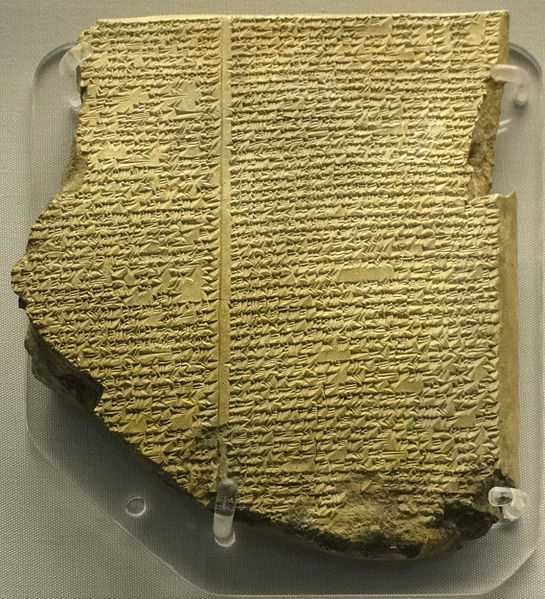
One of the oldest surviving epic poems is the Epic of Gilgamesh, from the 3rd millennium BC.  Gilgamesh, was king of the ancient Sumerian city-state of Uruk. The story contains an account of a universal flood that parallels the flood of Noah’s day. Some historians believe this poem validates the Babylonian, Phoenician, and Hebrew accounts of an ancient flood.

Here we have history recorded in a poem etched on a tablet.

The_Flood_Tablet

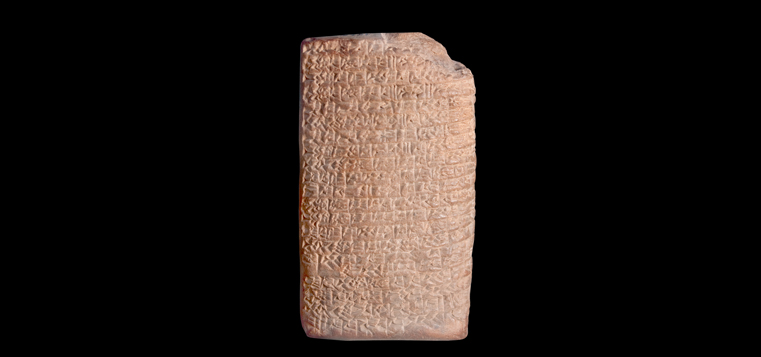
Moreover, one of the world’s oldest love poems dating from 8th century BC Ancient Babylonian Era, reads like a modern love poem:

Bridegroom, dear to my heart,
Goodly is your beauty, honeysweet,
Lion, dear to my heart,
Goodly is your beauty, honeysweet.

This memoir of love in verse affirms humanity’s continuous yearning for romance.

We all can relate to a love poem.

Even one written on a tablet.

Love poem on tablet

Reviving the Tradition

By penning a word journey of my experiences and insights dealing with my mother’s Alzheimer’s, I’m not only recording family history, I’m remembering for her. All those things she would want to tell her grandchildren, but can’t, I’ll have her memories written in verse.

My main reason, however, is to connect with others who are on the same confusing journey and that’s the purpose of poetry.

Connecting heart-to-heart.

Can you relate?

Join me at The Slow Forget.

 J Lynn SheridanJ.Lynn Sheridan writes poetry and fiction in the Chain O’ Lakes of northern Illinois in a very ordinary house, but she’d rather live in an old hardware store for the aroma, ambiance, and possibilities. She’s been published in several literary journals and anthologies, among them: Beyond the Dark Room, Em Dash Literary Magazine, Four and Twenty Literary Journal, and Garbonzo. Find her in cyber-world at Writing on the Sun, The Slow Forget and on Twitter @J.lynnSheridan.