
I’ve never experienced a natural disaster first hand- until now. Last weekend, husband and I visited our daughter in Spokane, Washington. At the beginning of our visit, we chose “adventure” as our theme word. We had struggled to find our guest cabin tucked into the woods, and it seemed to fit. “Adventure” came up again when we stumbled off path and struggled through a thicket of brush during a hike. But we never imagined our adventure would include ash and flame.
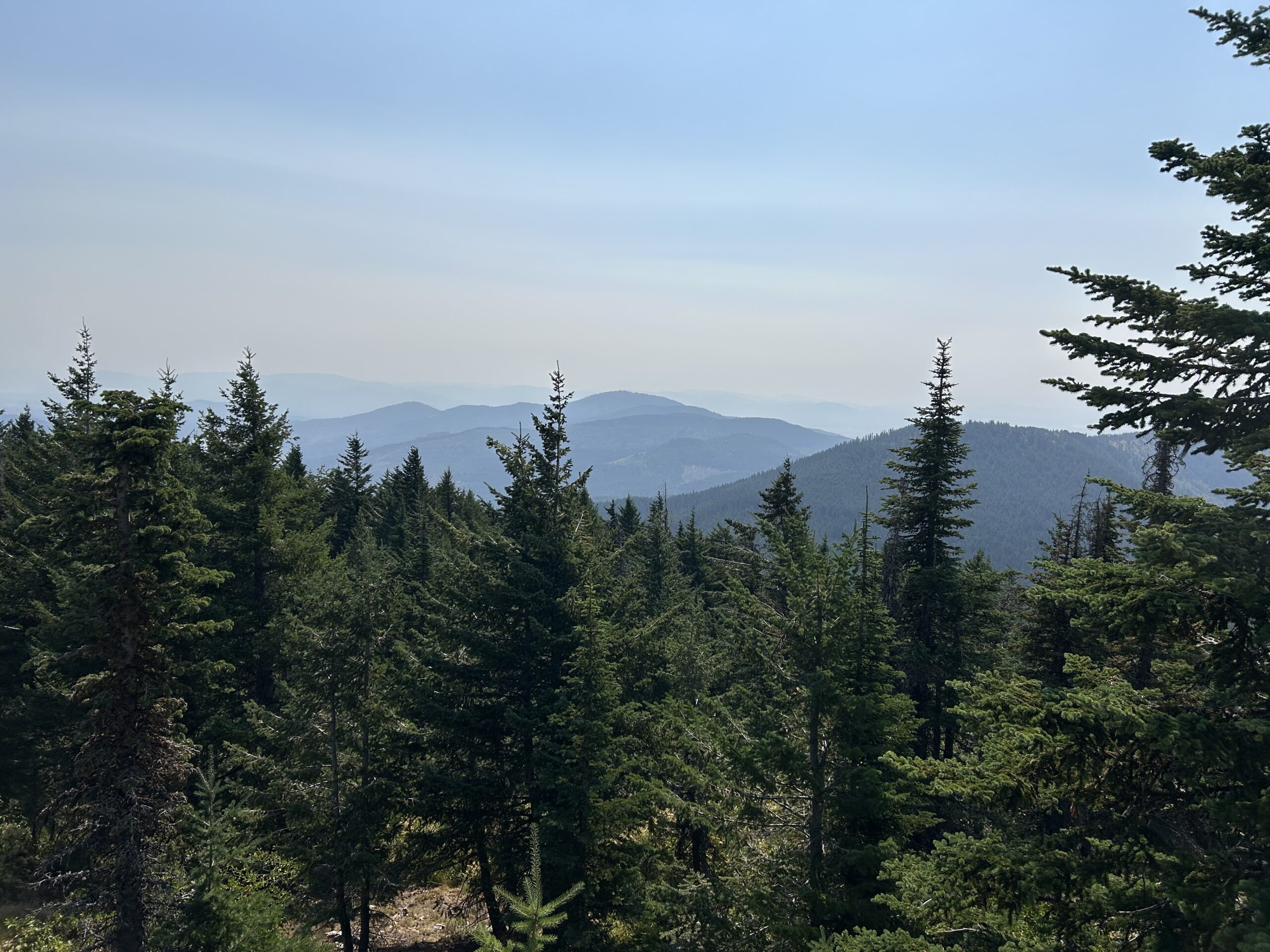
Forecasters predicted high winds for Saturday afternoon. The weather service posted Red Flag Warnings for several days. So, we rose early Saturday and ventured into Mt. Spokane State Park hoping to get in a hike before noon. The park has over 100 miles of trails and gorgeous views. Once we found the right trail head, and after we negotiated a 30-minute “short cut” through downed trees and prickly brush, we enjoyed breathtaking views of mountain ridges and lakes. By noon, the wind picked up and stirred dust in the clearings, so we headed back to the car. We planned to grab lunch, pick up groceries, and relax at our creek side cottage for the rest of the afternoon. Unfortunately, the day unfolded with more stress than leisure.
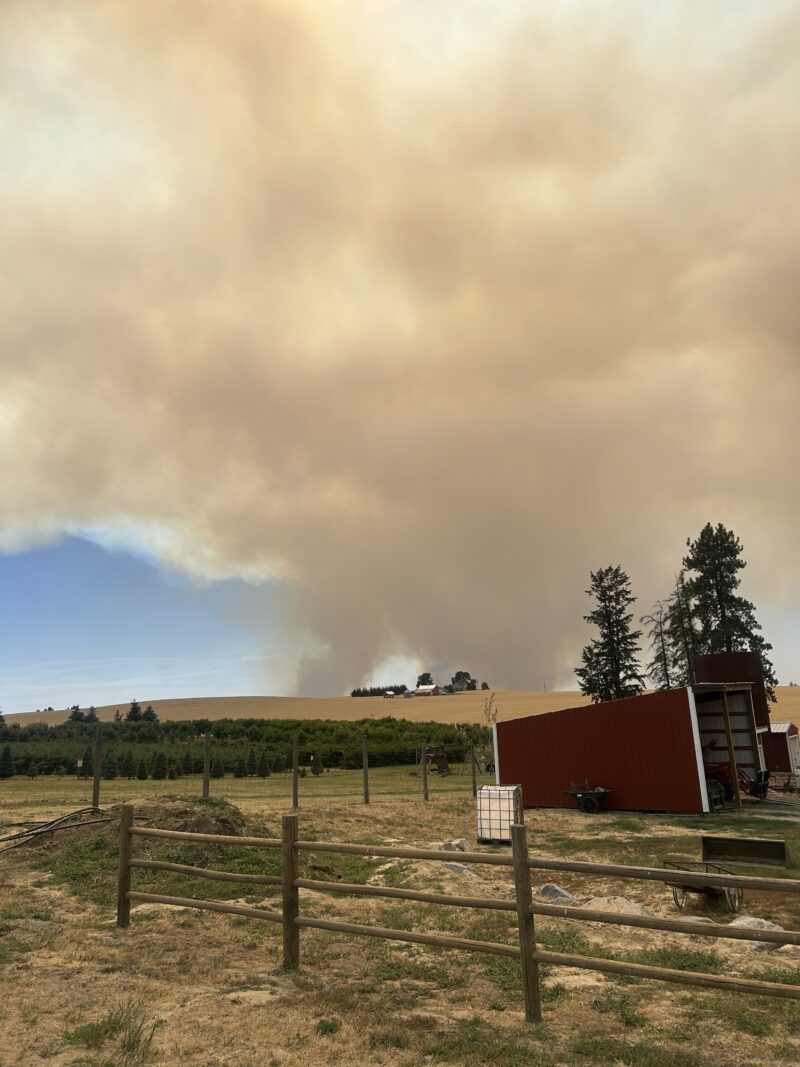
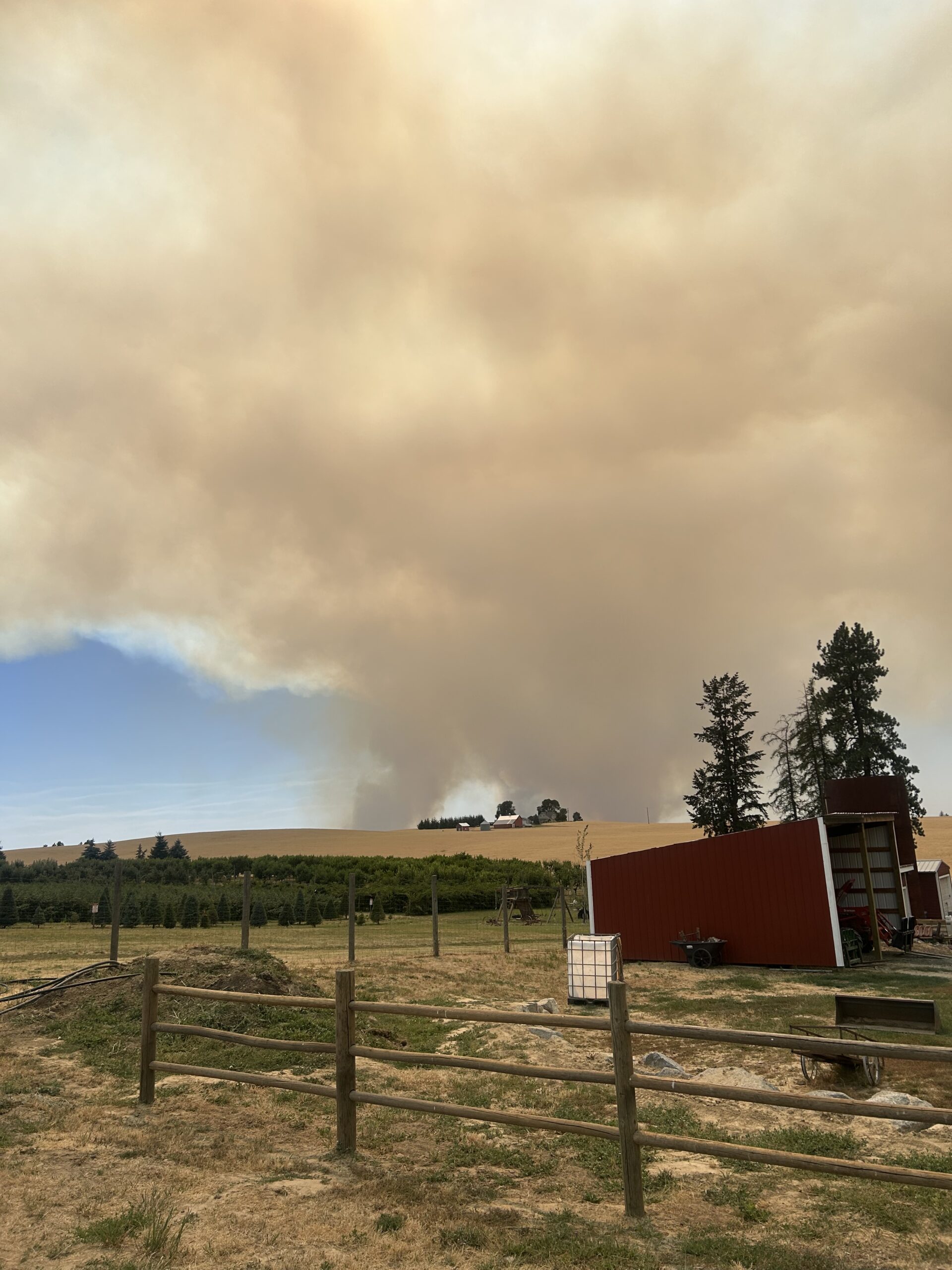
We visited the Big Barn Brewery in Mead for lunch. While we sat at a picnic table munching on BBQ, the wind strained against the canvas shade stretched over our heads, rattling the chains holding the tarp and threatening to send the entire contraption into the sky. Then alerts pierced the air. First from the phones of the people nearby, then from our own devices. The jarring chimes warned of high winds, evacuation orders, power blackouts. As the wind gusted, we held tight to our paper plates. Twenty feet away, a toddler stumbled through the grass and tossed a ball for his puppy. But the increasingly frequent alarms shattered what could have been a tranquil afternoon scene. Eventually, huge plumes of smoke rose on the western horizon. It was time to grab some supplies and retreat.
During the drive to the grocery store, more alerts assaulted our ears. By the time we reached the Yokes Fresh Market, two columns of expanding smoke loomed large in the distance. We rushed inside, quickly gathering food for an easy dinner. While we waited at the checkout, three men dressed in fire gear ran out the exit. Meanwhile, the teenager at the register asked, “Where are you staying?” We told him northwest, up by the park. He said, “Well then, you should be good,” with a casual tone that suggested we were discussing a good place for dinner and not raging wildfires.
We didn’t share his calm.
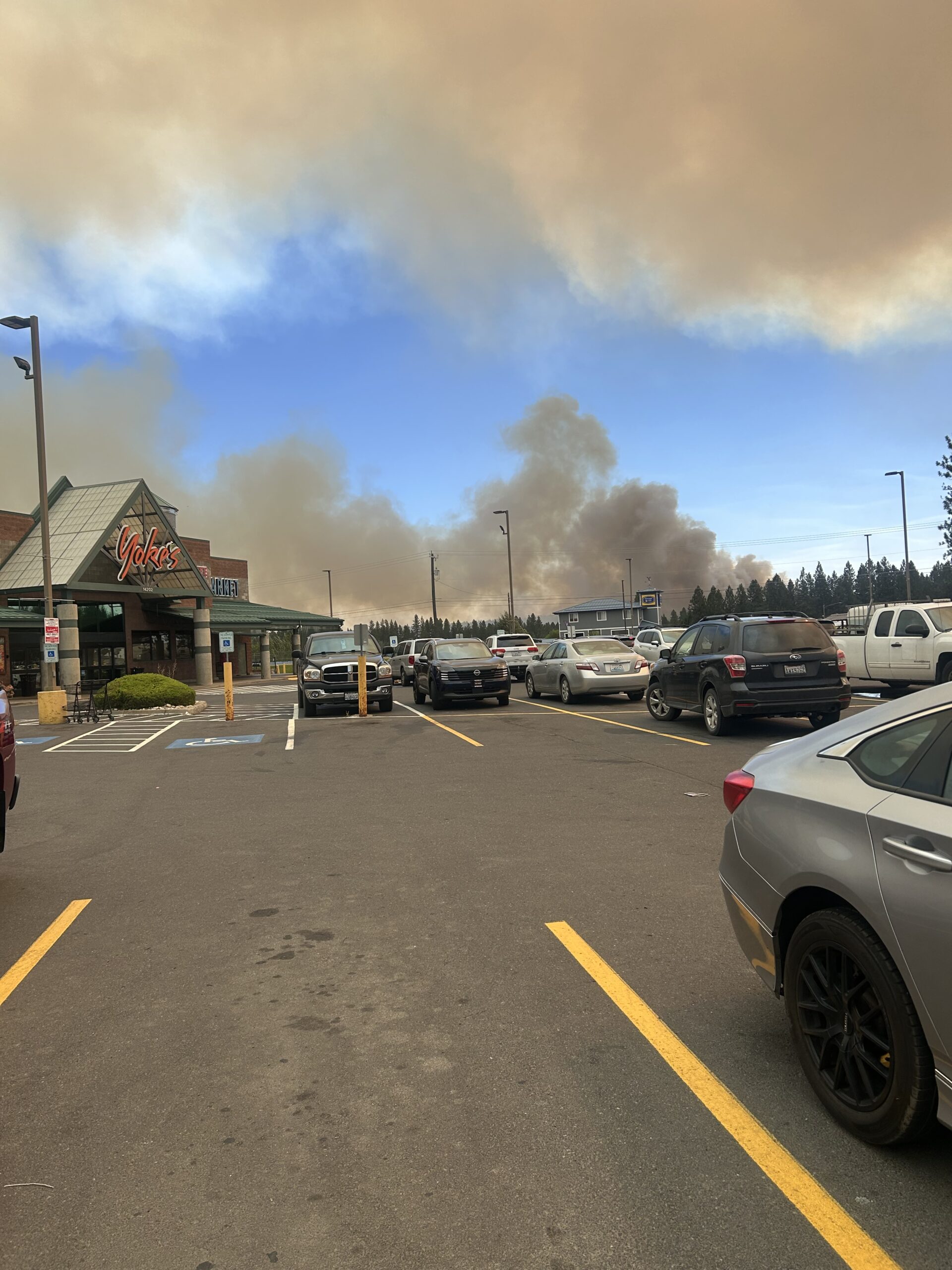
Even though we only spent a few minutes in the store, by the time we returned to our car, the smoke had thickened. We kept the a/c on recycle and headed back to our cottage, glancing at our phones and the sky with increasing concern. We arrived at our guest cottage and gratefully stepped into the cover of trees and the soothing rush of the brook nearby. But soon we encountered another challenge: the power was out. Authorities, concerned about sparks from power lines ripped in the strong wind, had shut off power across the Spokane area. We didn’t have cell coverage at the cottage. Without WIFI or power to cook dinner, we had nothing to do but sit on the porch by the creek and play rummy.
Which we did, snacking on chips and salsa from the store, until the smoke stung our eyes and burned our throats. When a fleck of ash landed on my husband’s arm, he decided to go inside. Daughter opted to stay in the waning light on the porch to read. Even without cell coverage or WIFI, alarms still blared periodically from our phones, giving notice about traffic patterns and expanding evacuation zones. The ground beef we bought for dinner sat in the dark fridge, and our snack of chips and salsa served as dinner. When there was hardly any light left in the cottage, we decided to go to sleep. We kept our phones on and close by, afraid of the jarring alarms and yet fearful of missing any notices
We woke the next morning to darkness. Without power and water, we dressed and gathered our belongings. Daughter suggested we head to nearby Coeur d’ Alene, Idaho, to find WIFI and breakfast. When we opened the doors to our rental car, ash floated off the surface. In silence, we headed back toward Spokane and the fires, concerned about what we would find.
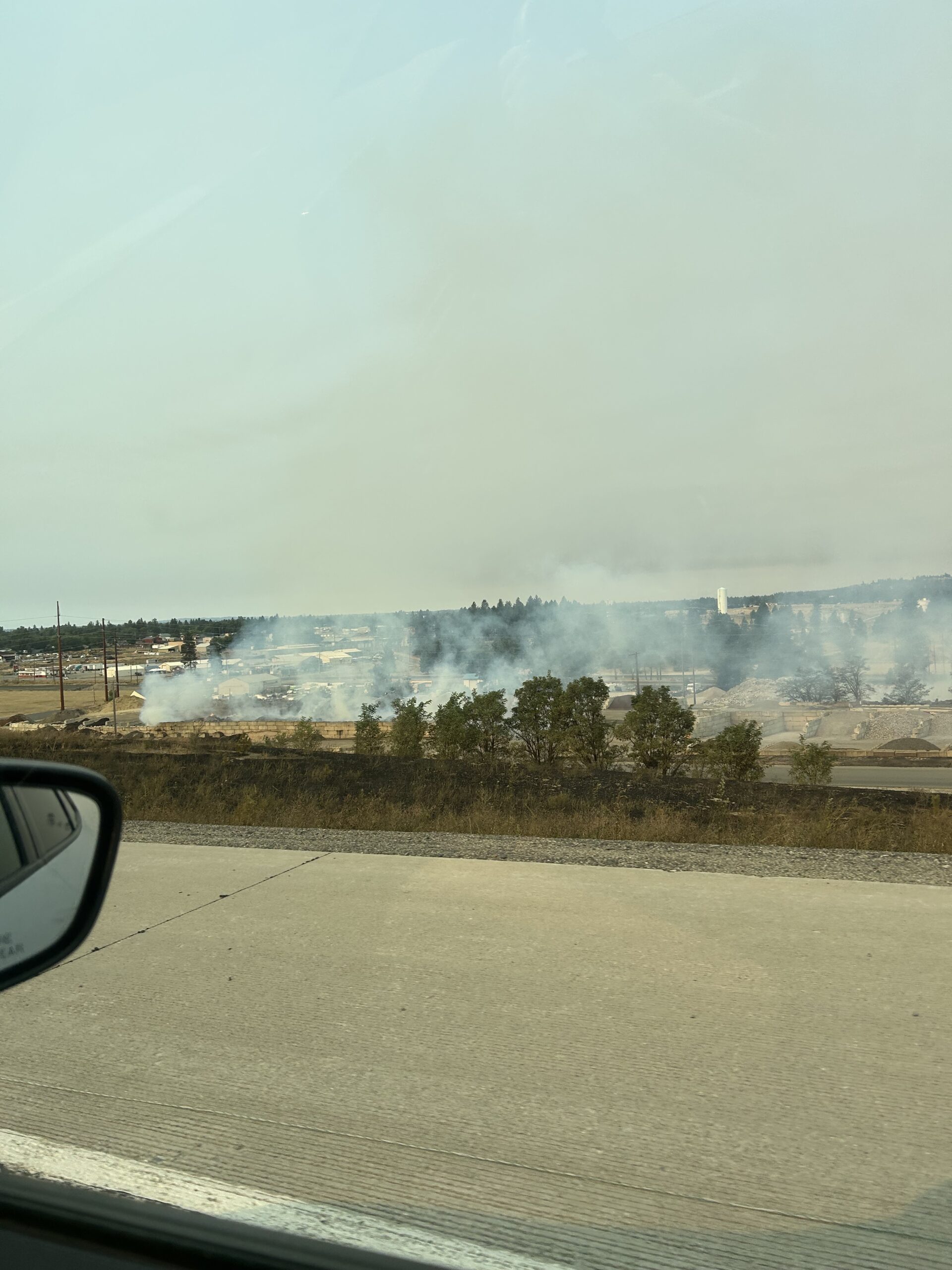
As soon as we had cell connection, our phones buzzed with texts from concerned family and friends. We did our best to answer texts while navigating detours and unfamiliar roads. Police cars blocked intersections closer to Spokane, forcing us to take a longer route to Coeur d’ Alene. In the process, we passed charred hillsides dotted with smoke and piles of mulch at a nursery still smoldering. The smoke hung heavy in the air and covered the roadways with a yellow gray haze. Even 30 minutes away in Coeur d’ Alene, smoke clouded the lake and stung my eyes. My daughter worried for the people she knew who lived in the northern part of Spokane, as well as the dogs at the shelter where she volunteered all summer. The shelter was in an evacuation zone, and management was desperate to find people who could take the animals.
As of August 11, 2026, all evacuation orders have lifted, and the fires are 97% contained. To get to that end, two thousand fire personnel from 176 jurisdictions were called in to help fight the blazes. More than 65,000 people were displaced, one quarter of the population of Spokane. Over 900 buildings have been destroyed, and more than 10,000 acres burned. One of the fires, the Autumn Lane Fire, covered at least 6000 acres by itself.
Sadly, one of the Spokane fires, the Old Trails Fire, was started on purpose by a man with wind resistant matches. After his arrest, he admitted to officials that he waited for dry weather and windy conditions to start the fire. Court documents reveal he has been charged with starting other fires around Spokane and that he has an obsession with fire. His bail was set at $2 million, and a mental competency evaluation has been ordered.
The entire experience, from brushing ash off my clothes to reading about the arson suspect, leaves me shaken. Being so close to something that big, dangerous, and unpredictable filled me with a helplessness I’ve only felt a few times in my life. It served as a sober reminder of how precious our lives are. As I continue to follow the Spokane fires, one of many disasters that have affected people in our country during my lifetime, I find myself wondering, how can we keep our world from literally and figuratively burning? We must find ways.
Have you experienced extreme weather conditions this summer? How did it affect you?
Thanks for getting nerdy with me!