
What is a Holacracy?

Wondrous Words Wednesday

wondrous memeWelcome to another addition of Wondrous Words Wednesday!  Visit Kathy over at Bermudaonion.net for links to interesting words.  It’s a great way to exercise your brain.

My word today comes from a recent news story on an unusual way to structure companies.  Normally, business lingo doesn’t interest me, but this word grabbed my attention.


holacracy– noun, from Greek hol, complete, + kratos, strength or power; a management structure based on the tasks a company needs to accomplish, rather than a standard reporting structure

Essentially, companies using a holacracy divide employees into teams, and each team assigns people to do certain tasks.  The focus is on task completion, not micromanagement. However, the system is flexible so that employees aren’t always locked into a certain position, like programmer.  Company processes are divided into “governance” – how the work gets down and “operations”- getting the work done.

If you’re interested in the concept, check out this article, which describes Holacracy as the hot management trend of 2014.  Also, check out the Holocracy website.  There’s a cool infographic I was afraid to share because of copyright issues.  

Have any of you ever heard of this concept, or better yet, worked in a holacracy?

Word Nerd Workout

Use holacracy in a sentence.  My example:

As my kids get older, I’d like to run my family as a holacracy, except there still would have to be a boss.  Me.

Word Nerd Vocab Quiz Winner

Congratulations to the winner of my Word Nerd Vocab Quiz, Spring Edition.  (drum roll…)

 Amy O.

Amy, welcome to the word nerd crew!  You’ve won a copy of 1100 Words You Need to Know  or a Barnes & Noble gift card.  Your choice!  Email me at julia dot tomiak at gmail dot com to let me know your preference and mailing address.

Thanks for getting nerdy with me!

Tweet: Word nerd word: holacracy- a task based management structure that promotes flexibility. More from @juliatomiak at http://ctt.ec/d1cd1+

Julia 

Why Memorizing Poetry is Good For You: Get Started!

photo (6)How do you feel when you see this word:

Poetry

Do you cringe?  Applaud?  Start composing verse in your head?

April is National Poetry Month, and it’s time to give poetry some much deserved love on the blog and at home.

Poetry Out Loud Contest

Have you heard about Poetry Out Loud?  The National Endowment for the Arts and The Poetry Foundation support this annual event to promote:

  • public speaking skills
  • self-confidence
  • knowledge of literary heritage

To participate, students must:

  • choose three poems from the 800 poems in the Poetry Out Loud archives
  • memorize and recite these poems for a panel of judges
  • impress the judges with articulation, understanding, dramatic effect, accuracy, and level of complexity

According to an article about the Poetry Out Loud contest in Kansas City, teens who recite poetry improve their vocabulary and develop an appreciation for active verbs and figurative language.  That means better writing!

Sounds like a Word Nerd Workout to me!

Poetry Out Loud, Word Nerd Style

We’re going to do our own version of Poetry Out Loud in the Tomiak house.  When I announced this plan on the way to school, a muffled groan rolled through the minivan.  But then someone mentioned Sick, by Shel Silverstein, and I Did Not Steal Your Ice Cream, by Jack Prelutsky.  The mood in the van became moderately positive.

My husband refuses to participate.  Back in college, he studied benzene rings while I recited Shakespeare.  No iambic pentameter for that guy.  But maybe I can keep my kids from becoming poetry-phobic.

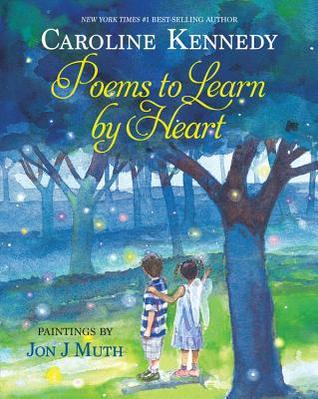
Poems to learn by heartTo make this thing work, I’ve got to find appealing poems.  For starters, I’m looking in Poems to Learn By Heart, by Caroline Kennedy.  It’s beautifully illustrated with watercolor paintings by Jon J Muth, and it features a variety of poems organized into categories like:

  • I Dreamed I Had to Pick a Mother Out (poems about family)
  • I’m Expecting You! (poems about friendship and love)
  • We Dance Around in a Ring and Suppose (poems about sports and games)

In the introduction, Ms. Kennedy explains why we can all benefit from memorizing poetry:

Poets distill life’s lessons into the fewest possible words.  But those tiny packages of thought contain worlds of images and experiences and feeling… If we learn poems by heart, we will always have their wisdom to draw on, and we gain understanding that no one can take away.

Wow. I can’t add much, except that reading and reciting poetry is an excellent way to practice reading aloud.  My kids like to rush through words while they read to me; the poems force them to slow down, listen to the rhythm, and use proper inflection.

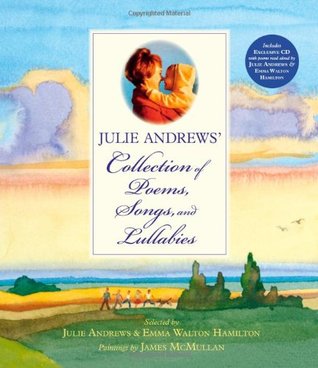
Julie AndrewsWanna join me for Poetry Out Loud, word nerd style?  Pick a poem and memorize it by the end of this month.  You can find poems in the archives at the Poetry Foundation Website.  Or check out Poems to Learn By Heart or Julie Andrews’ Collection of Poems, Songs, and Lullabies, another great resource.

And tell me, how do you feel about poetry?

Tweet: April is National #Poetry Month; memorizing #poems builds vocab, confidence, thinking skills. Try it w/ @juliatomiak http://ctt.ec/bR743+

Thanks,

Julia 


Word Nerd Vocabulary Quiz, Spring Edition

Word Nerd ReviewDare I say it?  Spring is FINALLY here!  (I’m afraid Mother Nature will drop a few more snow flakes now, just to scare me.)

It’s been a long, tedious winter, and to celebrate its end, I’m hosting a GIVEAWAY.  This word nerd workout will review some of my vocabulary words from the past few months. Everyone who plays will be entered into a drawing for a copy of 1100 Words You Need to Know, my favorite vocabulary book, or a Barnes and Noble gift card.  You can earn bonus entries by:

  1. answering all the questions correctly
  2. sharing the giveaway on social media (tell me about your shares)
  3. answering the bonus questions on my Facebook

We’ve had a lot of time to stay inside and read; let’s see how much you learned.

Word Nerd Workout – Review Quiz

1.  Fill in the blank:  The sound of waves crashing will always remind me of our ___________ days in Maui.

    1. polemic
    2. prosaic
    3. garrulous
    4. halcyon

2.  Complete the analogy:   inexorable:relentless :: inchoate: ____________

3.  Where are you most likely to find a polder?

    1. Colorado
    2. Alaska
    3. The Netherlands
    4. Switzerland

Leave your answers in the comments, and thanks for playing.  Don’t forget to earn bonus entries!  The giveaway will close Wednesday, April 9, 2014.

wondrous memeVisit Kathy at bermudaonion.net to learn more interesting words!

Julia 

When to Use Who vs. Whom

Who v WhomA few weeks ago, I explained the difference between i.e. and e.g.  Do you remember when to use each one?

No?! Please revisit the post on i.e. and e.g.

I got great feedback about that tip, so today I’ll tackle another common grammar dilemma: when to use who vs. whom.    Once again, I thank Grammatically Correct, by Anne Stilman, and my 8th grade English teacher, Mrs. Giles, for this info.  (Am I the only one who had to diagram sentences?  Am I the only one who thinks kids today should diagram?)


Interrogative Pronouns

Who and whom are both interrogative pronouns.  Wait!  Don’t panic. That just means that they are found at the beginning of questions that require an answer other than yes or no.

  • If the pronoun is the subject of the sentence, you use who.  For example:

Who is coming over for dinner on Friday?

The mystery person is coming over; he is the subject, and deserves a who.

  • If the pronoun is the object of the sentence, you use whom.

Whom will you invite to the dance?

You is doing the inviting; whom is being invited and is the object of the verb.

  • To help you figure out which pronoun to use, substitute “he” or “him” and see which sounds better.  For example,

Is he/him coming over for dinner on Friday?

Will you invite he/him to the dance?

If you can use he and it sounds right, use who.

If you can use him and it sounds right, use whom.  (Note that him and whom both have m’s.)

See, that’s not so bad.  Now, we will cover one more situation- relative clauses.  Stay with me and don’t let the grammarly words throw you off; it’s basically the same rule.

Relative Clauses

A relative clause is a special kind of dependent clause- it’s a piece of a sentence that can’t stand alone.  (It doesn’t have a subject and a verb.)  A relative clause gives information about a noun mentioned earlier in the sentence.  For example:

Children who do not finish their chores will not get to play with electronics this afternoon.

 The clause “who do not finish their chores” is the relative clause describing “children”.

  • If the pronoun of the relative clause refers to the subject of the sentence, use who, as in the sentence above.
  • If the pronoun of the relative clause refers to the object of the sentence, use whom.  For example:

The singer whom Jackie wanted to hear had already performed.

In this example, Jackie is the subject, and the singer is the object, and therefore whom is needed.

  • You can run the same “He/Him” test that you do for interrogative pronouns.

Word Nerd Workout

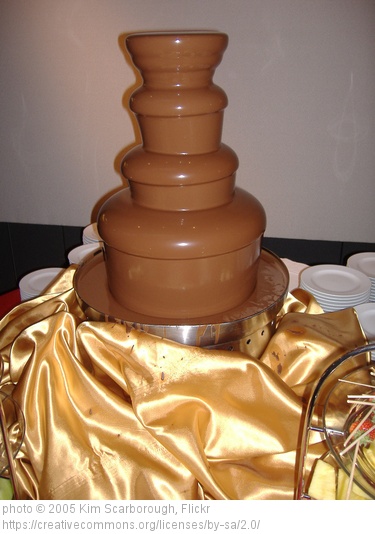
Yum, chocolate!  Can't wait until Lent is over.
Yum, chocolate! Can’t wait until Lent is over.

Practice makes it stick!  Use your new (or merely refreshed) word nerd skill to choose the best pronoun for each example below.  Share your answers in the comments, as well as any questions you may have.  I’ve made the sentences silly to keep this fun.

  1. The girl who/whom submerged her face in the chocolate fountain had just failed her third driver’s test.
  2. To whom/who will you give this giant yellow dinosaur?  Certainly not the family who/whom lives in the beach front condo?!
  3. Steve, whom/who are you trying to threaten with that giant Styrofoam sword?


Julia

Share the nerdiness:

Tweet: When to use who vs. whom: @juliatomiak, the word nerd, explains. http://ctt.ec/X0tOU+


Vocab from And the Mountains Echoed: Polemical

wondrous memeWelcome to Wondrous Words Wednesday, a great way to expand your vocabulary!  Visit our meme hostess Kathy at Bermudaonion.net for links to lots of interesting words.

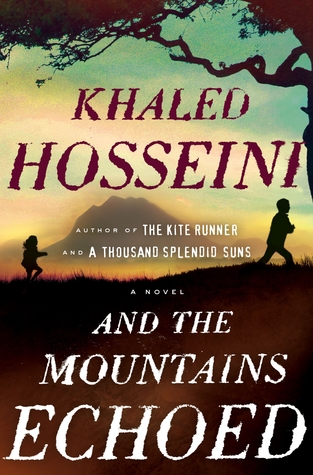
I have looked up many words while reading And the Mountains Echoed by Khaled Hosseini. This week’s word comes from a passage about poems.

They [the poems] read as though they have been crafted with the sole aim of shocking and scandalizing. They strike me as polemical, as angry indictments of Afghan gender roles.

Polemical \pə-‘lə-mi-kəl\ adj, from Greek polemikos, warlike, and French polemique, controversial; controversial or disputatious

Mountains EchoedWord Nerd Workout

Use polemical in a sentence.  Here’s mine:

The popular congressman carefully avoided discussing the polemical topics of immigration and gun control during his speech.

Your turn!  Talk nerdy to me.  And get ready for a word nerd review next week!

Julia


What You Need to Know About Divergent Before You See the Movie

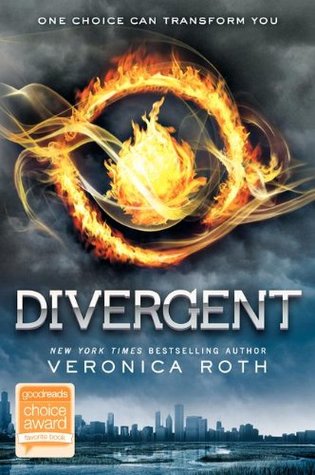
Divergent posterWhenever my daughter sees a trailer for the movie Divergent, she says, “I really want to see that.  It looks good.”

I think what she really means is Theo James, who plays one of the main characters, looks good. Alas, Divergent is rated PG-13, so I won’t let her see it yet.  Besides, she hasn’t even read the books, and in my mind, one MUST read the book before watching the movie.

In case you don’t follow that motto, or you’ve read the books and need a refresher, here are some things you should know about Divergent, the book, before you see the movie:

  • It’s dystopian fiction, so expect an oppressive government, a dysfunctional society, and a futuristic/apocalyptic setting.  Throw in a serious threat to survival of the characters.
  • Divergent is set in futuristic Chicago, and the people of the society are divided into five factions based on the virtues of abnegation, amity, candor, erudite, and dauntless.  For a complete definition of each faction, consult my faction vocabulary post.  The quick and dirty synonyms are selfless, peaceful, honest, intelligent, and brave.  Visit IMDB to see a cool factions infographic.
  • Only people from the abnegation (selfless) faction are allowed to hold political office.  (As you can expect, this causes  problems.)
  • Those who fail to assimilate into a faction become “factionless”- the people living on the margins.  (More problems)
  • Some special people show aptitude for more than one faction, and they are labeled divergent and are regarded as dangerous by “authorities.”  (Big problem for some characters.)
  • The story is dark and sometimes brutal.  However, the violence isn’t as disturbing as the sadistic plot of The Hunger Games, in which a corrupt government pits children against each other in a battle to the death.  In Divergent, conflict arises between the factions as different groups struggle for power.   That doesn’t sound much different from our own world, does it?
  • The characters must undergo “simulations” for training and assessment.  This requires being injected IN THE NECK with various serums.   *cringing*

Divergent What I liked about the book

Divergent has lots of action and a compelling lead, named Tris.  She’s small, yet strong, and struggling to understand where she fits in.  The brutality of her society troubles her, and yet she must engage in violence to survive.  Good internal conflict there.

Divergent provokes questions about government and society, the thin line between protection and oppression.  I was especially interested in the idea of factions.   Does a society need people who embrace the five virtues?  Why these five?  Should only selfless people rule?  Which faction I would choose to join if I were Tris?  Definitely NOT dauntless.  No jumping onto trains for me, thanks.

What I didn’t like about the book

Divergent is heavy on action and plot twists and light on character development.  It feels like a lot of other dystopian reads with a female lead enduring a choosing ceremony and then going on to fight for survival and the people she loves.  I also didn’t like the ending.  It’s basically just a page break before the next book begins.

I do plan on seeing the movie, and I’ll tell you about it soon.

Have you read Divergent?  Did you like it?  Did I miss anything?  Do you plan to see the movie?  

Thanks!

Julia