What Does Prevaricate Mean?

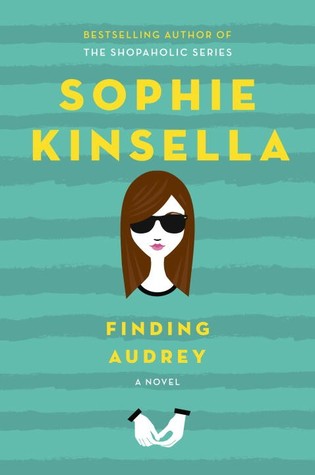
I’m currently reading Finding Audrey, by Sophie Kinsella, a hilarious  YA contemporary about a girl combating anxiety disorder. Daughter highly recommended it, saying, “the mom in this book is JUST LIKE YOU!”  So, of course, I had to read it.

The mother in Finding Audrey is a somewhat hysterical woman, prone to excessive rants about screen time, who throws her son’s computer out the window.  I’m trying not to be insulted.  Rants?  Me?

Finding Audrey sent me to the Kindle dictionary for a few words, including prevaricate.  If you like to learn about words, visit Kathy’s Wondrous Words Wednesday meme.  You can add your own post and read others.

On to my entry.  Audrey’s friend Linus has challenged her to talk to a stranger in Starbucks.  Her response:

“He looks really busy…” I prevaricate.  “What about someone else?”

prevaricate \pri-ˈver-ə-ˌkāt\ verb from Latin praevaricatus, to act in collusion; literally, to straddle, from prae– + varicare to straddle, from varus bowlegged

Sounds appropriate for politicians and children in trouble.  😉

Word Nerd Workout

Use prevaricate in a sentence.  Note that it’s not the same as “lie” or “fib”… it’s more like quibbling or avoiding.

The boys prevaricated about who actually struck the window with the baseball.

Don’t forget to visit Kathy’s blog for more Wondrous Words.

Thanks for getting nerdy with me!

Julia


Three Must Read Non-Fiction Books

I struggle with reading non-fiction. When I fall into bed at night and grab a book, I want entertainment. A compelling story. Some fascinating characters. Often when a non-fiction piece waits for me on the night stand, I just turn out the light and roll over.

To compensate, I’ve tried non-fiction on audio. I listen in the van or when I run. I’m convinced it slows my running pace and accentuates the fatigue in my quads, but hey, if I can get through some non-fiction that way, I’ll try.

All that said, I’m proud to report that I’ve finished three non-fiction books in the past few months, and I think you might like them too.

Yes, Please by Amy Poehler.  Memoir;  Audio-book
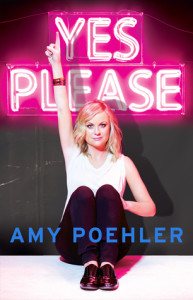
Yes PleaseIf you don’t know, Ms. Poehler is a comedienne who has worked on shows like Saturday Night Live and Parks and Recreation. She’s very funny, so her memoir isn’t exactly non-fiction drudgery. Mixed with her humor, Poehler shares thoughtful insights on:

  • self-acceptance, or “finding your currency”
  • the tension between motherhood and career
  • the importance of hard work

She’s brutally honest, and sometimes crass, but I respect her ideas; I even let daughter listen to a chapter (the one about the mean voice we all have in our head and how to get it to shut up.)

Poehler narrates her memoir for the audio-book and does a fantastic job. If you want funny with a little bit of thoughtful, Yes, Please is a good choice.

Favorite quotes:

~Good for her, not for me.

~The thing isn’t talking about the thing. The thing is DOING the thing.

~Don’t give your demon too much room in your head.

Warning: language and references to drugs and sex

On Writing: A Memoir of the Craft  by Stephen King.  Memoir/ Writing Craft.
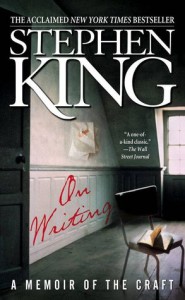
On WritingKing’s style and humor make On Writing an easy read. The first section covers King’s development as a writer; it’s a mini autobiography with a focus on writing, and it’s interesting.

In the second section, King offers tips for writing well, like: omit needless words, dialog tags, and adverbs.  He shares his writing process: write the first draft fast, door closed, then use the second draft to bring out theme and symbolism.  His commentary on outlining intrigued me. I love structure, but King warns that too much plotting can stifle creative flow. I’m planning on using KM Weiland’s loose “index card” outlining method for my next project.  Above all else, King upholds the importance of story:

None of the bells and whistles are about story, all right?  Only story is about story.  (Are you tired of hearing that yet?  I hope not, ’cause I’m not even close to getting tired of saying it.)

The third section describes a serious accident that nearly killed King. He says, “…it occurs to me that I have nearly been killed by a character right out of my own novels. It’s almost funny.”

On Writing is a must read for any writer or fan of his fiction. It won’t take long, and you’ll be inspired.
Favorite quotes: too many to count.  See this post and:

…perhaps the best of [On Writing] is a permission slip: you can, you should, and if you’re brave enough to start, you will.

The Glass Cage: How Our Computers Are Changing Us by Nicolas Carr. Technology. Audio
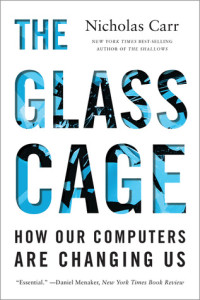
The Glass Cage pbk mech.inddThis is by far the most “non-fiction like” of all my picks. The Glass Cage explores technology and its effect on our lives. Carr raises several good points about the dangers of depending too much on tech, including:

  • Using our brains less, and therefore losing skills, tacit knowledge, problem solving ability, and memory
  • Losing sensory interaction with our environment, experiencing a narrow perception of the world
  • Making ourselves susceptible to the agendas of the people and/or companies designing the apps and algorithms we use

Carr cites many studies to back up his warnings, and at times, his writing is dull and repetitive. Also, The Glass Cage can be frightening and is best read in small bits so you don’t get too depressed and decide to pitch your iPhone out the door. But despite these issues, I recommend The Glass Cage for the serious concerns it raises.

I enjoy technology, but want a sharp mind.  Because of The Glass Cage, I’m consciously keeping my tech where it’s supposed to be: in the co-pilot seat.

I started listening to this on audiobook and had to switch to paperback. The audio brought on involuntary napping.

Favorite quote:

One of the great ironies of our time is that even as scientists discover more about the essential roles that physical action and sensory perception play in the development of our thoughts, memories, and skills, we’re spending less time acting in the world and more time living and working through the abstract medium of the computer screen. We’re disembodying ourselves, imposing sensory constraints on our existence.

Makes you think, doesn’t it?

Can you recommend some good non fiction titles?

Thanks for stopping by!

Julia


Who I Am Project: Mom’s Words of Wisdom

I’m trying something new in 2016 for the “Diary” part of this blog.  Each month, Dana from KissMyList.com will give a prompt for a virtual scrapbook entry that tells a story about Who I Am.  If you’d like to join, see Dana’s Tell Your Story post.   This month’s prompt asked participants to write about their childhood. 

When my mom dispensed wisdom, it usually came like a slap: strong and direct, with a bit of sting.

The first time I remember her advice-giving, I was about six. We were living in Milwaukee, a few blocks away from my grandmother. Mom had just been diagnosed with multiple sclerosis, and Dad had just left for a tour of duty in Korea. Of course, I didn’t know the adult stuff. I just knew I saw my grandmother more and had these new people called cousins in my life.

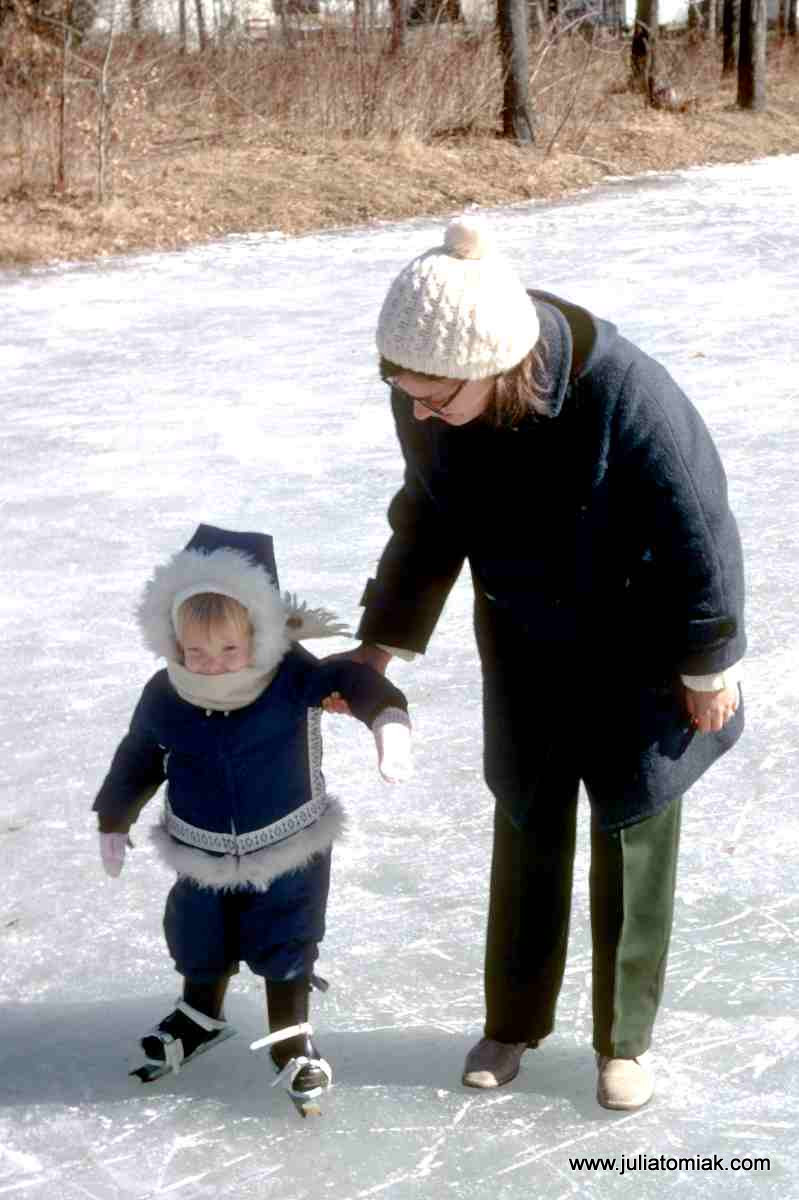
The event that prompted Mom’s advice was ordinary enough: a walk home from school. It felt like an odyssey back then, but it was just four blocks. I wore my red coat with the fur-lined hood that Aunt Kathy gave me, and probably hideous plaid pants that everyone loved in the ‘70s. I walked with my best friend on one side, and on the other, a girl who was friends with both of us but whom I regarded with caution. She’d tossed my shoes into a puddle the first week of kindergarten. Unfortunately, she lived near us, so we were stuck with her.

On this particular day, a first grader named Jimmy Galbraith walked ahead of us. He had curly dark hair, a crooked smile, and my hopeless devotion. Unfortunately, the girls with me knew this. I missed most of their conversation, daydreaming about Jimmy as I floated along the sidewalk twenty yards behind him.

After a block or so, shouting brought me crashing back to earth.

Untrustworthy Girl was yelling at Jimmy and his friends. They turned to look at us. She poked my shoulder. “She likes you! She likes you! Beat her up! Beat her up!”

My body burned crimson under my coat. I struggled to breathe, played off my tears as a reaction to the bitter wind blowing off Lake Michigan. Best Friend told Untrustworthy Girl to shut up.

Jimmy shook his head and turned away, continuing his walk home.

Sobs of humiliation threatened to burst out of every orifice in my head, but I stumbled on with lips pressed together and tears subdued until I got to my apartment. Once safe inside with Mom, I deteriorated into snot and tears. Mom was a good listener, but never a coddler. When I finished my story, she handed me a tissue and said, “I’m sorry this happened, but why in the world did you tell those girls? Next time, be more careful who you trust, and never tell anybody who you like.”

I remembered this advice when I was ten, and the principal’s daughter wanted blackmail material on me, and thirteen, when my friends insisted we play Truth or Dare.

Me and mom in 1973. Another fur lined hood!
Me and Mom in 1973. Another fur-lined hood!

Mom had more valuable wisdom as I grew up:

  • Always say good-bye and I love you; never part angry. (Meaning – you’d better kiss me goodnight and tell me you love me before you stomp off, daughter.)
  • Never put anything sensitive in a note; it might come back to haunt you. (Modern translation: Never say anything potentially offensive on social media; it will never go away.)
  • Don’t cut off your nose to spite your face. (In other words, don’t refuse to eat your lunch just because your friends didn’t save a space for you. They won’t care and you’ll just end up hungry.)

I had 25 years with my mom, enough time to store up plenty of her frank, and sometimes cynical, advice, but not enough time to understand the complex mix of strength, disappointment, and frustration caught inside a body wrecked by neurological disease.

Pneumonia, a side effect of her illness, stole her from me twenty years ago this month. I will be forever thankful that I was with her at the end. I told her I loved her, and we weren’t angry when we parted.

What were some defining moments from your childhood?

If you’d like to join this virtual scrapbook project, click the photo above to visit Dana’s blog and learn more.

Thanks for reading!

Julia


My Inspiring Word for 2016

Some people like to choose a word at the turn of the year to give direction to the twelve months of opportunity that lie ahead.

I’m definitely one of those people.

Life is crazy, and without focus, we can become slaves to reaction. With four kids, a busy husband, and a creative passion that won’t lie down and be quiet, I’ve got to approach these hectic days of my life with intention, or else I just might lose them. More importantly, I might lose myself.

Last year, I chose:

My word for 2015
My word for 2015

I wanted to do less “multitasking” and more appreciating. I’ve gotten better, but honestly, there’s still plenty of room for progress. I could have used present again, but where’s the inspiration in that?

I’ll keep “present” tucked in my pocket, but I’m gonna add a new one. My people and I have something else to work on. There’s a disturbing trend in our household:  we complain.

  • We whine about the school system (We live in the poorest part of Virginia, and we do not have the programs and classes available in the rest of the state. NO AP classes at the high school. Don’t even say “technology club” to me.)
  • We grumble about the people who shop at Wal-Mart in their PJs.  (Seriously, full-on button-down flannel with sneakers.)
  • We speak ill of others. My children vent about kids at school who don’t want to work and who spend lunch “pantsing” each other. I get uptight about parents who don’t stop their kids from posting suggestive pictures on Instagram. (What is WRONG with that mother?)
  • I despair at the minutiae of my life, the endless pattern of laundry, scheduling, and meal prep that saps my energy. And I fuss about it.

Underlying these complaints is a spirit of superiority. We complain and pass judgement because somehow, we’re too important for Wal-Mart and laundry and kids struggling at school.

But we’re not. This sense of condescension goes against our faith. It promotes negativity. It drains energy.

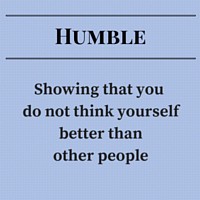
Fortunately, I’ve got a solution: humility.

  • When I’m humble, I remember that some days I don’t have it all together and that I shouldn’t judge the lady in flannel.
  • When I’m humble, I recognize that all parents use different styles and my approach isn’t the only one that works.  I also recall the times I’ve stumbled as a parent and remind myself that we are all doing the best we can with what we’ve got.
  • When I’m humble, I realize my children need compassion as much as intellectual stimulation.
  • When I’m humble, I put the needs of others before me and stop spiraling down the negative path of self-pity.

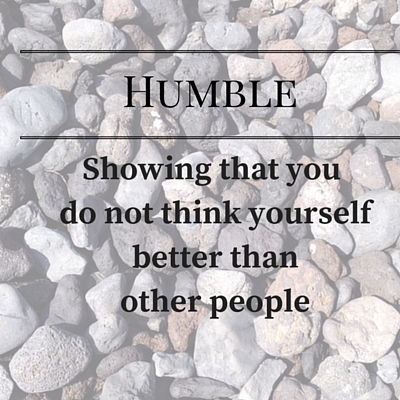
So, here it is, the word for 2016:

Humble with rocks
My word for 2016


Word Nerd Note: I’ve picked the adjective.  The verb humble means:

  • to make (someone) feel less important or proud
  • to easily defeat (someone or something) in a way that is surprising or not expected

Yikes! See how quickly things can change with just a shift in part of speech? That is definitely not the humble I will embrace in 2016, and it’s a good reminder that things can get ugly, fast.

Speaking of “embrace”, my blogging buddy Dana chose that as her word for 2016.  Read more at her blog, Kiss My List.

What word would you choose to define your actions in 2016? Why?

Thanks for sharing!

Julia


Vocab from Stephen King: Anomie

Wondrous Words Wednesday

I just finished one of the few books by Stephen King that I will ever read:  On Writing: A Memoir of the Craft.  I don’t do horror, but I love writing.  With humor and an easy style, Mr. King dispenses sage advice from his years of success as a wordsmith.  On Writing has encouraged me to indulge my interest in the craft, to spend more time writing, less time fretting over the house.

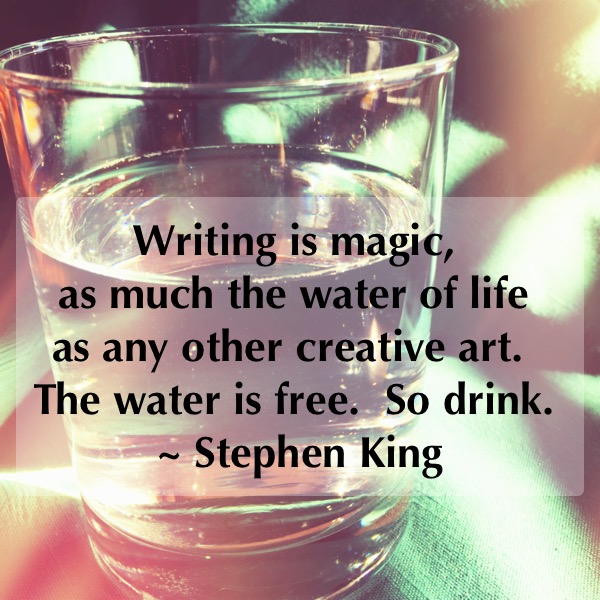
If you feel you need permission to do all the reading and writing your little heart desires, however, consider it hereby granted by yours truly.

Thank you, Mr. King.  I’ll take it!  And there’s more.  He unwittingly validates Diary of a Word Nerd when he says:

…good writing consists of mastering the fundamentals (vocabulary, grammar, the elements of style) and then filling the third level of your toolbox with the right instruments.

And he taught me some vocabulary along the way.

Raymond Chandler may be recognized now as an important figure in twentieth-century American literature, an early voice describing the anomie of urban life in the years after WW II, but there are plenty of critics who will reject such a judgement out of hand.

If you love reading, writing, and words, please visit Kathy’s Wondrous Words Wednesday meme at Bermuda Onion.  You can share your own post or learn new words from others.

Now, to this week’s word.

anomie \ˈa-nə-mē\ noun from the Greek a (without) + nomos law

  • social instability resulting from a breakdown of standards and values
  • personal unrest, alienation, and uncertainty that comes from a lack of purpose or ideals

[via Merriam Webster]

Word Nerd Workout

Can you use anomie in a sentence?  Here’s my try:

Chester’s parents thought  a stint in the military would shake him of his anomie. 

And, if you like Stephen King, or scribbling words on the page, I highly recommend On Writing.  

Writing Stephen King


Don’t forget to stop by Bermuda Onion for Wondrous Words Wednesday!

Julia


Words We Looked Up in 2015

What do you think, in light of presidential debates and terrorist attacks, were some of the most often looked up words of 2015? Turns out people were getting pretty philosophical last year. Some of the most frequently researched words at the Merriam-Webster site were:

  • Socialism
  • Fascism
  • Racism
  • Feminism
  • Communism
  • Capitalism
  • Terrorism

My first reaction when I read this list is was dismay. How sad that people don’t know a concept so integral to our society as capitalism.

But with further reflection, I realized these are complex, controversial terms that have changed over time. They deserve looking up. For example, “terrorism” comes from France’s Reign of Terror, so it originally meant tactics used by a government to terrorize its own people. Now, it most often refers to outsiders attacking a country. And if I’m going to be perfectly honest, before I wrote this post, I couldn’t give you a definition of “fascist”. When I heard “fascist”, I thought “Nazi”. Now I can tell you that fascism is a political philosophy that exalts nation or race over the individual.

Could you define, in a sentence or two, all the -isms above? Socialism is evolving – it used to be a close sister to communism, but now there’s a new term in political circles: democratic socialism, which suggests high governmental involvement to ensure an equal distribution of resources.

Complicated words, these isms. Also highly charged.

ursulakm via Flickr CC-BY-SA
Emma Watson ursulakm via Flickr CC-BY-SA

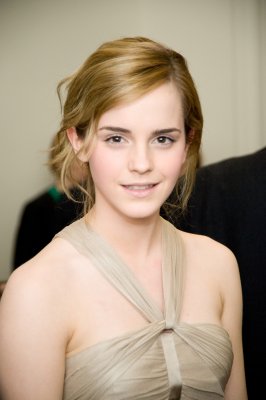
Emma Watson’s 2014 UN speech, which included the word “feminism”, inspired Nobel Peace Prize winner Malala Yousafzai to call herself a feminist in viral video released in 2015. Look-ups for feminism  spiked when the public learned that Watson was told not to use the word “feminism” in her speech. FYI, feminism describes a belief that men and women should have equal rights and opportunities. Um, why shouldn’t Watson use this term in front of the UN? Never mind, she did. Emma Watson rocks.

“Isms” were so popular in 2015 that Merriam-Webster’s word of the year is “-ism”. Fastidious word nerds know that -ism is a suffix, not a word, but, whatever.

Some other words with a high number of look-ups:

  • Marriage- no doubt because of the same-sex marriage debate
  • Hypocrite
  • Respect
  • Inspiration
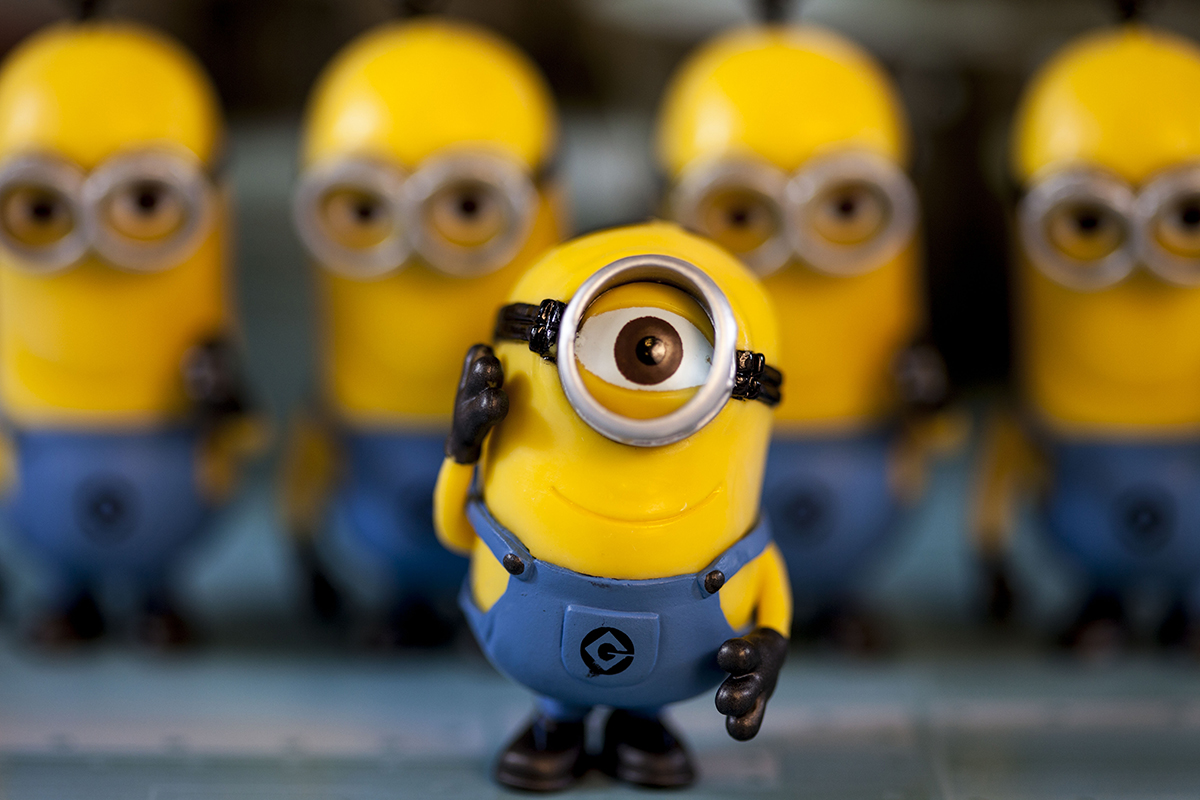
  • Minion- inspired by the Minion movie this summer  and the funniest word on the list. When my youngest two sons banter, grumble, and giggle at flatulence, they remind me of those teeny, be-goggled yellow busybodies. The word means “follower”, but its origin comes from the French mignon for dainty or cute.
minion
Sonny Abesamis via Flickr CC-BY

My favorite term from last year was bloviating megalomaniac. Whoops, that’s two words, but I heard them used to describe Donald Trump, and with him, one word just doesn’t cut it.

Another favorite: wexting. The Note To Self podcast used this term to describe the annoying phenomenon of people walking (usually in front of you, and slowly) while texting.

What was an interesting word you heard/ looked up/ started using in 2015? And, it’s time to come clean. Can you define all the words listed above, or would you benefit from some research as well?

Thanks for adding to the discussion.

Julia