
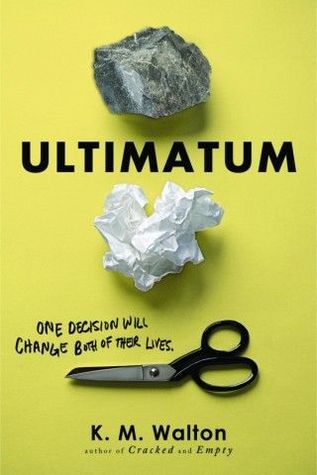
Sometimes, it’s hard to understand our family members. Sometimes, they don’t get us either. Ultimatum, a YA novel by K.M. Walton, tells the story of two brothers who can’t relate to each other but must learn how as they face the death of their alcoholic father.
Premise
 Oscar loves drawing and classical music. His mother was the only one in his family who understood him, but she died tragically in a car accident years ago. Oscar’s older brother Vance loves lacrosse and girls and got along great with their dad, who liked to party and listen to reggae music. However, after their mother’s death, Oscar and Vance watched helplessly as their father sank further and further into a trap of depression and alcoholism. As their father dies from liver failure, they have no idea what do next or what to say to each other.
What I liked
I won a signed copy of Ultimatum from Jessica Lawson at her blog Falling Leaflets. (Jessica often gives away copies of excellent kid lit books on her site; check it out.) I like to write realistic fiction with components of family conflict, and Ultimatum was an excellent novel to study.
For starters, Walton does a fabulous job of describing emotion in raw, fresh language. When Oscar’s brother yells at him for sketching their dying father, Oscar thinks
“If I respond, I may crack and leak and puddle. If I don’t respond, he may lose his mind. My hands sweat. The walls suddenly crowd me. I want to run away.”
Walton uses wonderful metaphors to convey feeling. For example, as Oscar realizes he may never get to talk with his dad again, he thinks
“I’ll never be able to ask him these questions. That reality is incredibly jagged. The cut will never be clean; it will never heal properly.
There will always be a scar.”
Walton alternates first person POV between Vance and Oscar, giving readers insight into each boy’s personality and the complicated family history they share. This close perspective into the mind of each brother makes each one easier to sympathize with and adds intensity to the conflict.
The story switches between present time in a hospice room and flashbacks to important events in the lives of the boys. Overall, the tone is sad, but the novel ends hopefully. Most importantly, the emotions felt real and relatable. I watched my mother die when I was 25, and Walton does a great job of depicting the fear, grief, and anxiety felt by a young adult when a parent dies.
What I didn’t like
Not much. At first, it didn’t seem like the characters have an obvious goal that they are working toward; more often they just seem to react to the crises enfolding in front of them. Yet by the end of Ultimatum, it’s obvious that the goal is for them to learn how to love each other so that they can survive without their parents. And even though I couldn’t always sense “a goal”, I wanted to keep reading and turning the pages, just because the emotional journey for each character was compelling.
Recommendation
Ultimatum was a satisfying read, even though it was a little sad. If you like YA novels with family drama, such as Sarah Dessen’s The Truth About Forever or See You at Harry’s by Jo Knowles, you’ll probably like Ultimatum.
Notes on content
 The boys’ father is an alcoholic, so there are several references to drinking and smoking pot. However, the consequences of substance abuse are also clearly described. There is a bit of bad language.
Have you read Ultimatum? What did you think? Can you share some other examples of YA with family drama?
Happy reading!


 Sheldon Cooper is wrong.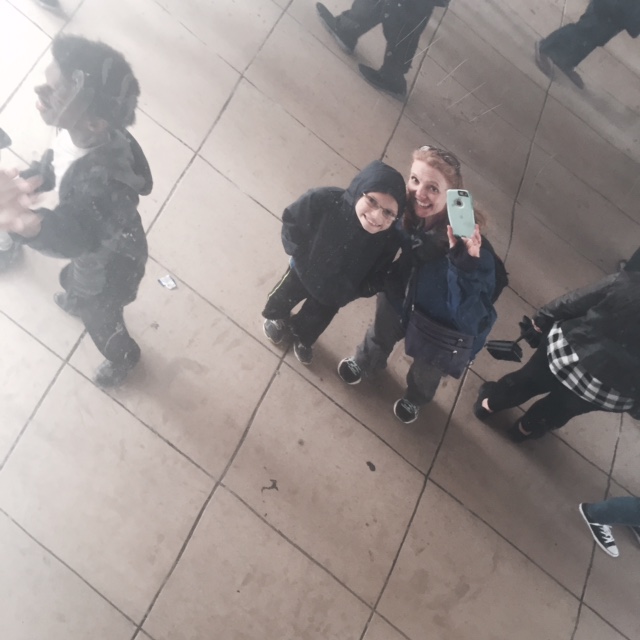

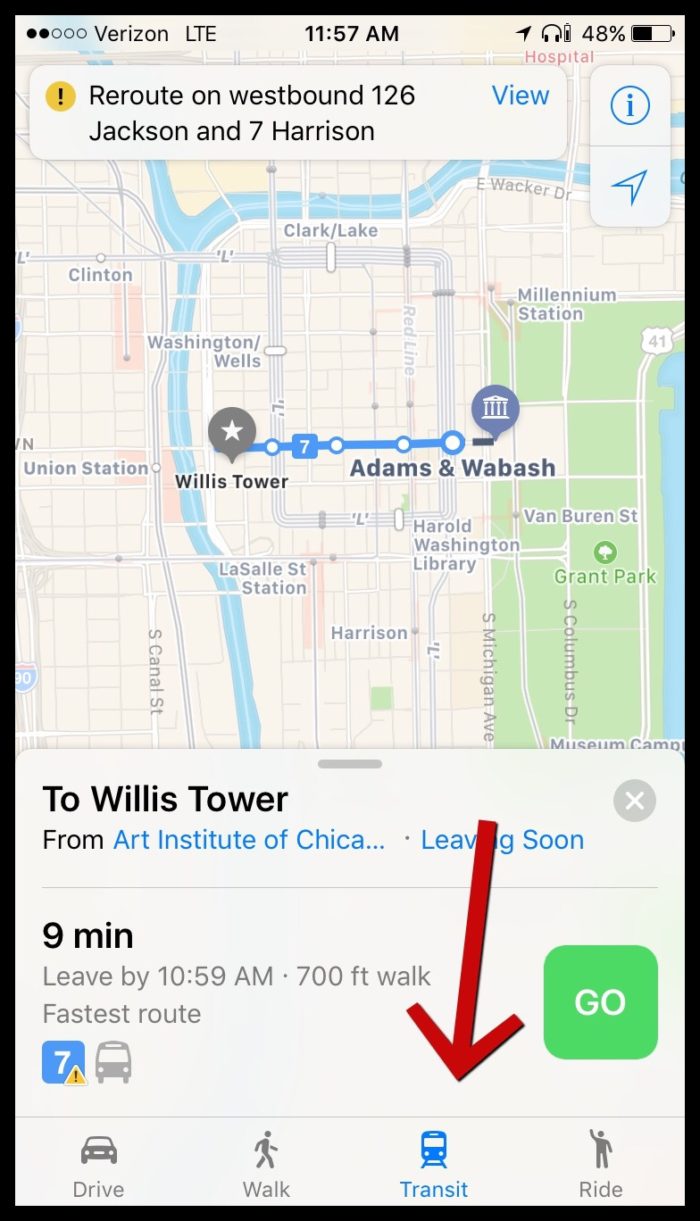
 Chicago has so many beautiful outdoor spaces- the River Walk, Millennium Park, Grant Park, the Navy Pier, and the lake front beaches – that it would be great to visit when the weather is warm. During our visit in late April, it was overcast with highs in the 50s (fairly typical for April). Closer to the lake felt even chillier. Good friends of mine who visited in the summer enjoyed warm weather activities like bike and kayak tours. When we go back, I’d definitely like to do that.