Why do we have leap years?

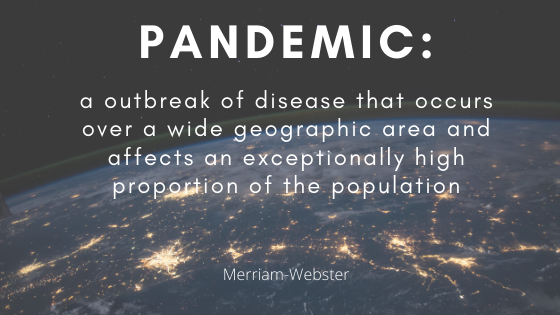
Graphic: What's up with Leap Year

Last year, I published a post explaining some of the unusual attributes of my birthday month, February. I mean, it’s short and it’s spelled funny! What’s the deal? (Turns out, it has a lot to do with the Romans.) But I left out an important quirk about February – Leap Years! Since 2020 is a Leap Year, I figured Word Nerds would want to know how we got here. Turns out we can blame Leap Years on the Romans too.

Our modern calendar is 365 days long and is based on the Earth’s movement around the Sun. However, it actually takes the Earth 365.2421 days to orbit the Sun, and over time, not including that quarter of a day adds up. We add a Leap Day every fourth year to keep our calendar matched up with astronomy.

In ancient times, the year was based on the lunar cycles and actually didn’t include some months. In 46 B.C., Julius Caesar, ruler of the Roman Empire, revamped the calendar so it was based on the sun. This “Julian Calendar” included 12 months, 365 days, and a Leap Year every four years. However, an extra Leap Day every four years added an extra 11 minutes every year, which meant that by the 14th century, the calendar was 10 days off of the solar year.

According to History.com, in 1582, Pope Gregory XIII fixed this problem by modifying the calendar to include Leap Years every four years except for years divisible by 100 and not 400. The year 1900 was not a leap year because 1900 is not evenly divisible by 400. (1900 / 400 = 4.75) We use this “Gregorian calendar” today, although it still has problems that will need to be fixed. I’m also a little confused, because 2020 isn’t evenly divisible by 400. 2020 / 400 = 5.05. Guess that .05 is a negligible issue needing future correction?

What other calendar quirks does the Word Nerd need to explore?

Thanks for getting nerdy with me!

Love Yourself

Valentine’s Day can be a tricky holiday. If you are in love, it’s great. But if you don’t have a significant other, or you are currently unhappy with yours, all of the pink and hearts can make you feel lonely at best and queasy at worst.

How about this year, whether you have a great partner or not, let every heart and rose you see be a reminder of the very real need to love… yourself! Make sure kind thoughts and words are floating in your head and out of your mouth. Embrace what makes you fabulous and accept what needs improvement. Have a little bit of chocolate, but not too much, because you love yourself. 😉

Thanks for being kind with me!

Strive for balance

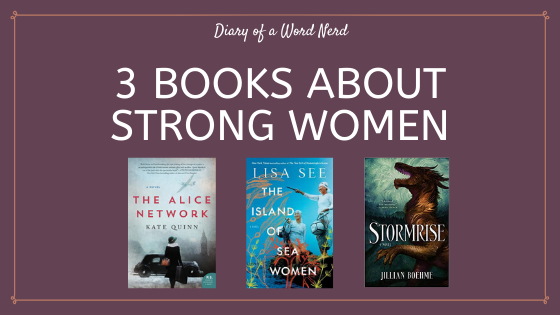
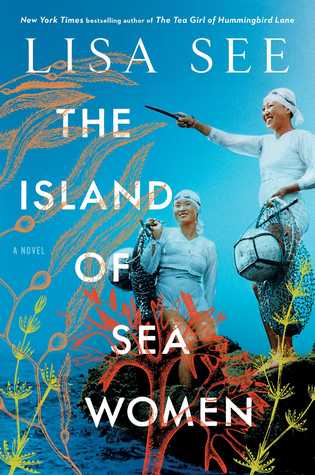
I’m currently listening to The Island of Sea Women by Lisa See. It’s fascinating historical fiction set on the Korean island of JeJu where women hold the power and perform dangerous physical work while the men stay at home and care for children. Shout out to Amy Makechnie for recommending it!

cover of The Island of Sea Women

I’ll have more about the novel’s exploration of the lives of women when I review the full book, but today, as we continue to debate growing climate concerns, I want to focus on the women’s attitude about the sea. The Island of Sea Women describes how a collective of women dives regularly in the ocean, without much equipment besides goggles and a knife, to gather sea creatures and plants to eat or sell. As the years pass by, and technology improves, their gear changes. But when some suggest they start wearing oxygen tanks on their backs to increase their safety and the lengths of their dives, the main character, Young-sook, and her diving companions refuse. Young-sook says:

Everything we do must be natural. Otherwise we’ll harvest too much, deplete our wet fields, and earn nothing.

The women of this book strive for a sense of balance. It governs how they interact with their world.

Imagine how different our world would be if we all practiced similar self-restraint, even when it meant sacrificing convenience, in order to maintain a sense of balance within our environment.

Thanks for imagining with me. Wait, maybe we should do more than imagine. Maybe we should practice some self-restraint in the name of balance right now! What do you think?

Grammar check: “on accident” vs. “by accident”

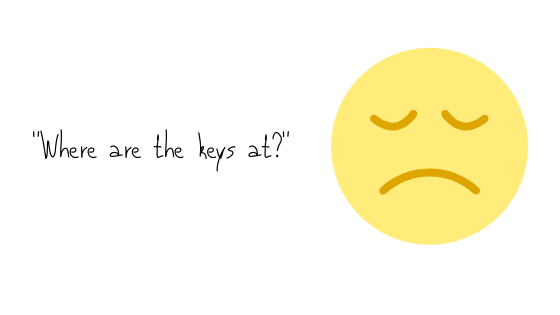
Over the winter break, we had friends over, played lively games of “Throw, Throw Burrito” (Have you tried it? Always fun. Sometimes heated.), and debated the finer points of grammar. Yes, we’re kinda nerdy like that. Besides me correcting my children’s tendency to ask “Where is it at?” (son- you don’t need that extra preposition), we debated the use of “by accident” versus “on accident”.

I immediately thought “by accident” was right because it’s what I’m used to. But saying “on accident” just substitutes one preposition with similar meaning for another, so could it be incorrect? I consulted Grammar Girl, the Grammarist, and Urban Dictionary to find out.

Grammar girl consulted a study done by Leslie Barratt, a professor of Linguistics at Indiana State University. Barratt found that the use of “by accident” or “on accident” appears to be driven by age. People born before 1970 use “by accident”, people born between 1970 and 1994 use either form, and people born after 1995 usually use “on accident”. “By accident” is more popular in written language, but its use has declined since 1940. Urban dictionary called “on accident” a “terrible, terrible grammar plague.” The Grammarist says the “on purpose” variation is used exclusively in the United States.

No one, including Barratt, can explain why. Some have suggested the change came as a parallel construction to “on purpose”. Some think it could be the influence of Spanish language in the U.S. Others think “an accident” has been misheard as “on accident”. Many agree the expression has spread via the media, and that is why it’s more popular with younger Americans. Although some style guides discourage the use of “on accident”, it will probably grow in popularity as time progresses.

So there you go… like so many other things in life, this question has a gray answer. If you still aren’t sure which phrase to use, you could always say “accidentally”. That avoids the whole problem!

Thank you to Catherine for this blog post inspiration, and good luck in the grammar debate with your dad!

Which do you use, “by accident or on accident”, and why? I definitely prefer “by accident”, but perhaps that’s showing my age. 😉

Thanks for getting nerdy with me!

Spice up your vocabulary in 2020!

Today, my guest Isabel Cabrera from Global English Editing has a few suggestions for updating your vocab this year. Check out her infographic!

A strong vocabulary can set you apart from other writers.

To boost your vocabulary, put away the thesaurus. Using larger, complex words that mean the same thing will alienate your readers and encourage them to click away from your writing. Instead, try using new words that have recently become mainstream. Not only does it make your writing fun to read, but the content feels much more natural.

The new words you need are in the infographic below.

Global English Editing has compiled a list of the 19 best new words to use in your writing. They’re words everyone knows, especially younger readers. From social media to promotional pieces, these words can be used virtually anytime, anywhere. If you spend a lot of time on the internet, you may already know some of these. But even if you don’t, it won’t take long for them to be added to your writers toolbox.

You want your writing to be unique, and using these words is what will help get you there. Pretty soon, people will begin to stan everything you write.

Infographic on 19 new words to use in speaking and writing from Global Editing, geediting.com
Graphic credit: Global English Editing, geediting.com

Why you should read Daring Greatly

“It’s not the critic who counts… The credit belongs to the man who is actually in the arena, whose face is marred by dust and sweat and blood…” I first heard this quote from Theodore Roosevelt on a bus full of anxious runners traveling to a state cross country meet. A fellow coach used it to remind our team of the importance of striving for greatness even if you might fall short.

Such an important message, especially for teens, for all of us, in a world that is increasingly critical and intolerant of failure.

This quote appears at the beginning of Brene Brown’s book Daring Greatly: How the Courage to Be Vulnerable Transforms the Way We Live, Love, Parent, and Lead. Brown, a professor of social work at the University of Houston, has spent lots of time studying shame, vulnerability, and courage, and she sums up some of her life changing realizations in Daring Greatly.

What I liked

I could relate to Browns tendency toward perfectionism and her fears about taking risk and being vulnerable. Her words and research reminded me of the importance of taking risks to become, as she calls it, a “whole hearted” person- someone in touch with- but not overwhelmed by- her feelings.

Brown argues that perfectionism crushes creativity. Some things in the world require perfectionism – computer coding and the design of airplanes, for example- but not everything fits into a perfect box. Creativity and art allow space for the things that don’t make sense and make us human. Brown also suggests that perfectionism is a hiding mechanism – a way to avoid risk. We need to get more comfortable with “good enough”, because perfectionism is the enemy of done.

Brown writes a lot about the need for self-compassion. To be healthy functioning adults, we need to accurately observe our feelings without over identifying or exaggerating them. We also need to speak to ourselves kindly.

Finally, Brown has some great thoughts on parenthood, including a parenting manifesto necessary in a culture that uses acquisitions and accomplishments to define worth. She asserts that who we are and how we interact with the world have more influence over our children than what we know about parenting. She also points out that HOPE is a function of STRUGGLE, and it is therefore important to allow ourselves, and our children, to struggle.

I now think rescuing and intervening are dangerous, and I think twice before I let my discomfort dictate my behaviors.

Brene Brown, Daring Greatly

What I didn’t like

Although Brown frequently shares personal stories and practical application of her ideas, sometimes the book is repetitive and lost my attention.

Word Nerd notes

I listened to the audiobook of Daring Greatly, which Brown reads herself. Again, a few times I got distracted or lost interest while listening. However, I think Brown’s ideas are important enough that I have bought a printed version of the book so I can revisit the points I think need emphasis in my life and skim over what doesn’t. I can’t wait to read The Gifts of Imperfection, another book by Brown. I need to embrace imperfection!

Brown has been on several podcasts. I enjoyed her interview with Oprah Winfrey on Super Soul Conversations. You might want to listen to that podcast or watch this video of her interview with Oprah to get a feel for her take on vulnerability and daring greatly.

Have you heard of Brene Brown and are you familiar with her other books?

Thanks for getting nerdy with me!