At the start of the holiday season in what has been a long, frustrating year, I want to tell you something incredibly important. So stop multitasking and take a few minutes to read and fully digest these words:
We do not have to be good at everything.
We live in a society that glorifies hard work and misery. We all compete for the prize of who is the busiest, who is the most tired, who has the most stress. But in the long hours of stretched thin overworking, have you ever paused to ask yourself why? If we don’t find joy in all of this hard work, why are we spending so much time doing it? The pandemic, among other things, has reminded us that life is precious and time is not a thing to waste. As we close out this trying year, we should contemplate what we have learned in the time of corona and how we can make life better moving forward.
As you celebrate what you are thankful for this week, I urge you to think about what brings you joy, and vow to spend more time doing those things, and less time being miserable.
It’s okay, I give you permission. And I’ll do it too. 😉
Word Nerds want to know: how has the 2020 crazy affected reading habits? Hopefully for the better? My guest Isabela Cabrera from Global English Editing has some interesting statistics for you…
As the world muddled through the coronavirus and lock downs in 2020, it’s no surprise that many of us turned to something familiar: reading books. Books are not only a great escape from daily life, they also have a number of science-backed health benefits.
Given most of us spent a lot more time at home this year, reading was a healthy thing to dive into. But how exactly did our reading habits change this year? What were we reading? And which countries read the most?
Global English Editing set out to answer these questions in their new infographic. A few of their surprising findings include:
India reads more than any other country, followed by China and Thailand
Romance is the most popular genre, accounting for one-third of all fiction sales.
Printed books are still more popular than eBooks
35% of people said they read more books because of the lock downs
To discover more fun facts about world reading habits in 2020, check out the infographic below.
I am horrified that the United States is at the BOTTOM of the list of countries that read the most. We’ve got to do something about this, Word Nerds! What is the most interesting stat you found in this infographic?
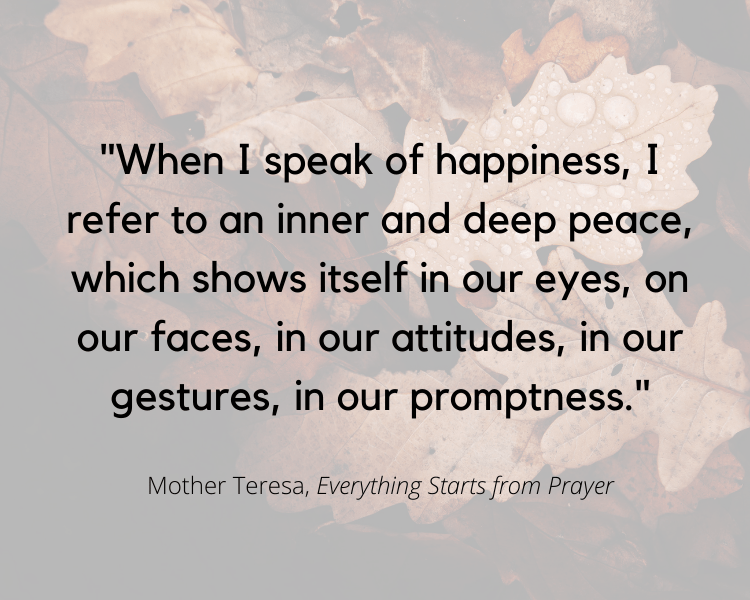
As we face upcoming winter months, with fewer hours of daylight, increasing “pandemic fatigue”, and a divisive political climate, it would be easy to give in to despair. But I’m not going to, thanks to my secret weapon: joy.
According to Merriam-Webster, joy is “the emotion evoked by well-being, success, or good fortune or by the prospect of possessing what one desires”. However, I don’t like that definition, especially in the midst of a pandemic, because it’s situation specific. I believe one can have joy without success or good-fortune. It’s all about the verbs you choose for living your life.
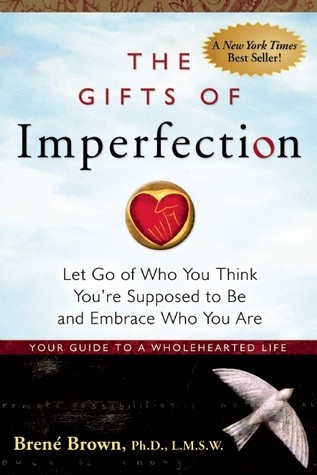
In her book, The Gifts of Imperfection, Brene Brown, Ph.D. and L.M.S.W., draws a careful distinction between joy and happiness. According to Brown, happiness is a human emotion that depends on circumstances (like the Merriam-Webster definition), but joy is a spiritual way of engaging with the world that focuses on gratitude. Her research found that joyful people keep gratitude journals, do daily gratitude meditations, and make time in the middle of their busy days to actually say out loud, “I am grateful for _______.” While no one can be happy or joyful all the time, Brown found that the research participants who actively tried to build joy into their lives were ultimately more satisfied.
So what are some other habits to help us cultivate joy? At a recent writing conference, children’s author Claudia Mills shared several tips for “working happier, not harder” that I found immensely inspiring. First, she reminded us that little things add up to big things, for the good and the bad. If we have a hobby or a skill we want to work on, we shouldn’t be upset if we can only devote a few minutes each day to that activity. A daily practice will build up to lots of time, if you stick to it. So, think of the thing that fills your spirit and makes you feel joy – reading, writing, painting, meditation, exercise – and allow yourself just a little bit of time each day to do it.
Recently, I was discouraged I couldn’t get through more books! So many to read, so little time and energy! I used to read before bed, but often these days I’m so tired at night I can’t focus. I decided to set aside just 15 minutes at the beginning of the day to read, and now I’m halfway through a 600 page history book! (It’s Stamped from the Beginning by Ibram Kendi, an incredibly important read, btw.)
Claudia also suggested that we use envy as inspiration. Instead of being jealous about the success or situation of others, we should try to emulate the habits and practices that lead to success. Even more importantly, we should consider carefully who we envy, choosing to imitate the actions of people who have a high quality of daily life and exhibit true joy.
Finally, Claudia urged us to document and celebrate our achievements. By making time to pause and appreciate our accomplishments, even using a journal to list successes and compliments, we will focus our attention on what we have, instead of what we don’t. I keep a daily journal and need to remember to put those positives in my entries, highlighted with clouds and asterisks!
As the days shorten and our battle with the coronavirus continues, don’t despair. Find the things that fill your spirit and do them, even for just a few minutes a day. Don’t depend on your situation for happiness; do the verbs that will cultivate joy.
Happy Friday, and thanks for getting nerdy with me.
Whew! I haven’t posted a book review in ages, and now is exactly the time when we need good entertainment. Today I will recommend not one, but THREE books for you, as well as a thought provoking documentary and a fantastic TV series.
First, the books. I love to write and read YA contemporary, so here are a couple novels in that genre for you to sample.
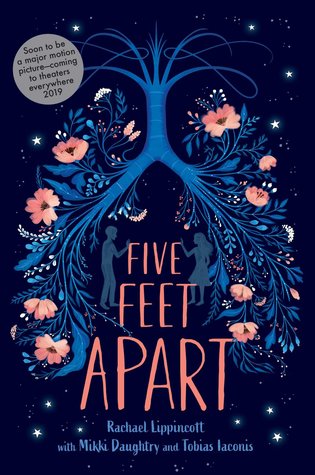
Five Feet Apart by Rachel Lippencott
Stella has been living with cystic fibrosis for years now, and she likes to control her world. She knows her parents’ failing marriage cannot take another family crisis, so she does everything she can to stay well, until Will ends up a few doors down from her in the hospital.
Will, another CF patient with a crooked smile and sarcastic charm, has a particularly virulent infection in his lungs. He is the last person Stella should be near, and the very person she can’t stay away from.
Five Feet Apart is a story about accepting loss and discovering what living really means. It has a positive ending, but is sad at times, so if you’re a little down from the pandemic, you might want to wait on this one. However, it strikes an interesting chord in the time of corona, as Will and Stella are constantly reminded to stay six feet apart to avoid sharing Will’s infection. The themes of finding connection while maintaining distance and living with limitations felt particularly relevant at this time. I listened to the audio book, which is well done.
What I Like About You by Marisa Cantor
In real life, Halle Levitt is quiet, anxious, and timid. Online, Halle is Kels, the confident YA book blogger with a huge following. Halle started her blog under a persona so she could establish herself in the book world independent of her grandmother’s publishing legacy, but she learns that maintaining two personalities – one IRL and one online – is exhausting and problematic. Especially when romance is involved.
What I Like About You explores the differences between online and IRL relationships and the disconnect between how we present ourselves online and who we really are. It does a nice job of pointing out the challenges modern teens face balancing virtual and physical interactions without being pedantic. I listened to the audio book which was at times painful; the narrator did a great job, but since the book includes lots of online interactions, it was annoying to listen to the dates and times of Tweets and texts. I would have skimmed over these if I was reading. It was very distracting when listening to the story.
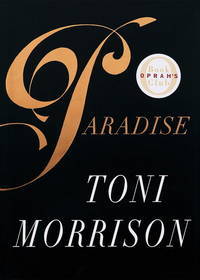
Paradise by Toni Morrison
Paradise is one of my favorites, worthy of a reread every decade or so. (I just finished my third read.) It compares and contrasts two communities. One, the town of Ruby, was established by the descendants of freed slaves and focuses on tradition, righteousness, and fear. The other, just 17 miles away at The Convent, is a collection of unlikely female housemates, exiled and grappling with their identity and their pain.
Morrison’s writing is powerful, layered, and poetic. She tackles complicated issues: the interactions between black and white, woman and man, outcast and chosen. It’s not an easy read, but it is a worthwhile one, especially these days. “So the venom is manageable now. Shooting the first woman (the white one) has clarified it like butter: the pure oil of hatred on top, its hardness stabilized below.” Although it was first published in 1999, its themes and questions remain relevant today.
The Social Dilemma
This documentary, available on Netflix, features several former employees of Big Tech who express their concern for the negative influence of social media. These former employees of companies like Google, Facebook, and Twitter, call for increased regulation and attention to the hazards of giving so much of our attention to our devices. Although The Social Dilemma has come cheesy scenes of a family “under the influence” of technology, the documentary raises interesting questions about the effect of tech on our attention, our mental health, and our democracy.
“The platforms make it possible to spread manipulative narratives with phenomenal ease, and without very much money.” –
Renée Diresta, research manager of Stanford Internet Observatory, former head of policy at Data for Democracy
There are only two industries that call their clients “users”: illegal drugs and software.
Edward Tufte
The Gilmore Girls
Bonus recommendation: The T.V. show The Gilmore Girls, which depicts the loving relationship between Lorelai Gilmore, a strong, independent young single mother, and her precocious daughter Rory. While exploring the challenges of family and growing up, The Gilmore Girls is cheesy, often predictable, and makes me, my husband, and my 14 year old son laugh out loud. The characters are interesting and the banter is irresistible. It’s the perfect escape from our current crazy, and yet it still covers timeless topics thoughtfully.
There you go! Hopefully these recommendations will give you some valuable content to consume over the next month or so. Do you have anything to add to this list? Please share in the comments!
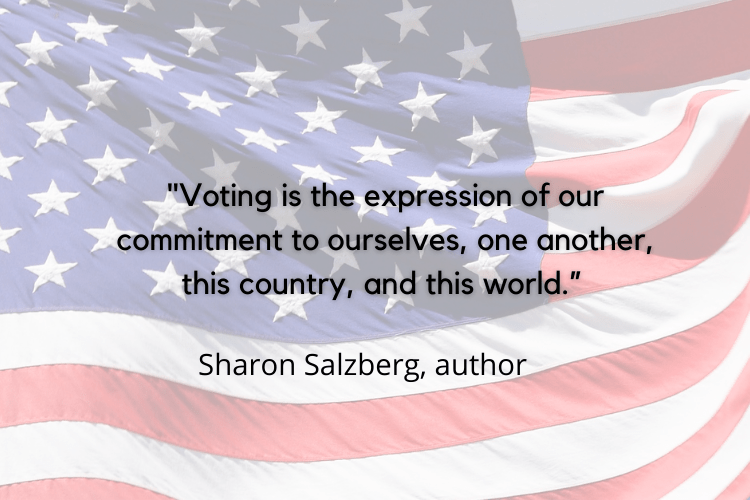
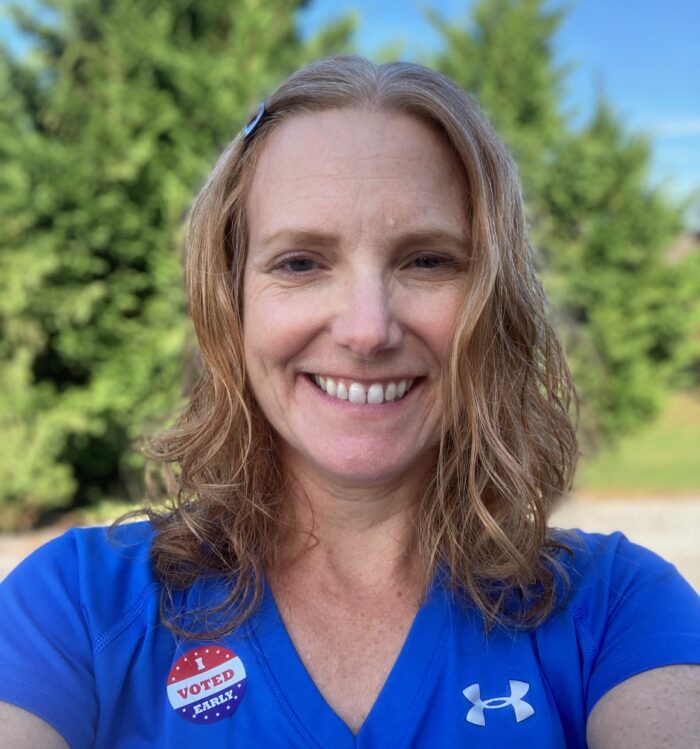
Election Day is November 3, two weeks away. In this year of crazy, it’s more important than ever to vote and have a plan for your vote. Depending on the state you live in, you can vote early in person, vote by mail, or show up at the polls on Election Day. I’m excited to report that hubby and I voted early in person and it was super easy. Whatever you choose, be safe and be informed.
Each state has its own rules, so be sure you understand the voting process where you live. Search “Vote in (your state)” to find information about voting options and contact numbers for your local elections board, and see my post on voting for more helpful tips. Mail in ballots seem to generate the most confusion; find out what you must do to make your vote count. Do you need a witness? Must you sign the outside of the envelope? Where is the best place to turn in your ballot?
Here is an interesting podcast on voting. It includes interviews with election officials and tips for making sure your vote counts.
As we approach Election Day, beware of misinformation. Before you share posts, double check them against reliable sources. While social media platforms make it easy to access and share information, they do not encourage nuanced discussion of complicated ideas. Twitter, Facebook, and Instagram thrive on capturing and keeping our attention by any means necessary. They really don’t care if the posts we see and share are accurate. We have to make that happen.
Voting early was easy!
Word Nerd Note: I watched The Social Dilemma last night, and yes, it did give me a lot to think about re: why our country is so polarized now. More on that later…
Get out there and vote! What is your plan for voting this year? Any tips to share?
Okay, this week has been an extra crazy experience in a year marked by months of crazy. So we are going to take a break from the serious and contemplative this week to discuss something silly and ridiculous.
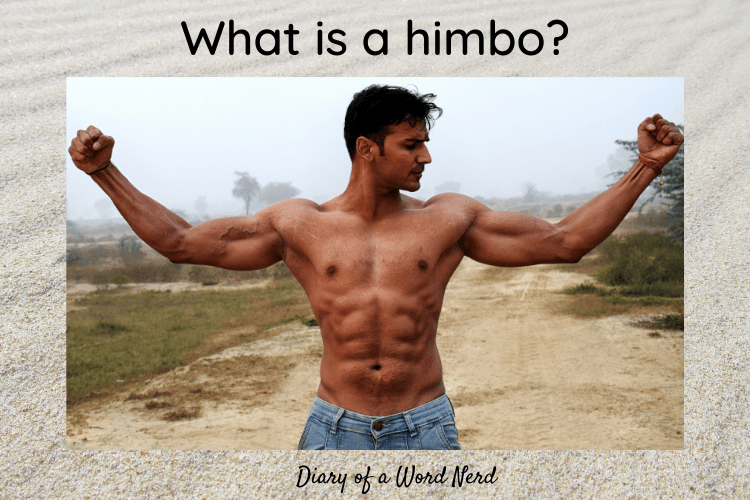
Do you know what a himbo is?
I came across this term while doing research for an online writing contest. Several authors and agents involved with the contest were enthusiastically supporting stories with “himbos” in them. I try, very hard, to keep up with the lingo of younger generations, but this was new to me. So of course, The Word Nerd looked it up.
According to this Newsweek article, himbo is a portmanteau (another fabulous Word Nerd word) of “him” and “bimbo”. Think Chris Helmsworth.
Apparently, there is some debate about whether or not “himbo” is an appropriate term to use. Some find “himbos” a welcome change in media – muscled men who are harmless because they will not use their strength to oppress women. One fan compared himbos to golden retrievers.
Himbos are the human equivalent of golden retrievers: Big, pretty, lovable, prob bad at calculus, and wouldn’t hurt a fly unless they’re defending someone vulnerable. #TeamHimbo
Christopher Thor Kevin Hemsworth, King Himbo the First, tells all himbo haters to get off my lawn pic.twitter.com/S9XqXgVU2n
However, others ridicule those who label stupid but strong men as sexy. Apparently, there’s something predatory about lusting after someone who has less intellectual power.
I don’t know about all that, but now I know what himbo means. And so do you. You’re welcome. 😉
Have you come across any new words in pop culture that have you stumped? The terms are always changing, and we need to keep up!