
What If My Goodreads Scanner Doesn’t Work?

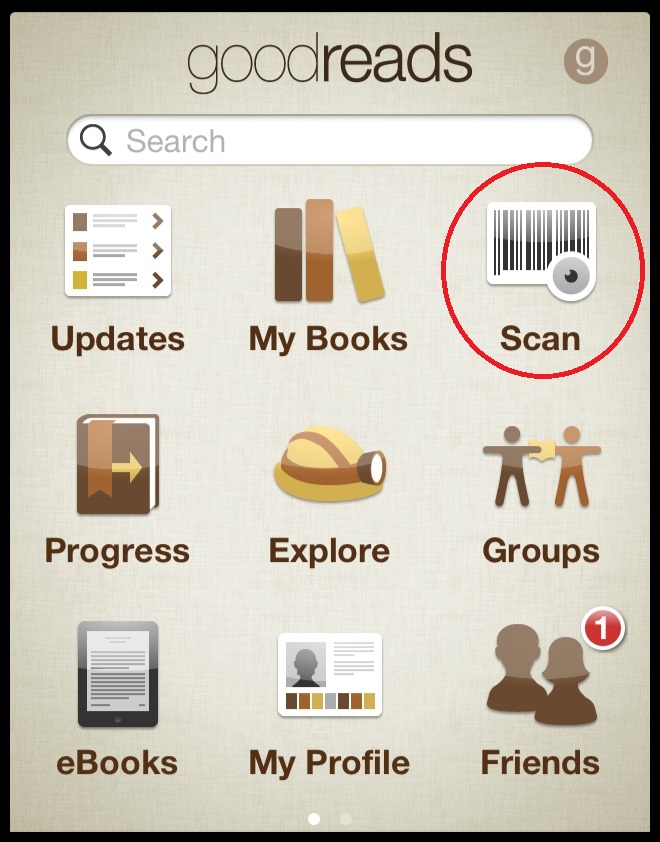
goodreads home scan circledAwhile ago, I posted about adding books to Goodreads using the mobile phone scanner.  It’s a super easy and quick way to save books to your GR shelves.  I love using it at the library and bookstore.

One person commented on my post that he couldn’t get his scanner to work; he kept getting the error notice: “Not an ISBN; really long number.”

Has anyone else had trouble?  I decided to research and help my fellow word nerds.  Here’s what I found after reading the Goodreads blog and help pages.

Checklist for the mobile app scanner:

  1. Your device must have a camera.  (I know, you get this.  Just wanted to be thorough.)
  2. Make sure that you are using the most updated version of BOTH the Goodreads app (version 1.1.5 or higher) and your device operating system.
  3. Make sure you scan the ISBN – 13 on the back cover of the book.  An ISBN- 10 or a UPC will not work.
  4. Keep the camera at an appropriate distance from the book and make sure there is enough available light for the device to read the code.

Another thing I wanted to know while researching this topic was, finally, what in the world does ISBN stand for anyway?

ISBN Facts
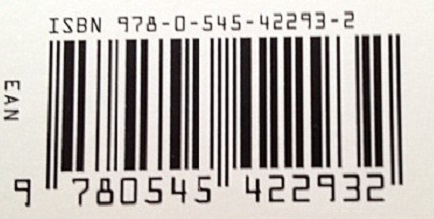
ISBN close upAn ISBN is an International Standard Book Number.  This number uniquely identifies one title or one edition of a title of a book or other book-like product published internationally.  It helps with marketing.

Up until 2007, ISBNs were 10 digits long.  Now they are 13 digits long.  Each ISBN – 13 has five parts separated by hyphens:

  1. the current prefix, “978”
  2. a country identifier for a national or geographic group of publishers
  3. a publisher identifier for a specific publisher within a group
  4. a title identifier for a specific title or edition of a book
  5. a check digit to validate the ISBN

Thank you www.isbn.org for this nerdy information!

Now that you have all this to ponder, I hope you’ll be able to scan books quickly and easily into Goodreads!  But if you have any other questions or comments, please share them below!

Has anyone else had trouble with the Goodreads scanner?  

Happy reading!

Julia 
How Dromedaries Made Me Feel Foolish

wondrous memeWelcome to Wondrous Words Wednesday, a great meme for people who want to be brainy, hosted by Kathy at Bermudaonion.net.  Join the fun and share some new words you’ve learned recently.  You know, the ones you stumble upon in your reading and need to look up.

What!  You don’t look them up?  Shame!  A good word nerd would.  😉

I had to investigate this week’s word as I  prepared to lector (read scripture) at church last Sunday. The reading came from the book of Isaiah:

They shall bring all your brothers and sisters from all the nations as an offering to the Lord, on horses and in chariots, in carts, upon mules and dromedaries;

What in the world are dromedaries?  For such a big word, I envisioned large carts or wagons, perhaps ornately decorated.  I whipped out my Merriam-Webster dictionary app and looked it up.  In front of my children, so they might learn from my example.  (Hint, hint, kids).

When I saw the definition, I felt so stupid!

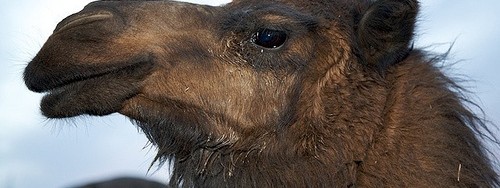
dromedary \’drā-mə-der-ē\ noun  from Latin dromaddromoas, from Greek, running; a camel

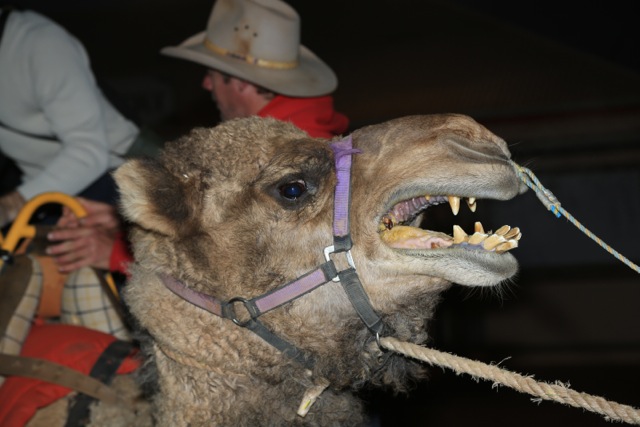
He's laughing at me, I know it!
He’s laughing at me, I know it!

Yup.  That’s it.  A camel.  Now why couldn’t Isaiah just say that?

At least I learned something new.  And if I ever come across it in the Bible again, (because I’m sure I won’t see it anywhere else),  I’ll know what it is.

Word Nerd Workout

Please make me feel good.  Please share another big, fancy sounding word for something simple that threw you once too.  Can’t wait to read your comments!

Have a great nerdy day!

Julia 

Nice teeth, huh?
Nice teeth, huh?

Update:  My friend Rachel told me that dromedaries are one humped camels and that bactrians are the more rare two humped Asian species.   Thank you Rachel!  She also shared this picture from her recent Australian adventure.  

What You Should Know about The Buddha in the Attic

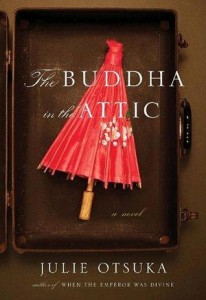
Please welcome my guest Jennifer Chow as she shares her insights about an award-winning novel, The Buddha in the Attic by Julia Otsuka.

Buddha in the AtticSynopsis

Picture brides come to San Francisco from Japan in the early 20th century. The book explores the discrepancy between their imaginings of America and its reality. It also highlights the effects of World War II and the internment camps on them.

 Review

At 144 pages, it’s a slim book, but it’s apparent how much research Julie Otsuka has done for her novel. Otsuka’s word choices throughout the book are stark but elegant. The story is told in a unique manner, using the collective voices of a group of women. Otsuka is able to weave in the women’s backgrounds, exploring the details of their lives in their original hometowns. She also discusses their emotional journeys in a vivid way. She explores the way the women were brought over and how they assimilated (or did not) to the new world, in the cities or in the suburbs they landed in.

The novel talks about their pregnancies and the new children born in a strange country, and those heart-breaking or hopeful relationships between older and younger generations. It also delves into the growing panic that ensued when families were rounded up for questioning during the perilous World War II times and the experience at the internment camps. Finally, it explores the impact their disappearance had on the towns the Japanese-Americans had been a part of.

Although I ended up enriched by the historical content revealed, in the end, I felt that there were too many voices to make a completely flowing narrative for me. I would have preferred to have read each section as its own complete short story. (Note: some of the chapters were first published on their own in various literary magazines.)

Have you read this novel or any others that touch on the topic of immigration and assimilation?  Please leave suggestions below.

Jennifer Chow

Jennifer J. Chow, a Chinese-American, married into the Taiwanese culture. The 228 Legacy was inspired by the family stories she heard after viewing photos of a two-million-person human chain commemorating 228. She has traveled multiple times to Taiwan and visited places dedicated to the incident. Her experience with the elderly comes from a gerontology specialization at Cornell University and her geriatric social work experience. You can visit her online atwww.jenniferjchow.com.


What Exactly Is a Tween Deck?

wondrous memeWelcome to Wondrous Words Wednesday, a meme hosted by Kathy at Bermudaonion.net. Today’s Word Nerd Word comes from my guest and fellow writer from Wordsmith Studio, Jennifer Chow.   Jennifer has recently published her first book, The 228 Legacy, and I’m so honored to have her as a guest!   Go for it Jennifer:

I’m excited to be on this blog today! Thanks for helping me to embrace my inner nerd, Julia!

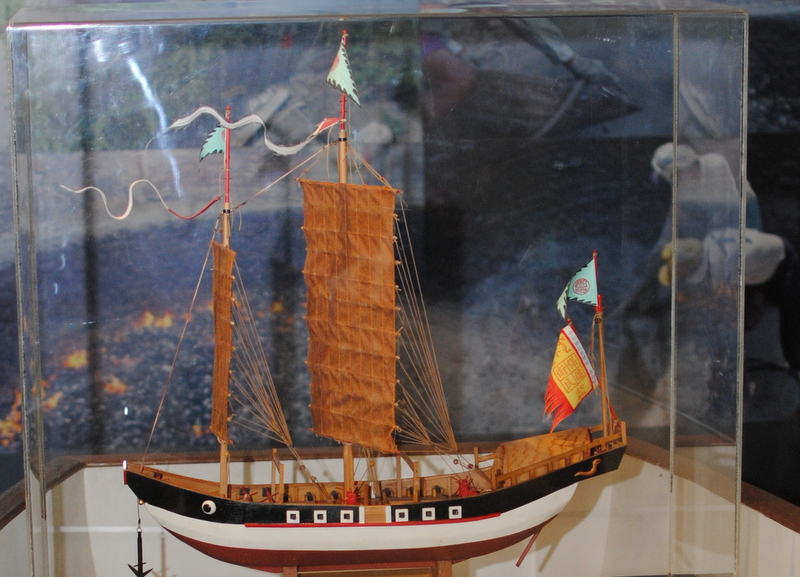
Tween deck \ˈtwēn\ \ˈdek\ noun: the space between two continuous decks in a vessel’s hull; also any deck below the main deck  

This nautical term comes from Julie Otsuka’s The Buddha in the Attic, winner of the PEN/Faulkner Award For Fiction.  The book tells the story of a group of young women brought from Japan to San Francisco as “picture brides” nearly a century ago. The first section of the novel describes the women’s rough and lonely boat voyage:

“And when they asked if they could see us alone—that very evening, say, on the tween deck, at quarter past ten—we stared down at our feet for a moment”

Word Nerd Note:  In the early days of emigration, people traveled on ships built for carrying cargo. Immigrants were placed in the cargo hold to carry them across the seas. In fact, some cargo ships are known as tween deckers; these have two or sometimes three decks. The upper deck is known as the main deck or weather deck, while the lower one is the tween deck.

tween deck ship

Word Nerd Workout

Use tween deck in a sentence.  For example:

I felt cramped on the tween deck and moved up to the main deck to glimpse the stars swirling against the night sky.

Now it’s your turn, fellow word-lovers!  Come back on Friday for a full review of The Buddha in the Attic.

Jennifer ChowJennifer J. Chow, a Chinese-American, married into the Taiwanese culture. The 228 Legacy was inspired by the family stories she heard after viewing photos of a two-million-person human chain commemorating 228. She has traveled multiple times to Taiwan and visited places dedicated to the incident. Her experience with the elderly comes from a gerontology specialization at Cornell University and her geriatric social work experience. You can visit her online at www.jenniferjchow.com.


How are eBooks Changing Libraries

LibraryLast week, I posted about the convenience of borrowing eBooks from my local library.  But while the digital publishing revolution makes our lives easier, it also creates new challenges for libraries.  A great NPR story highlighted some these changes earlier this month as a part of its series on libraries.  

Libraries vs. Publishers

You and I only have to pay $5-10 for an eBook; did you realize that libraries pay more like $85 for each title?  Ouch!  In this age of budget cuts and austerity measures, that hurts.  And even at that steep price, they don’t own the book.  Publishers put limits on the time libraries can lend the title or the number of check-outs allowed.  A library may have to pay $85 annually for a popular novel.

Of course, I understand that publishers want to protect their business.  EBooks never wear out, so unlike traditionally printed books, libraries might never need to replace them.  Also, since digital copies are potentially so easy to share, readers might never have to buy a book again.  Publishers need to sell material to stay viable.  But I don’t want them to squeeze libraries too hard.

Some creative solutions

I love hearing about innovative ideas to solve problems.   As several people commented on my post last week, some titles have very long waiting lists.  Some libraries in New York City tried a cool solution to this problem.  The libraries collaborated with publishers to create an option for patrons to buy an eBook through the library portal, with the library taking a cut of the sale.  This way, the library and the publisher benefit!  Except, that isn’t great for the reader trying to stick to a budget!

Amazon already offers a similar deal; a few weeks ago, I borrowed the Sea of Monsters Kindle eBook through my library.  Today, Amazon sent me a warning that my check out period will expire soon and included an option to buy the book.  Clever, but I’m pretty sure my local library wouldn’t benefit from the sale.

goodreads read shelf
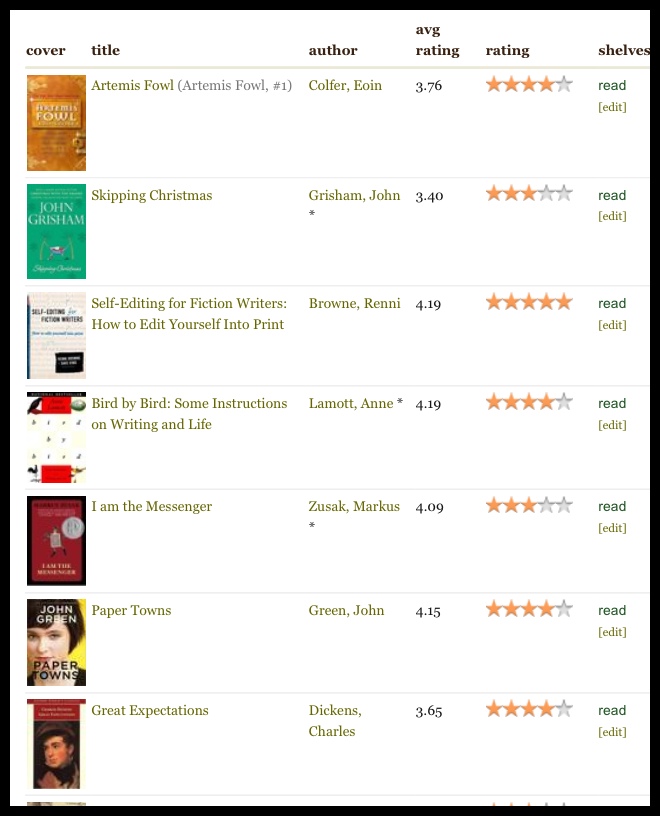
Part of my Goodreads “Read” shelf

Libraries can provide another solution to limited supply of popular eBooks by helping readers find similar books by lesser known authors.  Back when the big publishing houses dominated the book industry, a reader might not easily find books from small publishing houses or independent authors.  But now, librarians and sites like Goodreads can help readers find books that match their taste, even if the author is unknown.  Digital distribution is giving readers and authors more options.

Finally, the NPR story suggested that with the rise of digital publishing platforms, libraries might start publishing books themselves!  Wouldn’t that put a new spin on the book business?  Libraries would  have a great way to generate revenue besides used book sales!

How is your local library responding to digital publishing?  Can you think of other creative ways that publishers and libraries can work together for the benefit of all of us word nerds?

Thanks!

Julia 

The Perfect Word for Female Adolescents: Labile

wondrous memeWelcome to Wondrous Words Wednesday, a meme for smarties hosted by Kathy at bermudaonion.net.  Join us and share some interesting words from your reading or daily life.

My entry this week comes from the good old Merriam-Webster Word of the Day.

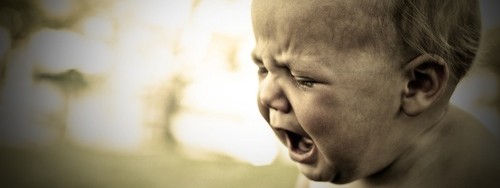
After my tween daughter deteriorated into a sobbing mess of flailing hands and piercing shrieks, I turned to my husband and said, “She’s been a little labile today.”  He took another sip from his beer.

labile \LAY-byle\ adj. from Latin labi-, to slip; readily or frequently changing, as

  • continually undergoing chemical, physical, or biological change or breakdown
  • characterized by wide fluctuations (as in blood pressure)
  • (my favorite usage) emotionally unstable

cryingIf you are currently dealing with a labile teen or tween, please read this sentimental post by my friend Amy Makechnie.  You’ll find a way to deal with labile.  🙂

And, I’ll admit it, my lability hasn’t disappeared with age!

Word Nerd Workout

Use labile in a sentence, incorporating any of the meanings above.  Can’t wait to read!

Thanks for getting nerdy with me today!

Julia