Wondrous Words for Summer: Vacation

wondrous memeWelcome to Wondrous Words Wednesday, a great meme for learning new vocabulary.  Visit Kathy at Bermuda Onion, where word nerds share new words they’ve learned or their favorites.

I’m leaving on vacation Friday, which has me thinking about laundry, packing, and placing a hold on the mail.  But also, this word nerd wants to know more about the word vacation.

vacation – noun, from the Latin vacatio, meaning freedom or exemption; a respite or intermission; a period of exemption; a period spent away from home


Lake Pleasant at Camp of the Woods
Sunset on Lake Pleasant

I’m escaping to a wonderful place called Camp of the Woods, a Christian Family Resort in the Adirondacks of upstate New York.  For one week, I will be living on the shores of Lake Pleasant.  (Seriously, that’s the name of the lake.)  My kids will be entertained by the plethora of activities there: putt putt golf, water sports, volleyball, a craft shack, and teen games.  I will, hopefully, be spending lots of time with my butt in a chair on the beach, reading Escaping Into the Open by Elizabeth Berg and OneThousand Gifts  by Ann Voskamp.

Besides reading and spending time with my family and dear friends, I will experience exemption from:

  1. planning, shopping for, cooking, and cleaning up meals (I think my family is finally starting to get why this is SO BIG for me)
  2. driving my children hither and thither
  3. paying bills and the other irritating jobs involved with running a household

I will have to do laundry half-way through the week, but folding underwear is so much more fun with a good buddy. 😉

Word Nerd Workout

Tell me what you like to be free and exempt from when you go on vacation.  I’d also love to hear about your favorite vacation destination, and what books you’d like to take with you.

Thanks for getting nerdy with me!

Julia 

My Writing Process Blog Tour

5406459295Five years ago, inspired by Stephenie Meyer, I decided to write a book.  If she could pen a YA novel during her kids’ swim practice, then so could I.  Right?

While I was learning about author platform, I joined an online writing group called Wordsmith Studio, (WSS), a fun, supportive, and eclectic mix of writers.  I met poet Michelle Pond through WSS and was pleased she could share some insight into Jazz Poetry here on the Word Nerd.  She blogs at MAPoet and writes poetry with a focus on grief.  Thanks, Michelle, for inviting me to the My Writing Process Blog Tour.

Normally, I don’t indulge in stories about my writing, but since Michelle asked…

What am I working on?

I recently finished my first YA manuscript,  Redefined.  It’s about a girl who struggles against the demands of her overprotective father and the needs of her ailing mother to fight for the independence – and the boy – she wants.

Now I’m crazy/daring/foolish enough to put my work out there by querying agents to find representation for publishing. Querying means lots of research, tweaking of letters, and waiting.  Fortunately, I found this great piece on querying at Writer’s Digest  and realized that I’m not the only writer to experience anxiety and despair.

While I wait, I’m tackling the next manuscript and penning guest posts.  I learned a lot in the five years it took me to write the first book (yes – five), and with the help of the awesome writing software Scrivener, I’m hoping the next book won’t take so long.

Why do I write what I do?

I like to write kid lit, especially YA, because childhood and adolescence are so intense.   I vividly remember my teenage years: the way my crush smelled like Ralph Lauren’s Polo cologne mixed with Big Red gum, the way my stomach rolled and my legs noodled at every high school track meet.    Teenagers make great characters; they are funny, surprisingly insightful, and passionate.  Besides, I never want to write anything steamier than a PG-13 love scene, and I hate violence and gore; that rules out most  adult genres.

How  does my writing process work?

With most things in life, including dinners and carpool schedules, I like to prepare. Same with writing.  For everything from blog posts to novel chapters, I create an outline. Fourteen years of motherhood has taught me that plans change, but I need some basic structure.  I also crave routine, so I schedule writing time on regular days in my week.  (Of course, summer vacation brings challenges…)

I write an ugly first draft, let it rest for a day, and then come back to knead it into shape. Sometimes my critical editor voice interrupts my “creative” writing time, and I have to work to keep her quiet.

I spend a lot of time in the minivan, and when I get inspiration, I pull out my iPhone and dictate my ideas or snippets of dialogue (yes, I pretend to be my characters) into Evernote or Drafts. NOT when children ride with me, though.

Meet two more writers

That’s enough about me.  I’m tagging two of my writing buddies for this blog tour; we can learn more about them next week.

Amy Makechnie

I met Amy Makechnie through blogging.  She runs, writes kid lit, and lives in the country with her four children.  (Just like me!  Except she runs marathons, crazy girl.)  Learn more about her:

Amy Makechnie is writer from New Hampshire and has written for many on-line and national publications, and east coast magazines. She is the author of the blog, maisymak.com, where she frequently tattles on her wily flock of children.  

 

Jennifer ChowI met Jennifer Chow through Wordsmith Studio. She released her book, The 228 Legacy, last year, and she shares “word nerd” tips with a Chinese spin at her blog; check her out!

Jennifer J. Chow, a Chinese-American, married into the Taiwanese culture. Her book, The 228 Legacy, is a 2013 Foreword Review’s Book of the Year Award Finalist in the multicultural category.  It was inspired by the family stories she heard after viewing photos of a two-million-person human chain commemorating 228. She has traveled multiple times to Taiwan and visited places dedicated to the incident. Her experience with the elderly comes from a gerontology specialization at Cornell University and her geriatric social work experience. You can visit her online at www.jenniferjchow.com.

Do you write?  What are you working on and what is your process?  I’d love to know.

Thanks for stopping by!

Julia
 

Three Wondrous Words for Funny Children

wondrous memeWelcome to Wondrous Words Wednesday, a meme where word nerds share their favorite words or new vocabulary they’ve learned.  Visit Kathy at Bermuda Onion for more interesting words.

For this week’s entry, I’m taking the “share favorites” option, inspired by my car pool to Camp Invention.  Yesterday, two seven-year-olds and a ten-year-old entertained me for an hour with deep thoughts on the color of puke, the proper way to wear underpants, and the benefits of marrying a super model.  (“You’d get $2000”)  Their hilarious banter reminded me of three previous WWW words that I’d like to review  today.

1.  Perspicacious– of acute mental vision or discernment

Examples from the minivan:

If you’re in kindergarten, and you have a best friend, and she’s a girl, and you’re a boy, then you must have FEELINGS for her.

and,

Seven year old: My puke was pink.

Ten year old:  Hmm.  I bet you had strawberry milk for breakfast.  Or you ate a paintball.

milk2.  auspicious – showing or suggesting that future success is likely; attended by good fortune

Example:

“I drink way more milk than I should – like a gallon a day.  One thing’s for sure-  I’m NEVER gonna break a bone.”

3.  risible – arousing or provoking laughter

Example:

I’m really good at burping.  All I need are some onions and root beer. Once, I burped for like, 20 seconds.  I even beat my mom!

Word Nerd Workout

Please share another example of a risible, auspicious, or perspicacious expression that you’ve heard or seen recently, or make one up!  Thanks for playing.

Julia 


How to Appreciate Poetry: A Word Nerd’s Guide

Appreicating PoetryI recently stayed up until two am to watch a movie with my son.

Please note that the days of me being awake at two am by choice ended sometime in the late 1990s.  I do not count nursing a baby or cleaning vomit soaked sheets in the “by choice” category.

So this must have been an awesome movie, right?

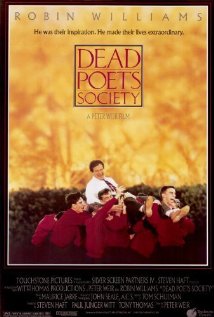
Dead Poet’s Society tells the story of a passionate teacher who uses unorthodox methods to get prep school boys excited about poetry.  John Keating inspires his students with Emerson,carpe diem”, and barbaric yawps.

On the first day of class, Mr. Keating, played by the always entertaining Robin Williams, has his students read an essay about analyzing poetry.  The essay actually suggests that one could graph a poem based on its importance and the quality of its craftsmanship.

dead poetsA graph.

Mr. Keating commands his students rip the essay out of their textbooks.

Like Mr. Keating, I hope to inspire excitement about poetry.  There’s no right or wrong (or graphing) with poems;  please don’t let cryptic lines and complicated rhythms intimidate you.  Just find a poem that looks interesting, settle into a comfortable spot to read, and think about these things.

Sound

Reading poems aloud is the best way to catch the musical qualities of words woven together.  When you read a poem, listen for:

  • Rhythm – can you find a pattern?  Count the syllables, note the stresses.  Some poems are written to fit specific structural requirements.  For example,

A line of iambic pentameter has ten syllables in a light stress, heavy stress pattern, such as:

No longer mourn for me when I am dead (Shakespeare sonnet # 71)

A line of trochee has the opposite pattern, first heavy then light stress

Double double toil and trouble (Shakespeare, Macbeth)

Anapest is a pattern of three syllables with two light and the last heavy.

For the moon never beams without bringing me dreams (Edgar Allen Poe, Annabel Lee)

  •  Rhyme – again, can you find a pattern?  Do the rhymes occur in adjacent lines or in every other line?  Does the rhyme carry significance?  Or is the poem written in free verse, without any rhymes?
  • Special effects– look for literary devices that influence the sound of the poem, such as

Alliteration – repetition of initial consonant sounds in a string of words

fair flower falling from the tree

Onomatopoeia – words that imitate sounds

buzz, crash, snap

Meaning

Poems condense profound meaning into a few lines of words, and poets use figurative language to build a bridge of understanding for readers.  Some common literary devices include:

  • Metaphor – makes an implicit or implied comparison between two dissimilar things

Bill is my rock during difficult times.

Bill isn’t actually a rock, but the metaphor implies that he is sturdy and strong

  • Simile –makes a direct comparison between two things by using  “like” or “as”

She’s as stubborn as a bull.

  • Personification – giving human characteristics to a thing, an idea or an animal.  Markus Zusak is a master of this in his often poetic prose in The Book Thief and I Am the Messenger.

Fear slipped into the room and wrapped itself around me.

 poetry handbookPoetry Resources

I can’t cover everything in this post, but I hope you’re intrigued.  For more information about poetry and literary devices, or to find some great poems, check out:

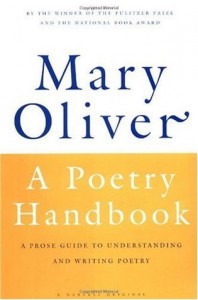
A Poetry Handbook by Mary Oliver

Poems to Learn by Heart by Caroline Kennedy

The Poetry Foundation Website

Poets.org 

 What do you use to help you understand poetry?  Who are some of your favorite poets?  Have you seen Dead Poets Society

Thanks for stopping by!

Julia

Vocab for Laughing: Risible

wondrous memeWelcome to Wondrous Words Wednesday, a great meme for Word Nerds who want to expand their vocabulary.  Check out Kathy’s Blog for links to more fun words.

Since last week’s word was dark (who remembers what “iniquitous” means?), this week I’m sharing something light-hearted.

My youngest son, Eli, has great comic timing.  Often, at the end of the day, when I’m exhausted, he whisks away my grumpy mood with his silly stories and risible expressions.

risible \’ri-zə-bəl\ from Latin risus, from ridere, to laugh; a)capable of or disposed to laughing b)arousing or provoking laughter c) associated with laughter, as in risible muscles (the ones around your mouth that you use when laughing, called the risorius muscles).  Ridiculous and deride also come from this Latin root.

Eli silly
My silly Eli

Word Nerd Workout

Can you come up with a synonym for risible?  Better yet, share a risible comment or joke that made you laugh this week.

Thanks for getting nerdy with me!

Spread the word on Twitter:  Word Nerd Word: risible = provoking laughter, via @juliatomiak

Julia

Six Puzzler Terms You Need to Know

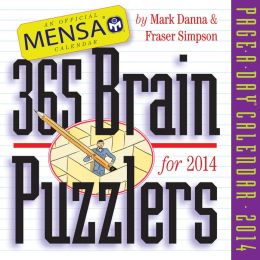
Puzzler CalendarIt’s summer time, but that doesn’t mean my kids have to stop using their brains.  Remember that cool “Puzzle a Day” calendar I told you about in January?  It’s still on the kitchen table, and now my kids have more time to do the puzzles!

I must admit, sometimes the vocabulary from the calendar confuses us.  We discussed many baffling terms from the puzzles over pasta and salad one night when we were finally sitting down together to eat.  We pondered questions like:

What’s the difference between an acrostic and an acronym? 

Have you ever heard of an anagram?

What the heck is a rebus? 

Such is the conversation in a word nerd’s home. 🙂

Of course, I HAD to clear this up for my family, and you.  So here goes, some essential vocab all puzzle people and word nerds should know:

  • Acronym-  a word formed from the first letters of each one of the words in a phrase, such as scuba (self-contained underwater breathing apparatus).  I use acronyms to help me make my various online passwords.  (e.g. ILBbaICL = I like big books and I cannot lie.)
  • Acrostic– a composition, usually in verse, in which sets of letters (such as the initial letters of the lines) taken in order form a word or phrase;  look at this great example from my Facebook friend Jeanette Duwe:

Acrostic

  • Anagram-  a word or phrase made by changing the order of the letters in another word or phrase (from Greek anagrammatisimos to transpose letters)

I found these funny anagrams at www.fun-with-words.com/anagrams

Dormitory – – dirty room

The eyes – – they see

Conversation – voices rant on

  •  Homophone– a word that is pronounced like another word but is different in meaning, origin, or spelling.

Mnemonic – see below and        Pneumonic- related to the lungs

 Their, there, and they’re

  • Mnemonic from Greek mimneskesthai– to remember; adj – assisting memory; noun – a device that helps people remember something.

My very excellent mother just served us nachos helps many children remember the planets in order from the sun.  (Mercury, Venus, Earth, Mars, Jupiter, Saturn, Uranus, Neptune.)  I remember when the mnemonic ended with “nine pizzas.”  So sorry, Pluto.

  • Rebus– a riddle or puzzle made up of letters, pictures, or symbols whose names sound like the parts or syllables of a word or phrase.  We see a lot of these in the kids’ Sunday School papers or in puzzle books from MindWare.  Can you figure out the one below:

🙂

Camper

Can you give an example of one of these puzzle terms?  Or can you share a puzzle term I missed? 

For further playing/ learning:

      • Literarydevices.net – definitions and examples of literary terms
      • Fun-with-words.com – wordplay games and definitions.  ***Note – this site runs ads across the top of its page, some with questionable content, e.g. – a picture of a scantily clad woman advertising games for “Male Gamers Only”

Thanks for stopping by.

Julia