Vocab from the Headlines: Contemporaneous

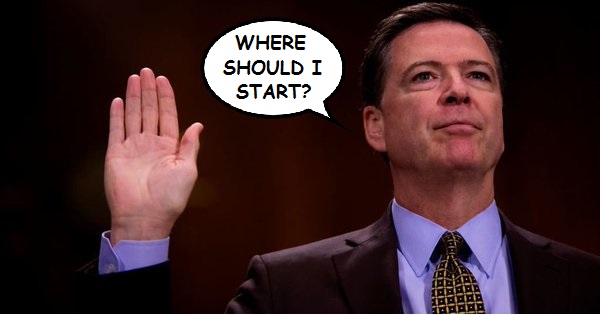
James Comey by Mike Licht via Flickr

Photo credit:  Mike Licht via Flickr CC-BY

Last week, as I listened to news reports about former FBI Director James Comey’s Congressional hearings, I heard journalists refer to the “contemporaneous notes” Mr. Comey kept about his meetings with President Trump. The word sounded familiar, but I didn’t exactly know what it meant. I should have – when you break it down to its Latin roots, it makes sense.

Contemporaneous \kən-ˌtem-pə-ˈrā-nē-əs\ adjective from Latin contemporaneus, from com– together + tempor-, tempus time

  • existing, occurring, or originating during the same time; usually used in reference to events

For example,
Contemporaneous reports confirmed that the shooter was in the school building.

I guess the journalists reporting on Comey’s notes believed that he wrote them very close in time to his meetings with President Trump. Read more at Merriam-Webster.

Word Nerd Workout

Can you think of a synonym for contemporaneous? My suggestion: simultaneous.

If you like learning about words, visit Kathy’s blog at Bermuda Onion for Wondrous Words Wednesday.

Thanks for getting nerdy with me today!


Why You Should Read Ultimatum

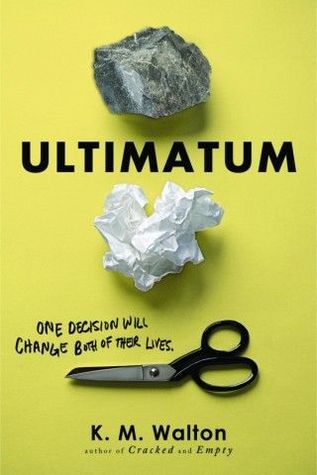
Ultimatum

Sometimes, it’s hard to understand our family members. Sometimes, they don’t get us either. Ultimatum, a YA novel by K.M. Walton, tells the story of two brothers who can’t relate to each other but must learn how as they face the death of their alcoholic father.

Premise

Oscar loves drawing and classical music. His mother was the only one in his family who understood him, but she died tragically in a car accident years ago. Oscar’s older brother Vance loves lacrosse and girls and got along great with their dad, who liked to party and listen to reggae music. However, after their mother’s death, Oscar and Vance watched helplessly as their father sank further and further into a trap of depression and alcoholism.  As their father dies from liver failure, they have no idea what do next or what to say to each other.

What I liked

I won a signed copy of Ultimatum from Jessica Lawson at her blog Falling Leaflets. (Jessica often gives away copies of excellent kid lit books on her site; check it out.) I like to write realistic fiction with components of family conflict, and Ultimatum was an excellent novel to study.

For starters, Walton does a fabulous job of describing emotion in raw, fresh language. When Oscar’s brother yells at him for sketching their dying father, Oscar thinks

“If I respond, I may crack and leak and puddle. If I don’t respond, he may lose his mind. My hands sweat. The walls suddenly crowd me. I want to run away.”

Walton uses wonderful metaphors to convey feeling. For example, as Oscar realizes he may never get to talk with his dad again, he thinks

“I’ll never be able to ask him these questions. That reality is incredibly jagged. The cut will never be clean; it will never heal properly.
There will always be a scar.”

Walton alternates first person POV between Vance and Oscar, giving readers insight into each boy’s personality and the complicated family history they share. This close perspective into the mind of each brother makes each one easier to sympathize with and adds intensity to the conflict.

The story switches between present time in a hospice room and flashbacks to important events in the lives of the boys. Overall, the tone is sad, but the novel ends hopefully. Most importantly, the emotions felt real and relatable. I watched my mother die when I was 25, and Walton does a great job of depicting the fear, grief, and anxiety felt by a young adult when a parent dies.

What I didn’t like

Not much. At first, it didn’t seem like the characters have an obvious goal that they are working toward; more often they just seem to react to the crises enfolding in front of them. Yet by the end of Ultimatum, it’s obvious that the goal is for them to learn how to love each other so that they can survive without their parents. And even though I couldn’t always sense “a goal”, I wanted to keep reading and turning the pages, just because the emotional journey for each character was compelling.

Recommendation

Ultimatum was a satisfying read, even though it was a little sad. If you like YA novels with family drama, such as Sarah Dessen’s The Truth About Forever or See You at Harry’s by Jo Knowles, you’ll probably like Ultimatum.

Notes on content

UltimatumThe boys’ father is an alcoholic, so there are several references to drinking and smoking pot. However, the consequences of substance abuse are also clearly described. There is a bit of bad language.

Have you read Ultimatum? What did you think? Can you share some other examples of YA with family drama?

Happy reading!


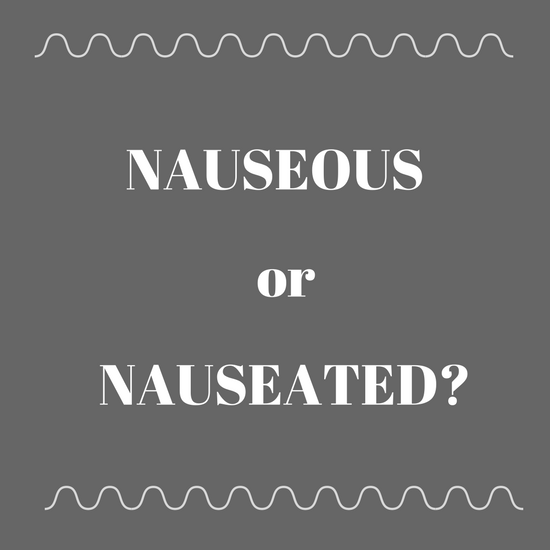
When to Use Nauseous vs. Nauseated

Sheldon Cooper is wrong.

If you watch The Big Bang Theory, as my family avidly does, you’ll know that this is a shocking statement.  Sheldon is never wrong. **Bad mom confession** I let my 10-year-old watch BBT. He loves the geeky qualities of the characters; I’m hoping all the innuendo goes over his head. Anyway, in an episode from the first season of the show, when Leonard tells Sheldon he feels “nauseous” about his upcoming date with Penny, Sheldon corrects him.

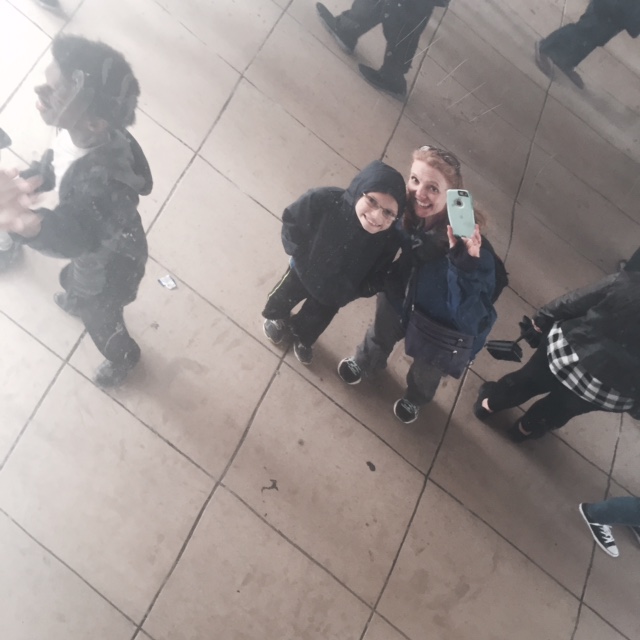
This grammar issue came up with my 10-year-old after we emerged from the underbelly of “The Bean”, officially known as Cloud Gate, in Millennium Park in Chicago. The Bean is a kidney bean-shaped sculpture (love all the public art in Chicago!) made of highly polished stainless steel and is a can’t miss photo-op in The Windy City. When you walk under The Bean, as my youngest and I did, all you can see is curving reflections of yourself and all of the other tourists crowded inside. For a 40 something gal with a sensitive vestibular system, this created a touch of vertigo. I was a good mom and took a selfie with my little guy, and then I got us out of there.

Our reflection on the underside of The Bean.

As we emerged, I said, “Whew, that made me nauseous.”
My guy, an ardent Sheldon Cooper fan, said, “No, you mean nauseated. Like Sheldon said.”

But it didn’t sound right to me. So I looked it up. And I repeat, Sheldon is wrong. Well, sort of.

  • Nauseous: adjective
    Causing nausea or disgust  (The nauseous smell of rotting meat hit me when I lifted the lid.)
    Affected with nausea or disgust    (I felt nauseous when I got off the roller coaster.)
  • Nauseate: verb
    To become affected with nausea (The smell of tar nauseated him.)
    To feel disgust  (Her laziness nauseates me.)

Usage note from Merriam Webster:
“Those who insist that nauseous can properly be used only to mean “causing nausea” and that its later “affected with nausea” meaning is an error for nauseated are mistaken.” For those of you who really care:

  • Nauseous is used most often to describe feeling physically sick, usually with a linking verb like feel
  • Nauseating is used more often to describe figurative feeling of illness, like “His attitude is nauseating”.
  • Nauseated is used most often to describe being affected with nausea or disgust, but one could correctly use nauseous in this case as well.

In short, you can use nauseous or nauseated to describe being affected with nausea, and you’ll be right. So Leonard and I? We’re all good. I’m thinking that since nauseous is an adjective, and I’m using it to describe myself, a noun, nauseous makes the most sense. I guess I could also say “The underbelly of the bean nauseates me.”

Has all of this grammar talk left you nauseated? Am I the only person who cares about such nuances? 😉

Word Nerd Workout

Use nauseous or nauseated in a sentence, and let’s see if I made any sense this morning.

Thanks for getting nerdy with me.


Vocab from the Headlines: Polymath

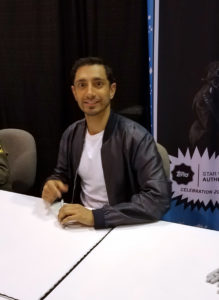
Photo credit Greg2600 via Flickr CC-BY-ND

Recently on social media, I saw that Riz Ahmed, musician and actor, (Star Wars: Rogue One) was named one of Time Magazine’s 100 most influential people of 2017. The post called him a “polymath”, a curious term that I wanted to learn more about. It actually has much less to do with math than I expected.

If you like to learn about words, join the Wondrous Wednesday meme over at Bermuda Onion. There, bloggers share interesting words they’ve learned.

Polymath \pä-lē-math\ noun from the Greek polymathēs, very learned; from poly (multiple) + manthanein to learn

  • A person of encyclopedic learning; someone who knows a lot about many different things

Turns out, calling Riz Ahmed a polymath doesn’t mean he’s a mathematician, it means he has talent and interest in many different areas, including music, acting, and activism. Here’s what Hamilton creator Lin-Manuel Miranda said about Ahmed in his Time tribute:

“Riz Ahmed has been quietly pursuing every passion and opportunity for many years as an actor (The Road to Guantanamo, Four Lions, Nightcrawler), rapper (Post 9/11 Blues, Englistan) and activist (raising funds for Syrian refugee children, advocating representation at the House of Commons). The year 2016 was when all the seeds he planted bore glorious fruit, and here’s the best part: he’s just getting started.”

So, a polymath sounds a lot like a Renaissance Man, such as Thomas Jefferson, who I featured in a recent post.

Word Nerd Workout

Don’t forget to visit Kathy at Bermuda Onion for the WWW meme!

Can you think of another polymath from real life or literature or movies? While I write this, I’m wondering, would it be better to focus on one thing and be really good at it? Or to know a lot about many different things? I have so many interests, I would love to pursue them enough to be called a “polymath”.

Thanks for getting nerdy with me today!


What You Should Know About 13 Reasons

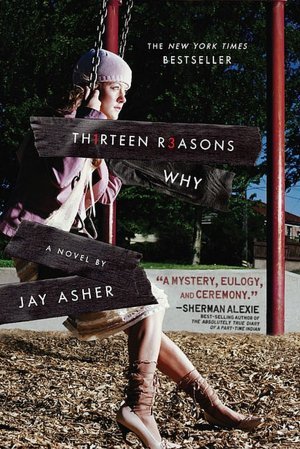
Is it possible to understand why someone would commit suicide? 13 Reasons Why by Jay Asher is a best-selling young adult novel that explores this question. In March 2017, Netflix released a series based on the book that sparked a buzz on social media. Many teens have been mesmerized by the show, and many parents are concerned. I recently finished reading 13 Reasons Why, and here’s what you need to know.

Premise

A few days after Hannah Baker commits suicide, Clay Jensen finds a package of cassette tapes on his front porch.  Hannah recorded the tapes right before her death, and Hannah’s haunting voice explains what and who made her decide to kill herself. Only people who played “a role” in her suicide are on the tapes and will receive them. Clay listens somewhat unwillingly to Hannah’s monologue, wanting to learn his part and dreading what he might hear.

What I liked

I liked the unusual structure that Asher uses to tell Hannah’s story. Hannah’s voice fills Clay’s head; she feels present, but he’s painfully aware that she’s not. Also, it’s a great example of irony. Hannah gave up on life because people never listened to her or understood her. They chose to embrace rumors and gossip instead of getting to know her. Recording the tapes gives Hannah a way to tell her story without interruption or misconception. She finally has a voice, but by the time people hear and understand, it’s too late.

In a disturbing scene, students scoff at a suicide note left in a Peer Communications class at Hannah’s high school. In the author notes at the back of the book, Asher says the same thing happened at his own school, and part of his motivation to write the novel was to increase awareness of the stigma of suicide and to encourage more candid conversations about it.

13 Reasons highlights some important warning signs of suicide, including changing appearance, giving away personal belongings, and, what should be obvious, mentioning suicide.

13 Reasons forces readers to consider how their actions affect other people. Says Asher, “… even though Hannah admits that the decision to take her life was entirely her won, it’s also important to be aware of how we treat others.”

What I didn’t like

The two main characters of 13 Reasons Why are passive, and I had trouble engaging with the story. Clay listens to the tapes and reacts. He doesn’t take action, he just laments the tragedy.

Hannah is equally passive. Her tapes reveal that she was upset by rumors about her reputation, and she felt misunderstood and abandoned by people she thought were her friends. These are very realistic emotions, but we don’t see Hannah doing anything about them. She witnesses a rape but feels incapable of stopping it. She climbs into a hot tub with a boy she knows just wants sex, and she gives in to him. Hannah is less compelling than someone like Melinda, the protagonist from the YA novel Speak, who is a victim of rape and rumor who struggles to recover.

Book vs TV Series

I have not seen any of the Netflix episodes, but I have heard that the series is a suspenseful, violent drama. In the show, Hannah slits her wrists to kill herself, and this is graphically depicted. In the book, the actual suicide is never described, and readers only know that Hannah decides pills will be the best method. Also, apparently the rape scene is quite graphic in the show, but in the novel, the incident focuses more on Hannah’s feelings and reactions than on what is physically happening.

Seeing and hearing disturbing scenes affects me much more than anything I read. If I’m upset by a passage in a book, I can skim over it, but with a TV show or movie, the images are harder for me to escape or forget. For that reason, I will probably not watch the show.

As always, I recommend teens and their parents read the book before seeing the show. This is an important topic, and if the book or the show increase awareness about suicide and encourage honest dialogue about it, than 13 Reasons Why has accomplished something important.

My 15-year-old daughter read the book and agreed with my assessment of the characters and story. She isn’t interested in watching the show because she feels it glorifies suicide.  I didn’t ask her if she knows anyone who has mentioned suicide or what to do if someone does. Perhaps we need to address that.

If you have read 13 Reasons Why or seen the show, please share your thoughts. What other shows and/or books offer good insight into the issue of teen suicide?

Thanks for adding to the conversation!



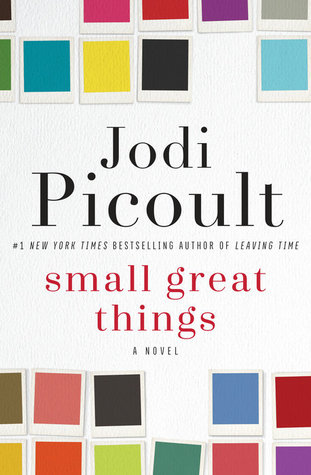
Why You Should Read Small Great Things

Small Great Things

I’m going to ask a difficult question, and I dare you to answer honestly:
Are you racist?

Many people reading this blog would probably deny they are racist.  However, whether you admit to racism or not,  you should read Small Great Things by Jodi Picoult. In this legal drama, Picoult explores racism in its overt and subtle forms and raises multiple questions, as any good novelist should. Small Great Things forces readers to evaluate the attitudes they claim and the generalizations they subconsciously harbor.

Premise

Ruth Jefferson is a labor and delivery nurse with a Yale degree and over 20 years of experience. She is also black. When a White Supremacist couple insists that Ruth cannot touch their newborn son, Ruth is offended but honors the couple’s wishes. Her supervisor places a note in the baby’s medical record: No African-American staff should care for this patient. Unfortunately, during a busy morning on the floor, all other staff must attend to urgent situations, and Ruth is left alone with the white baby to observe him after his circumcision. While under Ruth’s watch, the baby suffers cardiac distress.

Ruth faces a dilemma: should she honor the request of the baby’s parents or honor her duty to care for ill patients?

Tragically, the baby dies, and guess what his parents do? That’s right, this story is set in America. They sue.

Public defender, and white woman, Kennedy McQuarrie takes on the case, and what she learns about herself and her fellow Americans during this trial changes her forever. Hopefully it will change the hearts of readers too.

What I liked

Picoult uses mulitple POVs to tell this story. One is Turk Bauer, the white supremacist father. The other two are Ruth and Kennedy. Because each player gets full chapters of first person POV, readers get deep insight into how the attitudes of each character have formed .  This builds understanding for each one, even the overtly racist guy.

Although the three main characters are very different, Picoult links them all with the theme of parenthood. I don’t believe in the supremacy of the white race, but I do love my children, and that helped me relate to Turk Bauer. I don’t know what it’s like to be judged based on the color of my skin, but I do know how challenging it is to parent teens. I love this quote from one of Ruth’s chapters:

In a lot of ways, having a teenager isn’t all that different from having a newborn. You learn to read the reactions, because they’re incapable of saying exactly what it is that’s causing pain.

Amen.

Finally, I loved how Small Great Things examines the various forms and levels of racism. Through her relationship with Ruth, Kennedy gains new perspective on how it feels to live as a black person in America. During the trial, Kennedy says to the jury:

Sure, it’s so much easier to see the headwinds of racism, the ways that people of color are discriminated against… It’s a little harder to see- and to own up to- the tailwinds of racism, the ways that those of us who aren’t people of color have benefited just because we’re white.

Makes you think, doesn’t it?

What I didn’t like

Sometimes the examples of racism were hard for me to believe – would police really come to Ruth’s house, in a safe, well-respected community, at three in the morning to arrest her? Picoult hits her readers over and over with signs of injustice, and sometimes it felt contrived. However, I’m white.

The conversion of one of the main characters seemed unrealistic at first, but after I thought about it, I realized that Picoult laid the groundwork for this change earlier in the novel. The transformation of her characters reinforces her message of hope and possibility.

Recommendation

Everyone should read this book and use it as a guide to examine their own attitudes about race and injustice in our country.

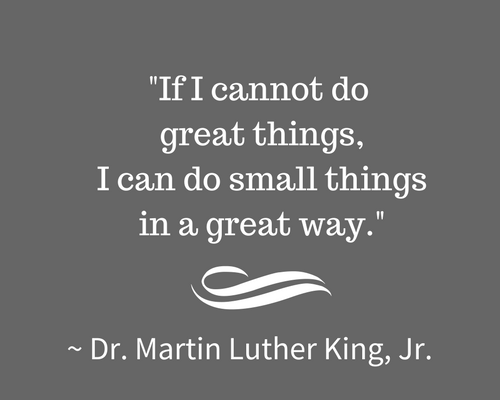
By the way, the title Small Great Things comes from a quote by Martin Luther King Jr.

Martin Luther King Jr quote small things

Have you read Small Great Things? What did you think? Can you recommend any other novels that address the issue of racism?

Happy reading!