
Why You Should Put the Phone Away

Something must be up if the people who make the technology are encouraging us to use their technology less.
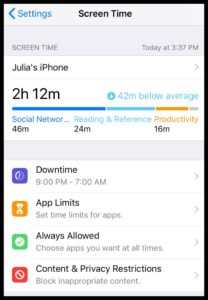
iPhone screen time
Screen time information can be found under settings

The current version of iOS on my iPhone has “Screen Time” settings. These are tools to help me decrease my use of certain apps and the phone in general. I set hours for “downtime” when almost all the app icons on my phone go dim, and if I try to open an app, I’m reminded not to use my phone. I can also set daily time limits for categories of apps, like “social media”, to make sure I don’t waste too much time scrolling through Facebook. Currently, my social media time limit is an hour, but I might change that to 30 minutes because…

A lot of people from a lot of different places are telling us that too much time with our phones isn’t good for us. We’re not just wasting time, we’re ruining our ability to concentrate and THINK. Here are a few things that have me reconsidering my relationship with my phone.

Brain Drain research

An article called “Brain Drain: The Mere Presence of One’s Own Smartphone Reduces Available Cognitive Capacity” describes interesting research on how phones affect concentration. According to the article, our smart phones interfere with our concentration because they are always present and are particularly good at attracting our attention. (Some studies show we respond to the sounds of our phone the same way we respond to the sound of our name!)

This is a problem, because every day we are bombarded with tons of environmental information, but we have limited cognitive ability (brain power) to process it. When our attention goes to our phones, even subconsciously, that further decreases our ability to think and process information.

The authors who conducted the Brain Drain research found the mere presence of a smart phone, even if it was turned off, face down, or silenced, decreased participants’ attention and decreased their performance on cognitive tasks. Based on these results, the researchers strongly recommend defined and protected periods of separation from smart phones to decrease interruptions and increase available cognitive capacity.

The point: If you are doing something important that requires focused thought, put your phone in another room so it doesn’t sap your precious brain power.

Researchers also suggest that using tools to limit, filter, and track smart phone use could decrease digital distraction. (Aha! The Screen Time settings are a good thing).
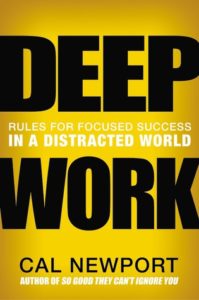
Deep Work by Cal NewportDeep Work

Cal Newport is an associate professor of computer science at Georgetown University. He also likes to study the impact of technology on society. His book, Deep Work, champions focused thinking in a noisy world.

In an interview with The New York Times, Newport explained some important concepts from Deep Work. First, “deep work” is focusing on an intellectually demanding task without any distractions. Newport says we need more of it. The term “attention residue” describes what happens when people switch focus between tasks. Every time we shift our attention, e.g. to check email, our ability to think and reason drops for a significant amount of time. If we constantly check apps and devices, we are living in a state of attention residue, and our mental capacity suffers. Finally, Newport says, concentration takes practice, and if we always attend to phone notifications and social media posts, we will never learn how to focus and think deeply.

“If you… always whip out your phone and bathe yourself in novel stimuli at the slightest hint of boredom… when it comes time to think deeply about something, your brain won’t tolerate it.” ~ Cal Newport

The point: Limit distractions so that you can train your brain to focus and work efficiently on important tasks. Make time for deep work.

Newport also recommends embracing boredom and quitting social media. He believes the cost of social media, in terms of distraction, outweighs the benefit, which is why he advocates Digital Minimalism (Which is the title of his book to be released February 2019.)

Technology is designed to be addictive

In an interview on CBS’s 60 Minutes, Tim Harris, former Google product manager, spoke about smart phone design. According to Harris, smart phone apps and content are supposed to be habit forming so the consumers will use them for long periods of time. Harris said, “Inadvertently, whether they want to or not, [designers] are shaping the thoughts and feelings and actions of people…There’s always this narrative that technology’s neutral. And it’s up to us to choose how we use it. This is just not true.”

The point: Don’t let the technology companies hack your brain. Know how technology can help and harm you, and be smart about how you use it.

I really like certain things about my phone- Google Calendar, reminders, the ability to communicate easily with my child who is away at college. But more and more, I’m backing off phone use. I turn off my phone around nine and leave it in the kitchen overnight, and I don’t look at it the next day until I’ve done my morning devotion, stretched, and made the kids lunch. (Unless the weather is bad, and I need to know if school is canceled.)

I also try to “batch” things, like checking email and social media only at certain times of day, (e.g., over lunch), and I turn off notifications so that I’m choosing when to open apps, not the other way around. Also, I will put my phone on do not disturb or even in another room while I’m doing deep work (writing, reading, piano), so that I can FOCUS on important tasks.

How do you feel about your relationship with your smart phone? What do you do to keep that relationship “healthy”?

Thanks for getting nerdy with me!



What is Justice?

justice

We’ve heard the word “justice” thrown around a lot in the past year: racial justice, economic justice, social justice. There were confirmation hearings for Justice Kavanaugh, and cries for justice for victims of abuse and assault. And everyone is still wondering what’s going on with the Justice Department and its Mueller investigation.

Justice is a familiar word, embedded in the foundation of our country, and yet it represents an abstract concept.  What does justice really mean? Equality? Fairness?

Apparently, a lot of people wanted to know the answer to that question, because “justice” had the most look ups in 2018 at MerriamWebster.com. It also had a spike in look ups compared to 2017. For those reasons, Merriam Webster chose “justice” as its Word of the Year for 2018.

Which brings us back to the question, what does justice mean?
Justice comes from the Latin justus, from jus right or law, and it has several meanings, including:

  • the maintenance or administration of what is just especially by the impartial adjustment of conflicting claims or the assignment of merited rewards or punishments
  • a judge or supreme court justice
  • the administration of law
  • the quality of being just, impartial, or fair
  • the quality of conforming to law
  • conformity to truth, fact, or reason : CORRECTNESS

I’m glad people are looking up justice and pondering its meaning. We live in challenging times, when we are questioning ideas and patterns of behavior that have been accepted for many years. We need to ask these important questions, but what can guide us to the answers?

In America we have our law, the Constitution, for a standard, but the Constitution is open to interpretation. And look at that last definition for justice: “Conformity to truth, fact, or reason: correctness.” These days, thanks to the Internet and social media, opinion can be misunderstood as fact, truth can be relative, and reason sometimes gets lost among passionate beliefs. When we speak of justice, we must not only decide what conforms to “correctness”, but also determine what exactly “correctness” is.
Justice is not a word to toss around carelessly, and its meaning will definitely be tested in 2019.  I plan to watch carefully.  How about you?

Other popular look ups on the Merriam Webster site in 2018:

  • Nationalism-a sense of national consciousness exalting one nation above all others and placing primary emphasis on promotion of its culture and interests as opposed to those of other nations or supranational groups
  • Pansexual-of, relating to, or characterized by sexual desire or attraction that is not limited to people of a particular gender identity or sexual orientation; also : tending to suffuse all experience and conduct with erotic feeling
  • Lodestar– one that serves as an inspiration, model, or guide (used in reference to John McCain)
  • Excelsior– “higher” (motto of New York and sign off of famous comic book writer Stan Lee, who died in 2018)

What words from 2018 most interested you?  

Thanks for getting nerdy with me!

Why Do We Send Christmas Cards?

Every year, as I seek to shorten my list of Christmas to dos, and therefore limit my holiday exhaustion, I ponder The Christmas Card.  Is it worth coercing my people to pose for a picture?  And if yes, what should we wear?  Should I write a letter, or is a brief blurb on the back of the card enough?

The Christmas Card takes a lot of energy: assembling the family unit; enduring the grumbling; running between the tripod and the family huddle before the shutter timer goes off; designing the perfect photo card; choosing the perfect words.  And then there’s the mail merge  (I don’t print mailing labels enough; each year I must relearn the process) and the hours spent signing, stamping, sealing.

Christmas would be simpler without The Card.

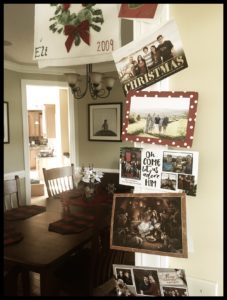
I like to display my cards in the entrance to our dining room.

But I love GETTING cards.  I can’t wait to see how families and friends have grown and changed over the year.  I lament that in many cases, communication has been reduced to this annual ritual, and yet I’m thankful to at least have that.  I devour the letters that come with cards; I wish more did.

And so, every year,  I make the photo card and compose the letter.  I never use verse or acrostics (some people are very creative!), but write a family update, allowing one paragraph for each Tomiak.  I try to keep it real with snippets and quotes from our daily lives.  I avoid boasts and saccharine sweet sentiments. I hope to create something informative and entertaining.

This year, as if they heard my doubts, a few friends and family have made the time to tell me how much they love and look forward to my letter.  I appreciate the fact that in this busy world, at this busy time, if people make the effort to complement you, they usually mean it.

So The Christmas Card is a tradition I will keep.  Which of course leads to the Word Nerd question, how did the tradition of sending cards start?

Way back in 1843, in Victorian England, a man named Henry Cole had a problem: too many friends.  The custom of sending a Christmas letter had been around for a long time in England, but it got even more popular with the introduction of the “penny post”.  People could send a card or letter anywhere in the country for just one cent.  Mr. Cole didn’t want to neglect his duties of correspondence, but he simply didn’t have enough time to write everyone in his social circles.  So he had an idea.

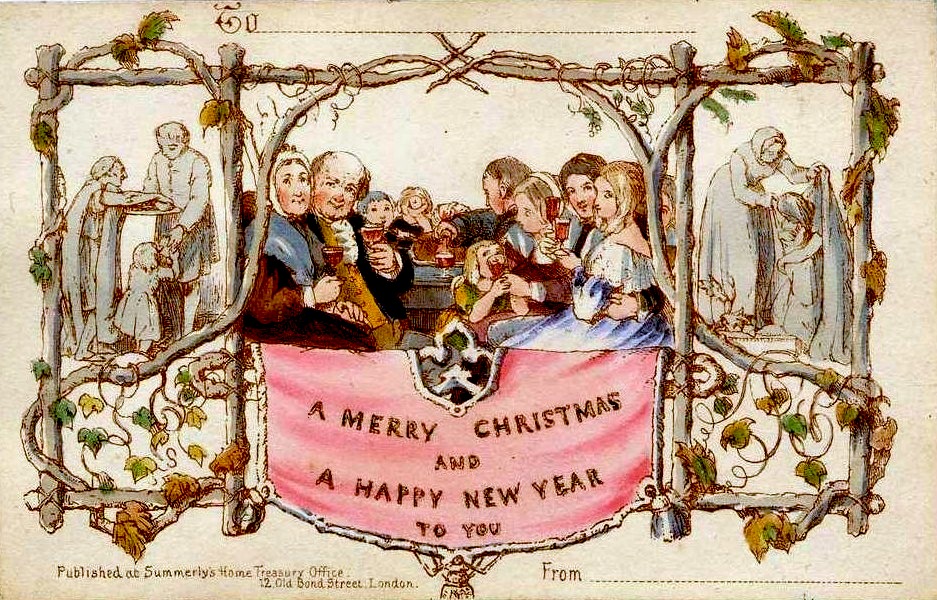
Mr. Cole asked his friend J.C. Horsley, an artist, to create a Christmas illustration.  Cole printed that image on 5×3 inch pieces of cardboard with the generic greeting,  “A Merry Christmas and a Happy New Year to You.”  Cole could still personalize the postcard by writing a name at the top, but the bulk of the work was done, and the first Christmas Card was made.

The first Christmas card
The first Christmas card, designed by John Callcott Horsley for Henry Cole in 1843. Public Domain.

It took awhile for the tradition to catch on in the United States.  Louis Prang, a Prussian immigrant with a print shop near Boston, created the first Christmas card in the United States in 1875.  The custom didn’t truly get popular until 1915 when the founders of what would eventually become the Hallmark company introduced a new format for the card: bigger, folded like a book, mailed in an envelope.  The business boomed in the 1930s and 1950s and continues to be popular today.

It seems to me, we are going back to the original idea of a decorative post card.  Most of the cards I get are a single page, usually with a picture and a sentiment.  I love them, and I keep many displayed throughout the year as a reminder of friends and family who live far away.

If you’d like to learn more about the history of The Christmas Card, visit Smithsonian.com.

Do you send holiday cards?  What format do you prefer?  What do you do with the holiday cards you receive?

Happy Holidays!


Favorite Books of 2018

Thank you to everyone who contributed book ideas to my Favorite Books of 2018 list!  We now have a great selection of books to use for gift giving or just personal reading.  This year’s winner of the Favorite Books giveaway is Sara Gearheart!  Congratulations Sara!

Here is your list for 2018, with comments from readers in quotes.  We are heavy with historical fiction and memoir this year.  Click the links to read more about each book in Goodreads.  Enjoy!

Fiction

  • The Valentine Trilogy (Very Valentine; Brava, Valentine; The Supreme Macaroni Company)  by Adriana Trigiani

Fantasy

The Great AloneHistorical Fiction

  • America’s First Daughter by Stephanie Dray.  Well researched fiction about the life of Martha Jefferson, Thomas Jefferson’s daughter.  (My review here.)  “I loved First Daughter. It was fascinating to understand the role that Martha played in her father’s career. An amazing read!!”
  • Before We Were Yours by Lisa Wingate.  (Goodreads Choice Winner 2017).  “It is historical fiction based on the illegal activities of the Tennessee Children’s Home in the 1930’s-50’s. There are dual story lines – one in the 30’s and one current day. Some wonderful characters.”
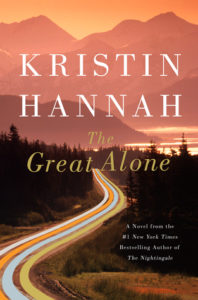
  • The Great Alone by Kristin Hannah. (Goodreads Choice Award for historical fiction 2018) “The first book I’ve read that is set in Alaska. The 70s are my favorite decade so I like anything from that era.”
  • The Heart’s Invisible Furies by John Boyne. “Give yourself time to become immersed in the life of Cyril Avery, who is born to a teenage girl in rural Ireland and adopted by a wealthy couple in Dublin.  Each section of the book fast forwards seven years, so we meet Cyril’s mother, then Cyril at seven, 14, 21, and so on.  His story isn’t necessarily an extraordinary one, but it unfolds beautifully.  The writing is fabulous, the characters are magnificent, and it’s just the kind of book that settles in your heart and stays there.”
  • News of the World by Paulette Jiles.  From Goodreads: “In the aftermath of the Civil War, an aging itinerant news reader agrees to transport a young captive of the Kiowa back to her people in this exquisitely rendered, morally complex, multilayered novel of historical fiction… that explores the boundaries of family, responsibility, honor, and trust.”  Says the reader who contributed: “Brilliant.”
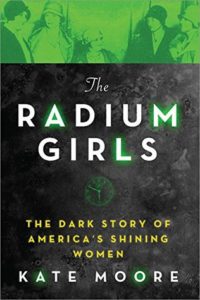
  • The Radium Girls: The Dark Story of America’s Shining Women by Kate Moore.  radium girlsA history of the women who worked in radium factories, the side effects they suffered, the regulations and research they inspired.  “Very different from anything I have ever read, and a piece of history I never knew existed. It was riveting, terrifying and fascinating all at the same time!”
Memoir

  • Shoe Dog by Phil Knight.  “Story of the creation and growth of Nike, including how they came up with the name and swoosh.  Mr. Knight is a runner that just wanted to make better running shoes.  A good read, a history story including high risk business decisions that turned out well for Nike.  The story moves along well.”
  • Becoming by Michelle Obama.  “It is really good. She shares her story and it really feels like she is the working mom next door. So many of the struggles and insecurities (I’m not sure if that is the best word…) she expresses are demons we all fight.”
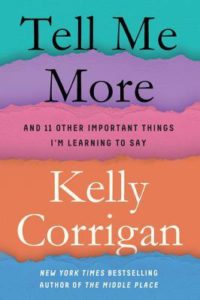
  • Tell Me More by Kelly Corrigan (see my review here)
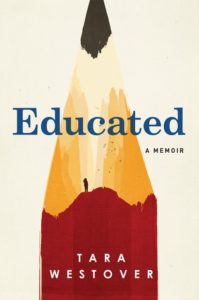
  • Educated by Tara Westover  (Goodreads Choice Award winner for memoir 2018) From Goodreads: “An unforgettable memoir in the tradition of The Glass Castle about a young girl who, kept out of school, leaves her survivalist family and goes on to earn a PhD from Cambridge University.”
  • QB: My Life Behind the Spiral by Steve Young.  From Goodreads: “In the most candid and compelling sports memoir since Andre Agassi’s riveting bestseller Open, former San Francisco 49er, Super Bowl champion, NFL MVP, and Hall of Famer Steve Young gives readers an unprecedented and stunning inside look at what it takes to become a super-elite professional quarterback.”

The Mighty DeadNon-fiction

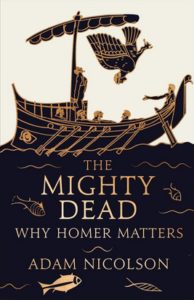
  • The Mighty Dead: Why Homer Matters by Adam Nicolson  “It’s a broad take on the importance of the Illiad and Odyssey, alternating between a very personal view of the poems and a sweeping analysis of the book’s setting, language, historical accuracy, and who Homer may or may not have been.  It’s amazing how many echoes can be detected in these poems from an oral, tribal, oral world if you listen carefully enough.”
  • How We Decide by Jonah Lehrer.  “Great book that comes with some interesting controversy.”  (Lehrer was accused of making up Bob Dylan quotes).

Young Adult

  • The Hate U Give by Angie Thomas.  (Goodreads Choice Award winner 2017, young adult).  A great book about racism and awareness.  See my full review here.

What a great list!  Happy shopping and reading everyone!


What is a balaclava?

We got hit with 16 inches of snow last Sunday.  Enough for good sledding, snow men, and week out of school!

The view outside my front door last Sunday.

For the past few days, the laundry room has been littered with ski bibs, wet socks, and random gloves, as well as an interesting sounding article of clothing my youngest struggled to say: balaclava.  [bal-uhklah-vuh]

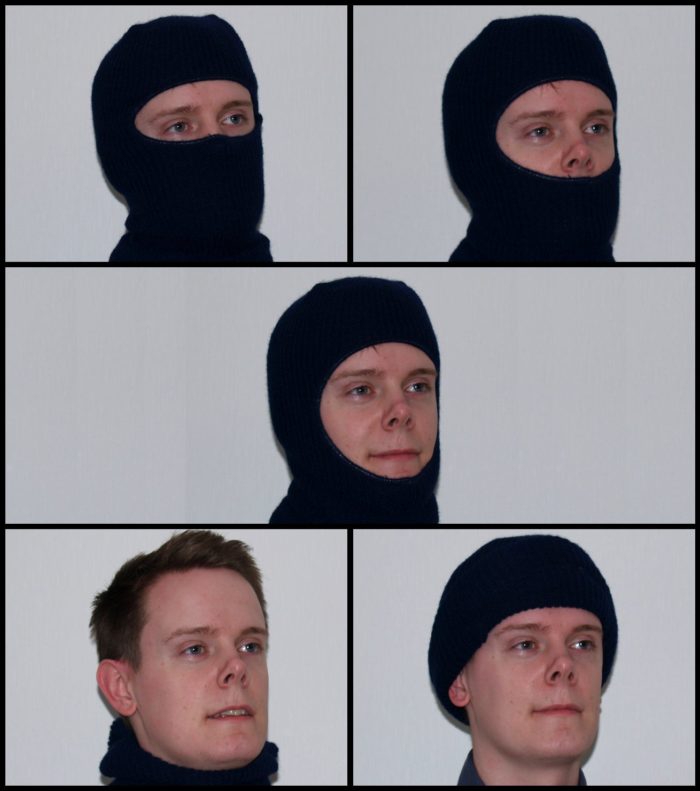
Once we got the pronunciation down, we had to wonder, where did this thing get its name?  It sounds Greek, or maybe Eastern European.  Turns out, the balaclava, a close-fitting cap that also covers the head, neck, and tops of shoulders, has a very interesting history going all the way back to the Crimean War.

The Crimean War was fought on the Crimean Peninsula, in what is now called Ukraine.  In 1854, near a small town called Balaklava, French, British, Sardinians, and Ottomans fought against the Russians in cold, harsh conditions.  The British soldiers were poorly equipped for the weather and wrapped garments around their heads to keep warm.  Eventually, the name for this hat stuck.  (Thank you, Dictionary.com and Snowslang.com.)

Today, soldiers still wear balaclavas to protect the head and face.  They are also used by people who ski, snow board, bike, run, and ride motorcycles.  They can be worn with varying degrees of coverage based on what you need.

Balaclava
Erik Strandberg via WikimediaCommons CC-BY-SA

With cold weather upon us, perhaps a nice warm balaclava would be the perfect gift for someone who spends time outside!   We like to use them for skiing, biking, and obviously, playing in the snow.

What do you use to keep warm in the winter?  Would it make a good gift? 

Thanks for getting nerdy with me,


What Was Your Favorite Book of 2018?

I’m guessing sometime in the past several months you’ve read a book that has excited you, spoken to you, been impossible to put down.  The kind of book you tell all of your friends about and perhaps even give as a gift.

I would really like to hear about that book.  In return, I promise to make your holiday shopping a little easier.

Here’s the deal.  Today I’m starting the Favorite Books Giveaway for 2018.  Tell me your favorite book from 2018 and the reason you liked it.  I’ll add your book to a list of recommendations and your name to a drawing of potential winners. In the end, we’ll have a collection of fabulous book titles to use as a shopping guide, and one lucky winner will have a Barnes and Noble gift card.

Favorite Books of 2018: Giveaway details

  • You may enter the giveaway by commenting here on the blog, my Facebook profile, my Twitter feed, or my Instagram Favorite Book post by Friday, December 14, 2018.
  • Your comment must include your favorite book from 2018 and a short explanation of why you recommend it.  All genres welcome.
  • The book doesn’t have to be published in 2018, just read in 2018.
  • I will announce the winner on Monday, December 17 with the full list of favorites. That will give you plenty of shopping time. 😉
  • The giveaway winner must provide a mailing address for the gift card.

The first suggestions

Tell Me More Kelly CorriganMy favorite book this year was Tell Me More, by Kelly Corrigan.  It’s a thoughtful memoir about the things Kelly is learning to say to the people she loves, including “tell me more”,  “yes”, and “no”.  (Click to read my full review of Tell Me More.)


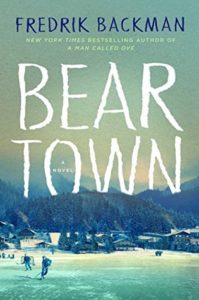
My next favorite was Beartown, by Fredrik Backman, author of A Man Called Ove.  Here’s the opening line of Beartown:

Late one evening toward the end of March, a teenager picked up a double barrel shot gun, walked into the forest, put the gun to someone else’s forehead, and pulled the trigger.  This is the story of how we got there.

Beartown, Fredrick BackmanWow!  Talk about a hook!  Beartown is the story of a small town and its obsession with hockey, but this isn’t a sports book.  It’s full of multidimensional characters with secrets and hurts who are all just trying to do the best they can.  It explores themes of loyalty, the role of sports in small communities, and how people gain power.

Two things I loved about Beartown.  First, throughout, Backman uses an onomatopoeia, “bang, bang, bang” to punctuate the narrative.  The “bang, bang” can be the sound of a stick hitting a hockey puck, the sound of a puck hitting the wall, or the sound of a gun going off.  Especially since I listened to the audio production of the book, this literary device effectively grabbed my attention and accentuated the fast pace of the story.

Second, I loved how Backman captured the dynamics of small town life.  I live in a small town, and Beartown felt real to me.  One of Backman’s characters says, “We may not know right and wrong, but we do know the difference between good and evil.”  Sometimes it’s hard to know the right thing to do.  Sometimes it’s easy.  And sometimes, it depends on the person who is choosing.  Backman explores this idea in multiple story lines, from multiple perspectives.  (Thank you, Dana, for recommending this book on Kiss My List!)

Now, it’s your turn.  What was your favorite read in 2018 and why?  Remember, you could win another book if you share!

Thanks for getting nerdy with me,