

Three Places to Visit in Arizona

travel in Arizona

In early April, daughter won a trip to Intel’s International Science and Engineering Fair (ISEF) in Phoenix. As soon as I heard she was going, I thought, “I want to go too!” Husband suggested we make it a family trip.

So, in a matter of hours, with the help of good friends, we planned a five day trip to Arizona. Phoenix is four hours away from The Grand Canyon, and we HAD to visit that, so our time in AZ involved many hours on highways. It was exhausting, but I’m glad we did it. Here are some highlights for anyone planning on spending time in Arizona.

Sedona

Our first day, we landed in Phoenix, grabbed a rental car, and headed two hours north to Sedona. Husband found an awesome resort called Los Abrigados that had suite style accommodations at a reasonable price, beautiful grounds (despite some construction), and very helpful staff.

The gorgeous red rocks of Sedona.

The scenery in Sedona is gorgeous. Robust rock formations, breathtaking in size and color, surround the little town. Hiking trails abound. Our second day in Sedona, we got up early to beat the crowds and hiked the Devil’s Bridge Trail. It was a fairly easy four mile trek that brought us to the largest natural sandstone arch in the Sedona area of the Coconino National Forest.

The Devil’s Bridge, Sedona. Very high!

My boys marched right over the arch, ready to pose for the kind hikers who had our phones and cameras. Unfortunately, I have a leg numbing fear of heights. “It’s wider than it looks,” they said. “No big deal.” So I ventured out and was fine until I got to the middle of the arch, felt the steady wind that stirs in places of great height, and glanced down at the rocks and trees below me.

It’s never good to look down.

I froze. My boys came back to me. I smiled for the camera and cleared off that arch as fast as my shaking legs allowed.

Sedona is a cozy tourist town with a friendly vibe. After our hike, we grabbed some treats from Sedonuts. (And we still haven’t stopped making jokes about that name.) We enjoyed a great dinner at the Secret Garden Cafe, which offered vegan options and had a no straw policy. Daughter would have loved it, but daughter was in Phoenix doing her super science thing with 1800 other super scientists. I sent her a pic.

Mindfulness on the mini golf course.

Things close down early in Sedona, since it is a Dark Sky Community. There’s also a new age element, with crystal shops scattered throughout the town and multiple suggestions to visit a vortex. I never could get a straight answer on what a vortex is – a place with spiritual energy, I guess. Even the putt putt course at our resort encouraged relaxation.

There were many hikes we wanted to take but didn’t have time. I think we will go back.

The Grand Canyon

It was a four hour round trip journey from Sedona to The Grand Canyon, but it was worth it. We got to the south rim (the one closest to Phoenix) early (read: 8 am) to beat the crowds. We booked a guided tour with Bright Angel Bike Tours for $65 each and started our day riding along the rim of the canyon, getting fascinating information from our guides about how the canyon formed and the plants and animals that live around it. The bikes were comfy and easy to use.

The Grand Canyon, south rim
A view of the Grand Canyon from the south rim.

After our tour, we turned in the bikes and hiked down the Bright Angel Trail, one of the easiest and busiest trails at the canyon. Our tour guides told us only 5% of people who visit The Grand Canyon travel below the rim. So sad! The views only get better as you descend. We ventured about a mile down, with 900 feet of elevation change, and after pausing for the obligatory picture, child number three insisted we had to march back out “double time”. We let him go ahead.

A super early start, sunblock and water highly recommended!

Phoenix

The city is clean and well signed, and the convention center, where ISEF was held, was gorgeous. We stayed at an Embassy Suites in Scotsdale to avoid the pricier hotels (and parking fees) in the city, but Phoenix traffic is dense, and if I had a redo, I would pick a hotel closer to downtown and suck up the price. After all of the other driving we did, commuting 20 minutes every time we went into the city was exhausting.

After taking in the spectacle of 1800 science fair projects from 80 countries around the world, we ventured to South Mountain Park and Preserve, a 16,000 acre municipal park. We drove up to Dobbins Lookout, the highest point in the park, for a fantastic view of Phoenix and the surrounding area.

The view of Phoenix from Dobbin’s Lookout

Coming from the mountains of Southwest Virginia, we thought it was crazy how far we could see. AZ has mountains popping up, but overall it is SUPER FLAT, and you can see for miles. And, I’m not gonna lie, it freaked me out a little to know, and to see so clearly from Dobbins Lookout, that we were surrounded by barren desert on ALL SIDES. The Arizona landscape is fascinating, sometimes brown and scrubby, sometimes rugged and red, sometimes dotted with pines. I’m glad we got to see it, but I was also relieved to get back to the green of Virginia.

Have you ever visited Arizona? Do you have any travel tips you’d like to add?

Thanks for “traveling” with me!

What Is a Dark Sky Community?

Apparently, some towns in this great world of ours take light pollution very seriously. I always thought light pollution in cities and suburbs just made it hard to see constellations. However, turns out light pollution causes a lot of problems.

Beautiful rock formations like this are all over Sedona!

I became aware of the hazards of excessive night time lighting when we recently traveled to Arizona. We spent a few nights in the gorgeous town of Sedona, about two hours north of Phoenix. When I asked the concierge at my hotel to recommend a restaurant for dinner, she warned me that most places in Sedona close by 9pm.

Hello? That seems pretty early to shut down, especially in a tourist town. Turns out, Sedona is a “Dark Sky Community”.

According to the International Dark-Sky Association, Dark Sky Communities strive to decrease the negative effects of light pollution by creating and enforcing policies that promote education about light pollution and more responsible use of outdoor lighting.

Many species (including humans) need darkness to survive and thrive.

American Medical Association Council on Science and Public Health (2012)

Don’t think light pollution is a problem? Consider this:

  • wasted energy: excessive lighting at night results in wasted energy- at least 30% of all US outdoor lighting is wasted and results in 21 million tons of carbon dioxide needlessly released into our atmosphere
  • disrupted ecosystems: light pollution at night disrupts the nocturnal activity and breeding rituals of many species; artificial light disrupts the clues that many birds use for migration; sea turtles hatching on beaches are drawn away from the ocean by artificial light
  • human health: artificial light at night disturbs our biological clocks and our sleep patterns and causes increased risks for obesity, depression, sleep disorders, diabetes, breast cancer and more; most outdoor lights and computer screens use blue light, which is more energy efficient but worse for human health

One main reason we use so many lights at night is to prevent crime. However, multiple studies show little evidence that increased light causes a decrease in crime.

Luckily, I live on a farm far enough away from the glaring lights of the Walmart parking lot that I can see the Milky Way from my driveway. However, my small town is definitely not a Dark Sky Community. Perhaps it should be. To learn more about the International Dark Sky Places conservation program, visit DarkSky.org/our-work.

Have you ever heard of a “Dark Sky Community”? What do you think about the issue of light pollution?

Thanks for getting nerdy with me!

Embrace the Change

My oldest child has just completed his first year of college, and what a fabulous experience he had.  He challenged himself academically, physically, and socially.  He struck a successful balance between study and play.  He found wonderful friends, including his roommate.  And he and I established a rhythm for communication that gave him enough space, yet allowed me to feel connected. 

When people ask him about college, he says, “College is great!  Ten out of ten recommend.”

The goal of parenting is to launch, and my son has happily launched.

So why do I still get sad?

Ah, dorm life

I’ve been prepping my son for college for the past 15 years, but the transition hit me harder than I expected.  I approached moving day with a brave face, lugging linens and clothes up to the dorm room and helping just a little with organizing.  When it came time to go, I said a quick goodbye and cleared out before the water works began in earnest.  I was proud of myself. 

But two days later, middle son, who wanted to claim some much deserved space, asked for help cleaning out oldest son’s room.  I agreed, unaware of the emotional hurricane that was about to hit.  With each photo I unpinned from the bulletin board, the realization that things would never be the same sank in deeper and harder.  Soon, I was a mess of blinding tears and high pitched sobs.  Middle son stood perplexed beside me, holding a dust cloth and asking, “Mom, are you okay?”

That was my low point.

Since then, I’ve adjusted.  Somewhat.  I can leave after a visit without shedding tears, but sometimes, sadness unexpectedly pops up, like when one of his siblings says something that reminds me so much of him that my throat closes and I have to blink away the heat rising in my eyes.  My most recent relapse occurred when I realized he wouldn’t be home for his birthday for the first time ever.  I needed a hug from a dear friend to recover.  

A few weeks ago, I found a name for the emotions I’ve been grappling with for the past nine months: grief.  No one has died, but a season of my life is gone.  And oldest son is just the first domino to fall.  Soon, I will only have two children at home.  Then none.  Over the next few years, the daily pattern of my life will change dramatically.  This is a sobering and sometimes overwhelming thought.

But, naming my experience – grief – empowers me to deal with it more effectively.  I must be kind and patient with myself during the grieving process, but I must not wallow.  Change is hard for me, but it’s not necessarily bad. 

Instead of clutching onto the past, I can open my heart to the possibilities that lie ahead for my children and me, and honestly, opening feels better than clutching.  I will see new places as my children’s worlds expand.  I will pursue some of the interests I’ve limited or put on hold for the past two decades. And, as counter intuitive as it sounds, by giving my children space to grow, I believe I will eventually find myself closer to them.  Maybe not physically, but in other ways.

Honestly, opening feels better than clutching

Speaking of staying close, I’ve decided to embrace the social media /communication platform my kids like the most.  Currently, that’s Snap Chat.  I don’t exactly understand why everything has to come with an often goofy and crooked photo, but when I “snap” them, they respond quickly, and I get a glimpse of their world (often a classroom ceiling) or a precious face.  A friend calls it “proof of life”. 

As a mother, I often feel multiple emotions at the same time- pride, happiness, worry, grief- that’s just for one child.  No wonder it’s so exhausting!  But as challenging as this gig is, I know it’s making me a better person, and I know great things are in store, if I just open up and embrace the change.

For all you moms out there getting ready to launch a child, this is for you.  Open your heart and embrace the change.  And let me know if you need a hug. Thank you to Dana of Kiss My List for introducing me to the concept of “embrace”. 🙂

How do you deal with big changes?

Thanks for getting nerdy with me!

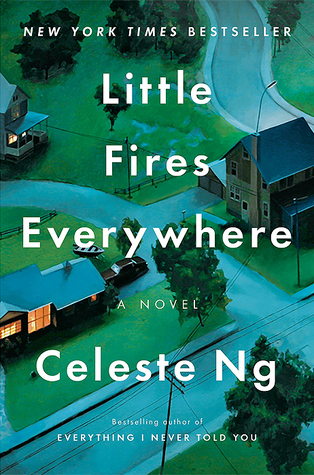
Great Book Quotes: Little Fires Everywhere

I recently finished listening to Little Fires Everywhere, by Celeste Ng. (I’m taking advantage of my Audible membership and getting way more “reading” done via audiobooks.) A full review will come soon, but since May in general, and this week in particular, is CRAZY, for now I will share one of my favorite passages from the book.

Little Fires Everywhere book
Have you read this? A great book.

Little Fires Everywhere explores, among other things, how people decide what is “right” and “wrong”. Ng does a great job of presenting sympathetic characters who stand on opposite sides of an issue, leaving the reader to decide who is right or wrong, if anyone is.

Near the end of the book, in chapter 16, one of the characters thinks:

For her, it was simple… one had followed the rules, and one had not. But the problem with rules, he reflected, was that they implied a right way and a wrong way to do things, when in fact most of the time, there were simply ways. None of them quite wrong or quite right, and nothing to tell you for sure which side of the line you stood on.

Celeste Ng, Little Fires Everywhere

As someone who has always liked “rules”, this passage hit me hard. In a good way. As I’m getting older, I’m realizing that I need to be more flexible in how I decide “right” and “wrong”. And that sometimes, rules serve a purpose, but sometimes they cause problems.

Where do you stand on rules?

Thanks for getting nerdy with me!

Why is it called “bussing tables”?

origin of bus boy

There are three teenagers in my family now, and as the month of June swiftly approaches, the topic of summer jobs has come up several times. Me to college son: “Aren’t you going to look for a summer job?” (He cites summer classes and travel plans as an obstacle.) Or daughter at the dinner table, “I’ve gotta find a job this summer. I need money.” (She needs to fund her weakness for sushi.)

While discussing job options, I shared that the teens’ father bussed tables during high school summers, which prompted my youngest to ask, “What the heck is bussing tables?” It was a curious question, how the “bus boy” got his name, and the Word Nerd had to research.

According to Barry Popik, a contributor to the Oxford English Dictionary and an expert on the origins of many food related terms, the term “bus boy” was used in the late 1800’s as a shortened form of “omnibus boy” to describe a waiter’s assistant who performed many or “omnibus” tasks, including filling water glasses, shuttling plates to and from the kitchen, and cleaning tables. (Omnibus means of, related to, or providing many things at once.)

“Bus boy” was cited in print as early as 1902, and the term “bussing tables” is seen in print from 1945. In those days, the waiter’s assistant was almost always a boy or man, but now women also perform this work, so the term “busser” is used more often.

Wondrous Words Wednesday

If you like learning about the origin of words, visit Kathy at Bermuda Onion for Wondrous Words Wednesday. Each week, bloggers share favorite words or new words they’ve learned.

Did you know where the term bussing came from? Do you have any other curious words about summer jobs to share? Cheers to summer, and hopefully, summer employment!

Thanks for getting nerdy with me!

The Importance of Silence

I’ve always said the month of May is crazier than Christmas. End of school year activities bombard my calendar, and I often feel like I’m treading water with bricks tied to my ankles. However, this May, the schedule is just as bad, but my attitude is better. I recently had an epiphany after receiving the same message three different ways in one morning.

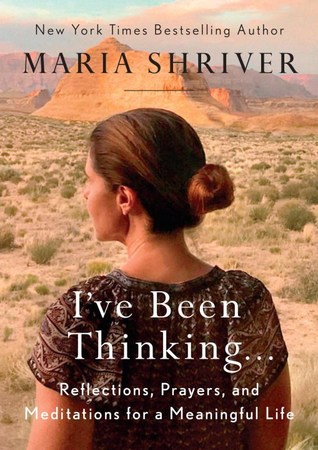
Maria Shriver

It came first via my morning devotional from the book I’ve Been Thinking… Reflections, Prayers, and Meditations for a Meaningful Life by Maria Shriver. It’s a collection of devotions on everything from grief to fortitude. In the segment, “When life throws you a curveball”, Shriver writes, “’Going internal’ – pausing, reflecting, meditating—allows us to bring sanity into our daily lives. It makes us better people, better professionals, and better leaders. It’s better for our brains and our bodies. It’s better for our self-respect. It’s better for the creative spirit that lives inside all of us.”


I took a deep breath and held those words close to my soul. Shriver’s recommendation to “go internal” was just what I needed before I left the quiet of my bedroom to start the day’s, and the month’s, many, many tasks.

Then later, with my sons, I read from Mother Teresa’s book Everything Starts from Prayer: Mother Teresa’s Meditations on Spiritual Life for People of all Faiths. The passage said, “Man needs silence. To be alone or together looking for God in silence. There it is that we accumulate the inward power which we distribute in action, put in the smallest duty and spend in the severest hardships that befall us. Silence came before creation, and the heavens were spread without a word.”

I’ve heard words like this before, but this time, I didn’t just hear them. I embraced them, because I needed them.

Interior silence is very difficult but we must make the effort. In silence we will find new energy and true unity.

Mother Teresa, Everything Starts from Prayer

Finally, late that morning, the message hit me a third time. I was lying on a massage table, and the therapist found a tight, angry muscle that ran along my spine from my shoulder blade to my hip. “My goodness,” she said. “What did you do?”

“Life,” I replied. I’ve been doing life. I’ve got four kids, one husband, and an overflowing mind. I exercise, eat my veggies, but I rarely pause. Silence is hard for me; stillness even harder. But Maria Shriver, Mother Teresa, and my massage therapist were all telling me the same thing: slow down. And finally, I’m wise enough to listen. I need to balance “doing” with “pausing” because, quite frankly, the alternative doesn’t work.

In the past, during frantic times, when I’ve chosen all chaos and no silence, I’ve ended up crashing physically and mentally. I’ve gotten so overwhelmed with doing that I’ve lashed out at the very people I’m doing all the stuff for.

Make time to pause and embrace silence.

This May is going to be different. When I feel my chest tighten or my stomach twist or the urge to rush frantically into a long to do list, I will heed the whispered call to “go internal”. I will give myself permission to pause, even if it’s just for five minutes, and immerse myself in quiet. I will trade the spiraling, self-depreciating script of “I can’t do this, there’s too much, I’ll never get it all done” for silence.

I’m a week in, and so far, this balancing thing is going well. How about you? During this busy month of May, will you give yourself permission to find some silence?

I hope so.

Thanks for getting nerdy with me!