Word Nerd Gift Recommendations 2020

One of the things I love about the holidays: sending and receiving cards! Are you surprised? šŸ˜‰ Hand written notes are one of my favorite things to give and receive- they convey thoughtfulness and caring, and I find great joy in sending them out into the world. I talk more about that love, and the origin of the Christmas card, in this post about the Christmas card tradition.

However, one of the things I like least about the holidays: finding gifts. I have a big family, and I don’t like stuff, or shopping, so I struggle to generate enthusiasm to buy more stuff for all of the people on my Christmas gift list spreadsheet. (Oh yes, I am a HUGE fan of spreadsheets, especially color coded ones.)

If you, like me, are a Word Nerd who struggles with gift ideas, here are some suggestions for people who love words, reading, and/or writing. These are all things I’ve used or read myself!

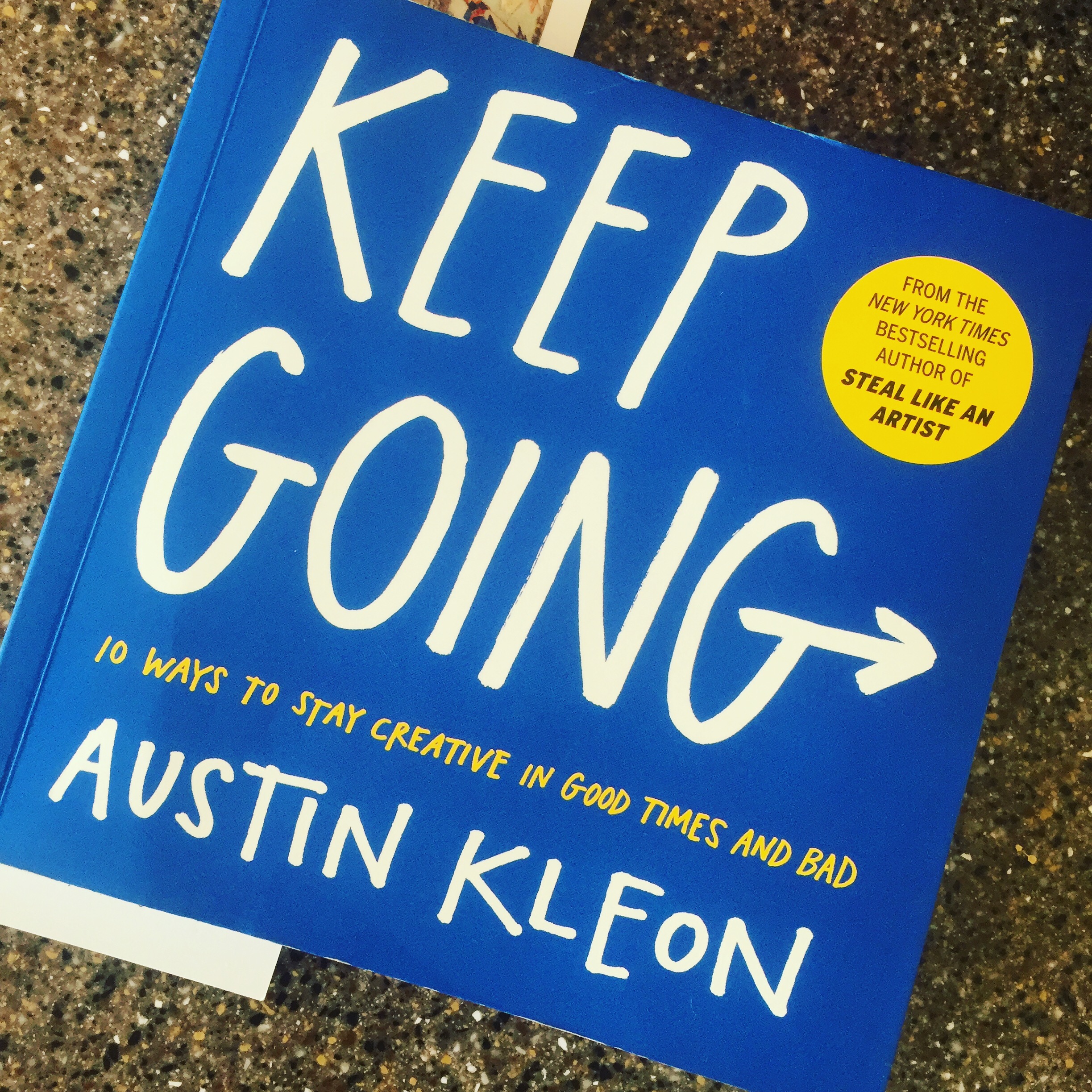
Keep Going by Austin Kleon

Keep going cover

This is a great little book to encourage your creative side. Filled with quotes, diagrams, and inspiring snippets of text, it doesn’t take long to read and is perfect to flip through when you need a mental boost. I got myself Steal Like an Artist and the Steal Like and Artist Journal, also by Kleon, to rekindle some creativity in 2021. After this crazy year, we all need to practice some nourishing creative habits.

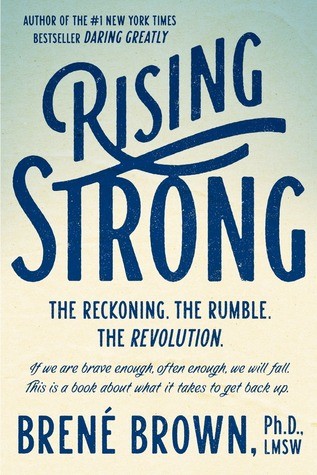
Rising Strong by Brene Brown

Rising Strong book cover

This is the third book by Brown that I’ve read, and it is by far my favorite. Rising Strong is about choosing to be vulnerable enough to uncover and understand our emotions. Brown, a social worker and researcher, uses data and personal anecdotes to explain how to rise from failure, disappointment, and heartbreak. I listened to the audio, which Brown reads herself, and next I need to make note cards, so the next time I’m overcome by a strong emotion, I will have the Rising Strong tools ready to deal with it.

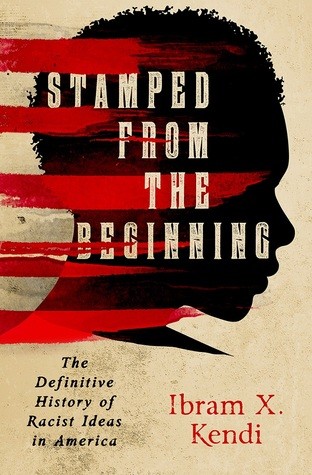
Stamped from the Beginning: The Definitive History of Racist Ideas in America by Ibram Kendi

Cover of Stamped by Ibram Kendi

This book is heavy- physically and mentally- but it’s a very important read. It’s at least three inches thick and has lots of well researched information about the history of racism in the Western world, starting before our country was even founded. Stamped covers aspects of history that my high school courses never did. I’ve learned about Jefferson and Lincoln’s ideas on slavery and racism, the complicated path of W.E.B. DuBois’s activism, and how Angela Davis influenced politics and feminism in the U.S. There is a YA version of this book, co-authored by the talented Jason Reynolds, that I have given to my son and family friends. This is a great time to explore the origins and influence of racism. Stamped is a great place to start.

A journal

I started keeping a daily journal a few years ago, under the influence of Austin Kleon. (Yeah, that guy I mentioned two gift ideas ago.) I use a basic Moleskin daily planner to record the events, ideas, accomplishments, compliments, or frustrations of each day. It’s been especially interesting to record and process 2020 with my journal. I’m sure 2021 will be another interesting, transformative year, and a journal will give your friend or loved one a permanent place to record thoughts and reactions. Who knows where Twitter and Instagram will be in 10 or 20 years, but that journal could be fun and instructive to look back on. Choose soft leather or fun, vibrant colors, whatever suits the recipient best.

Goodreads Choice Awards

I always scan the winners and nominees of the annual Goodreads Choice Awards to help me find potential gifts. These awards are given by every day readers, and I often enjoy what I find on this list.

Final recommendation

I’m growing more and more suspicious and unhappy with Amazon’s business model, so this year, I purchased all my Word Nerd gifts from either BarnesandNoble.com or independent bookstores. Book No Further, in Roanoke, VA, has great shipping service, and I feel good knowing I’m supporting a local, independent bookstore. Search independent bookstores near you to help out a local small business.

All of my recommendations are fairly serious. Do you have a “fun”, “escapist” book or gift to recommend? Or any other ideas to add?

Thanks for getting nerdy with me!

Disinformation and misinformation: it’s all bad

With all the talk about fake news out there, I wanted to get clear on two words often used interchangeably: disinformation and misinformation. Turns out, both terms refer to incorrect information, but the important difference is the intent of the person or persons spreading the information.

Misinformation, which combines mis (meaning wrong or mistaken) + information, refers to false information that is spread regardless of whether there was intent to mislead. Sometimes, people unknowingly share social media posts or news with inaccurate information; they don’t mean to mislead, they just don’t know it’s wrong. (Which is why we all need to get in the habit of fact checking before sharing.)

Also, sometimes people mishear, misunderstand, or forget details of the person or event they are posting about or sharing. There is no bad intent, but the information is still wrong.

Disinformation, which combines the prefix dis (meaning a reversal or a negative) + information, is false information spread by a government, intelligence agency, or other person or group as a subversive tactic. It can also describe deliberately misleading or biased information, propaganda, or manipulated facts. With disinformation, a person or group spreads wrong information in order to persuade, subvert, or arouse doubt or conflict.

Unfortunately, it’s hard to prove intent, so experts say it’s best to describe bad info as disinformation only if you know for sure that someone or some group intended to mislead. In most cases, it’s safest to use the word misinformation.

Regardless of which term you use, misinformation and disinformation present numerous problems. Social media and technology make it incredibly easy to share bad information that spreads quickly, and automation and artificial intelligence can create more traffic and attention than people. Many unethical characters are using this powerful, destructive, and divisive tool to influence public opinion and political outcomes.

And people don’t just use disinformation to sway opinion. Plenty unscrupulous characters at “dark PR firms” make tons of money from the distribution of bad information. For a scary and concerning read, check out this Buzz Feed article, “Disinformation For Hire: How A New Breed Of PR Firms Is Selling Lies Online”, in which a software developer brags about his ability to collect and distribute bad information with his “Content Farm Automatic Collection System” that shares links to misleading articles via multiple websites and fake social media accounts.

There is now a worldwide industry of PR and marketing firms ready to deploy fake accounts, false narratives, and pseudo news websites for the right price.

Craig Silverman, Buzz Feed news

I also recommend listening to this episode of the Make Me Smart podcast, in which an expert on disinformation discusses the depth of the problem.

Thanks to misinformation and disinformation, we are being manipulated by the very things we love: words. To prevent being duped by disinformation campaigns, we need to learn about this blooming problem, increase our awareness of mis- and disinformation, and prevent the spread of false information.

Here are a few ways you can fight back:

  • fact check before posting and sharing
  • consume content from a wide variety of reliable sources
  • consult official and well respected websites, such as those for local, state, and national government offices, for accurate information
  • avoid obscure, previously unheard of sources

If you’d like to learn more about disinformation, please check out:

Are you aware of mis- and disinformation, and what do you do to combat them?

Thanks for getting smart with me!

Give yourself permission to be happy

At the start of the holiday season in what has been a long, frustrating year, I want to tell you something incredibly important. So stop multitasking and take a few minutes to read and fully digest these words:

We do not have to be good at everything.

We live in a society that glorifies hard work and misery. We all compete for the prize of who is the busiest, who is the most tired, who has the most stress. But in the long hours of stretched thin overworking, have you ever paused to ask yourself why? If we don’t find joy in all of this hard work, why are we spending so much time doing it? The pandemic, among other things, has reminded us that life is precious and time is not a thing to waste. As we close out this trying year, we should contemplate what we have learned in the time of corona and how we can make life better moving forward.

As you celebrate what you are thankful for this week, I urge you to think about what brings you joy, and vow to spend more time doing those things, and less time being miserable.

It’s okay, I give you permission. And I’ll do it too. šŸ˜‰

Happy Thanksgiving!

World reading habits in 2020

Word Nerds want to know: how has the 2020 crazy affected reading habits? Hopefully for the better? My guest Isabela Cabrera from Global English Editing has some interesting statistics for you…

As the world muddled through the coronavirus and lock downs in 2020, it’s no surprise that many of us turned to something familiar: reading books. Books are not only a great escape from daily life, they also have a number of science-backed health benefits.Ā 

Given most of us spent a lot more time at home this year, reading was a healthy thing to dive into. But how exactly did our reading habits change this year? What were we reading? And which countries read the most?

Global English Editing set out to answer these questions in their new infographic. A few of their surprising findings include:

  • India reads more than any other country, followed by China and Thailand
  • Romance is the most popular genre, accounting for one-third of all fiction sales.
  • Printed books are stillĀ  more popular than eBooks
  • 35% of people said they read more books because of the lock downs

To discover more fun facts about world reading habits in 2020, check out the infographic below.

I am horrified that the United States is at the BOTTOM of the list of countries that read the most. We’ve got to do something about this, Word Nerds! What is the most interesting stat you found in this infographic?

Thanks for getting informed with me!

How to cultivate joy

As we face upcoming winter months, with fewer hours of daylight, increasing ā€œpandemic fatigueā€, and a divisive political climate, it would be easy to give in to despair. But I’m not going to, thanks to my secret weapon: joy.

According to Merriam-Webster, joy is ā€œthe emotion evoked by well-being, success, or good fortune or by the prospect of possessing what one desiresā€. However, I don’t like that definition, especially in the midst of a pandemic, because it’s situation specific. I believe one can have joy without success or good-fortune. It’s all about the verbs you choose for living your life.

Gifts of Imperfection book cover

In her book, The Gifts of Imperfection, Brene Brown, Ph.D. and L.M.S.W., draws a careful distinction between joy and happiness. According to Brown, happiness is a human emotion that depends on circumstances (like the Merriam-Webster definition), but joy is a spiritual way of engaging with the world that focuses on gratitude. Her research found that joyful people keep gratitude journals, do daily gratitude meditations, and make time in the middle of their busy days to actually say out loud, ā€œI am grateful for _______.ā€ While no one can be happy or joyful all the time, Brown found that the research participants who actively tried to build joy into their lives were ultimately more satisfied.

So what are some other habits to help us cultivate joy? At a recent writing conference, children’s author Claudia Mills shared several tips for ā€œworking happier, not harderā€ that I found immensely inspiring. First, she reminded us that little things add up to big things, for the good and the bad. If we have a hobby or a skill we want to work on, we shouldn’t be upset if we can only devote a few minutes each day to that activity. A daily practice will build up to lots of time, if you stick to it. So, think of the thing that fills your spirit and makes you feel joy – reading, writing, painting, meditation, exercise – Ā and allow yourself just a little bit of time each day to do it.

Recently, I was discouraged I couldn’t get through more books! So many to read, so little time and energy! I used to read before bed, but often these days I’m so tired at night I can’t focus. I decided to set aside just 15 minutes at the beginning of the day to read, and now I’m halfway through a 600 page history book! (It’s Stamped from the Beginning by Ibram Kendi, an incredibly important read, btw.)

Claudia also suggested that we use envy as inspiration. Instead of being jealous about the success or situation of others, we should try to emulate the habits and practices that lead to success. Even more importantly, we should consider carefully who we envy, choosing to imitate the actions of people who have a high quality of daily life and exhibit true joy.

Finally, Claudia urged us to document and celebrate our achievements. By making time to pause and appreciate our accomplishments, even using a journal to list successes and compliments, we will focus our attention on what we have, instead of what we don’t. I keep a daily journal and need to remember to put those positives in my entries, highlighted with clouds and asterisks!

As the days shorten and our battle with the coronavirus continues, don’t despair. Find the things that fill your spirit and do them, even for just a few minutes a day. Don’t depend on your situation for happiness; do the verbs that will cultivate joy.

Happy Friday, and thanks for getting nerdy with me.

Word Nerd Recommendations for fall 2020

Whew! I haven’t posted a book review in ages, and now is exactly the time when we need good entertainment. Today I will recommend not one, but THREE books for you, as well as a thought provoking documentary and a fantastic TV series.

First, the books. I love to write and read YA contemporary, so here are a couple novels in that genre for you to sample.

Five Feet Apart by Rachel Lippencott

Five Feet Apart cover

Stella has been living with cystic fibrosis for years now, and she likes to control her world. She knows her parents’ failing marriage cannot take another family crisis, so she does everything she can to stay well, until Will ends up a few doors down from her in the hospital.

Will, another CF patient with a crooked smile and sarcastic charm, has a particularly virulent infection in his lungs. He is the last person Stella should be near, and the very person she can’t stay away from.

Five Feet Apart is a story about accepting loss and discovering what living really means. It has a positive ending, but is sad at times, so if you’re a little down from the pandemic, you might want to wait on this one. However, it strikes an interesting chord in the time of corona, as Will and Stella are constantly reminded to stay six feet apart to avoid sharing Will’s infection. The themes of finding connection while maintaining distance and living with limitations felt particularly relevant at this time. I listened to the audio book, which is well done.

What I Like About You by Marisa Cantor

In real life, Halle Levitt is quiet, anxious, and timid. Online, Halle is Kels, the confident YA book blogger with a huge following. Halle started her blog under a persona so she could establish herself in the book world independent of her grandmother’s publishing legacy, but she learns that maintaining two personalities – one IRL and one online – is exhausting and problematic. Especially when romance is involved.

What I Like About You explores the differences between online and IRL relationships and the disconnect between how we present ourselves online and who we really are. It does a nice job of pointing out the challenges modern teens face balancing virtual and physical interactions without being pedantic. I listened to the audio book which was at times painful; the narrator did a great job, but since the book includes lots of online interactions, it was annoying to listen to the dates and times of Tweets and texts. I would have skimmed over these if I was reading. It was very distracting when listening to the story.

Paradise by Toni Morrison

book cover paradise

Paradise is one of my favorites, worthy of a reread every decade or so. (I just finished my third read.) It compares and contrasts two communities. One, the town of Ruby, was established by the descendants of freed slaves and focuses on tradition, righteousness, and fear. The other, just 17 miles away at The Convent, is a collection of unlikely female housemates, exiled and grappling with their identity and their pain.

Morrison’s writing is powerful, layered, and poetic. She tackles complicated issues: the interactions between black and white, woman and man, outcast and chosen. It’s not an easy read, but it is a worthwhile one, especially these days. ā€œSo the venom is manageable now. Shooting the first woman (the white one) has clarified it like butter: the pure oil of hatred on top, its hardness stabilized below.ā€ Although it was first published in 1999, its themes and questions remain relevant today.

The Social Dilemma

This documentary, available on Netflix, features several former employees of Big Tech who express their concern for the negative influence of social media. These former employees of companies like Google, Facebook, and Twitter, call for increased regulation and attention to the hazards of giving so much of our attention to our devices. Although The Social Dilemma has come cheesy scenes of a family “under the influence” of technology, the documentary raises interesting questions about the effect of tech on our attention, our mental health, and our democracy.

Here are some thought provoking quotes that stuck with me:

ā€œThe platforms make it possible to spread manipulative narratives with phenomenal ease, and without very much money.ā€ –

RenĆ©e Diresta, research manager of Stanford Internet Observatory, former head of policy at Data for Democracyā€

There are only two industries that call their clients “users”: illegal drugs and software.

Edward Tufte

The Gilmore Girls

Bonus recommendation: The T.V. show The Gilmore Girls, which depicts the loving relationship between Lorelai Gilmore, a strong, independent young single mother, and her precocious daughter Rory. While exploring the challenges of family and growing up, The Gilmore Girls is cheesy, often predictable, and makes me, my husband, and my 14 year old son laugh out loud. The characters are interesting and the banter is irresistible. It’s the perfect escape from our current crazy, and yet it still covers timeless topics thoughtfully.

There you go! Hopefully these recommendations will give you some valuable content to consume over the next month or so. Do you have anything to add to this list? Please share in the comments!

Thanks for getting nerdy with me!