Valentine’s Day approaches, and with it, in our house at least, heart shaped sugar cookies with sweet pink frosting and Oreo cookie truffles. Then, shortly after, the “detox” of Lent begins. No dessert for six weeks!
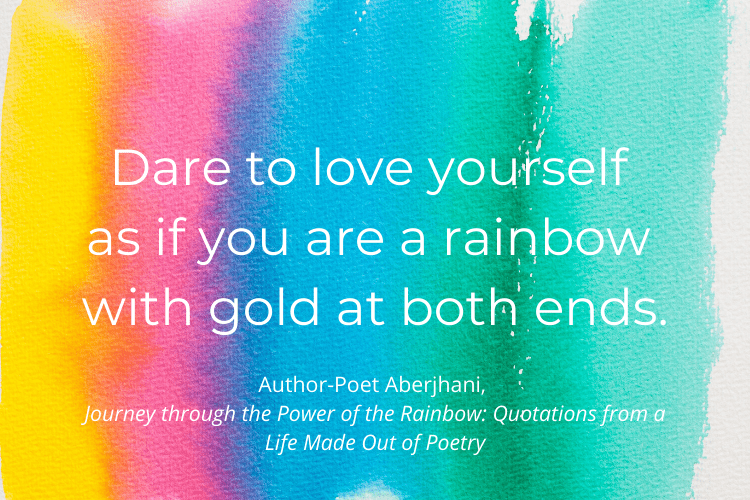
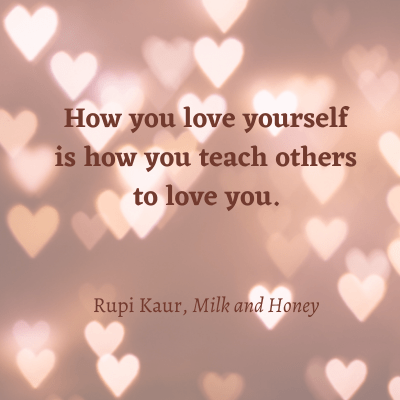
Whether or not you have a significant other to shower with sweet treats or overpriced cards this Valentine’s Day (seriously, make your own!), I encourage you to use this “Hallmark holiday” as a reminder to embrace love, for yourself and the world around you. We live in challenging times, and this silly pink day, in the darkness of February, is a great excuse to love yourself and extend love to those around you – including people you don’t know or understand.
Since it’s gray outside, and therefore perfect reading weather, here are a few books I recommend to help you love yourself. If you can add any others, please do so in the comments!
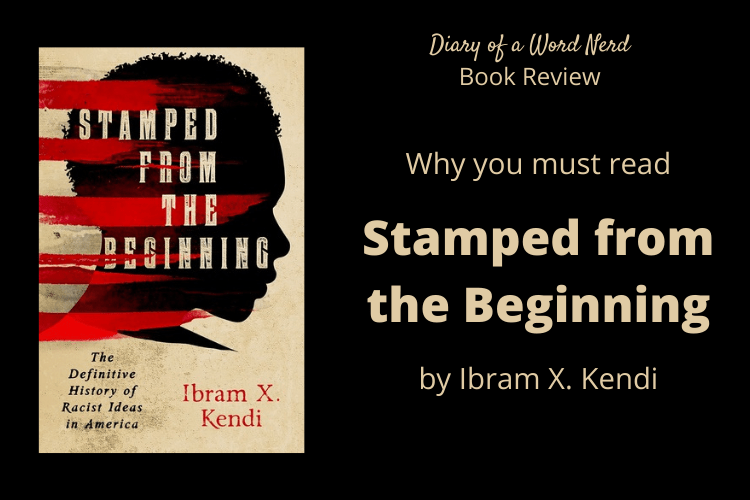
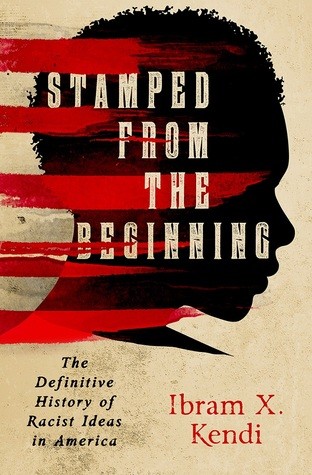
Kendi covers historical information I either missed or forgot or was never given in school. He describes things I’d never heard of before, such as the Biblical justification of slavery known as “the curse of Ham” or the fact that Ronald Reagan launched his War on Drugs in the 1980s at a time when drug crime was actually quite low. He provides context around key events of American history, such as the Civil War, that gave me a better understanding of our country’s complicated relationship with racism.
Also, now I know who Angela Davis is.
Throughout the book, Kendi presents the responses of assimilationists, segregationalists, and antiracists to events in American political life, and how those responses affected policy and the lives of African Americans.
Although Kendi’s opinion clearly comes through in the book, this is not an opinion piece. Kendi includes no less than 45 pages of notes and references in the back of his book, and he obviously did the exhaustive research necessary to produce a “definitive history.”
What I didn’t like
Stamped from the Beginning is heavy, physically and intellectually. It requires a hearty commitment to read and digest all of the material it presents. Also, sometimes I found Kendi’s language confusing. He tends to use long sentences with complicated syntax, and on several occasions, I had to reread sections to understand what he was trying to say.
Recommendation
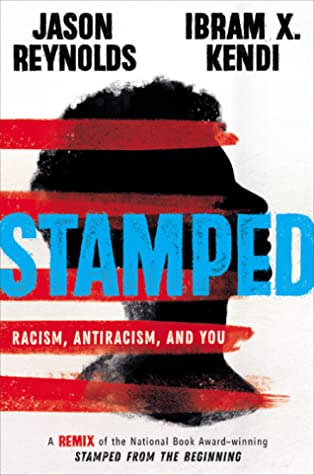
Everyone needs to explore and better understand the complicated history of racist ideas and policies that have affected America since its inception. I strongly encourage you to take a crack at Stamped from the Beginning. If 500 pages is too daunting, check out the YA remix of Stamped that Kendi wrote with the amazing and award winning kid lit author Jason Reynolds. It’s calledStamped: Racism, Antiracism, and You. My friend Dana reviewed it last year and called it “an accessible, engaging narrative that I believe every American teen and adult should read.”
Have you read Stamped or its YA remix? What did you think? What other books about racism can you recommend?
Happy Black History Month, and thanks for getting nerdy with me!
The Word Nerd is reading…
Just read: All American Boys by Jason Reynolds, Such a Fun Age by Kiley Reid
Currently reading: Piecing Me Together by Renee Watson
Currently listening to: One of Us is Lying by Karen M. McManus and Rising Strong by Brene Brown.
I’m going to steal a trick from my friend Amy and offer you some Sunday inspiration. Snow frosts the tree limbs and evergreen leaves outside my window, and the crisp winter coating hides the brown grass and helps me forget, temporarily, the challenges of life.
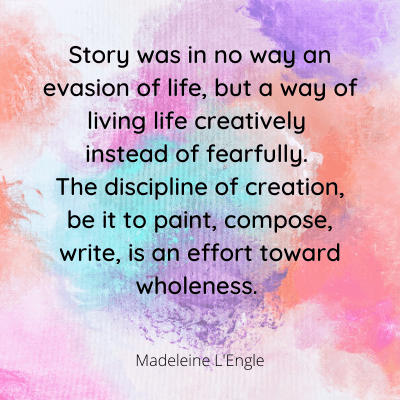
In a recent blog post at her amazing site Helping Writers Become Authors, K.M. Weiland shared some very inspiring words from Madeline L’Engle’s book Walking on Water: Reflections on Faith and Art:
“Create” is my word for the year of 2021, as I still have not made creating a big enough priority in my life. I plan to create, and move toward wholeness, this Sunday. Will you?
If I gave you two minutes to explain populism, what would you say?
Yeah, up until this week, I didn’t understand populism either. I’m no political science expert, but after reading about the subject, I have better understanding of populism and the controversy around it. To follow up on my post about the power of words, I’d like to try and explain this charged and complicated word.
A vague term
Populism first showed up in America in the late 1800s, when people frustrated with Big Business and the government formed the Populist Party. Its platform called for more economic regulations, nationalized railroads, and directly elected senators. The party had some success, but never cracked our two party system, and “populism” remained largely a term discussed by academics.
Starting in 2016, “populism” gained popularity as the media claimed that Brexit, the 2016 U.S. Presidential Election, and Viktor Obrbans’ takeover of Hungary showed a rise in worldwide populism. However, even though we are hearing the word more, it usually doesn’t come with a definition, so we are left with a vague term often used to evoke negative feelings.
Populism is frequently associated with charismatic politicians who appeal to the resentment of the “common man” and make promises to end their struggle. Mainstream media and politicians apply the term to political movements that don’t fit the mainstream. Populist leaders are characterized as using highly emotional and simplistic rhetoric and backing opportunistic policies to win support of voters. But couldn’t this last sentence apply to many politicians? And therein lies the problem of using a broad term.
Trying to define populism
In 2004, Dutch political scientist Cas Mudde published “The Populist Zeitgeist”, a paper explaining the two core values of populism. 1) Society exists in a tense, moral division between “the people” (who are good) and “the elite” (who are corrupt and out of touch). 2) Politics should represent the “general will” of the people, a common sense set of ideals shared by “ordinary people.”
This definition, used widely by journalists, is often referred to as the “thin ideology definition” because it rests on those two basic tenets. Mudde asserts that populism, because it is a thin ideology, often partners with another ideology to give it more depth. This explains why politicians as vastly different as Donald Trump and Bernie Sanders can both be considered populist. Each could be said to champion the will of “the people” over the self-serving “establishment. “
Different forms of populism dictate who belongs in the morally divided groups. “The people” can be made up of anything from an ethnic group feeling threatened or people facing economic hardship. For example, in right wing populism, “the people” are often those who resent an underclass and the elites who favor that underclass with policies to keep power away from “real people.”
However, some academics see populism as a political style, not a value based ideology. They argue that conflict is inherent in political life, and there will always be a “we” and a “they”. In democracy, the status quo shifts as people unite to create change. What we should expect as normal fluctuation often looks like populism, and therefore characterizing populism as negative can stifle the normal democratic process. Populism often raises valid questions about the status quo, but since many recent successful populist movements have come from the far right, populism has gotten a bad name.
Misconceptions about populism
Some common misconceptions about populism include:
any politician citing “the will of the people” is populist
populism and nationalism/ nativism (policies advocating ethnic purity) are always linked
anyone who deviates from the mainstream is populist
Why populism exists
Many who study politics believe that populism exists because reality doesn’t match the shining ideals of a government built by and for the people. As political parties have converged in recent years, there is a smaller range of options for representation, and people cannot identify with the people making policy decisions. Says Peter C. Baker in his article “We the people: the battle to define populism”,
It finds life in the cracks – or more lately, the chasms – between democracy’s promises and the impossibility of their full, permanent realisation.
Sounds to me like populism, as an ideology or a political style, will be around for a while. We should probably try to understand what it is and why its here.
If you’d like to learn more about populism, please check out these articles:
Eeek! The holidays are over, and it’s time to get back to studying. As you return to lectures, notes, and papers, The Word Nerd encourages you to seriously consider keeping good old fashioned pens and paper handy in your desk and backpack. And I’m not just saying that because I’m old. 😉 Writing things by hand stimulates more parts of your brain than typing does, and it helps you focus… all of which helps you retain information.
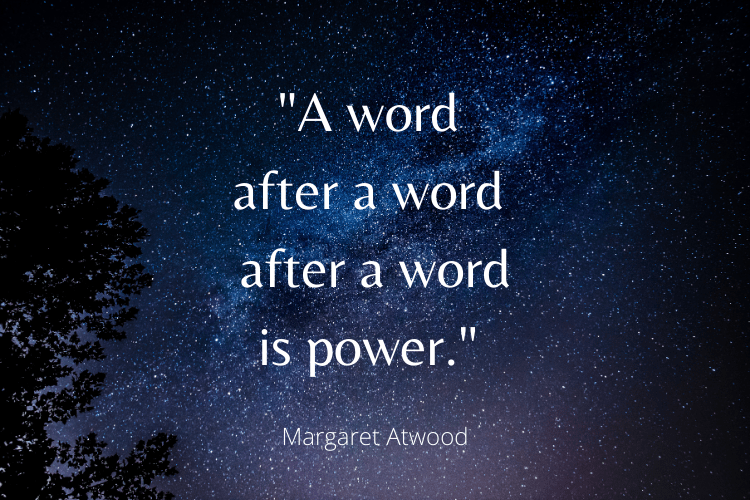
“A word after a word after a word is power,” author Margaret Atwood tells us, and the past several months, culminating in the events of January 6, 2021, have proven her right.
We can use words to inflame hate or inspire compassion. We can wield them to divide or utilize them to unite. We need to recognize the power of words and start using them more carefully if we want to heal from the challenges of 2020 and move forward productively.
Specifically, I suggest we send less words out into the world and think more about the words we absorb. In social media and news reports, people use simple terms for complex ideas, and I’m convinced half the time, we don’t really know what the words mean. When a protestor claims, “The democrats want socialism“, what does that even look like? When a pundit suggests “America is moving toward populism“, what does that say about our society?
We need to stop carelessly throwing words around and slow down to consider the meaning and influence of what we say. We must listen to the words of people we don’t agree with to appreciate why some are so upset and angry that they shatter windows and loot buildings, whether they do so in the streets of Portland or at the Capitol in D.C. We must use words to find understanding, to encourage cooperation, and to foster coexistence.
The words we tell ourselves and each other have incredible effect. We can use them to rehash old hurts and regurgitate old regrets, or we can employ them to build connection and inspire positive change.
At the turn of this new year, I’m planning on using words more intentionally, and I’ve chosen a few, from songs and Bible verses, to turn to when negativity threatens to break me down. My word for the year is “create”, and I originally chose it to remind me to nurture my own creativity, because I have learned indulging my creative side – by writing a novel, sketching a flower, or making a card- fills my spirit.
But now, after the events of January 6th, I realize I can’t just focus on me. People are hurting, and I must consider how my focus word, “create” can make this broken world better. I can, and must, create bridges, and safe places for dialogue, and trust, and understanding. It’s a heavy goal, but one I believe is necessary.
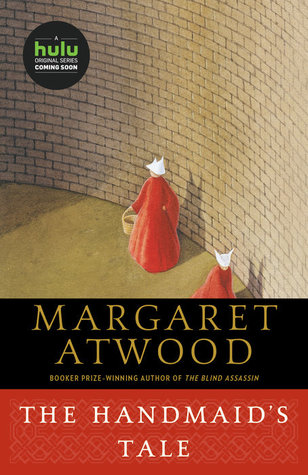
Word nerd note: In her acclaimed novel The Handmaids Tale, Margaret Atwood describes life in the oppressive republic of Gilead, a nation formed in the United States after insurgents storm the Capitol and take over Congress. Does that scare you a little? It should.
In 2021, let’s use words for better things: building, empathizing, understanding. Because as Atwood so wisely reminds us, “A word after a word after a word is power.”