
What you need to know about ChatGPT

Image of computer screen with headline "What you need to know about ChatGPT"

Chat GPT, an Artificial Intelligence chat bot, launched in November 2022, and now, it’s everywhere. Each day I read something about Chat GPT in my news feed or hear hosts discussing it on podcasts. Tech enthusiasts revel in its possibilities. Teachers fear it will promote cheating. Creatives worry it will steal their jobs. But what is it?

What is generative AI?

Artificial intelligence has been around for a while, and most of us use it every day. Do you talk to Siri or customer service robots? Then you use AI. In simple terms, traditional AI analyzes large amounts of data to find patterns and make predictions. The new trend in AI is generative AI, which is what ChatGPT is. Generative AI collects tons of data inputs, such as words, descriptions, images, or computer code, and creates something “novel” in response to a prompt. For example, one could ask a generative AI model to create a painting of a dog in the style of Van Gogh, and it would create something that looks like a Van Gogh painting. But isn’t.

What is ChatGPT? 

ChatGPT is a language processing model that provides “human like” text responses to prompts. For example, you can ask it to write a poem about cats or an essay about World War II. Chat GPT is run by Open AI, a research lab backed by Microsoft. ChatGPT is a form of generative AI.

Generative AI models have been around for a while, but lately they are getting more attention because Chat GPT is free and open to the public. All you need to use it is an account with Open AI and ChatGPT.

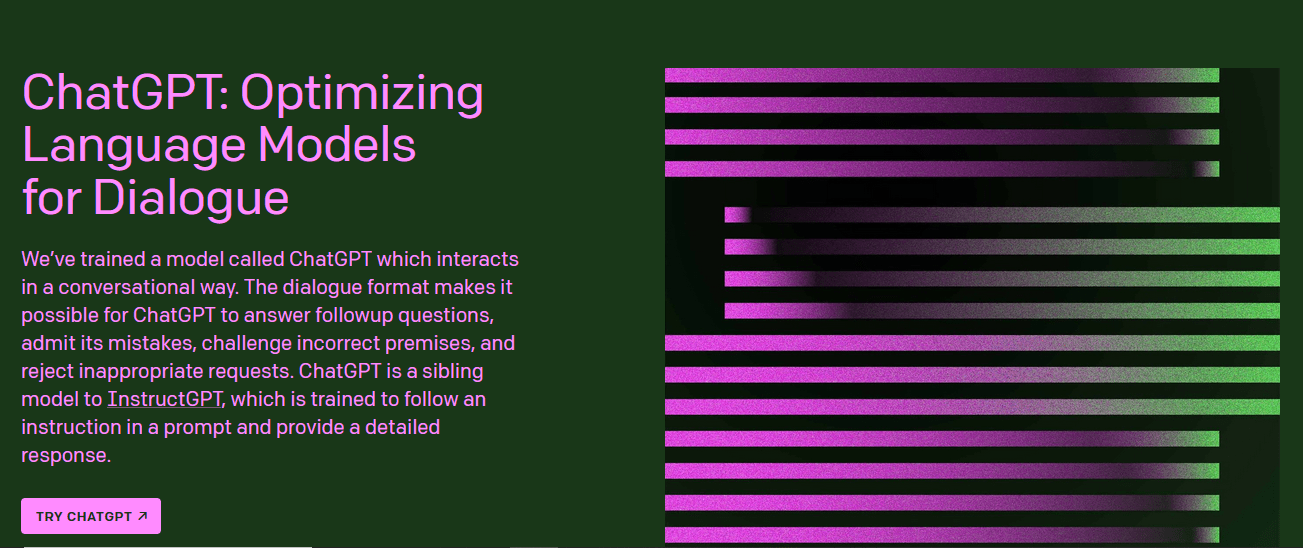
This is what you find about ChatGPT on the OpenAI website.

What are the benefits of ChatGPT?

Open AI says ChatGPT has huge potential for more efficient work. It could help content creators by providing tips on marketing strategies and copy for websites, blogs, and social media posts. ChatGPT can take over tedious tasks and open up more time for employees to work on higher level thinking, like research and strategy.

Some argue ChatGPT can do some basic tasks better than humans can, because it sees patterns humans do not. For example, ChatGPT might do a better job of writing copy for a website to maximize search engine optimization. It can also, ironically, do a better job of personalizing text.

Another benefit: improved internet searches. Some believe a model like ChatGPT will eventually replace search engines like Google. The generative AI can give users actual information, not just links to websites.

And on the coding front, ChatGPT can make basic coding faster. In fact, Microsoft is putting a lot of money into developing generative AI because it wants to use AI tools as “pair programmers” to improve coding efficiency.  AI can often debug code faster than humans can. I bet my son, who recently spent six hours debugging a program at work, would pay attention to that.

Limitations of ChatGPT and other AI models

ChatGPT has its issues. To work well, generative AI models require millions of data points and significant computing power. They also need human input at the beginning and end of each process. For example, a person has to give ChatGPT a prompt so it can generate a response. Then, the person has to evaluate the response, and if necessary, provide new prompts to refine the final output. Because generative AI depends on data to produce things, it has inherent bias. It learns from the information you give it. Even if it’s bad information.

Open AI admits ChatGPT is not good at math calculations. For example, if you tell ChatGPT that 10 + 9 = 20, it will carry that incorrect information forward during your chat with it.

Also, ChatGPT is trained on data up to 2021, so you cannot use it to generate up to date text about breaking news or current events. Also, since it is easy to manipulate, it may produce offensive, biased responses and misinformation.

What to watch for with ChatGPT

Like all technology, ChatGPT offers benefits and drawbacks. As a creative writer, I join the ranks of artists, journalists, and creatives who worry AI generated content may replace the work I do. However, ChatGPT is good at filler language and basic document generation, but it can’t write a novel. I’ve read some songs and poems written by ChatGPT. They are not good. So hopefully AI won’t take over the author world.

Educators worry ChatGPT will make it easier to cheat. Students can ask GPT to write an essay on The Great Gatsby, for example. Or to write a paragraph explaining the Krebs Cycle for biology class. Universities are scrambling to respond to the implications of ChatGPT. Some professors are contemplating oral exams and in class writing assignments, with, dare I say it, pen and paper! (This old Word Nerd thinks that’s a good idea with or without ChatGPT.)

One of my biggest concerns is regulation of AI. Or the lack thereof. Currently, artists are suing Microsoft and other tech companies over AI models. The artists say AI models scrape images and text from the internet to create items that are basically collages of original work. The AI models do not ask for permission to use the copyrighted material, nor is AI currently required to follow any licensing guidelines. The artists say that’s intellectual property theft, and I agree.  

AI can blur the lines between what is human made and what is computer made. We already have trouble figuring out if what we read on the internet is true. Generative AI has just complicated that problem.

And what about accountability and responsibility? If a generative AI model produces something offensive, inaccurate, or slanderous, and it goes viral, who is to blame? The person who prompted AI to create the offensive material, or the company that runs the AI model?

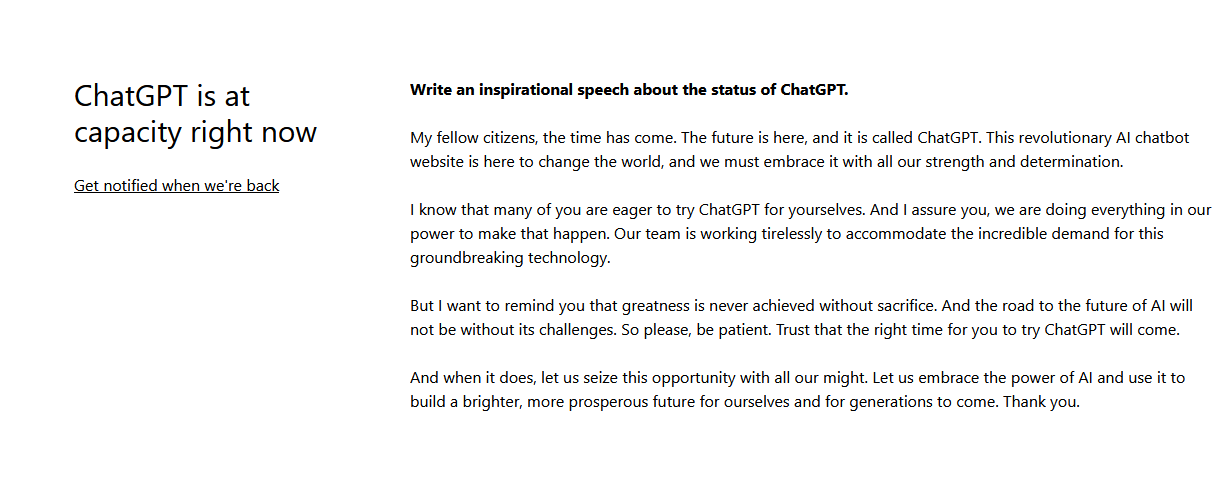
When I tried to log in to ChatGPT, this is what I got. I assume AI wrote this speech.

We do not have legal and ethical standards established to govern AI and its use, and we need them. Quickly. You may be thrilled with the possibility of AI. It may scare you. But we all should be paying attention. Generative AI is here, and we need to make sure we use it wisely.

What are your thoughts on ChatGPT? How are you staying informed?

Thanks for getting nerdy with me!

Do you know what skeevy means?

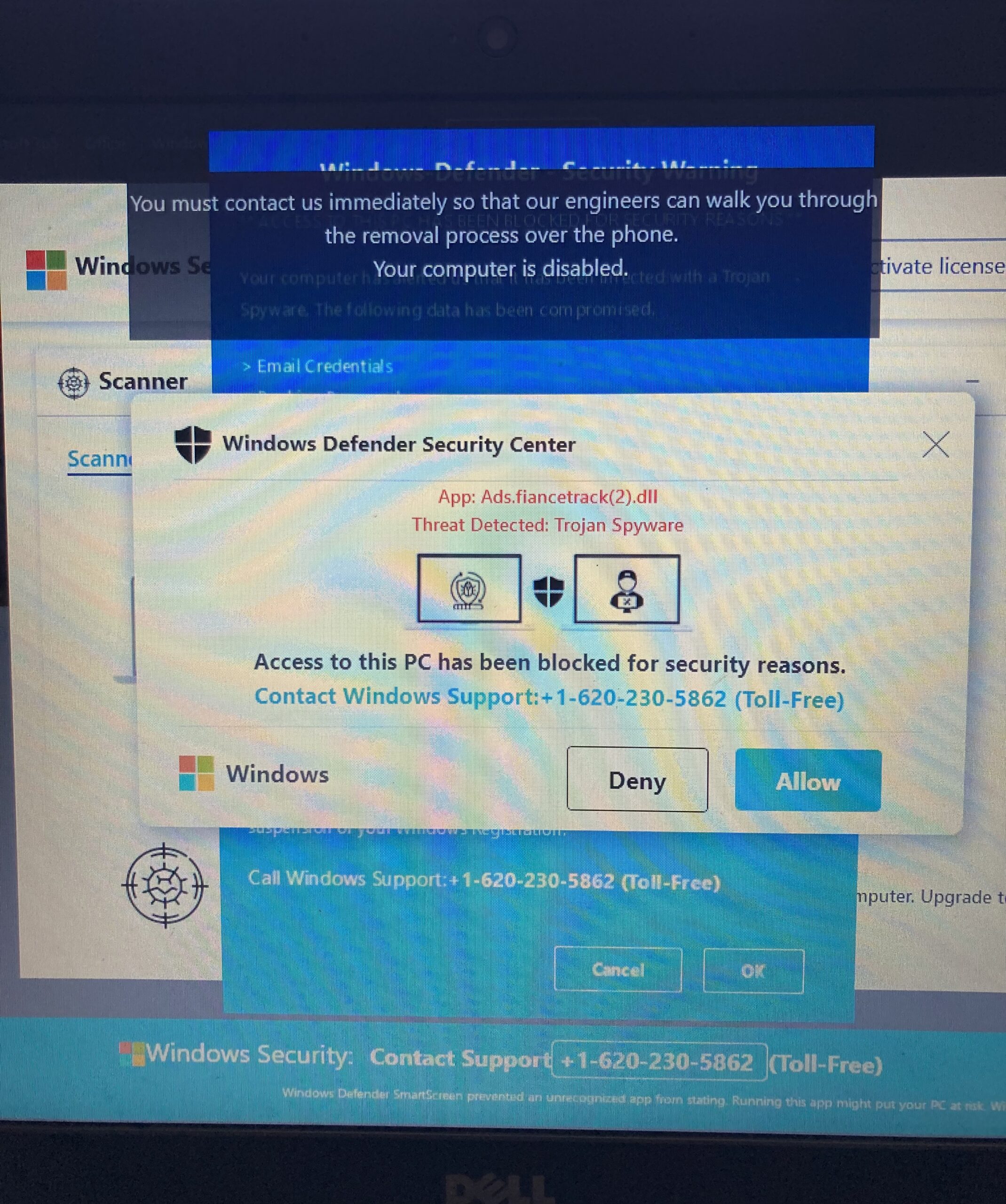
I was typing on my laptop, focused on achieving my writing goal for the day, when this alert took over my screen:

Screen shot of a Windows Detector Warning
This looks official, right? But check out that phone number. Skeevy.

The notice had the official Windows logo. An audio warning eclipsed my Spotify playlist and told me to call the number on the screen as soon as possible. I examined the number. Everything else about this warning seemed legit, but that phone number, with the skeevy 620 area code, gave me pause.

What- you don’t know what skeevy means? Let the Word Nerd explain.

My eldest introduced me to skeevy last week. He was explaining how his employer switched to a new health care plan that requires employees to upload all kinds of personal data, including daily steps, sleep records, and exercise logs, to earn a discount on health insurance premiums.

He shook his head. “It’s skeevy, man. I feel like they can use that data to build some kind of profile on me.”

When I asked if skeevy was new slang among Gen Z, he assured me it was a real word and promptly looked it up. He was right. (This is also the child who introduced me, and therefore you, to scuffed.)

skee·​vy [ˈskē-vē ] adjective; morally or physically repulsive : disgusting, sleazy

According to Merriam-Webster, “skeevy probably comes from skeeve “to disgust, be disgusted by” (borrowed from the stem of Italian schifare “to loathe, feel disgust for,” earlier “to shun, avoid,” borrowed from Old French eschiver) — more at eschew.”

Although skeevy is classified as slang, it’s first known use was in 1976. Way before Gen Z. It reminds me of another Word Nerd Word: smarmy.

So, getting back to that skeevy blue message on my laptop, before I touched any key and certainly before I dialed that number, I searched “Windows Defender pop up” on my phone. Turns out, this is a phishing scam that will introduce a virus to your computer if you call the number. I read this article on the scam, made sure my internet browser settings were returned to default, cleared my browser history, and ran a full (not quick) scan of my laptop. McAfee found a virus and fixed it.

Whew, those internet pirates are getting sophisticated. Do not be fooled! Trust your skeevy sensor!

What interesting word have you heard lately?

Thanks for getting nerdy with me!

Great content for when you are stuck at home sick

COVID got me over Christmas. It started with a sore throat, then the headache, then the obligatory swab of the nostrils. The timing wasn’t fabulous, but we made it work. To be honest, I actually enjoyed some time to myself to rest, read, and recover. And, since we have at least two more months of winter, (three where I live!) I’m sharing three things I enjoyed while isolating in my room. I hope they will help you pass the time when you are feeling not so great.

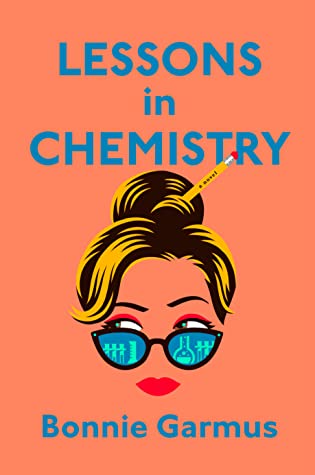
Lessons in Chemistry by Bonnie Garmus

A dear friend dropped this gem off to me when she learned I was isolating. Although Lessons in Chemistry deals with serious topics, like misogyny, sexual assault, and loss, it’s also a very fun book. The main character is plucky and undeterred the constraints society tries to impose on her.

Fun, witty, and compelling! Feminists must read!

It’s 1962 and Elizabeth Zott has lost the love of her life as well as her job as a research chemist. Each day reminds her of the things she cannot have because she’s a woman: the masters degree she worked so hard for; credibility as a chemist; the freedom to live without judgement. But despite all that, Zott never loses her sense of self.

She’s a single mother, and she needs money. So when she’s offered the starring role on a cooking show, she takes it. Her producer thinks she’s going to wear tight dresses and act sexy on camera. Instead, Zott teaches her rapt female audience about the chemistry of cooking, how to poison your unappreciative husband with just the right mushroom, and the benefits of pursuing a dream. At the end of each show, she looks into the camera and says, “Kids, go set the table. Your mother needs a minute.”

Oh, if only Elizabeth Zott really gave cooking lessons in 1962! Or, dare I say, now. Witty, strong, resourceful, and nonconforming, Elizabeth Zott will have you laughing and cheering. If you liked Where’d You Go, Bernadette?, you’ll like Lessons in Chemistry.

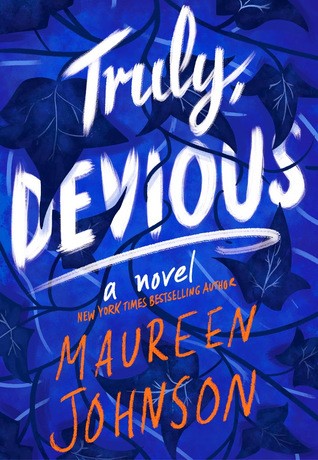
Truly Devious by Maureen Johnson

Truly Devious is a YA mystery series from Maureen Johnson. I just finished book #3 and have loved each one. The main character of the series, Stephanie “Stevie” Bell, loves true crime and solving mysteries. Her avid interest lands her at the prestigious Ellingham Academy in the the mountains of Vermont. The school was established in the 1930s by Albert Ellingham, a wildly successful businessman with a desire to educate. Stevie has gotten herself to Ellingham to solve crime of the century- the kidnapping and murder of Ellingham’s wife Iris and the disappearance of his daughter, Alice in 1936.

But just as Stevie is learning important information about the Ellingham case, a fellow student dies under suspicious circumstances. Was it an accident, or murder? Soon Stevie is working on two mysteries cases.

Over the course of three books, Stevie collects clues to the Ellingham case as well as the present day deaths that occur at the school. She also must learn to navigate her own anxiety, her struggles with panic attacks, and her first foray into the complicated and confusing game of romance.

Johnson develops unique and compelling characters in Truly Devious. They are observant, witty, and bound to make bad decisions. She also maintains a sense of suspense across the three books. At the end of book one, I literally lifted my head and shouted, “You stinker!” to Johnson for leaving me in such a cliffhanger. Luckily, since I’m late to the series, I could get the next book right away.

Note: I listened to the audio books. The narrator, Kate Rudd, was at times a little stilted in her reading. She seemed to get better over the course of the series… or I just got used to her.

Bad Sisters on Apple TV+

Sometimes when you’re sick, you don’t feel like reading. You just want to lay down and watch something. If so, check out the Bad Sisters series on Apple TV+. Set in Ireland, Bad Sisters tells the story of the five tightly knit Garvey girls. Each has her quirks and her secrets. One, Grace, is married to an absolute prick, named JP. As her husband constantly gaslights her into believing she is weak and unworthy, Grace wastes away. Her sisters fear she will fade into a shadow of the girl they once knew, and so, they decide to get rid of the prick.

But how? A series of hilarious missions ensues. It’s dark comedy, sure, but it also champions family, loyalty, and standing up for yourself and the people you love.

I recommend using the subtitles, because those Irish accents can be hard to follow. This is good watching until the next season of Ted Lasso drops. (If you like Bad Sisters, also check out Derry Girls on Netflix.)

Have you been sick this winter? What have you read and/or watched during recovery?

Thanks for getting nerdy with me!

What you need to know about “gaslighting”

Gaslighting – I’ve heard the term thrown around, but never understood what it meant. Apparently, I’m not alone. At the end of 2022, Merriam-Webster made gaslighting it’s word of the year. Apparently, lookups of gaslighting increased 1740% in 2022. There was high interest in the word throughout the year.

So let’s break it down – what is gaslighting, anyway?

Origin and definition

The term comes from a play called Gaslighting written in 1938. It tells the story of a man trying to make his wife believe she’s going crazy. He’s doing something secretive in the attic to make the house’s gas lights dim, but he tells her the lights aren’t dimming. He wants to convince her she can’t trust her own thoughts.

Gaslighting was first used in the mid 20th century to describe the manipulation depicted in the play. Here is the official MW definition:

psychological manipulation of a person usually over an extended period of time that causes the victim to question the validity of their own thoughts, perception of reality, or memories and typically leads to confusion, loss of confidence and self-esteem, uncertainty of one’s emotional or mental stability, and a dependency on the perpetrator

Merriam-Webster

Of late, “gaslighting” is being used to refer to general deception that is part of a bigger plan and usually for personal gain. In the age if mis- and disinformation, amid the cries of “fake news”, gaslighting is used to call out perceived deception.

A perfect example

I watched an apt representation of gaslighting while binging the series The Morning Show while I was in isolation with COVID over the holidays. In the series, Steve Carell plays sexual predator Mitch Kessler. Kessler is fired from The Morning Show after allegations of sexual misconduct emerge.

In the episode called “Lonely at the Top,” we watch Kessler manipulate a young junior booker into sexual relations. In a later episode, we see the girl confront Kessler about that night. She says, “I don’t remember it the way you do.” Kessler responds with anger and self-righteous vigor, accusing her of using him for a promotion. Ha! Gaslighting at it’s finest. And, to the show’s credit, we see the catastrophic impact on the young victim.

Now that I understand the term better, I am sad to realize a few people I love have been victims of gaslighting. It’s important to know what gaslighting means, and even more important to perceive when it is happening, especially in the current environment when disinformation and misinformation run rampant.

What terms from pop culture or social media are you curious about? Please share in the comments!

Happy New Year!

Thanks for getting nerdy with me!
Celebrating a “scuffed Christmas” won’t get us down!

It’s December 21, 2022. I’m recovering from COVID and am finally able to leave isolation in my bedroom today. But now child #4 is sick. And child #1, who doesn’t live at home, is sick and says he might wait until after Christmas to visit. Disappointed, he said he was preparing for “Scuffed Christmas 2.0”.

Why 2.0? Last year, Christmas 2021, our oldest son suspected he had COVID, and therefore he spent the holiday isolating, and we opened presents socially distanced using Face Time. But really, this year should be Scuffed Christmas 3.0, because Christmas 2020 was no dream holiday. That year, my daughter and I spent Christmas Eve and much of Christmas day away from home, caring for my father who had just been released from a week long stay in the hospital. Oh, and during that stay, he was diagnosed with stage 4 colon cancer.

For those of you older than 25, the “kids” use scuffed as an adjective that means “of poor standards or low quality” or to refer to something broken or not working as intended. (Thanks, Urban Dictionary.) Yep, that definitely could be our Christmas 2022.

Which is too bad, because everything is perfect at Christmas, right? I mean, the lyrics of “Have Yourself a Merry Little Christmas” tell us every year to “Let our hearts be light” because “from now on our troubles will be out of sight.” I strongly dislike that song. Because it’s a lie. Troubles are a part of this life. I experienced many a less than perfect Christmas growing up. Like, when my parents fought, and the tension hung so thick at the dinner table that I could hardly swallow my food. When my mom cried over frustration of being stuck in her wheelchair. Then there was the Christmas we had to put her in a nursing home.

As the Man in Black tells Princess Buttercup, “Life is pain, Highness. Anyone who says differently is selling something.”* “Have yourself a merry little Christmas” is selling us an unrealistic picture of the holiday, pretending that troubles don’t shadow us just because it’s December. But many of us are facing loss and grief and pain, no matter the season. I have several friends caring for aging parents and facing difficult decisions. Several who are grieving loved ones. My husband’s aunt just got diagnosed with cancer and started chemo the first week of December. And think of the poor people in Ukraine.

I’m not a Scrooge. I am just pointing out from the midst of tinsel and twinkling lights that Christmas can be hard as well as merry. That people are struggling and sometimes the notion of a perfect Christmas makes it worse. 

But we can and should find comfort in Christmas, even if it is scuffed. We should find our joy not in gifts or chocolate or decorations, but in the reason we celebrate in the first place. Good will conquer evil. Love is meant for all. And salvation comes to us in simple, humble ways, like a naked baby in a barn. We can face our troubles with hope, because we are eternally cherished. And in turn, we can cherish and support each other.

For our family this year, Christmas might not look like it has in the past, or it might not be perfect, but we will still find time to enjoy each other and share love with each other. To find moments of joy. As I told my oldest son, Christmas is a season. We can celebrate on any day, not just December 25.

Wishing you the very best this holiday season, even if it is “scuffed.” Especially if it is!

*If you don’t recognize this quote from The Princess Bride, then go watch it now! That will make you smile! 🙂

Find joy!

Favorite gift ideas for the holidays 2022

The days of December are flying by, and if you, like me, are scrambling for gift ideas with a Word Nerd twist, I have some great bookish gift suggestions for you.

Favorite books this year

I haven’t read as many books as I hoped this year. I blame it on tackling two 1000+ page tomes by the fantasy master Brandon Sanderson. Yes, that’s not a typo. TWO 1000 page books. I think I should get credit for at least four books out of that.

The Way of Kings and Words of Radiance are the first two books in Sanderson’s The Stormlight Archive series. My kids rave about these books, so I dug in, even though I’m usually not a big fantasy reader. I enjoyed them – there is great world building and, most important to me, character development. There are, however, lots of things to keep track of and a large number of “interludes” with new places and characters that are hard to understand. I ask my kids a lot of questions when I’m reading these books. I’m not going to suggest them as gifts because it takes a certain kind of reader to like these novels. If they sound good to you or you know someone who likes epic fantasy, then be my guest. I liked The Way of Kings better than Words of Radiance. I will finish the series, but I had other books to read.

Books that I read and thoroughly enjoyed this year include:

Books I haven’t read but dare to recommend

The Goodreads Choice Awards are book awards given by real people. Over five million readers voted this year. I have always enjoyed the titles my fellow readers on Goodreads recommend. The results for 2022 are out, and here are some titles I can’t wait to try (both from the winners and the nominees.)

  • Demon Copperhead by Barbara Kingsolver because it’s Kingsolver and it’s about the trials of coming of age in Appalachia, where I live. She has taken the classic David Copperfield by Charles Dickens (him again!?) and transposed it to the modern American south. My book club is reading it early next year.
  • Mad Honey by Jodi Picoult because I really enjoyed Small Great Things and it is, according to Goodreads, “A soul-stirring novel about what we choose to keep from our past, and what we choose to leave behind.” Also a pick for my book club.
  • The Winners by Fredrick Bachman because I love Beartown.
  • I Must Betray You by Ruta Sepetys YA Historical Fiction- because my daughter, who is a well read young woman with a good track record on recommendations, has enjoyed many of Sepetys’s books and I’ve decided that HF is a great way to learn more about history. And I want to perhaps write a YA HF or at least have components of history in it so I’d better start studying someone who is good at it. And, it’s NOT about World War II.

Word nerdy favorite things that aren’t books

This year, I finally went ahead and started paying for the pro versions of two of my favorite apps: Evernote and Canva. And I upgraded to Scrivener 3.

Evernote is a digital notebook app- I can access my notebooks from multiple devices, add notes quickly and easily, and keep my writing ideas, research, and resources organized easily. I can clip articles from the internet directly into Evernote which is great for when I see something that inspires a blog post or a novel idea. $9/month

I use Canva to create graphics for my blog and social media. The free version is quite nice, but I decided to go ahead and try the pro version. I get access to more photos, graphics, and templates with the paid version. I can also make my own “brand” templates, fonts, and colors with Canva pro. It makes creating content super easy and fun! $120/year

Finally, I paid for Scrivener writing software a long time ago and recently paid to upgrad to Scrivener 3. It’s an incredibly powerful software program for writing novels, screenplays, research papers. It has so many functions it can be overwhelming. I highly recommend doing the tutorial and making use of the online help guide as needed. But it won’t take much to get you started.

With Scrivener, it’s easy to keep your project organized with a binder that can hold research info (including links to outside sources), notes and ideas, and scenes that are easy to shift around. When you get a draft written, you can compile the relevant documents into a Word document for sharing/ reviewing. I am currently editing a novel with alternating narratives. I have assigned a color coded icon to each scene to help keep track of the different plot points within each timeline. Love it! You can also buy it as a gift. $60 for Windows and MacOS

Happy holidays!

There you go! I hope you find some useful ideas here, and if you have more to share, please do so in the comments.

Have a wonderful holiday season, and don’t forget to make time to relax and read!

Thanks for getting nerdy with me!