Most people I know indulge in guilty pleasure reading over the summer. Romance and other fluff, or the latest in a young adult fantasy/adventure series. But what did I bring to the beach in July?
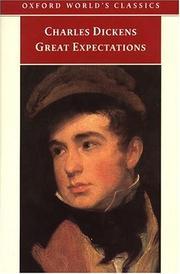
Great Expectations by Charles Dickens.
When I pulled it out, I received quizzical looks. One friend tilted her head, raised an eyebrow and asked,“Why are you reading that?” She didn’t verbalize the other question clearly written on her face: “Are you crazy?”
My initial answer was, “Because my book club picked it.” But I couldn’t stop there, because by that time, I’d gotten half way through the book, and I actually liked Great Expectations. Sure, I had to push through a dark period in the beginning, when the prose felt too dense, Pip seemed too whiney, and I struggled to find a single redeeming character in the novel. For a few days, I had seriously considered abandoning the book for the John Green novel Paper Towns, which promised to be much more fun. (You can always expect humor from John Green). But I persisted, and I’m so glad.
Great Expectations turned out to have more than I expected: plot twists, life and death situations, intriguing characters! And it was funny, in a subtle, smart way. During an early description of a holiday dinner at Pip’s house, Dickens had me laughing out loud as Pip explained that he sat “squeezed in at an acute angle of the table-cloth, with the table in my chest, and the Pumblechookian elbow in my eye.” (Pumblechook is the surname of an irritating character in Pip’s life). I could clearly imagine a miserable little boy stuck at a formal dinner table with pretentious adults.
Besides the humor, I found many attributes of exceptional writing that I’ve learned about, including interesting detail, snappy dialogue, and great characterization. Read this description of an escaped convict:
A man who had been soaked in water, and smothered in mud, and lamed by stones, and cut by flints, and stung by nettles and torn by briars; who limped and shivered and glared and growled; and whose teeth chattered in his head as he seized me by the chin.
Yes, it’s a run on sentence, but it paints a picture, doesn’t it?
Finally, and most importantly, a great book forces us to think about the essential truths of our existence, and Great Expectations does that. Dickens questions the value of societal labels and the importance of money: in his novel, a poor, simple man holds the most wisdom, while a wealthy woman burns in her own bitterness. Dickens champions loyalty and compassion, and his characters suffer for their pride, jealousy, and insecurities. The lessons from the novel have as much validity today as they did in the 19thcentury.
So if you are the kind of person who likes to think and doesn’t shrink from a challenge, I recommend that you pick up this worthwhile classic, and pay attention. Amid the verbose prose, Dickens has some very compelling things to say.
What are some worthwhile classics that you have read? If you have read Great Expectations, what did you think of it? Share your thoughts in the comments below, and thanks for stopping by!
Other book reviews you might like:
Julia