

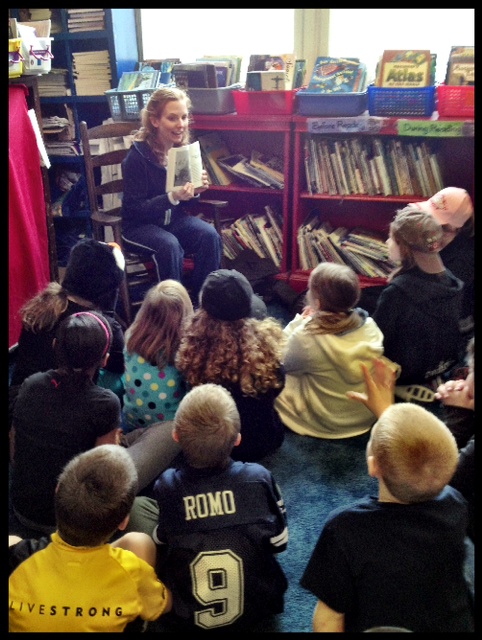
Obviously, I love to read. And I want everyone else to love it too. Here I am, at my son’s school on “Fit for Reading Day”, hoping to hook his classmates with Eoin Colfer’s wit and humor.
It worked. While I read Colfer’s humorous short story, the kids, and their teacher, snickered and giggled at all the right spots. When I finished, I told the kids about Artemis Fowl, the evil kid genius who plots to get rich by stealing gold from fairies. One smiling boy said, “My sister has those books. I think I’ll borrow them.”
Mission accomplished.
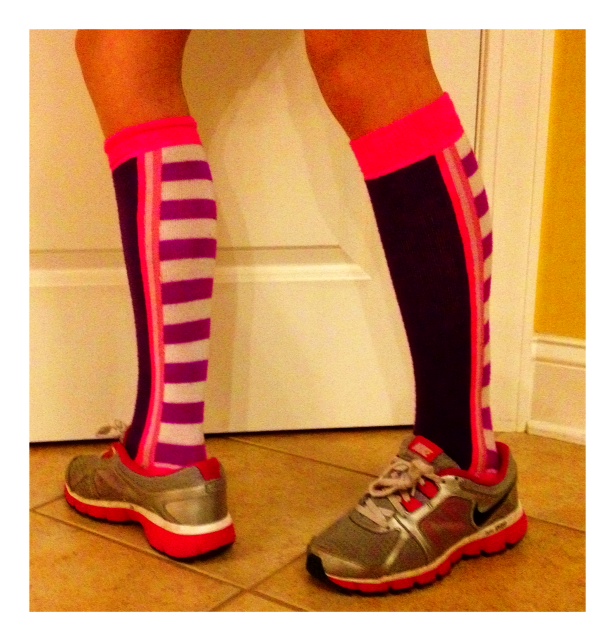
The school hosted reading activities all week to celebrate Read Across America day on March 1. My daughter even wore these crazy socks, with shorts, in 30 degree weather, on Wacky Wednesday.
But wit, humor, and wackiness don’t always work. Some kids cringe at books. Often boys do, especially tweens and teens. Maybe they’d rather play video games or toss a football.
That’s okay. Reading doesn’t have to involve books. How about sports?
Many guys (of any age) I know can’t remember to pick up dirty laundry, but they can cite every stat from Tom Brady’s career with the Patriots. So why not capitalize on that interest?
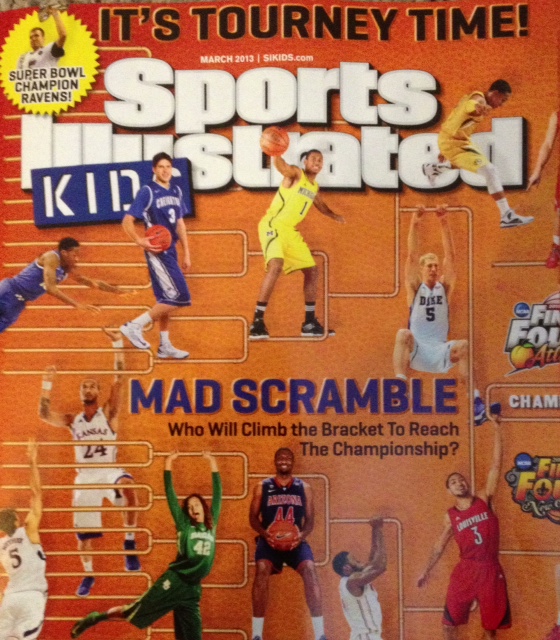 The mailman delivers Sports Illustrated Kids to our house every month. And the pages get worn out quickly. Why?
- lots of eye grabbing color photos
- short bits of copy instead of long, intimidating paragraphs
- monthly features like “Freeze Frame” (cool sports pics), “Sports Gamer”, “Tips from the Pros”, and “What’s the Call?” to engage sports fans
The March 2013 issue has tons of stories about March Madness, aka the NCAA Basketball Tournament for those of you non-sports types. I especially like a feature on Aaron Craft, the point guard from Ohio State. Sure, the easy-to-read article comments on his skill with defense etc, etc, but what caught my eye was the blue side bar listing “Aaron’s Favorite Stuff.”
Guess what Aaron’s favorite hobby is?
Reading!
I love role models (yes, Charles Barkley, athletes are role models) who love reading!
I’ll be cheering for you Aaron Craft!
Please note that girls like sports too. I’m one of them. SI Kids does a great job of covering female athletes.
So the next time you need to get a gift for the not so enthusiastic reader in your life (of any gender or age), get him or her a few magazines, and see if they start reading.
And if they like sports, by all means give ’em SI Kids.
For other ideas on encouraging boys to read, visit GuysRead.com and see my post on Helping Guys Read.
Thanks for stopping by!
Julia