
I love college campuses, don’t you? A word nerd can find so much inspiration.
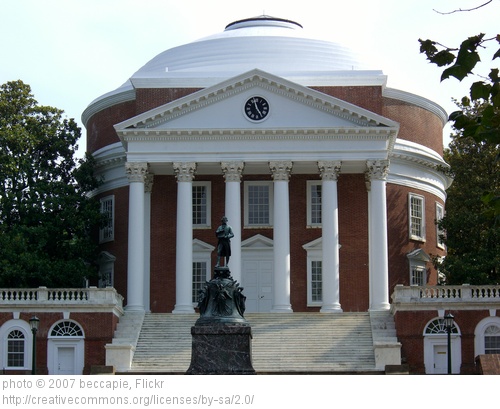
When I was picking my son up from “Camp Invention” at Radford University, I stumbled upon this quote from the great Henry David Thoreau in the Alumni Garden:
I hope you are spending plenty of time in this noble exercise.
Hmm. I wonder what he meant by “true books”? Perhaps notFifty Shades of Gray?
Today I embark on my annual trip to Lake Pleasant in the Adirondacks. Here’s to reconnecting with good friends, no cooking for a week, and plenty of activities to keep my family happy. Think putt-putt golf, white water rafting, and hiking. But the thing I look forward to the most: spending time on the beach and READING!
In years past I toted Pillars of the Earth and Great Expectations up to the lake. My traveling companions laughed at me. This summer, I want something more “beachy”.
What makes a good beach read?
Here are my criteria for a good vacation book; let me know if you agree.
Nix the non-fiction– I struggle with non-fiction on a good day, but when I’m supposed to indulge in relaxation, no way!
Keep it light– I don’t want anything too deep, depressing, or complicated. Vacation is the perfect time for fluffy entertainment.
Make me laugh– I’ve recently realized how important humor is to me. As my writing buddy Jeannine Bergers Everettsays, it’s much better to laugh at the absurdities of life than to get mad.
Keep it light, part two (literally!)- Who wants to get a hand cramp while relaxing? Pillars of the Earth is three inches thick and weighs, seriously, five pounds. No fun in a beach chair. Of course, one could eliminate this problem with an e reader.
Suggested beach reads
A few weeks ago, I finished Folly Beach by Dorothea Benton Frank. What conjures up a coastal breeze better than a novel set in South Carolina? The story: Cate Cooper returns to her childhood home after her husband’s suicide leaves her homeless, broke and emotionally shattered. Besides including lovely description of Folly Beach, Ms. Frank weaves in historical information about Dubose and Dorothy Heyward and their collaboration with the famous composer George Gershwin.
Folly Beach got me in the mood for summer and gave me a few laughs. Ms. Frank has a reputation for “saucy wit.” But the dialogue and tone seemed targeted for an “older” audience. Perhaps that’s just because I’m immersed in the world of YA these days.
Although it breaks my “no non-fiction” rule, I’d also recommend Stories I Only Tell My Friends, Rob Lowe’s autobiography. In full disclosure, I haven’t read it myself, but my friend Kristen really enjoyed it on our trip a few years ago. And not just for the pictures. I loved hearing her say after dinner one night, “I’m gonna go crawl into bed with Rob Lowe.”
If you prefer audio books, Mr. Lowe read this one himself, and apparently he does a great Cary Grant impression.
My choice for this summer is Looking for Alaska, by John Green. Mr. Green always delivers wit, but I’m also sure he’ll wow me with thoughtful prose. Hopefully nothing too deep.
What have been some of your favorite beach reads? What qualities do you look for in a vacation book?
Share your suggestions in the comments, and thanks for stopping by!
P.S. Since I’ll be at the lake, I’m taking a blog vacation as well. Look for new tips on vocabulary and reading starting July 17.
sesquipedalian \sess-kwuh-puh-DAIL-yun\ adj; from Latin sesquipedalis, sesqui – one and a half, ped- foot; literally a foot and a half long; having many syllables; characterized by the use of long words.
Supposedly the Roman poet Horace originally came up with this word to warn young poets against using exceptionally big words. Centuries later, English literary critics started using it to criticize verbose writing.
My eldest son, an avid reader, likes to use sesquipedalian words to impress his peers; usually they just think he’s weird.
Word Nerd Workout
Don’t be afraid to use the dictionary for this workout!
Think of some sesquipedalian words and share them below. For example: indubitably, perfunctoriness, vituperation.
Next week, big change will come to the Internet, and you should prepare now.
On July 1, Google Reader, the tool many word nerds use to follow blogs, will disappear. So will all of your feeds in Google Reader. But fortunately many alternative apps have emerged. You just have to pick one. Soon.
Let’s get technical
A few explanations: feeds, subscriptions, and RSS.
Essentially, a feed is like a channel for updates of new content on blogs and websites that you choose to follow. You can access and organize those feeds with a reader, such as Google Reader, Feedly, or Flipbook. This is a great way to keep up with new content without clogging up your inbox.
Examples of the RSS button found on most web sites.
You subscribe to feeds using RSS: Real Simple Syndication. Word Nerd Note: syndicate (verb) means to sell for publication in many places at once. Thankfully, you don’t have to buy your subscription to most blogs. You simply sign up for new content by clicking on the RSS button and registering. Then, when you want some good reading material, you can scroll through new material without having to run all over the Internet.
If you have subscribed to feeds, you can transfer your subscriptions to another reading tool. There are plenty out there, but I recommend Feedly.
Why Feedly?
Several months ago, I switched to Feedly and have never looked back. Here’s why.
Feedly can import all of your subscriptions from Google Reader in a few easy steps. Just go to www.feedly.com and follow the instructions. It will bring over all of your feeds while keeping them under their original folders. For example, I have feeds categorized into “Book Blogs,” “Favorite Blogs,” and “On Writing.” The switch didn’t disrupt anything. (Thank goodness, because I’m a little OCD about my folders!) ** Please note, you must import your subscriptions to Feedly before July 1.
Feedly includes pictures from new content. In general, it’s a more aesthetically appealing presentation.
Feedly makes sharing easy; buttons for popular social media platforms are embedded into the application, so you can share contact directly. You can even comment from within Feedly.
The app is available for computer, iPhone, and iPad, so it’s always available to me. Like when I’m waiting in line at Walmart.
Feedly isn’t the only option. For other ideas, consult this helpful article, which includes a comparison chart of 14 different readers. (I love charts!)
The best way to ensure that you won’t miss new content would be to subscribe to blogs you love via email; any posts will come straight to your inbox. Look for a subscription form at blogs you like to visit. Mine is up there, in the right hand side bar, under my picture. See it? “Subscribe to Diary of a Word Nerd.”
Don’t be afraid to subscribe. I only post twice a week, so I won’t overwhelm you with emails. And then you will receive all of my crucial word nerd information, like the meaning of obfuscation.
How do you follow your favorite blogs? Can you recommend a Google Reader alternative?
A few weeks ago, I cleared up some confusion about the word “erstwhile.” Apparently, I wasn’t the only one who didn’t know that it meant “former.” I’m here again, sharing a word that I thought meant commotion, but actually means something much different.
I subscribe to Merriam-Webster’s Word of the Day email, and when “milieu” popped up in my inbox, I said to myself, “Oh, I know that one. Commotion, a mess.”
Wrong! Good thing I read the entire email.
milieu \mel-‘yü\ noun, from the French mi– middle + lieu place; the physical or social setting in which something occurs or develops
For example,
A middle school dance provides the perfect milieu for embarrassing situations and gossip.
Do you remember middle school dances? Shudder. Soon, I’ll have to attend them again- as a chaperone!
Do you have a Pinterest account? Pinterest is a great way to “clip and save” cool ideas for cooking, decorating, and crafts. No cutting required. But my favorite way to use Pinterest is for bookish pins!
Perhaps you’re already on Pinterest, and you don’t want to add another social media site, like Goodreads, to your plate. That’s fine; you can easily use Pinterest to collect ideas for future reading, find clever ways to display your books, or to meet other people who love books as much as you do.
Pinterest is a social media site, and is therefore supposed to encourage interaction, but I like it for selfish reasons. It helps me save ideas for later, without taking up a lot of time or space.
Get “Word Nerdy” on Pinterest
The first thing you will need to do is get an account at pinterest.com. You’ll have to provide the typical social media information, like a user name, email, and short description about yourself.
Set up a board or two dedicated to books using the “create a board” button. You might like to give your boards bookish names. You could start one called “Books I’d Like to Read” or “Favorite Books.” If you have one book / book series or a character that you adore, devote a board to that. For example, “Artemis Forever.”
Start pinning images to your boards. You can do this three ways.
Upload them from your computer/ phone. For example, a photo of your favorite book cover. Or a shot of your friend reading upside down in a chair.
Repin them from other people’s boards, using the “search” box to find book stuff.
Pin them off of the internet- my favorite way. When I’m reading blog posts and book reviews, I pin books I want to save for the future. To make pinning while you browse easy, you’ll need to get the “Pin It” bookmarklet. This is a function you add to your browser so that whenever you’re on the web and you see something you’d like, you can click the Pin It button and save it to a board.
Need some inspiration?
Word Nerds have found a lot of interesting stuff to pin about books. Check out:
Author Jody Hedlund’s boards, which include “I love reading”, “Reading Humor”, “Fascinating Book Art” and “Stuff for a Book Geek.”
Several buddies of mine from Wordsmith Studio have fun book boards, including:
My writing buddy Sarah Turnbull has a board called “Rather Be Reading“, a collection of funny bookish images, books she likes, and articles on books.
Mona Alvarado Frazier has “Books Worth Reading” and “Beautiful Bookstores” boards in her profile.
Joy Weese Moll has caught a lot of attention with her board “Healthy Lifestyle Books“, on which she pins reviews of, well, you can guess.
“Bibliotraveler” Beth Saunders has several pins of famous people, like Walt Disney and Clark Gable, reading on her board “Books“. There’s also a cute little librarian Lego minifig.
Linda Hatton highlights authors who have contributed to her publication Mouse Tales Press with a special board for their books.
Kasie Whitener has a “Read This” board with pins of top YA and children’s books from Goodreads.
And my boards include “Wordy Nerdy Tid Bits,” “Must Read Books,” and “Books I’d Like to Read.”
There are tons of ways you could use Pinterest to serve your addiction to books! Get pinning and have fun!
How do you use Pinterest for bookish topics? If you have a board you’d like to share, please do so in the comments.