Vocabulary for Foodies: Umami

Welcome to Wondrous Words Wednesday!  Get ready to learn something new, and perhaps get a little hungry.  Visit Kathy at bermudaonion.net for more fun words.

wondrous meme

This word nerd word was so interesting, my ten-year-old insisted on visiting the library to find it.  He read Rebecca Stead’s middle grade novel Liar and Spy several months ago, and he couldn’t remember the word introduced in book for a special sense, a fifth taste.  After a few seconds of hasty flipping in the juvenile fiction aisle, he found it: umami.

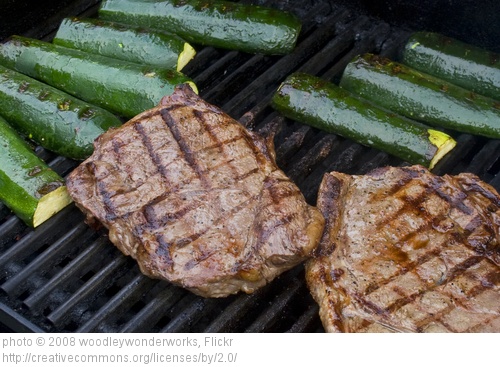
steakumami \ü-mā-mē\ noun; Japanese; a taste sensation that is meaty or savory and is produced by several amino acids and nucleotides

I’d never heard about this taste until reading Rebecca Stead’s novel.  How about you?

Word Nerd Workout

Can you think of food that fits this taste?  I’m imagining grilled steak marinated in soy sauce.  Hmm.  Too bad it’s too cold to grill these days.  Hopefully soon!

Tweet: Vocabulary for foodies: umami. Learn something new from the culinary world via Word Nerd @juliatomiak http://ctt.ec/8ae4E+ #amreading

Thanks for getting your foodie nerd on with me today!

Julia 

P.S.  Here’s my review for Liar and Spy

Another Way to Read E-books: Scribd

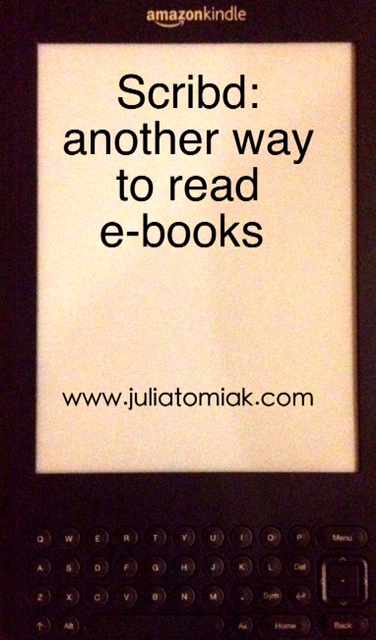
scribd picMy book club is reading And the Mountains Echoed by Khaled Hosseini this month.  I haven’t started yet, and I wanted a quick and economical way to get my hands on this book!  So I browsed the e-book collection at my local library.

Sigh.  The listings didn’t even include The Kite Runner, much less Hosseini’s newest book.  In defense of my library, it is limited by dwindling funds from the state and restrictions from publishers.  (See my post on the tenuous relationship between publishers and libraries.)

But I still wanted the book.  I’d heard about a new e-book lending service called Scribd, so I decided to check it out.

Scribd: the Netflix of e-books

Most of the people I know get their e-books from Amazon, B & N, or the library.  The library is obviously the cheapest option, but book selection can be dreadful.  And e-books for Kindle or Nook cost at least $5 (Except for the classics!  They’re a bargain!)  The idea of having access to an UNLIMITED number of e-books for a reasonable monthly fee sounds tempting, doesn’t it?

Enter Scribd.  It started in 2007 as a self-publishing site for professional papers that eventually included creative writing.  In October 2013, Scribd partnered with HarperCollins Publishing to offer an e-book lending subscription service.  The the developers of the updated Scribd site want it to be what Pandora is to music, or what Netflix is for movies and T.V. shows.

What you need to know about Scribd

  • Readers can start with a one month free trial.
  • A subscription costs $8.99 per month.
  • A subscription gives you access to an unlimited number of e-books, including books from the HarperCollins back list and “thousands” of best-sellers.
  • Scribd is compatable with any device that has a web browser, including computers, smart phones, and tablets.  (This includes the Kindle Fire, since it is basically a tablet.)
  • It is NOT compatable with regular Kindles or Nooks.
  • Scribd offers you personalized suggestions to help you find new books and authors.

Sounds great, right?  Well, I think it could be, if you don’t want new releases.  When I browsed the site, I saw books like Bridge to Terebithia and Water for Elephants.  These are wonderful novels, but not new releases.

I didn’t register for the free trial; something told me that I wouldn’t find And the Mountains Echoed at Scribd.

Where do you get your e-books?  Have you ever tried a subscription service like Scribd?  How did it work for you? 

Click the link below to spread the word about Scribd:

Tweet: Scribd: an e-book subscription service, like Netflix for books! #amreading more at http://ctt.ec/ycjAB via @juliatomiak

Thanks for stopping by!

Julia 


What Does Uber Really Mean?

wondrous memeWelcome to Wondrous Words Wednesday, an awesome meme for word nerds hosted by Kathy at Bermudaonion.net.  Join the fun- share a new word you learned this week.

My entry isn’t exactly a word.  But after I heard my 13-year-old son use “uber” for the hundredth time, I decided we needed to clarify the meaning.

“My hair is ubershort now,” my son said upon leaving the barber shop.

“Do you even know what that word means?” I asked.

“It’s not a word, it’s a prefix,” he said.

What an ubernerd. 😉

Uber \’ü-bər\ German, from über, meaning over or beyond; being a superlative example of its kind or class; to an extreme or excessive degree; super


My ubercool photo of uberimpressive lava rock formations on Maui.


Word Nerd Workout

Use uber in a sentence.  Or, if you’re like my friend Kristen and you’re sick of hearing this prefix, share a more creative or original way to describe something as “superlative or extreme.”

Thanks for getting nerdy with me today!

Julia 

Why I Love See You At Harry’s

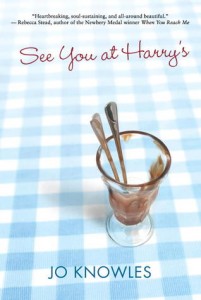
See you at harry's

When I find a beautifully written piece of kid lit, I have to share it.  And Valentine’s Day is the perfect time to tell you about the bittersweet middle grade novel, See You At Harry’s, by Jo Knowles.

My daughter actually suggested See You At Harry’s.  She found it at her middle school book fair and read it to me during our swim meet road trips.  That’s right, she read to me.  It was a great way to enjoy a book together, except she kept rolling her eyes when I cried, because See You At Harry’s has some very sad spots.

The Premise

Twelve year old Fern feels lost in her “crazy” family.  Her father spends all his energy on the family restaurant business, and her mother often disappears to meditate.

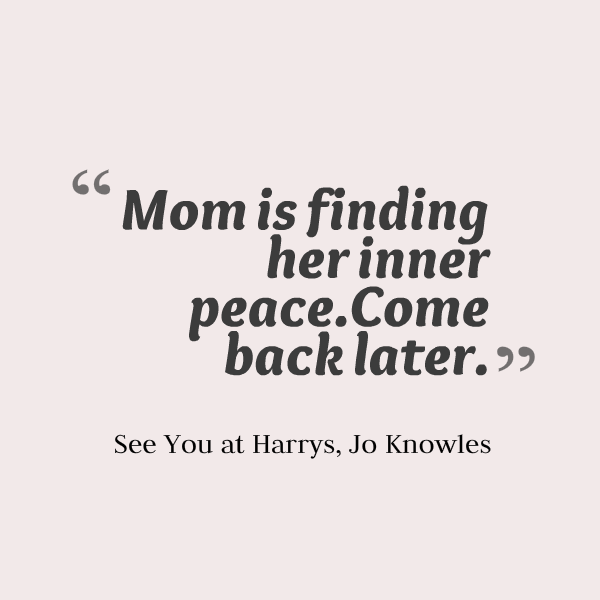
Inner peace


Fern’s older sister, Sara, is distant, while her older brother Holden struggles with his sexual identity.  And then there’s Fern’s baby brother Charlie, always ready to poke her with a sticky finger.

Fern laments her status this way:

For someone who is invisible, why am I the only one in this family who can’t seem to master the art of disappearing?

Doesn’t every twelve-year-old feel like this sometimes?

When tragedy strikes, Fern and her family must learn how to pull together in the face of a terrible loss.

What I love about See You at Harry’s

Jo Knowles skillfully and sensitively tackles lots of “coming of age” issues in her novel: grief, loss, insecurity, and love.  She shows  Fern’s emotions with simple yet vivid detail, and there were several passages where I had to sigh with admiration at the beauty of her writing.  Like this one:

[Mom} holds me against her chest and rocks me back and forth.  It feels so strange at first.  She doesn’t smell like I remember.  And my face doesn’t reach the part of her body it used to when she would hold me like this.  I know it’s because I’m bigger now, but to me it feels like she is smaller.

What a beautiful way to describe how Fern has “grown up”, without using tired cliché and symbolism.  This passage made me sniffle; my children are all starting to get taller than me, and it signifies so much more than height.  My daughter heaved an exasperated sigh when she saw the tears on my cheeks.

“Really mom, this isn’t even the sad part.”

But she doesn’t know what I know.

Another great thing about the novel are the characters. Fern has a great bond with her brother Holden, but their relationship gets tested as he explores adult issues. Fern also has a wonderful best friend, Ran, a boy who was bullied in elementary school and who calms Fern with the motto “All will be well.”  Because of his experiences, Ran likes to figure out the “why” behind people’s actions, even when they are mean.

More of us need to be like Ran.

A few caveats

See You at Harry’s deals with some mature issues, including death and homosexuality.  These were great discussion points for my daughter and I as we covered the miles to Knoxville and D.C., but might not be suitable for younger readers.

If you liked the novel Wonder, by R.J. Palacio, I think you’ll enjoy See You at Harry’s.

Have you read See You at Harry’s?  What did you think?  Can you recommend another middle grade novel in the spirit of Harry’s or Wonder?

Thanks!

Julia 
 

What’s the Story Behind the Olympic Motto?

wondrous memeWelcome to Wondrous Words Wednesday, a meme hosted by Kathy at Bermudaonion.net. Last week, Kathy introduced me to a great word:

banjax:  to ruin (Irish)

Isn’t that fun to say?  I bet I’ll be able to use it week; the impeding snow storm will surely banjax my writing plans.  Visit Bermuda Onion for more great words.

Now, on to…

The Word Nerd Low Down on the Olympic Motto

Are you watching the Olympics?  Do you know the story behind the words of the Olympic motto?

First, do you even know what the Olympic motto is?

In Latin:

citius, altius, fortius

In English: (can you guess before you peek?  Come on Spanish and French students)


faster, higher, stronger


Opening Ceremony at the Sochi Olympics

Turns out, this motto originated in the 19th century with a French Dominican priest named Henri Didon, a popular preacher and writer.  When he became principal of a school, Fr. Didon encouraged his students to participate in sports as part of a well-rounded education.

Fr. Didon was friends with Pierre de Coubertin, the creator of the modern Olympic games.  On March 7, 1891, De Couberin attended a lecture given by Fr. Didon to a sports association.  In his speech, Fr. Didon emphasized the value of sports for self-improvement and discipline, and he used the words “citius, altius, fortius“.  De Coubertin liked the phrase and adopted it for the Olympic motto.  

Word Nerd Workout

In only three words, share your thoughts about participation in athletic activities.  This doesn’t have to be about the Olympics- it can be relevant to your experiences with sports.  (But, you can’t use faster, higher, stronger).  My example:

discipline, habit, sweat

Share your three words in the comments, and thanks for stopping by!

Julia 

What’s the Difference Between i.e. and e.g.?

photo (10)About a month ago, my friend Crystal challenged her Facebook friends with a link to an on-line grammar test.  I did well, earning the title of “Grammar Queen” or something like that, but one question stumped me: I didn’t know the difference between i.e. and e.g.

They both mean, “for example,” right?

Not exactly.  And because I’m such a nerd, I did some research so you won’t have to.

(Thank you to Writer’s Digest Grammatically Correct for helping me figure this out!)

The Grammar Nazi Info

Both of these abbreviations give more information about a prior statement, but there is an important distinction between the two.

  • i.e.  comes from the Latin phrase id est, which means, “that is.”  It restates what has already been said, implying that no other options are possible. 

I can meet you early next week, i.e. Monday or Tuesday.

With this example, it should be clear that Monday and Tuesday are the only days I’m available.

  • e.g. comes from the Latin exempli gratia, which means “for example”.  It offers an illustration of what was previously said, but implies that other options are possible.

The Sweetheart Dance is next week!  I need to find an outfit, e.g. dress, shoes, jewelry.

The “e.g.” implies that the list of items I include for the “outfit” isn’t comprehensive.  What about hair accessories?!

Also, please note that since the abbreviations are both for two-word Latin phrases, there should be two periods, one for each word.

Yes: i.e.  No: ie.

Word Nerd Workout

The only good way to learn is TO DO.  Give it a try, even if it feels a little like homework.  In the comments, let me know if I’ve used the Latin abbreviation appropriately in the following sentences.  If not, tell me why and fix it.

  1. We stopped at Food Lion to pick up everything we needed to bake a chocolate cake, i.e. milk, flour, butter.
  2. I was worried because Eric had several flu symptoms, eg. congestion and fever.


Can anyone add to my illustration?  What other grammar points give you trouble?

Special Word Nerd request:  I know that Augustus Waters uses either i.e. or e.g. at some point when he is speaking to Hazel in The Fault in Our Stars.  I wanted so badly to use  that excerpt to analyze Gus’s grammar knowledge, but I can’t find it!  Any help out there?

Thanks for stopping by!

Julia