

When to Use Who vs. Whom

Who v WhomA few weeks ago, I explained the difference between i.e. and e.g.  Do you remember when to use each one?

No?! Please revisit the post on i.e. and e.g.

I got great feedback about that tip, so today I’ll tackle another common grammar dilemma: when to use who vs. whom.    Once again, I thank Grammatically Correct, by Anne Stilman, and my 8th grade English teacher, Mrs. Giles, for this info.  (Am I the only one who had to diagram sentences?  Am I the only one who thinks kids today should diagram?)


Interrogative Pronouns

Who and whom are both interrogative pronouns.  Wait!  Don’t panic. That just means that they are found at the beginning of questions that require an answer other than yes or no.

  • If the pronoun is the subject of the sentence, you use who.  For example:

Who is coming over for dinner on Friday?

The mystery person is coming over; he is the subject, and deserves a who.

  • If the pronoun is the object of the sentence, you use whom.

Whom will you invite to the dance?

You is doing the inviting; whom is being invited and is the object of the verb.

  • To help you figure out which pronoun to use, substitute “he” or “him” and see which sounds better.  For example,

Is he/him coming over for dinner on Friday?

Will you invite he/him to the dance?

If you can use he and it sounds right, use who.

If you can use him and it sounds right, use whom.  (Note that him and whom both have m’s.)

See, that’s not so bad.  Now, we will cover one more situation- relative clauses.  Stay with me and don’t let the grammarly words throw you off; it’s basically the same rule.

Relative Clauses

A relative clause is a special kind of dependent clause- it’s a piece of a sentence that can’t stand alone.  (It doesn’t have a subject and a verb.)  A relative clause gives information about a noun mentioned earlier in the sentence.  For example:

Children who do not finish their chores will not get to play with electronics this afternoon.

 The clause “who do not finish their chores” is the relative clause describing “children”.

  • If the pronoun of the relative clause refers to the subject of the sentence, use who, as in the sentence above.
  • If the pronoun of the relative clause refers to the object of the sentence, use whom.  For example:

The singer whom Jackie wanted to hear had already performed.

In this example, Jackie is the subject, and the singer is the object, and therefore whom is needed.

  • You can run the same “He/Him” test that you do for interrogative pronouns.

Word Nerd Workout
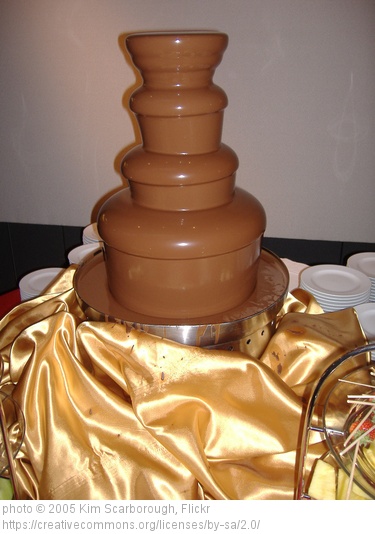
Yum, chocolate!  Can't wait until Lent is over.
Yum, chocolate! Can’t wait until Lent is over.

Practice makes it stick!  Use your new (or merely refreshed) word nerd skill to choose the best pronoun for each example below.  Share your answers in the comments, as well as any questions you may have.  I’ve made the sentences silly to keep this fun.

  1. The girl who/whom submerged her face in the chocolate fountain had just failed her third driver’s test.
  2. To whom/who will you give this giant yellow dinosaur?  Certainly not the family who/whom lives in the beach front condo?!
  3. Steve, whom/who are you trying to threaten with that giant Styrofoam sword?


Julia

Share the nerdiness:

Tweet: When to use who vs. whom: @juliatomiak, the word nerd, explains. http://ctt.ec/X0tOU+
 

Vocab from And the Mountains Echoed: Polemical

wondrous memeWelcome to Wondrous Words Wednesday, a great way to expand your vocabulary!  Visit our meme hostess Kathy at Bermudaonion.net for links to lots of interesting words.

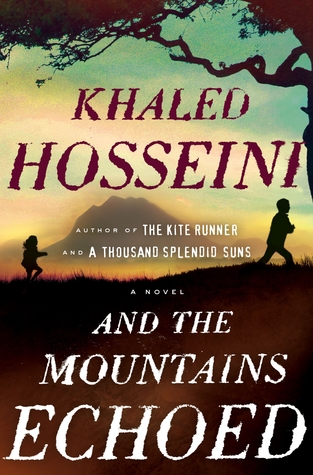
I have looked up many words while reading And the Mountains Echoed by Khaled Hosseini. This week’s word comes from a passage about poems.

They [the poems] read as though they have been crafted with the sole aim of shocking and scandalizing. They strike me as polemical, as angry indictments of Afghan gender roles.

Polemical \pə-‘lə-mi-kəl\ adj, from Greek polemikos, warlike, and French polemique, controversial; controversial or disputatious

Mountains EchoedWord Nerd Workout

Use polemical in a sentence.  Here’s mine:

The popular congressman carefully avoided discussing the polemical topics of immigration and gun control during his speech.

Your turn!  Talk nerdy to me.  And get ready for a word nerd review next week!

Julia


What You Need to Know About Divergent Before You See the Movie

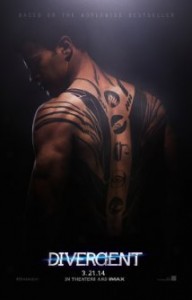
Divergent posterWhenever my daughter sees a trailer for the movie Divergent, she says, “I really want to see that.  It looks good.”

I think what she really means is Theo James, who plays one of the main characters, looks good. Alas, Divergent is rated PG-13, so I won’t let her see it yet.  Besides, she hasn’t even read the books, and in my mind, one MUST read the book before watching the movie.

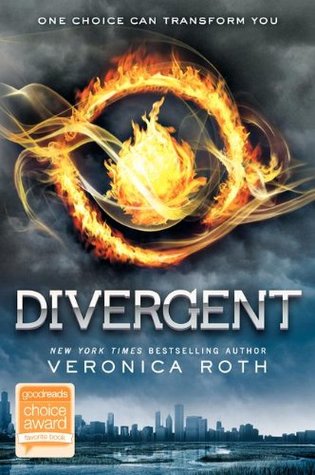
In case you don’t follow that motto, or you’ve read the books and need a refresher, here are some things you should know about Divergent, the book, before you see the movie:

  • It’s dystopian fiction, so expect an oppressive government, a dysfunctional society, and a futuristic/apocalyptic setting.  Throw in a serious threat to survival of the characters.
  • Divergent is set in futuristic Chicago, and the people of the society are divided into five factions based on the virtues of abnegation, amity, candor, erudite, and dauntless.  For a complete definition of each faction, consult my faction vocabulary post.  The quick and dirty synonyms are selfless, peaceful, honest, intelligent, and brave.  Visit IMDB to see a cool factions infographic.
  • Only people from the abnegation (selfless) faction are allowed to hold political office.  (As you can expect, this causes  problems.)
  • Those who fail to assimilate into a faction become “factionless”- the people living on the margins.  (More problems)
  • Some special people show aptitude for more than one faction, and they are labeled divergent and are regarded as dangerous by “authorities.”  (Big problem for some characters.)
  • The story is dark and sometimes brutal.  However, the violence isn’t as disturbing as the sadistic plot of The Hunger Games, in which a corrupt government pits children against each other in a battle to the death.  In Divergent, conflict arises between the factions as different groups struggle for power.   That doesn’t sound much different from our own world, does it?
  • The characters must undergo “simulations” for training and assessment.  This requires being injected IN THE NECK with various serums.   *cringing*

Divergent What I liked about the book

Divergent has lots of action and a compelling lead, named Tris.  She’s small, yet strong, and struggling to understand where she fits in.  The brutality of her society troubles her, and yet she must engage in violence to survive.  Good internal conflict there.

Divergent provokes questions about government and society, the thin line between protection and oppression.  I was especially interested in the idea of factions.   Does a society need people who embrace the five virtues?  Why these five?  Should only selfless people rule?  Which faction I would choose to join if I were Tris?  Definitely NOT dauntless.  No jumping onto trains for me, thanks.

What I didn’t like about the book

Divergent is heavy on action and plot twists and light on character development.  It feels like a lot of other dystopian reads with a female lead enduring a choosing ceremony and then going on to fight for survival and the people she loves.  I also didn’t like the ending.  It’s basically just a page break before the next book begins.

I do plan on seeing the movie, and I’ll tell you about it soon.

Have you read Divergent?  Did you like it?  Did I miss anything?  Do you plan to see the movie?  

Thanks!

Julia 

Vocab from And the Mountains Echoed: Blithe

wondrous memeWelcome to Wondrous Words Wednesday, a fun meme for word nerds hosted by Kathy at bermudaonion.net.  Share a word you learned in your reading this week or highlight one of your favorites.  Be sure to visit Kathy’s site to learn more interesting vocab.

My word today comes from my current read, And the Mountains Echoed by Khaled Hosseini.

I’m halfway through the book, and I definitely do not like it as much as Hosseini’s older novel, The Kite Runner.  First of all, nobody told me that it is basically a collection of tragic short stories.  As each chapter nears its end, I wonder, “How is this one going to end badly?”

However, Hosseini’s writing is undeniably beautiful, even if his subjects are heartbreaking.  I’ll write a full review when I finish.

Mountains EchoedToday’s word comes from the story of a middle-aged man who has returned to America after a trip back to Afghanistan, the land of his youth.  His sons are not interested in his stories.

… he is annoyed with their lack of interest, their blithe ignorance of the arbitrary genetic lottery that has granted them their privileged lives.

blithe \’blīth\ adj from Old English blithe, akin to Old High German blidi, meaning joyous;  of a happy, lighthearted character or disposition; lacking consideration; heedless

This is one of those words that I read and thought, I should KNOW this one.  It’s not even that big!  But alas, I had to look it up.

Word Nerd Workout

Use blithe in a sentence.  My workout:

While I tried to review the day’s itinerary, my family interrupted with blithe, and frankly, annoying, chatter.

Your turn!  Thanks for getting nerdy with me!

Tweet: Word nerd word from @juliatomiak: blithe = lighthearted, heedless. Can you use in a sentence? #amreading And the Mountains echoed http://ctt.ec/bSb2B+

Julia 

Why You Must Like The Characters to Like the Book

Looking for AlaskaLast week I shared my formula for what makes a great character. (Formula- yikes!  I’ve spent too much time supervising science fair projects.)

Today, I’m pondering the importance of characters again.

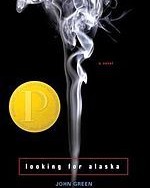
My idol, the YA author John Green, poses these questions at the back of his award-winning novel Looking for Alaska:

Do you like Alaska?  Do you think it’s important to like the people you read about?

To question #1, I say “No!”  I couldn’t stand Alaska.  While complaining about the mistreatment of women, she used her body, adorned with tight tank tops, to string along the other main characters in the story (all 17-year-old boys, of course).  I’ve known girls like her, which perhaps added to my ire.

To question #2, I proclaim an emphatic “YES!”  I must like the characters to like the book. Perhaps Alaska is interesting, in a screwed up sort of way.  But she’s also self-absorbed and unstable.  I pick Hazel Grace over her any day, and, quite frankly, I’m glad Mr. Green wrote The Fault in Our Stars, or I wouldn’t like many of his female leads.  (Margo Roth Spiegleman of Paper Towns also suffers from a severe case of self-absorption and attention seeking.)

Life is too brief, and my free time too limited, to bother spending hours with people I don’t like. That goes for the literary world as well as the real world.

Did I appreciate the value of Looking for Alaska?  Indeed.  Mr. Green masterfully tackles themes like suffering, mortality, and forgiveness.  If you read any of his commentaries on his novels, you will appreciate exactly how much thought he puts into his work.

But I will never call Looking of Alaska one of my favorites.  I couldn’t connect with it.  And then there was the tube of toothpaste.

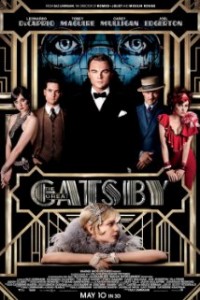
The Great GatsbyWhen the movie The Great Gatsby came out, I dragged my husband out to watch it.  (I’ve loved Leo DiCaprio since What’s Eating Gilbert Grape, which was released before Titanic, btw.)  But as the glittery story unfolded, I remembered, “Oh yeah, I don’t like any of the characters in this book.”  I left the theater feeling empty, even though I’d consumed a half bucket of popcorn.

There are other award-winning and highly praised novels that I appreciate, but don’t like, because they don’t have a single character I enjoy.  For example, Great Expectations, The Catcher in the Rye, and A Thousand Acres.  The writing might be lovely, the themes sophisticated and relevant, but if a character doesn’t pull me in, the reading starts to feel like work.

How would you answer Mr. Green’s questions?  Do you have to like the characters to like a book?

Thanks for adding to the discussion!

Julia 

A Runner’s Lexicon

Wondrous Words Wednesday

wondrous memeWelcome to Wondrous Words Wednesday, a fun meme hosted by Kathy at bermudaonion.net. Please welcome my guest Nicole as she shares Wondrous Words from running and some awesome pinnable quotes!


A unique subculture, runners dash through life at a different pace.

Part statistician, we reel off numbers with ease.

Total weekly mileage. Interval paces. Race splits.

Part cartographer, we chart our runs around the best pit stops.

Cleanest public bathrooms. Tolerable port-a-potties. Emergency bailouts.

We know the exact location of every one within a 50-mile radius.

And we have a way with words.

Glycogen stores. Iliotibial band. Lactate threshold.

To the uninitiated, the runner’s idiolect is as exotic as the Khoisan click languages of Africa.

‘Did she just say fartlek?’

For Wondrous Word Wednesday, I’m getting word nerdy to unlock the secrets of the swift. Use these helpful definitions to decipher the excited chatter around the water cooler.

A Runner’s Lexicon

Black Toenail – Caused by downhill running or too-small shoes, this badge of honor often heals on its own within a few months.


Bonk –
To run out of energy during a training run or race. See Hitting the Wall.

Boston Marathon – The Holy Grail of marathon races. Runners must qualify for entry. See BQ.

BQ – Shorthand for Boston Qualifier.

Carbo Loading – Practice of increasing carbohydrate intake leading up to an endurance event. The reason Olive Garden has a 2-hour wait on race weekends.

Chafing – Skin rubbed raw by clothing or skin-on-skin contact. Often undetected until hot shower. Results in loud exclamations and prolific expletives.

Cramp – Painful, involuntary contraction of a muscle. Pronounced ‘Aaaaaaarggghhhhh.’

Cross Training – Training regimen incorporating other forms of exercise, such as swimming and cycling. Often ignored by runners.

DFL – Dead F***in’ Last

DNF – Did Not Finish

DNS – Did Not Start

DOMS – Delayed Onset Muscle Soreness.

Endorphins – Chemicals in brain credited with producing sense of elation after completing an arduous run. See Runner’s High.

Fartlek – Swedish for “speed play;” variable pace running. Surefire way to make non-runners laugh.

Flopper – A runner who has a habit of collapsing in dramatic fashion in a non-winning position (usually second place) at the conclusion of a race.

Gu ­– Overpriced, barely edible, semi-liquid carbohydrate snack packaged in single serving pouches. Used as a fuel supplement during long periods of exercise.

Hill Repeats – A workout involving running uphill fast, jogging downhill slowly to recover, and then repeating the sequence. Also known as torture.

Hitting the Wall – A bonk so sudden and severe it feels as if you actually hit a wall. Energy levels plummet and negative thoughts skyrocket. Commonly occurs at mile 20 of marathon.

Junk Miles – Miles run at an easy pace to reach a certain weekly or monthly mileage.

Kick – Finishing burst of speed at the end of a race.

LSD – Long Slow Distance. Unexpected flashbacks to particularly brutal miles common.

Marathon – Long distance race run over 26 miles, 385 yards. Not for sissies. See Pheidippides.

Negative Split – Running the second half of a race faster than the first half. Requires superhuman strength.

Ninja Mama Runner – Fierce, fabulous woman who pounds the pavement and tears up the trails.

Pheidippides – Greek courier who ran from Marathon to Athens in 490 BC with news of a Greek victory. After delivering the message, he collapsed and died. Also known as Cautionary Tale. See Marathon.

PR – Personal Record. Term used to describe a runner’s fastest time over a certain distance. Also called Personal Best (PB).

Runner’s High – A feeling of exhilaration directly associated with vigorous running; related to the secretion of endorphins. Highly annoying to non-runners.

Snot rocket – Act of clearing nasal passages by blocking one nostril and blowing.

Stretching – To extend one’s body or limbs; something runners watch others do.


Taper – Cutting back mileage and intensity prior to a big race. Accompanied by phantom pains, mounting anxiety, and insatiable appetite.

Technical apparel – Clothing made of synthetic fibers that wick moisture away from the skin. Best known for increased stink factor with each wear.

Yasso’s 800s – Popular workout to predict a specific marathon time. Bane of every marathon training plan.

What terms would you add to the list?


Glacier_NGNicole Goodman is a full-time working mother of two and the caffeine-driven mind behind Work in Sweats Mama.

After business hours, you’ll find her chasing her fearless two-year-old, verbally sparring with her precocious four-year-old, avoiding housework, seeking an endorphin high on long runs, and slurping down gigantic fountain Cokes.