
What You Should Know about The Fault in Our Stars Before You See the Movie

TFIOS 2My 12-year-old daughter came home from school the other day and announced, “Everyone is going to see The Fault in Our Stars movie when it comes out.”

Everyone?

Well, she conceded, about 90%.

Then she put her hands on her hips and gave me the why don’t you let me do what other parents let their kids do look.

I get it a lot.

I sighed and asked, “Do you even know what the book is about?”

She admitted she did not.  And so I launched into an explanation of one of my favorite books, which is about to hit the big screen.

Here’s what you and my daughter need to know:

  • TFIOS is the love story of Hazel and Augustus, two teenagers diagnosed with cancer and contemplating the Big Questions of life.
  • You should read it first.  I say this about all books, but I really mean it this time.  John Green, the author of The Fault in Our Stars, tells this sad story with an admirable mix of humor, wit, and brutal honesty.  I’m not sure how his “voice” will transfer to the big screen.  Sure, his dialogue will make it, but what about great lines that are part of Hazel’s narrative, like

I fell in love the way you fall asleep: slowly, and then all at once.

Or:

Funerals, I had decided, are for the living.

Its only 313 pages; most people I know finish it in two days.  Read it!
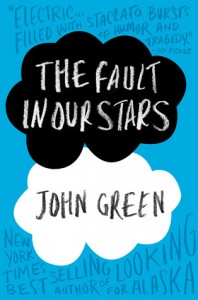
  • TFIOSIt’s sad.  These are kids contemplating their own deaths.  I cried.  For two days.  I’m actually hesitant about seeing the movie because I don’t want to go through the trauma again.  My 14-year-old son read TFIOS recently and said, “It was well written.”  He’s a John Green fan, and I shared TFIOS with him because he tends to ponder things at great length, much like the main characters.  But he didn’t like it.  I think it disturbed him a little, although he won’t admit it.  He does NOT want to see the movie.
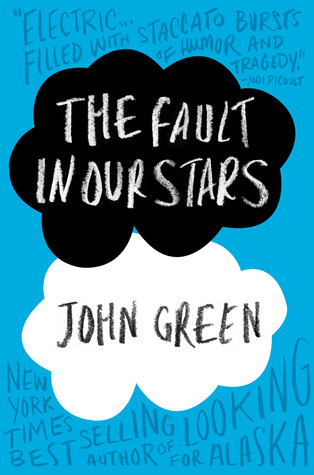
It’s sad.

  • There’s a lot of deep stuff going on.  Hazel and Augustus ask big questions like, “What kind of mark do I want to leave on the world?” and “How do I want people to remember me?”  and “Why are scrambled eggs only served for breakfast?”  It will take a mature reader/ movie goer to grasp all the themes and meanings Mr. Green has weaved into his story.  And Augustus likes to use big words.  For example:

I was, like, the prototypical Hoosier kid… all about resurrecting the lost art of the midrange jumper, but then one day… I couldn’t figure out why I was methodically tossing a spherical object through a toroidal object.

See what I mean?

  • There is one sexual encounter, tactfully written.  I’m actually not as concerned about that as I am about the deeper meanings going unappreciated.

Personally, I don’t think this book/movie is for tweens, not because of “the scene”, but because when my daughter reads/sees it, I want her to really get it.  What a waste to go through all that sad and not understand the humor and beauty too.

Have I missed anything?  What else should people know about TFIOS?  Do you plan on seeing the movie?

Thanks for stopping by!

Spread the word on Twitter: What you should know about The Fault in Our Stars before you see the movie #amreading #YAlit #TFIOS

Julia
Vocab from I Am the Messenger: Aspersion

wondrous memeWelcome to Wondrous Words Wednesday, a great meme for word nerds!  Visit Kathy at Bermuda Onion for more great words.

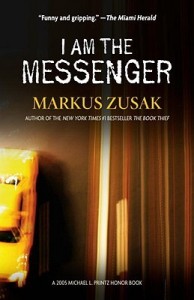
I’m currently re-reading I Am the Messenger by Markus Zusak for my book club.  Some teenagers I know call this book “life changing,” but so far, I’m not getting it.  Zusak has a very distinct style- sometimes beautifully poetic, often staccato.  Lots of “telling”- somehow, he gets away with it.  (In the writing world, we often hear, “show, don’t tell.”)

Here’s a quote from Ed Kennedy, the main character of I am the Messenger, while he testifies at a trial:

The judge chimes in now.  “And as for ugly – Mr. Kennedy, could you please refrain from casting such aspersions?  You’re not an oil painting yourself, you know.”

Messengeraspersion \ə-‘spər-zhen, -shən\ noun, from Latin aspersus, from ad– + spargere to scatter; 1)sprinkling with water especially in religious ceremonies; 2) a false misleading charge meant to harm someone’s reputation; 3) the act of making such a charge

I’m Catholic and never knew there was a name for the sprinkling of holy water that goes on in church, especially around Easter.  Thanks Wondrous Words!  Here, obviously, Zusak is using the second meaning, a misleading charge.

Word Nerd Workout

Use aspersion in a sentence.  For example,

Claire fumed while she listened to the girls spread aspersions about her friend at the lunch table.

Spread the word on Twitter: Word nerd word: aspersion = a false misleading charge, via @juliatomiak 

Your turn!  Thanks for getting nerdy with me today!

Julia

What I Liked (and Didn’t) About And the Mountains Echoed

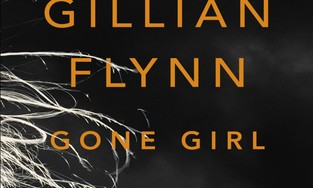
Mountains EchoedDid you realize that May is “Short Story Month”?  How appropriate, since most people (especially students and mamas) have so many field trips, projects, and end of year celebrations in May that reading time gets trumped! (Of course, I chose this month to read Gone Girl, which is keeping me up way too late every night.)

I haven’t read many short stories, but I recently read a novel that felt like a short story collection.

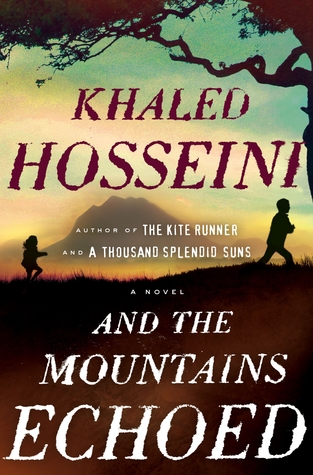
And the Mountains Echoed by Khaled Hosseini reads like a compilation of intertwined short stories.  Hosseini’s tales span several generations and many countries, including Greece, America, and of course, Afghanistan.  To fully appreciate the tapestry of interwoven plot lines, you must pay attention to names and places.  When you pull everything together, it’s really cool.

What I liked about the book

As with his other famous book The Kite Runner, Hosseini masterfully strings words together to describe several bittersweet truths about life and the human existence.  For example:

The decline of one’s own body is incremental, as nearly imperceptible as it is insidious.  Seeing Thalia white-haired presents jolting evidence of her steady, inevitable march toward old age- and, by association, my own.

What a beautiful way to describe a phenomenon I’ve recently noticed – when I see friends or relatives after a long absence and note the outward signs of their age, I feel older.

Here’s another wonderful passage, one that carries special resonance with me, a “creative”:

I see the creative process as a necessarily thievish undertaking.

Hosseini’s ability to capture these kernels of truth always impresses me.

And the Mountains Echoed does not have the stark violence of that pivotal scene in The Kite Runner.  But it isn’t a lighthearted read, either.

What I didn’t like about the book

At first I didn’t enjoy Mountains at all; I described it to friends as “soap operas set in Afghanistan.”  Many of the early stories focus on the ugliest of human tendencies: jealousy, selfishness, manipulation, and distrust.  I was only a third of the way in and had already endured one character pushing her sibling out of a tree (which led to a paralyzing injury) and two assisted suicides.  It got to the point where I reached the middle of a story and thought, how will this one go wrong?

Also, I didn’t get a deep understanding of Afghan culture and history like I did with The Kite Runner.

Two of the later stories end, if not happily, at least with a marginal sense of closure.  I finally found a few characters that I could like and respect.  Yet there is always a haunting sense of something missed, something lacking.

This book is not a “pick me up” kinda read.

Final recommendation

You would probably like And The Mountains Echoed if:

  •  you crave beautiful prose and exotic settings
  • you aren’t afraid to spend time with the dark side of human nature
  • you are willing to pay attention to names, dates and places to discover how the characters’ lives interconnect
  • you like novels that experiment with new ways of storytelling

For a more traditional novel, I highly recommend The Kite Runner.  But be warned, a very important scene in the book involves a brutal sexual assault, and this plot point disturbs many readers.

Have you read And the Mountains Echoed?  What did you think?  Can you recommend any short story collections?

FYI, if you’re interested in listening to short stories, my friend Andrea Bagdley has compiled a great list of story telling podcasts at her blog Andrea Reads America.

Thanks for stopping by!

Julia

Tweet about it: And the Mountains Echoed: beautiful writing, dark topics: a review by @juliatomiak #amreading 

Vocabulary from Gone Girl: Apotheosis

wondrous memeWelcome to Wondrous Words Wednesday!  Visit Kathy at Bermuda Onion to learn more cool words or share some of your own.

I’ve got one more word from Gone Girl.  Amy, one of the main characters, is wicked smart (and I mean wicked); she’s sent me to the dictionary several times.

Here’s the snippet from Gone Girl.  Amy is watching a TV talk show about herself:

The show gets underway, and I feel a bit better.  It is the apotheosis of Amy.

apotheosis \ə-pä-thē-ō-səs, a-pə-thē-ə-səs\ noun; from Greek apo + theos god; elevation to divine status; the perfect example of something

For example,

During her interview, Missy Franklin appeared as the apotheosis of good sportsmanship.

or

Gone Girl, a literary apotheosis of the domestic thriller, rushed to the top of the best seller list and will come out as a movie later this year.

Word Nerd Workout

Use apotheosis in a sentence.  What is the perfect example of a spring day? a sci-fi story? high school?

Thanks for getting nerdy with me!

Click the link and spread the word on Twitter: #Vocab from #GoneGirl: apotheosis = the perfect example of something, via @juliatomiak

 Julia

Why We Should Be Generous With Books

personal library
My personal library; awesome for organization

I have a confession:  sometimes I’m possessive with my stuff.  Including books.

I used to blame it on “the only child” syndrome.

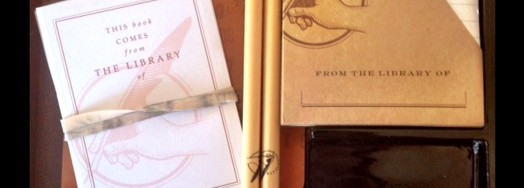
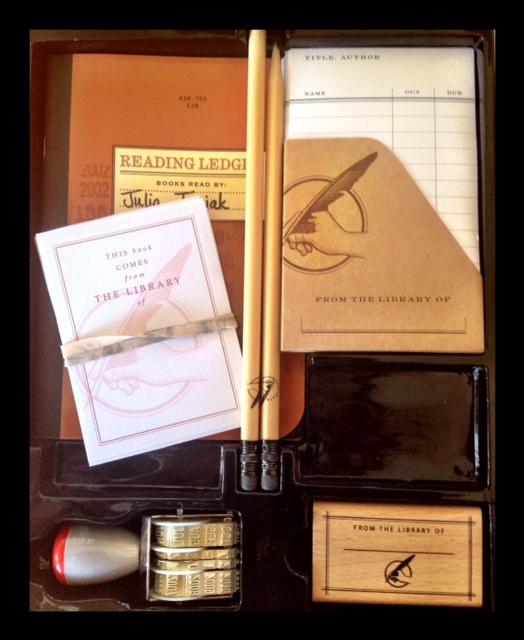
I’ve always handed over a favorite book with hesitation.  What if I never see it again?  A few years ago, a friend gave me a personal library set.  Using tools from this set, I put my name in all of my books and kept records of who had which novel from my collection.

If I didn’t see a book for a few months, I started asking questions.

But during Lent this year I realized the fault of my ways.

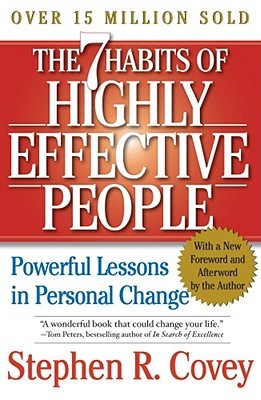
Awareness struck me while I was on the dreadmill, listening to Michael Hyatt’s podcast about finding margin .  Michael said that many people make decisions out of fear that they might lose something, miss out, or be judged.   He referenced the scarcity mentality, first introduced by Dr. Stephen Covey in his book, The Seven Habits of Highly Effective People.

I paused the treadmill and the podcast as I realized with horror: I had a scarcity mentality.

The Seven Habits of HighlyTwenty years ago, I read The Seven Habits.  I was newly married, my Master’s Degree hung on the wall, and I thought I had it all figured out.  I read Dr. Covey’s explanation of “the scarcity mentality” and thought, with scorn, of several people I knew who fit this description:

They see life as having only so much, as though there were only one pie out there.  And if someone were to get a big piece of the pie, it would mean less for everybody else.  The Scarcity Mentality is the zero-sum paradigm of life.

It took two decades for me to understand that I have suffered from a limited view of the world for a long time, and in many facets of my life.  It’s an anxious way to live, thinking that there isn’t enough.  My possessive tendencies filled me with worry, not joy.

Thanks to Mr. Hyatt and Dr. Covey, I’m done with scarcity.  This revelation has changed my perspective on parenthood, marriage, and friendships, but I’ll keep my thoughts here focused on the word nerdy realm.

Now, when fretful thoughts creep up, I remind myself that I already have or can obtain everything I need accomplish my goals.  And one thing I love to do is help people find interesting things to read.  I can’t do that clutching selfishly to my books.

book showerTherefore, I’m embracing a generous literary spirit.    If I can find great books to give as gifts, I’ll spend the money to do so.  If I’ve got books on the shelf I haven’t touched in years, I’ll donate them to the library.  I’ll hand out my beloved copy of The Help without reservation.  Because encouraging people to read is more important than preserving my book collection.

Book lovers shouldn’t hoard books; we should share them. 

We live in a world where Minecraft, Net Flicks, and six second videos pull attention away from books.  While those forms of entertainment are ok in moderation (see, that’s the abundance talking- there’s plenty for everyone), books deserve love, too.  And the best way I can spread that love is with an open hand.

How do you feel about sharing your books? 

Thanks for sharing!

Julia

Click to Tweet:  #Booklovers: It’s better to share #books than hoard them, via @juliatomiak

Vocabulary from Gone Girl: Wastrel

wondrous memeDo you care enough to look up words when you don’t know what they mean? Then you’re in the right place! Welcome to Wondrous Words Wednesday, a great meme for word nerds hosted by Kathy at Bermuda Onion.
I’ve got another word from Gone Girl. In this quote, one of the main characters, Nick, describes how he looked at a press conference:

The booze floating, sludgelike, just beneath the surface of my skin made me look like a fleshy wastrel, just sensuous enough to be disreputable.

wastrel \’wās-trēl\ noun from an irregular form of waste; one who expends resources foolishly and self-indulgently; one who wastes time, money, etc.

Gone GirlWord Nerd Workout

Have you ever known a wastrel? Tell us about him or her in a sentence. Fortunately, my only experience with wastrels has been through fiction. Here’s my sentence:

I shuddered at the story of the young man who wasted all of his money on alcohol and gambling and hoped that my son would never be such a wastrel.

Spread the word on Twitter:  wastrel = one who wastes time, money, via @juliatomiak 

Thanks for getting nerdy with me!

Julia