
Welcome to Wondrous Words Wednesday, a great way to strengthen your vocabulary muscle. Join me every week to learn new words, and visit Kathy at Bermuda Onion to link up with other Word Nerds and see what interesting words they share.
My family is observing the last week of Lent, a time of repentance, prayer, and alms giving in anticipation of Easter. Many Christians refer to this week as Holy Week, and there will be special services on Holy Thursday, Good Friday, and, for Catholics, Holy Saturday.
I’ve seen churches advertising “Maundy Thursday” services, which of course had me wondering, what does Maundy even mean? I thought Maundy meant “sad.” I was wrong.
Maundy Thursday \’mȯn-dē\ noun, from Middle English maunde ceremony of washing the feet of the poor on Maundy Thursday, from Anglo-French mandet, from Latin mandatum meaning command.
The term refers to Jesus’s words to his disciples after He washed their feet and they shared the Last Supper together:
I give you a new commandment: love one another. As I have loved you, so you also should love one another. John 13:34 NAB.
Maundy Thursday definition: the Thursday before Easter observed in commemoration of the institution of the Eucharist.
Whether you are Christian or not, whether you recognize Lent or no, don’t you agree that this is a lovely commandment to cover our lives?
In the Catholic tradition, at the Holy Thursday service, a priest washes the feet of his parishioners, just as Jesus washed the feet of his disciples before the Last Supper. It is an action of humility and service that Jesus used as an example for his followers.
Washing of the feet at a Holy Thursday Catholic Service. Photo Credit: Randy OHC via flickrCC-BY
Word Nerd Workout
What other interesting religious term, related to Holy Week or otherwise, can you share?
Thanks for getting nerdy with me. If you celebrate, Happy Easter. If not, happy spring!
I’ve always feared that screens work against reading. You know, more time with the iPad and Boom Beach means less time with good books. But a recent story called Mobile Power for Girl Power (gotta love that headline, right?) shows how technology can actually improve literacy in the poorest areas of the world.
Some things you should know
UNESCO stands for United Nations Educational, Scientific, and Cultural Organization.
In February, UNESCO and UNWomen organized Mobile Learning Week, a venue for education and technology experts to come together to discuss how technology programs can eradicate educational discrepancies between genders in poor countries.
The Matthew Effect: the theory that wealth endures and poverty repeats itself. In relation to literacy, this mean that those who read well become strong, voracious readers. Less successful readers face huge hurdles in education.
Why does there need to be a Mobile Learning Week? Check out these statistics:
Two thirds of the world’s illiterate adults and youth are female
25% fewer women than men have Internet access in developing countries
In poor countries, 300 million more men than women own mobile phones, and therefore have more access to technology to assist with education and business
UNESCO ran a program in Pakistan (in a partnership with Nokia) that gave women and girls access to mobile phones and learning apps. Girls who couldn’t read are now avidly reading and exchanging books. The people at Mobile Learning Week used their brilliant minds to come up with more programs like this one.
That makes this Word Nerd very happy. Don’t you love news stories that feature good news?
How have you seen technology used to encourage reading? Please share some more happy news.
And check out my post on Worldreader, a non-profit that gives e readers to people in poor countries.
Welcome to Wondrous Words Wednesday, a great meme for learning something new. Visit Kathy at Bermuda Onion to join the fun. Or write your own post and link up.
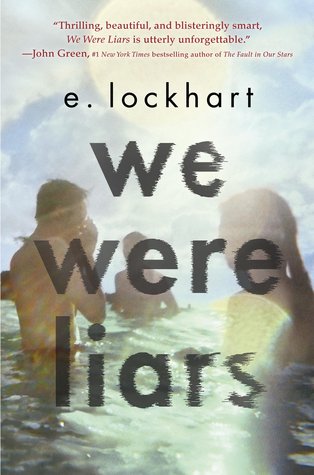
I just started We Were Liars by E Lockhart. It’s a YA thriller about a wealthy family, set mostly at their private island off the coast of Massachusetts where they summer. There’s an accident, amnesia, and many things left unsaid. Lockhart uses original, vivid language to describe her characters and their emotions.
So far, I’m loving it.
My wondrous word comes from the first half of Liars.
He’s doing pretend semaphore, waving his arms in ornate patterns as if I’m supposed to understand some kind of secret code.
Semaphore \’se-mǝ-fȯr\ noun, from Greek sēma meaning sign, signal + International Scientific Vocabulary phore
An apparatus for visual signaling (as by the position of one or more movable arms)
A system of visual signaling by two flags held one in each hand
Berit Wallenburg, Swedish Girl Scout, demonstrates semophore. Photo Credit: Swedish Heritage Board via flickr Public Domain
Today’s post is going to focus more on nerdy, less on wordy.
I’m gonna admit my love for spreadsheets.
I know, spreadsheets are more of an accountant’s obsession. But Excel can do way more than calculations. It can keep a busy life organized. And, you can color code! Next to my love of words comes my love of color. All my index cards in graduate school were color coded: pink and purple for neuroanatomy and pediatrics (my favorite subjects), black and red for wound care (the subject I dreaded.)
The Beauty of Spread Sheets
I have four children. Have I mentioned that before? My daughter keeps telling me I have short term memory loss. I’m positive that, if I have memory loss, motherhood has caused it. All the more reason why I need my spreadsheets! The sports schedules alone keep me hopping, and I need a way to see soccer games and swim meets all at once, so that when someone asks, “What weekends in April are you free?”, I can answer coherently.
Here’s where the Spring Sports Schedule spread sheet comes in handy.
Every child has a color – and that’s not just for spread sheets. The family color code works across calendars, chore charts, and folders I use to keep track of paperwork.
With the spreadsheet, I can pinpoint particularly tricky weekends, when every child has an entry across the row. I save the spreadsheet in Dropbox so that the hubby and I can access it from any device.
Another handy use for Excel: the Family Health Visit Record. Good grief, I don’t know how I would remember when everyone had their last eye exam or visit to the dentist without it.
See how every family member has a color coded tab? This workbook goes chronologically left to right – I just keep adding notes. Eventually, I guess I’ll delete old stuff. 2011 was a long time ago. Sigh.
See how often I’ve been to see a primary care physician? Whoops! Does it count if I’m married to one?
Finally, I use Excel to keep an Editorial Calendar for Diary of a Word Nerd. This is where I plan out posts and keep an eye on variety. Who wants to read (or write) book reviews week after week? With this spreadsheet, I keep notes for social media posts and set reminders for annual events, like National Poetry Month and Banned Books Week. When the new year rolls around, I “save as” for the new year.
I ♥ spreadsheets. Call me “Type A”. Say I’m a dork.
But I know when my child had his last fluoride treatment. Do you?
Welcome to the best meme for word nerds, Wondrous Words Wednesday. It’s a great place to ponder those words you come across while reading that give you pause. Visit Kathy at Bermuda Onion to find more interesting words or write your own post and link up to join the fun.
Inimical \i-‘ni-mi-kǝl\ adj from Latin inimicus, meaning enemy
Being adverse often by reason of hostility
Having the disposition of an enemy
Unfriendly
The substitute had years of experience and didn’t flinch under the inimical glares of her freshmen biology students.
Word Nerd Workout
Tom Felton (aka Draco) doesn’t look so inimical in this picture. Photo Credit: Gabbo T via flickrCC-BY-SA
Can you think of a synonym for inimical? Or better yet, a character from fiction who has an inimical disposition. My synonym is “oppositional” and my character is Draco Malfoy – I know, I took an easy one.
If you don’t know what this means, then clearly, you’ve been living under a snow pile for the past three months. I’ll fill you in.
Insurgent, the second movie in the Divergent series, features a dystopian society in which all people must choose to live in one of five factions: Amity, Erudite, Abnegation, Candor, or Dauntless. (For an explanation of each faction, visit my faction vocabulary post.) The society was originally divided into factions to promote peace and balance, but unfortunately some factions aren’t happy with the set up and want to take over.
Also, not all people fit nicely into a faction. Some end up factionless, the equivalent of modern society’s homeless. Others are special, or Divergent, having qualities of two or more factions as well as superior abilities.
Tris, the heroine of the series, is Divergent, which makes her dangerous in the eyes of the people vying for power. She and her boyfriend, Four, who is also Divergent, lead a fight against the evil people trying to take over.
Four is brave, mysterious, and as you can see, gorgeous.
This is a fun dystopian series, with rebellion, truth serum, and tattoos, and some good questions about human nature. I read Insurgent a year ago, but I know a 13-year-old Fan Girl who has read the series repeatedly and treasures her Collector’s Edition books. She can tell you what you need to know before you see the movie.
WN (Word Nerd): How many times have you read Insurgent?
FG (Fan Girl): Uh, I stopped counting after ten.
WN: Seriously? Ten? Why do you like this book so much?
FG: Because Tris is awesome.
WN: What are the key plot points of Insurgent, the book?
FG: Probably [Tris] finding out exactly what Jeanine [the evil leader from the Erudite faction] is up to, figuring out what to do with the hard drive [an item with critical information that Tris stole from Jeanine in Divergent], as well as resolving personal conflict about Will. [Tris had to kill Will, her friend, at the end of Divergent, and this haunts her.]
WN: How does the main character,Tris, change in this installment of the story?
FG: She is very reckless and conflicted at the beginning, but near the end she learns to enjoy life and put her emotions aside when making decisions.
WN: What goes on between Tris and Four, who just started their relationship at the end of Divergent?
FG: They fight a TON. 🙁 They learn-ish to trust each other – a problem they struggle with a lot even going into Allegiant, the third and final book in the series.
WN: What are some of your favorite parts of the book? Favorite lines? (because I know you can quote some.)
FG: My favorite part is when [Tris and Four] are in hiding at the Amity compound. [People in the Amity faction grow all the food and are peace loving – think hippies ]. Tris says to Four, “That’s why you like me! You’re not very nice either!” when she’s high on peace serum.
The Insurgent Collectors Edition at Amazon
WN: Why should people read the book before seeing the movie?
FG: The same reason you should read any book before a movie. It – the book – gives you more information than a movie can give you.
WN: Excellent answer. What’s cool about the collector’s edition of Insurgent?
FG: It has special interviews, posters, and even some of Veronica Roth’s rough drafts and early manuscripts.
The Fan Girl’s friends were raving about the movies but hadn’t read the books, something that distressed both Fan Girl and me, so I promised to take them to see Insurgent if they read the book first.
Hopefully, I’ll have a pack of girls with me at theater next week. 😉
Have you read Insurgent? Do you plan to see the movie? Please share!