
Who I Am Project: How I’ve Changed Since Childhood

Most mornings, when the “Goodreads Quote of the Day” pops up on my iPhone, I smile, or feel inspired. But this one hit me like an accusation:
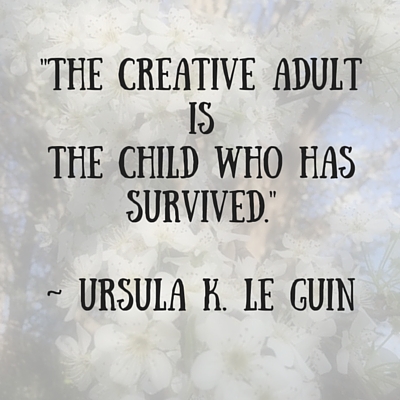
Creative Adult Quote

The words taunted me: where has your inner child gone?

My name, Julia, means youthful, and true to form, I surround myself with younger people. Through all of my occupations and positions, (teacher, physical therapist, coach), children have been the consistent feature. And yet, I worry my own “child” has gotten lost.

I don’t have any siblings, and although I always wanted more kids around when I was younger, the lack of companionship nurtured a great gift: creativity. Out of necessity, I became very good at entertaining myself. In grade school, I created elaborate schemes that included Barbies, Fisher-Price figures, and random pieces of furniture. When I entered adolescence, my creativity manifested itself in sketch books. Pencil and paper were my favorite mediums, although I fancied acrylic paint as well. Difficult subjects like glass, ribbons, and bubbles fascinated me. I loved exploring the coiled lines of a bow atop a present or how glass bends a flower stem.
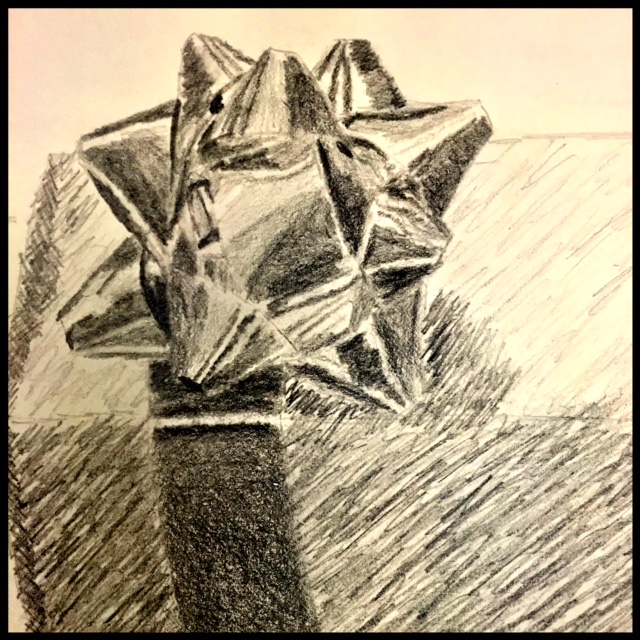
bow sketch

The demands of marriage and family buried that part of myself until recently, when one of my children was working on an art project, and I pulled out a few of my old sketch books. As I flipped through the pages of an older book, my son said, “Wow, Mom, these are good.”

glass sketch


My drawings spoke to me too. They whispered, somewhat bitterly, “Where have you been?”

I’ve been changing diapers and doing laundry. Balancing checkbooks and color coding sports schedules.

I closed the sketch book, but I couldn’t forget.  The shock helped me realize something:
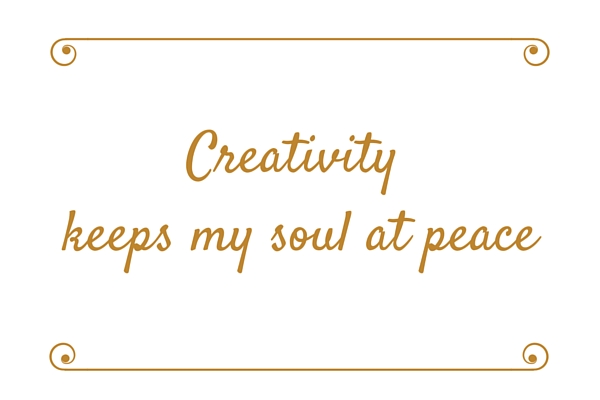
Creativity keeps my soul at peace

Yes, motherhood consumes much of my time, and hours spent taking care of my kids are hours well spent, but I can’t lose myself amid the demands.  Since I don’t have endless carefree afternoons like I did at age ten, finding time for creativity, which currently comes into my life as lines of fiction or clicks of the shutter, demands self-discipline and self-love, but it’s necessary. It’s who I am.

I will make sure my inner child thrives alongside my offspring.

And someday, when there isn’t as much laundry because there aren’t as many children at home, I will again fill the lonely places with strokes of my paintbrush.

Who-I-am-button

Thank you Dana for the Who I Am writing project. This month’s prompt has been especially timely as busy end of the school year schedules and the demands of soccer season threaten to drown the creative child inside me.

If you’d like to participate in the Who I Am project, visit Dana’s blog, Kiss My list.

How have you changed since you were a child?

Thanks for getting thoughtful with me!

Julia


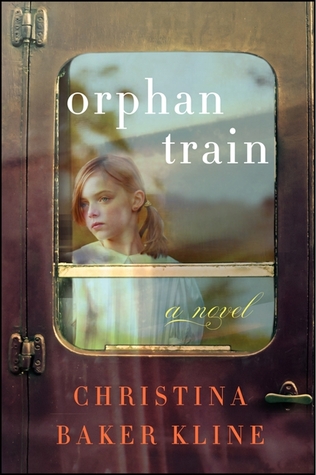
Why You Should Read Orphan Train

Orphan Train, by Christina Baker Kline, came highly recommended by several friends and blog readers, and it did not disappoint. If you like historical fiction or novels that explore themes of family and finding acceptance, you’ll like Orphan Train. It reminded me of The Language of Flowers, another favorite of mine.

Premise

Orphan Train weaves two stories from different time frames. In the “present”, jaded teenager Molly, who has bounced through the foster care system for years, agrees to help an elderly woman clean out her attic for community service hours. In the “past” narrative, we learn the story of Irish immigrant Niamh, a girl who loses her parents to a fire in New York City and ends up on a train headed west, with hundreds of other orphaned children, to find a family willing to adopt her.  These two very different characters end up having a lot in common.

What I liked

  • I’d never heard of “Orphan Trains” and found this piece of American history fascinating. Apparently, from 1854 to 1929, over 200,000 orphaned or abandoned children traveled into the Midwest for adoption . Many times, the families who took orphans were merely looking for free labor. It’s an excellent illustration of an idea with good intentions that goes terribly wrong.
  • With the use of a modern narrative, Orphan Train successfully creates an emotional connection to events from the past. I especially liked how the author brought together two characters with seemingly nothing in common and created a bond between generations. I also like YA and enjoyed having a teenager in the narrative.
  • Although I’ve never been abandoned or orphaned, I found the main characters easy to relate to. Here’s a quote from Molly’s story:

But it kind of feels nice to nurture her resentment, to foster it. It’s something she can savor and control, this feeling she’s been wronged by the world.

Ouch, I know I’ve been guilty of nurturing some resentment. Here’s the good news: both characters learn to rise above this human tendency.

  • The switch between narratives/ time frames did not confuse and helped to keep the pace of the plot moving. The author includes small surprises and twists that make the story compelling, but not ridiculous.

What I didn’t like

The “past” narrative is told in first person point of view by nine-year old Niamh, but often, she sounded more like a teenager to me.  My book club buddies suggested that since Niamh went through such difficult experiences, it aged her, and that came through in her voice. I’m still not sure I buy it.

Notes on content

One of Niamh’s foster parents attempts to sexually abuse her. The scene is handled tactfully, but is fairly graphic (mentions male anatomy).
Have you read Orphan Train? What did you think? Can you recommend other historical fiction?

Happy reading!

Julia


Vocab From Go Set a Watchman: Gulosity

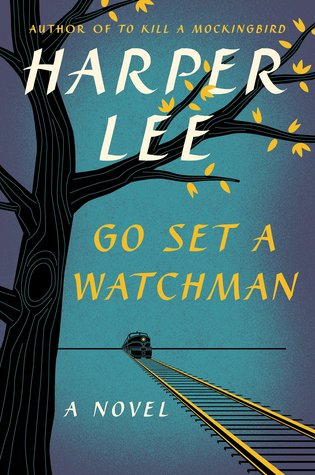
I’m still enjoying Go Set a Watchman by Harper Lee.  Just last night, I read the hilarious passage in which Scout recalls how she first learned about her “monthly curse” and planned to throw herself off the Maycomb water tower because she thought she was pregnant.  Ah, the naivety of youth.  😉

wondrous memeHarper Lee certainly had a rich vocabulary.  If you want to build up your word repertoire, join the Wondrous Words Wednesday fun with Kathy at Bermuda Onion.  Bloggers share new words from their reading or ones that interest them.

Last night, Ms. Lee stumped me with gulosity.  Have you heard of it before?  Here’s a fun passage that shows some of the personality of the main characters of Watchman:

In spite of herself, Jean Louise [Scout] grinned.  [Aunt] Alexandra could be relied upon to produce a malapropism on occasions, the most notable being her comment on the gulosity displayed by the youngest member of a Mobile Jewish family upon completing his thirteenth year:  Alexandra declared that Aaron Stein was the greediest boy she had ever seen, that he ate fourteen ears of corn at his Menopause.

LOL emoji


gulosity \g(y)ü-ˈlä-sə-tē\ noun from the Latin gulosus gluttonous, from gula gullet

  • excessive appetite; greediness

According to Merriam-Webster, gulosity is a word for gluttony that is rarely used anymore.

Word Nerd Note: Were you stumped by malapropism?  It means: an amusing error that happens when someone uses a word that sounds like another word but has a very different meaning.  It’s derived from Mrs. Malaprop, a character prone to such verbal mishaps in the 1775 play The Rivals.  The author, Richard Sheridan, got her name from the French term  mal à propos, which means “inappropriate.”  [Merriam-Webster]  Often, young children are susceptible to such mix-ups.  My youngest likes to call his comforter his “comfortable”.  😉

Word Nerd Workout

Can you think of a synonym for gulosity or a character from books or movies that demonstrates gulosity?  How about Smaug the dragon’s gulosity over the treasure he hoarded in The Lonely Mountain in Tolkien’s The Hobbit?  Or, please share a malapropism you’ve heard.

Thanks for getting nerdy with me.

Julia


Seven Ways to Celebrate Poetry

Perhaps it’s because I’m worried my kids spend too much time with screens and not enough time creating. Perhaps it’s because I could use an imagination boost myself. Perhaps it’s John Green and his short poems on the Dear Hank and John podcast. Whatever it is, I’m dusting off the college English anthologies and leaving poems on my kids’ beds.

April 2016 marks the 20th anniversary of National Poetry Month, the world’s largest literary celebration. Every year, schools, publishers, libraries, booksellers, and poets encourage appreciation for this art form that condenses meaning, rhythm, and sometimes whimsy into short lines of words.  Good poetry raises questions, communicates emotion, and inspires us. It’s a worthwhile literary form that deserves our attention.

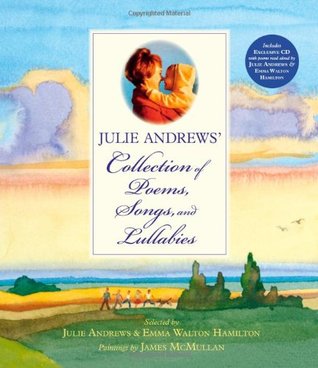
Julie Andrews

To get a little more poetry savvy this spring, check out the Poets.org list of 30 Ways to Celebrate National Poetry Month. If you’re short on time (who isn’t?) check out my list. I took the most interesting and viable tips from Poets.org and added a few of my own Word Nerdy ideas:

  1. Encourage everyone in your house to memorize at least one poem this month. Humorous poems get the most traction with my younger kids. I’m hoping my teens will embrace something more meaningful, maybe even angst ridden, this year, like Walt Whitman’s “Song of Myself”. (Wait, that’s like 20 pages long. Maybe just parts “1 and 2”?)
  2. Sign up to receive a Poem-A-Day via email for the month of April. Then actually READ the poems, preferably out loud, to anyone who will listen. (e.g. children trapped in the car with you.) Even better, have a child read the poem. I just printed off “Blind Boone’s Apparitions” by Tyehimba Jess for my daughter, the pianist.
  3. Read a poem to yourself/roommate/spouse/ kids before bed. I know evening time is precious. Pick a short poem!
  4. Chalk a poem on the sidewalk. This will be a new activity for me this year. I’d like to chalk poetry graffiti near the schools and parks in town.  Of course, I’ll ask for permission first, and I’ll let you know how it goes.
  5. Participate in Poem In Your Pocket Day. On April 21, copy a poem (here are some ideas) and keep it in your pocket to share with friends, family, coworkers, and students. I’ll be on a field trip to Washington D.C. with a bus full of 8th graders; this should be interesting. 🙂 Daughter will LOVE ME.
  6. Print up a famous poem plus critical analysis and discuss it with your kids/coworkers, etc.  Inspired by The Fault in Our Stars, I’ve picked “The Love Song of J. Alfred Prufrock” by T.S. Eliot.
  7. Get ready for Mother’s Day by choosing a line of poetry to use in a Mother’s Day card. Or, if you’re a mother, give your kids some poetic suggestions and see what they pick.


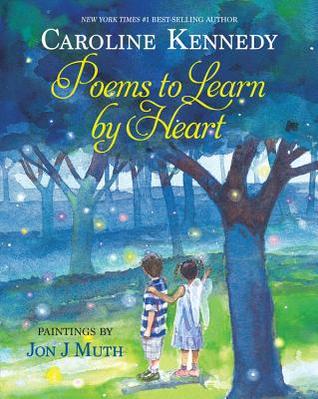
Caroline KennedyDo you like these ideas, but need to find great poems?  Look here:

Which of these activities will you use to celebrate poetry this month? Can you offer any other suggestions?

Thanks for getting poetic with me!

Julia


Vocab from Go Set a Watchman: Abjure

I’m finally reading Go Set a Watchman with my book club this month! For those of you who don’t know, Watchman was written by Harper Lee and features the iconic characters of To Kill A Mockingbird two decades after Mockingbird’s setting. Jean Louise, aka “Scout” Finch, visits home and learns disturbing things about her home town and the people she loves. It’s set in the 1950’s, in the tension of the Civil Rights Movement, and I can’t wait to dig in! I love books that explore racial tension and find them applicable, unfortunately, today.

Harper Lee stumped me on page 13:

He began dating her [Scout] on her annual two-week visits home, and although she still moved like a thirteen-year-old boy and abjured most feminine adornment, he found something so intensely feminine about her that he fell in love.

Abjure \ab-ˈju̇r\ verb from the Latin jurare, which means “to swear” (related to perjury and justice, also based on the root jus, meaning “law”), plus the prefix ab-, meaning “away.”

  • to renounce upon oath
  • to reject solemnly
  • to abstain from

According to Merriam-Webster, in the 15-16th centuries, to abjure something meant to reject something by oath and was subject to penalty of death. In modern language, the meaning isn’t as strong, as in the example above, in which Scout refrains from “feminine adornment.” No one is going to burn her at the stake for not wearing a necklace. 😉

Word Nerd Workout

Give a synonym for abjure. For Divergent fans, I’m offering “abnegate”, no deny.

wondrous memeIf you like learning new words, please join in the Wondrous Words Wednesday meme, hosted by Kathy at Bermuda Onion.

Thanks for getting nerdy with me today!

Julia


It’s April! Find Your Inner Poet

Things are crazy, time is scarce, so this will be brief.  Today, April 1, isn’t just April Fools Day.  It’s also the beginning of National Poetry Month.  Next Friday, I’ll have some great ideas for getting into poetry this month.  Until then, meditate on one poem (you know, song lyrics are basically poetry) and awaken your inner poet.  Click the button below to help:

Appreicating Poetry


Thanks for getting poetic with me!

Julia