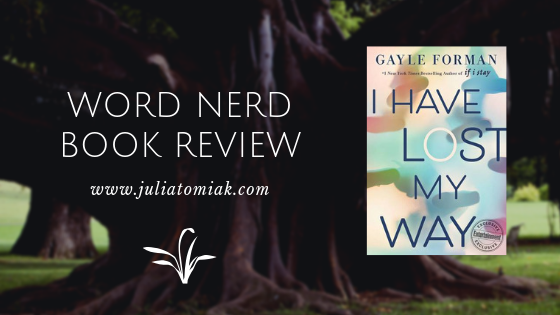
Why You Should Read I Have Lost My Way

We’ve all felt loss. We’ve all been lost. And that, plus the gorgeous writing, is the appeal of I Have Lost My Way, Gayle Forman’s most recent young adult novel. The three main characters couldn’t be more different. One is a young black singer, one is a dutiful son in a Muslim family, and one is a white visitor to New York City on a tragic mission. But they all share one thing: a devastating sense of loss. Yet in that loss, they find each other.

Premise

Freya is a rising young singer with a studio contract and tons of followers on Instagram. But just when she should be recording her music, her voice stops working. Her manager sends her to doctors and specialists, but nothing brings her singing voice back. If she can’t sing, she will lose her career, and she’s already lost her father and her sister.

Harun lives in a family of devout Muslims who do not know that he is gay. He cannot bring himself to tell his parents the truth about himself, and because of that, he has lost the one person who understood and accepted him – James.

Nathaniel grew up in a “fellowship of two” – just him and his dad in a house in the woods. Unfortunately, Nathaniel’s father suffered from untreated mental illness, and Nathaniel spent his life caring for and protecting his father. He has recently discovered the cracks in the world where he and his father lived, and he can see only one future — and it’s not a happy one.

Freya, Harun, and Nathaniel collide in a freak accident in Central Park and spend the rest of the day discovering each other and finding what they’ve been so desperately missing.

What I Liked

Foreman effectively uses multiple points of view to lay out an interesting story. All three characters have distinct compelling voices, and it’s easy to follow who is thinking and doing what. The switching POVs add tension and interest to a quiet story that emphasizes character development.

Although they come from very different lives, the three characters connect in realistic ways because of one common experience: loss. It’s a theme much needed these days, when differences seem to overshadow the similarities between people.

There is a lot of emotion in I Have Lost My Way, but Foreman’s writing never feels melodramatic. She uses effective description and metaphors to make readers care for her characters. Here’s a good example:

“And secrets crave fissures, until the fissures become trenches, and the trenches become channels, and the channels become crevasses, and suddenly you are alone, on a block of ice, separated from everyone you care about.”

Or this:

“To be the holder of other people’s loss is to be the keeper of their love. To share your loss with people is another way of giving your love.”

Overall, Foreman’s writing is clear, and her imagery beautiful. I enjoyed her older novel, If I Stay, but I think the writing in I Have Lost My Way is better. It’s smoother and feels more authentic.

I Have Lost My Way has a happy ending, although everything isn’t neatly tied up. The characters do not necessarily get what they want, but they do get what they need, and they see the value in that.

Recommendation

I Have Lost My Way is a great read for people who like contemporary realistic fiction, especially if they are looking for diversity.

Notes on content

I Have Lost My Way includes scenes with intimacy that is described tastefully. There’s some swearing. And one of the characters is gay and wrestles with coming out to his family.

Are you a fan of Gayle Foreman? Have you read If I Stay or any of her other books? Can you recommend similar books with diverse characters wrestling with real life challenges?

Thanks for getting nerdy with me!

A Poem for Your Pocket 2019

Ada Limon

When was the last time you read a poem? Can’t remember? That’s a shame, because poetry is a powerful medium. It channels emotions into brief lines and phrases. For me and Word Nerds everywhere, poetry offers a fascinating study of the power and passion of words.

So we all need to read and write more.

Today is Poem in Your Pocket Day, a celebration of poetry started back in 2002 by the Office of the Mayor along with the New York City Departments of Cultural Affairs and Education. It’s become an important part of National Poetry Month, an annual event sponsored by The American Academy of Poets every April since 1996.

The American Academy of Poets has some great resources on its website, including a PDF with a great selection of poems to share and wonderful ideas for sharing them. Sidewalk chalk, handmade bookmarks, social media.

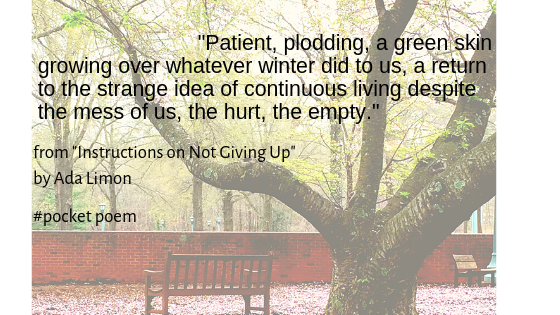
This year, I’m sharing “Instructions on Not Giving Up” by Ada Limon. It’s perfect for this season in my life. I love the colors of spring, the promise of the bright green leaves, the faith of this poem that so nicely voices the theme of my last blog post, The Ones with the Most Faith Win.

When all the shock of white
and taffy, the world’s baubles and trinkets, leave
the pavement strewn with the confetti of aftermath,
the leaves come. Patient, plodding, a green skin
growing over whatever winter did to us, a return
to the strange idea of continuous living despite
the mess of us, the hurt, the empty.

Ada Limon, “Instructions on Not Giving Up”

I don’t think I’m legally allowed to share the whole poem. You can find the entire piece, only 14 lines, here at poets.org. It’s lovely. Please read it and share it, or some other poem you find inspiring. I’d love to see more!

Have you heard of Poem in Your Pocket Day? What celebrations of poetry have you come across this month? What’s a poem you’d like to share?

Thanks for getting nerdy with me!

The Ones with the Most Faith Win

faithful

It’s been an exciting week in our house. In the past three days we’ve celebrated grand prizes and basketball victories. My beloved ‘Hoos are National Champions and my beloved daughter is taking her science fair project to Phoenix to compete with students from all over the world in the International Science and Engineering Fair.

The trophies and medals are nice, but they aren’t what’s most important to me. What I love, and what I hope people will remember, are the stories behind these victories and the character behind the stories.

First story: the Virginia Cavaliers

Last year, the Cavaliers had a winning season with just two losses. They defeated North Carolina in the ACC Tournament to claim the title of ACC Champions, and they were unanimously picked in coaches’ polls as the number one seed going into the NCAA Men’s Basketball Tournament.

They lost in the first round. To a 16th seed. No team had ever done that before. They made history in the worst way and in the national spotlight. The team endured criticism and scorn, and even, according to a post written by Virginia shooting guard Kyle Guy that I found on Facebook a few days after the devastating loss, death threats. The team needed extra security when returning to their hotel.

Can you imagine how hard it would be to come back from that?

Virginia Head Coach Tony Bennett handled that humiliating defeat with characteristic grace, and now, he calls the epic loss “a painful gift.” He has said numerous times that the 2018 tourney debacle was part of the experience his team needed to achieve success, and after 12 months of rebuilding and recovering, they have indeed succeeded.

In his speech after the 2019 championship game, Bennett said, “I played a song for them today called ‘Hills and Valleys’ by Tauren Wells and it just means that you’re never alone in the hills and the valleys and we faced those this year.” He also shared a team motto: the most faithful wins. “These guys stayed so faithful,” he said. And because of that, they made history again – as the greatest redemption story in college basketball.

Too often in a culture that emphasizes success, we don’t see the opportunities hidden in failures. Thanks to the example of the ever humble and gracious Tony Bennett and his team, we will embrace the reality that success and failure don’t define us. Attitude, habits, and character do.

My daughter’s story

To reinforce this point on a smaller scale: last fall, my daughter had an idea for a science fair project. She wanted to study plastic bags and how they interact with heavy metals in the environment. She reached out to professors at area universities to develop her project. She changed her method and focus several times. She put in hours researching plastics, performing her experiment, and analyzing her data. She got significant results that indicated plastic bags could be potentially dangerous, and that more research is indicated. Everyone, from her sponsor to her parents, told her how great her project was. She took it to the school fair, hoping to win a prize.

She didn’t. Not even honorable mention. We were shocked and disappointed. How do you explain to your child that sometimes hard work doesn’t get recognized? How do you encourage her to keep trying?

You tell her to stay faithful, to keep putting her work out there and trusting someone will eventually recognize it. (You also hope that other people, like her teachers and sponsors, will tell her the same thing, because, let’s be honest, sometimes the words of a mother just don’t resonate. Thank goodness, her sponsor was one of her biggest cheerleaders.)

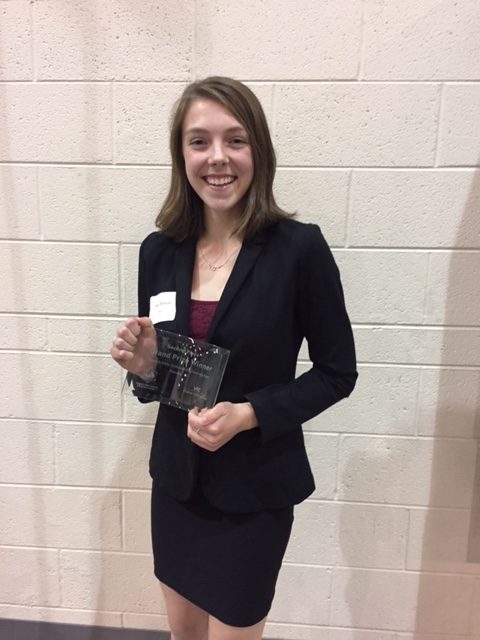
Look at that smile!

And she was faithful. She took her project to regions, where it won its category and was nominated for grand prize. Then she took her project to the state science fair, where it again won the chemistry category and second grand prize out of over 250 projects from across the state. She earned a spot at ISEF, which, she confided to me later, was her goal all along. It’s kinda like the national championship of science fairs. She, like my ‘Hoos, has had a fabulous run.

I’m not telling this story to brag about my child. I just want her and everyone reading this post to remember: the ones with the most faith win.

What have you learned from March Madness this year? Do you have a redemption story to share?

Thanks for getting nerdy with me!

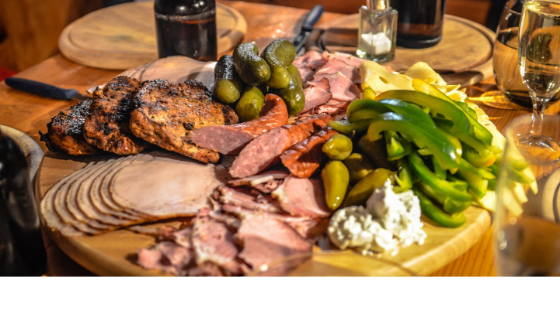
What is a charcuterie board?

My friend Dane is using fractal burning to make beautiful and unusual charcuterie boards. So much to learn from this! First, what is fractal burning? And what the heck is a charcuterie board, and better yet, how do you pronounce charcuterie?

Fractal burning
Fractal burning patterns

Fractal burning combines art and science to create “Lichtenberg figures” – branching patterns burned into damp wood by running a strong current through it. They are named for Georg Christoph Lichtenberg, a German physicist who discovered and studied these patterns.

They are beautiful, but the process is dangerous (hello, water + electricity = danger), so don’t try this at home. Seriously, people have died. Dane assures me he is very careful and doesn’t touch the probes while the electricity is flowing. To learn more about fractal burning, visit FractalBurn.com . If you’d like to see more of Dane’s wood art, follow him on Instagram @voltzwoodworx.

Fractal burning - charcuterie board
It’s like hitting wood with lightening! I love the color Dane has added.

Now, if you were to get one of these charcuterie boards, you’d have to know how to pronounce it. Here’s what Merriam Webster told me:

charcuterie: \ shär-ˌkü-tə-ˈrē \ or \shar- ku-ta- REE\ noun, from French chaircutier pork butcher, from chair cuite cooked meat;

  • a delicatessen specializing in dressed meats and meat dishes
  • the products sold in such a shop

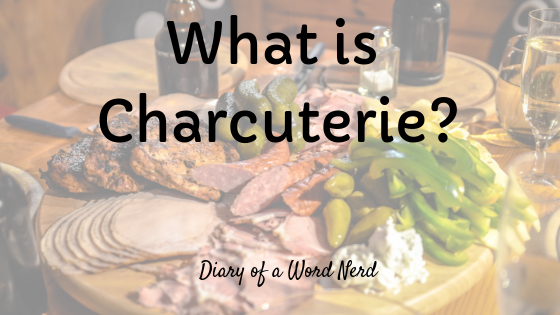
And if you learned to say the name and got yourself one, what would you use it for? According to The Reluctant Entertainer, charcuterie means cured meats, and an epic charcuterie board features cured meats, cheeses, olives, nuts, crackers/ bread, dried fruit, and jelly or jam. You can use them to serve dinner to the family or appetizers to guests at a party.

charcuterie
I’m hungry now
Wondrous Words Wednesday

If you like to learn new words, or the history behind words, join the Wondrous Words Wednesday meme at Kathy’s Bermuda Onion blog. Every Wednesday, bloggers share words they have learned. Visit and add to the discussion!

Have you ever seen fractal burning? How about charcuterie boards? Can you share any other unusual wood art ideas or food treats?

Thanks for getting nerdy with me!
Why You Should Sign Up for a Race

running

It was a brisk 30 degree morning, but I had my hat and gloves to keep me warm. After a trip to the bathroom (oh, the line!) and a few dynamic stretches, I joined 2000 other people to run 10 miles through Charlottesville, Virginia, one of my favorite places.

Yes, I said run. Yes, I said 10 miles. Yes, there were hills. And I had a FABULOUS TIME. For those of you who have never run a race, or if it’s been a while, it’s time to sign up for one!

Benefits of a race – BEFORE

Signing up for a race is the perfect way to set up a SMART goal for yourself. It’s specific (“I’m going to run __ miles”), it’s measurable, it’s time bound. Once you send in your registration fee, you’re committed. If you want to improve your fitness or decrease your weight, a race is a great way to keep you focused.

Being committed, financially and mentally, means you’ve got built in motivation to train. When the weather is too wet or cold or windy, you might be tempted to skip a workout, but you can’t, because you’ve got to make it through your race! About a week before the Charlottesville 10 Miler, it was cool and windy, and I really wanted to bail on my run for the day. Then I checked the weather for race day. It was supposed to be cold and windy. 🙁 Grumbling, I pulled on another layer and headed out for the run, figuring I needed to prepare myself for the weather I’d be facing.

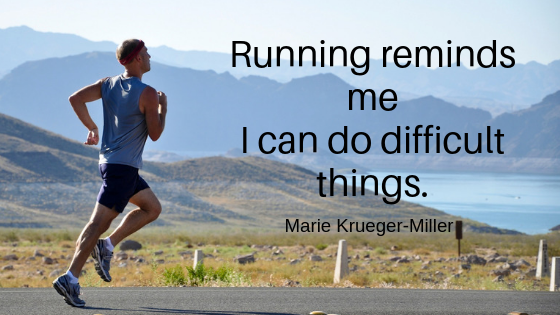
Running quote

Training tip: If you don’t feel like working out, put on your workout clothes anyway. Chances are, once you’re dressed, you’ll be mentally on board.

The motivation is even better if you find a race buddy. Mine was my hubby. There were days when I didn’t feel like running at all, but then hubby reported he ran six miles. Well, I wasn’t about to let him be in better shape than me, so I got my six miles in. 😉

Finally, signing up for a race, be it a 5K, a 10 miler, or a half marathon, doesn’t mean you are going to compete in the Olympic trials. You can set up realistic expectations for the race, which means “finishing” is an acceptable goal. My goal for the 10 Miler was to finish in less than 100 minutes (averaging less than 10 minute mile pace). The people who came in first ran twice as fast as me and finished in under an hour. Good for them. I beat my goal, that’s what matters.

Benefits of a race – DURING

I’ve been a participant and a spectator at all kinds of races, and the atmosphere is always positive. These events aren’t competitions as much as a giant “we got this” experience. You feed off of the energy of the crowd, and it’s easy to keep going when you are surrounded by tons of other people doing the same thing.

All along the route of the C’ville 10 Miler, people cheered for us, rang cow bells, and held signs with encouraging words like:

  • GO, random stranger, GO!
  • You run better than government!
  • Sweat is just your fat cells crying
  • Run like dinosaurs still exist! (Held by someone in a huge inflatable T-rex costume)

As we ran through a hilly neighborhood, one supporter had speakers on his front porch blasting “Stars and Stripes Forever” by Sousa. At mile eight, there was a huge crowd of girls and a DJ cheering us on with

I love rock n roll, so put another dime in the juke box, baby…

The energy and music gave me a boost right when I was getting tired.

The positive vibe wasn’t always loud. On one of the last hills of the race, I passed a guy who was walking. He looked over at me, and I nodded at the hill and said quietly, “Come on.” He smiled and started running. Honestly, encouraging him had encouraged me too.

Benefits of a race – AFTER

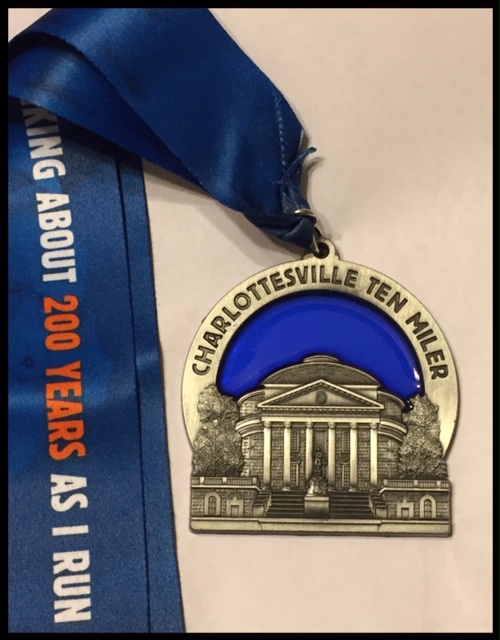
Charlottesville 10 Miler medal
My awesome medal!

Usually, you get a cool t-shirt, or maybe even a medal, as proof of your race day achievement. You’ll be in great shape, and more importantly, in the habit of being active. Hubby says he’s thinking about a half. Guess my training will continue…

When I’m having a rough day, and I don’t want to work out, I’m going to put on my 10 miler shirt. I’m pretty sure that will get me moving, because Running reminds me I can do difficult things.

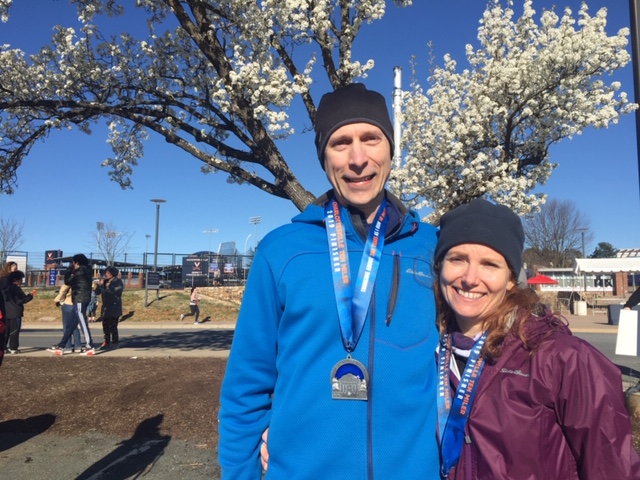
We did it!

Go find a race and sign up for it! And if you need some training advice, check out Train Smart, Run Forever and Runner’s World.

What is your experience with running races? Do you have one on your radar for the future?


Thanks for stopping by!


What is a Screed?

screed

Last week, on March 15, 2019, a gunman killed at least 49 Muslims at two mosques in Christchurch, New Zealand. It was yet another horrible example of the violence in our world.

Before the shootings, one of the attackers posted a 70+ page manifesto online that included racist statements and ironic references to memes. It was clearly meant to insight fear and hatred. When David Greene of NPR News interviewed New Zealand’s Ambassador to the United States, he referred to the document as a “screed”.

I’d never heard of screed and had to look it up. In the process of doing my research, I became aware of something more important: this screed highlights a dilemma almost as big as gun violence: how the Internet is helping spread hatred.

First, let’s look at screed.

screed \ ˈskrēd \ noun, from Middle English screde, fragment; from Old English scrēade; akin to Old High German scrōt piece cut off
1 a : a lengthy discourse
b : an informal piece of writing (such as a personal letter)
c : a ranting piece of writing
2 : a strip (as of a plaster of the thickness planned for the coat) laid on as a guide
3 : a leveling device drawn over freshly poured concrete

I think definition 1c fits my example best. Thank you Merriam-Webster.

Now, the problem this particular screed represents. Before the days of social media, such a screed would be seen primarily by traditional media outlets- newspapers, television stations. Those outlets could act as “gate keepers” and would only release snippets of such a document. But now, with the Internet making it so easy for people to reach the public, anywhere, anytime, everyone has access to the entire screed and its divisive messages. According to The Atlantic, the screed was designed to “troll” – meaning it was written not just to express an opinion, but to get clicks and shares and lots of online attention. And so, The Internet is giving the words of all of us more power, and sometimes that’s not a good thing.

I admire New Zealand’s Prime Minister Jacinda Ardern for trying to keep the names of the accused out of the media. She didn’t want to give the attackers what they so desperately wanted: attention. Unfortunately, now the name of the prime suspect is out there, and he has gained the notoriety he wanted.

But we can still take some responsibility. We can filter what we consume and share on the Internet. We can choose to fast from negativity, pessimism, and hate, and feast on truth, hope, and compassion. (Very appropriate for Lent.)

Let’s be thoughtful about the screeds we read and share.

Wondrous Words Wednesday

If you like to learn new words and the origins of their meanings, visit the Wondrous Words Wednesday meme at Bermuda Onion. Each Wednesday, bloggers share new words they’ve learned.

Thanks for getting nerdy with me!