
Embrace the Change, Part II

Change is hard for me. I guess that’s why I have to write about it so much. I’m beginning to realize that motherhood is not only an unending training course in patience and humility, it’s also a recurring lesson in dealing with change. And clearly, I need the training.

Obviously, kids change. They go from diapers and sippee cups (thank goodness!) to sports equipment and school supplies to drivers licenses and tuition payments. I’ve been good with all of the other changes, (woo hoo, no more elementary school pick up line!), but I’m still struggling with the latest evolution in our family: the launch phase.

Last week, I took my eldest child back to school for his second year of college. And after we moved in his clean laundry, and I took him to the store to stock up on pasta and ground beef, he looked at me and said, “You’re gonna head out after this, right?”

Right. Because we had spent most of the day together, and he wanted to set up his space, and I had a long drive home. I left shortly thereafter, and I’m proud to say, I only got a bit teary. It was a huge improvement over the complete undoing I experienced one year ago when we left him in his dorm room hanging his posters.

However, while I was gone, child number two, the daughter who can’t wait to go to college, was filling out her Common App and plotting the best SAT strategy to get into her top choice schools. While I share her excitement about the next phase in her education (but not her enthusiasm for a school on the other side of the country), I am silently dreading the fact that next year, I will be dropping off two children at college.

In one year, only half of my children will live at home.

In six years, none of them will.
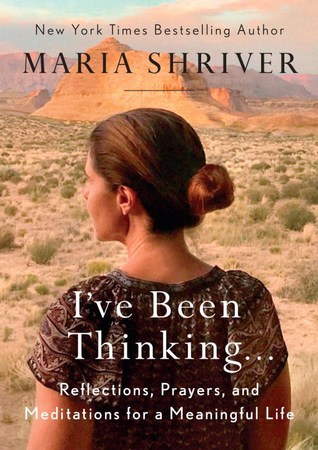
I've Been Thinking cover

Fortunately, while I’ve been wrestling with this transitional stage of motherhood, I’ve been reading Maria Shriver’s book I’ve Been Thinking: Reflections, Prayers, and Meditations for a Meaningful Life. Shriver is a little older than me, and her book covers many topics I can relate to, with devotions on things like “The Power of Letting Go” and “Why Finding Acceptance is the Path to Peace”. Shriver mentions God and her religion often, but the book isn’t overly preachy. There are very few Biblical references. It’s more about her middle age struggle to find peace as her life undergoes significant change.

One of my favorite passages is from a reflection entitled: “We Are the Ones We’ve Been Waiting For”. In it, Shriver shares a poem she has hanging in her office that is attributed to the elder of a Hopi tribe in Arizona. It’s long, but here’s the part I found most inspiring:

There is a river flowing now very fast. It is so great and swift that there are those who will be afraid. They will try to hold on to the shore. They will feel they are torn apart and will suffer greatly.

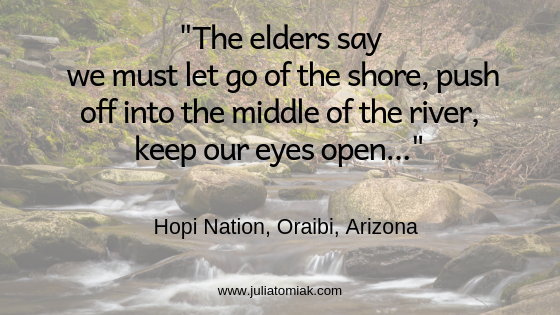
Know the river has its destination. The elders say we must let go of the shore, push off into the middle of the river, keep our eyes open, and our heads above the water. And I say, see who is in there with you and celebrate.

“A Hopi Elder Speaks, Hopi Nation, Oraibi, Arizona

When I last wrote about embracing change, I mentioned that “opening feels better than clutching”. I think that’s what this Hopi elder was getting at. Fear may drive us to hold on to the shore, to the way things used to be, but resisting the changing force of life will only tear us apart. Better to unclutch and join the flow with our eyes open. The river has a destination, and I’m sure it’s a good one, and if we’re scared, we can reach out to other people who are sharing the ride.

You know what I did when I left eldest child at his college home? I met a dear friend, one who has three children scattered across the country, and we drank tea and laughed and sent our kids a Snap selfie.

We met in the middle of the river to celebrate.

How do you adapt to life’s changes? I welcome all input!

Thanks for getting thoughtful with me!

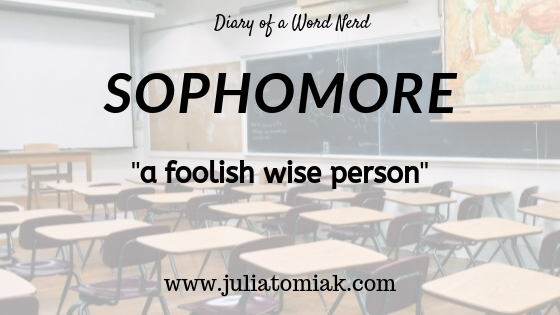
What does “sophomore” mean?

It’s the first day of school around here, and as another academic year begins, I am close to being the mother of FOUR teenagers, aged 13-19. (Mothering four young children takes lots of physical stamina, but mothering four teens? That takes emotional stamina, regular exercise, lots of wine, and a few close friends who are excellent listeners.)

Out of my four teens, two will be sophomores this year, one in college, one in high school. When I realized this fun fact, I had a flashback from my own high school years, when my very cultured world civ teacher explained to us that “sophomore” means “foolish wise person”.

As a 15 year old, I was offended. As a 48 year old mother, I get it.

Child number one has a year of college on his record, plus summer classes. He’s grown intellectually and emotionally (and physically, thanks to a weight lifting program), but it’s obvious that even though he’s a responsible young adult, he still has some growing to do.

Same for the high school sophomore. He’s much taller than me, survived freshman year unscathed, and feels pretty confident rolling into 10th grade. But he’s also learning how to drive, and this morning we careened through a curve because he didn’t brake enough going into the turn.

So much to learn. Luckily, both of my sophomores like learning.

According to Merriam-Webster, sophomore comes from the Greek words sophistēs, meaning “wise man” or “expert,” plus mōros, meaning “foolish.” (Word nerd note: we get the word moron from mōros.) A sophomore, therefore, is a “wise fool”.

Centuries ago, students at English universities like Cambridge and Oxford were called sophisters. Sophister could be used like philosopher, but it also frequently referred to young and not-yet-wise people with immature reasoning skills.

Fitting term, don’t you think?

Of course, eldest child studies at the University of Virginia, where the terms freshman, sophomore, junior, and senior aren’t used. Instead, students are called “first years”, “second years”, etc. The founder of The University, Thomas Jefferson, rejected the typical student labels, as “senior” implies a student has reached the highest level of learning, and Jefferson believed in life long education.

Did you know the backstory on sophomore? Do you think the word and its meaning accurately describe the sophomores you have known? Can you share any other interesting terms from academia?

If you like to learn new words and the origins of their meanings, visit the Wondrous Words Wednesday meme at Bermuda Onion. Each Wednesday, bloggers share new words they’ve learned.

Happy new school year, and thanks for getting nerdy with me.

A reading quote

Reading quote

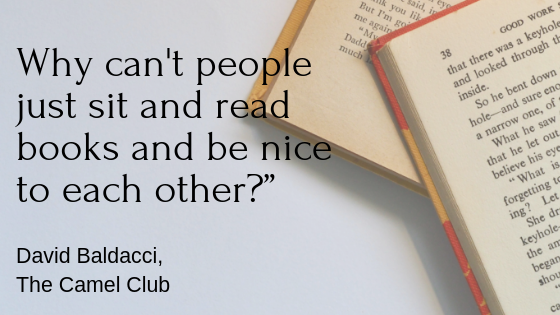
Summer is quickly slipping away. Soon I will have to deliver my oldest back to college and start packing lunches. Between the weeding and the constant food prep for my teens and their pals, I’m having a hard time making time for writing. So I give you this quote, fitting for this time of long summer evenings and political debates.

I hope you are making time for the things you love, including your friends, family, and books. I also hope you are being nice to each other.

Thanks for getting nerdy with me!

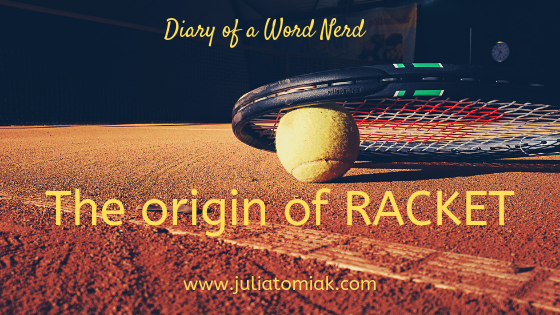
Summer Sports: The origin of racket

racket

While my youngest child and I were playing “track ball” in the back yard yesterday, we got into a discussion about the word “racket”. (Youngest child often wonders about the origin of words, like hamburger. What a good Word Nerd offspring he is!)

I guessed that “racket” came from French, “racquet”, and I was right! Here is the origin of the word “racket”.

According to Online Etymology Dictionary, racquet or racket was used as far back as 1500 to describe a “handled hitting device used in tennis, etc”. It comes from the French word racquet meaning a “racket for hitting” or “palm of the hand”. Turns out, the game of tennis started with medieval French knights who would play a game by striking a ball with the palm of their hand. (Ouch?) Racquet might also come from Italian racchetta or Spanish raqueta, both often said to be from Arabic rahat, a form of raha “palm of the hand”.

Word Nerd side note: “tennis” comes from French tenez, imperative of tenir “to hold, receive, take”, which was used as a call from the server to his opponent.

Now, may I suggest that you pick up a racket, go outside, and enjoy the summer weather! (And impress your playing partners with some Word Nerd knowledge!)

Wondrous Words Wednesday

If you like to learn new words and the origins of their meanings, visit the Wondrous Words Wednesday meme at Bermuda Onion. Each Wednesday, bloggers share new words they’ve learned.

Thanks for getting nerdy with me!

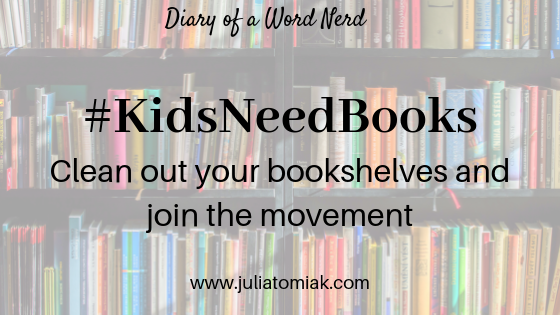
Friday Inspiration: #KidsNeedBooks

With all the distressing news floating around these days – the crisis at the border, the precarious state of our environment, the nasty political rhetoric we see every day – I’m craving something positive.

And guess what? I found it! And it’s bookish!

One of my favorite quotes is:

It is better to light a single candle than to curse the darkness.

William L. Watkinson

Authors like Jarrett Lerner (The Enginerds) and Ann Braden (The Benefits of Being an Octopus) are doing just that. They have been busy lighting candles for kids by putting books in their hands. It started with Braden, who was moved by the frustrated tweets of teachers and librarians worried about students who wouldn’t have anything to read over the summer. They were concerned about something educators call “summer slide” – a drop in reading skills caused by limited access to books when school is out.

Braden, a former teacher, wanted to do something to stop summer slide, so she combed through her bookshelves and gathered a stack of books to donate to teachers. She used tweets with the hashtag #KidsNeedBooks to find interested teachers and bring awareness to the problem.

Lerner saw Braden’s tweets and searched through his own collection of books to find titles to give away. On his author website, Lerner explains, “All the books were ones that I had read and enjoyed, even loved, and that I had purchased with the intent of having them on my shelves forever. But as soon as I considered the fact that there were a tremendous number of young readers out there who, for one reason or another, were facing the prospect of being book-less all summer long, it wasn’t very hard to part with even the most beloved of these books.”

Other authors have joined in, and thanks to the #KidsNeedBooks movement, over 500 books have been put into the hands of kids who otherwise wouldn’t have read all summer.

Do I really need to keep all of these books? No, I do not. And we’ve got two more bookshelves just as full!

Wow. I love that this is so simple, and so accessible for Word Nerds like us. I’ve got tons of books sitting around the house that my kids have enjoyed but will probably not read again. I used to think I would save all of them for my grandchildren, but Lerner is right – there are kids who need those books now. Currently, Runaway Ralph is just collecting dust in my house. He could be in the hands of a child who would love to not only to read a book, but to actually own it.

Sure, there are beloved titles I will keep, but I could easily donate the others. It would be like lighting a bunch of candles.

Lerner says that he collects books throughout the year – at library sales, industry conferences, etc – to give away to teachers at the end of school. He suggests that people who want to join the #KidsNeedBooks movement can donate their unneeded books to Little Free Libraries or schools and libraries that serve needy children. My town has a Little Free Library and also many children who probably don’t have books at home. I’m late for this summer, but I can start preparing for the end of next school year. And I know a teacher and a librarian who will help me get those books into the hands of kids who need them.

It’s time to clean out! I hope this good news will make your weekend a little brighter, and that you will be inspired to light a candle yourself.

For more information on #KidsNeedBooks, visit Jarrett Lerner’s website or Ann Braden’s website.

Have you heard of the #KidsNeedBooks movement? Would you be willing to donate books?

Thanks for getting nerdy with me!

Summer Reading Suggestions

A few days ago, Daughter announced that she was going with her friends to “hang out in a hammock and read”. It sounded lovely. During summer, one of my favorite things to do is hide out on my sun porch in the late evening, when the light is golden and the frogs are congregating and croaking in the pond down the hill, and read.

The view from my sun porch. See the pond behind the play set?

I hope summer is giving you more time and spaces to enjoy books. (Where is your favorite place to read this time of year?) If you need suggestions for what to read, I’ve got some great ideas to share.

Kid Lit

Audio books are helping me get ahead on my Goodreads annual goal, and I just finished two lovely middle grade novels that are perfect for a family road trip.

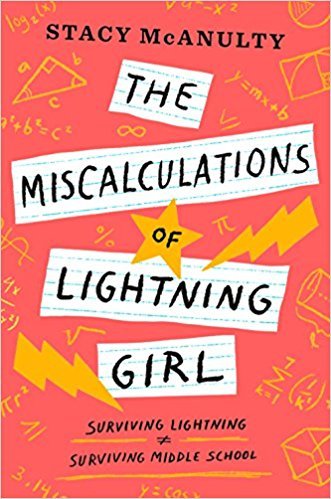
The Miscalculations of Lightning Girl by Stacy McAnulty tells the story of 12 year old Lucy. When she was young, she was struck by lightening, and the zap gave her super math skills, but also some OCD quirks, like the need to sit down/ stand up three times before taking her seat in class. Lucy has been home schooled for years, and she’s smart enough to go to college, but her grandma thinks she needs to spend a year in public school as part of her education.

With great trepidation, Lucy embarks on her first year of middle school. She endures teasing and taunting, and more than one humiliation, but along the way she learns the value of friendship and self-acceptance. Although Lucy has unusual talent, any kid (or adult) can relate to her story. A great read!

The Benefits of Being an Octopus by Ann Braden thoughtfully tackles the challenges of living in poverty. Seventh grader Zoey rarely finishes her homework – not because she doesn’t care, but because she is too busy babysitting her younger siblings while her mom is at work. Zoey’s mom barely makes enough money to pay the electric bill, and because of her desperate situation, she puts up with an unhealthy relationship to keep her family in decent housing.

Zoey faces difficult decisions, including confronting her mom about her emotionally abusive boyfriend. Octopus has great insight into the plight of marginalized women and children, and it’s a great read for encouraging discussion and compassion.

Young Adult

On the surface, Save the Date by Morgan Matson looks like a lighthearted story of a large family pulled together for a wedding weekend. There’s a mad game of Capture the Flag, cake destroying pets, and an unfortunate suit swap. However, Save the Date addresses some of the hard things about stepping into adulthood, like reevaluating our perceptions of family and accepting change. It was a little longer than it needed to be, but I enjoyed the read, especially as I am grappling with change as my own kids transition into adulthood.

I picked up Rayne and Delilah’s Midnite Matinee by Jeff Zentner because I wanted to study the market I write in – contemporary realistic fiction. I didn’t expect to like this novel about two girls who host a public access TV show about horror movies, but I have found myself totally pulled in. Why? Because Zentner has mastered a key writing skill: MAKE US CARE.

Delia (aka Delilah) is searching to find and confront the father who abandoned her. And Josie (aka Rayne) is trying to figure out what she wants to do with her future- should she leave her best friend and new boyfriend to pursue a TV career at UT Knoxville, or should she stay close to home and the people she loves. A great novel with witty, punchy dialogue and some beautiful descriptions about falling in love, dealing with loss, and choosing your way. Here’s an example:

I wonder a lot if I’ve made a mistake by letting myself need Josie so much. Life would be so much simpler if we didn’t allow ourselves to need anybody. We wouldn’t go through this world so easy to wound, our hearts beneath some paper thin layer of skin.

Delia, on her best friend Josie

Adult

Girl, Wash Your Face by Rachel Hollis is an easy read about becoming the best woman you can be. The writing isn’t profound, but the messages are good. I particularly liked Hollis’s chapters on pursuing your dreams (no one else cares about your dreams as much as you do, so you’d better go after them) and being kind to yourself and other people. Hollis is a Christian, and her faith illustrates her perceptions and decisions, but it isn’t overbearing. Overall, she promotes an attitude of acceptance and compassion. Great pool side read.

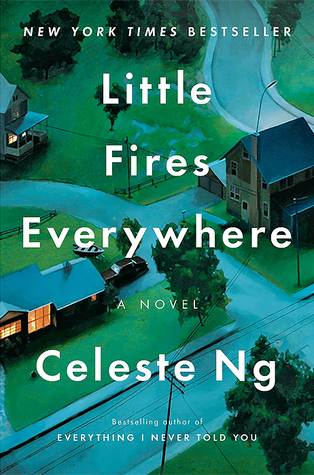
Little Fires Everywhere by Celeste Ng is an interesting study of character and the assumptions of right and wrong. Her characters have complicated family relationships and secrets they try to hide. If you like a good character driven novel, with thoughtful insights about human nature, Fires is for you.

“To a parent, your child wasn’t just a person: your child was a place, a kind of Narnia, a vast eternal place where the present you were living and the past you remembered and the future you longed for all at the same time. You could see it every time you looked at her: layered in her face was the baby she’d been and the child she’d become and the adult she would grow up to be, and you saw them all simultaneously, like a 3-D image. It made your head spin.

Celeste Ng, Little Fires Everywhere


What have you been reading this summer? Please share more great “hammock books”!

Thanks for getting nerdy with me!