What is phrenology? Ruling on swim caps sparks controversy

Recently, the International Swimming Federation (FINA) rejected an application to officially recognize swim caps designed to accommodate thick, curly natural black hair. Soul Cap, a British company, filed the application. It hoped that swim caps designed specifically for the needs of black swimmers would make the sport more accessible to them. However, thanks to FINA’s ruling, black athletes cannot use Soul Cap products at this summer’s Olympic games, or in any other swimming competitions.

Soul Cap told the BBC that FINA rejected the application because the caps “do not conform to the shape of the head.” This prompted Molly Wood, a host of one of my favorite Podcasts, Make Me Smart, to claim the rejection was based on “phrenology”.

In the midst of my concern about a ruling that so clearly inhibits black swimmers, I was also disappointed I didn’t know what phrenology meant. Enter Merriam-Webster.

What is phrenology?

phrenology, derived from the Greek Greek phren-, phrḗn “seat of the passions, mind, wits” + o + logy; the study of the conformation and especially the contours of the skull based on the former belief that they are indicative of mental faculties and character

Bias against black swimmers

Yikes. I’m not sure FINA made its decision based on phrenology, but I am concerned this ruling will continue to limit black access to the sport. My daughter swam for years with a USA swimming team, and, the sport, at least in Virginia, is decidedly white. With a smattering of Asians.

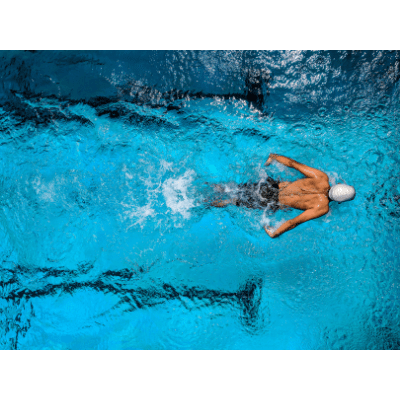
Swimmer in pool

People with natural black hair must braid it, or use special oil, to get the regular, smaller swim caps on. If their hair gets wet, they must condition it and comb it out, a time consuming process. According to the story on BBC.com, British swim coach Tony Cronin says the FINA decision reveals “misunderstanding and and ignorance. “

CBS.com reported that Soul Cap recently partnered with Alice Dearing, the first black British swimmer to qualify for the Olympics. Dearing said in a Soul Cap sponsored post on Instagram:

{Soul Cap is] always looking for ways to improve their caps, making sizes for all and dispelling the myth that swimming equipment cannot be inclusive. You CAN find a cap which will fit your braids, locs, ‘fro, curly hair in; feels good to be able to say that.

Alice Dearing, Olympic swimmer, team Britain

Dearing co-founded the U.K.’s Black Swimming Association. She has been trying to increase awareness and accessibility to swimming for years. FINA’s ruling has disappointed her and many other black swimmers.

What word from recent news stories has you stumped? And how do you feel about this ruling?

Thanks for getting nerdy with me!

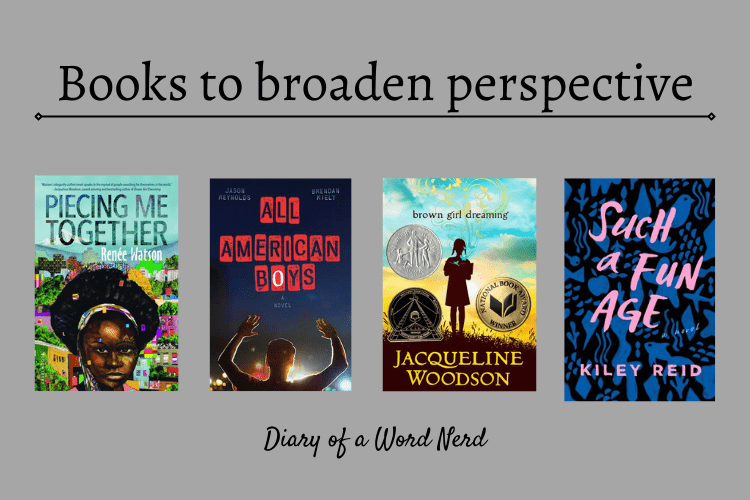
Five books to improve perspective

I live in a mostly white town in the mountains of southwest Virginia. In the past year I’ve made an effort to learn more about life from the perspective of people of color, but that’s kinda hard when there aren’t many people of color around me. Enter books!

I’ve read a few non-fiction books to increase my understanding of the complicated issue of race in America, but research shows that reading fiction can also increase empathy and understanding of different people. Here are a few great books I’ve read over the past few months that have helped me broaden my perspective and understanding of people from other racial and ethnic backgrounds.

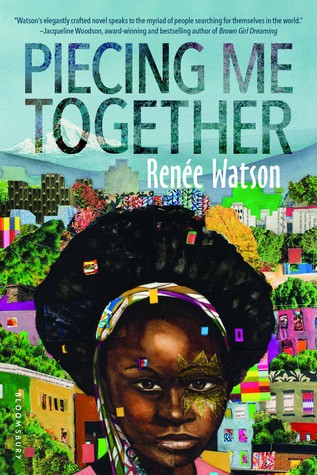
Piecing Me Together by Renee Watson

Piecing Me Together (young adult contemporary) tells the story of Jade, a smart and talented artist who specializes in collage. She lives in a “bad neighborhood” of Portland with her mother and uncle and can’t wait to get out. When she earns a scholarship to attend a private, mostly white, high school, she gains access to several opportunities for “at risk” girls. Unfortunately, these opportunities are more demeaning than helpful. Even Jade’s mentor, a black woman who graduated from the same high school, has trouble seeing how her good intentions hurt more than help. Jade’s story is woven together with the motif of collage making that underscores the theme that people are made up of different, mismatching pieces.

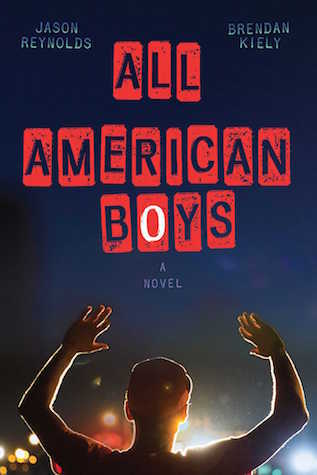
All American Boys by Jason Reynolds and Brendan Kiely

All American Boys book cover

All American Boys (young adult contemporary) uses two alternating points of view to tell the story of a brutal police arrest and its aftermath. When Rashad, a black teen, accidentally trips over a white woman in a convenience store, he is accused of stealing and resisting arrest and is savagely beaten by the arresting officer. Quinn, a white teen, witnesses the event and recognizes both Rashad as his high school classmate and the arresting officer – who happens to be a man he has looked up to for years – his best friend’s older brother. Reynolds and Kiely do an excellent job of describing different viewpoints of the same event and exploring the assumptions, backgrounds, and personal history that build perspective.

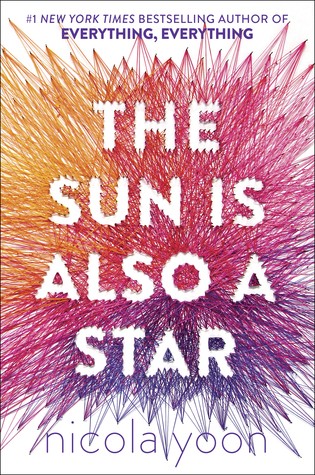
The Sun is Also a Star by Nicola Yoon

The Sun is Also a Star (young adult contemporary) describes a day in the life of Natasha and Daniel. Natasha is a Jamaican born undocumented immigrant trying to prevent her family from deported the next day. Daniel is a Korean American trying to escape a college interview and the plans his parents have for his future (which include Yale and medical school- Daniel wants neither). Daniel, a poet and dreamer, is convinced fate brought Natasha to him, and they are meant to be together. Natasha, a scientist and realist, thinks Daniel is ridiculous. But she can’t deny her attraction to him.

The story balances humor with thoughtful descriptions of family dynamics. It includes deep thoughts about life, fate, and what brings people together and what pushes them apart. It also explores the science of falling in love and how the actions of one person can affect others. At times I found the romance of Daniel and Natasha melodramatic, (similar to Eleanor and Park), but overall I enjoyed the story and its themes. The audio book is well done, with different actors reading for Natasha, Daniel, and the narrator.

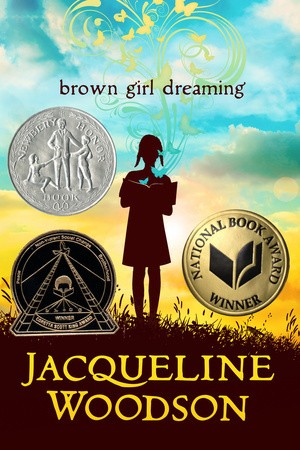
Brown Girl Dreaming by Jacqueline Woodson

Brown Girl Dreaming is a memoir in verse in which Woodson describes growing up as an African American in the 1960s and 1970s. She spent her time split between South Carolina and New York and never felt quite at home in either place. Her poems cover everything from her grandfather and his declining health to her family’s religion (Jehovah Witness) to the Civil Rights Movement. Descriptive and moving, the verses of Brown Girl Dreaming gave me a better understanding of a life so different from my own.

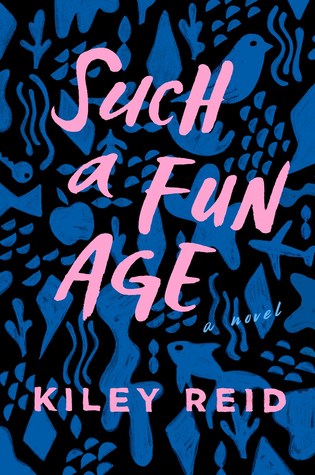
Such a Fun Age by Kiley Reid

Such A Fun Age (adult contemporary) was a Good Reads Choice Award winner for 2020. It tells the story of Emira, a black college grad in her mid 20s trying to figure out what she wants to do with her life. She knows she needs a job with good pay and health benefits, but until she finds one, she’s babysitting for a white, wealthy family in Philadelphia. Emira loves her charge, a thoughtful two year old named Briar, but is wary of her boss, Alix (pronounced Ah-leeks) who asks a lot of questions.

When Emira is accused of kidnapping Briar one night at a gucci grocery store, it sets off a complicated chain of events propelled by race, privilege, and good intentions falling short. Such a Fun Age is an interesting commentary on relationships and relating, and the audio book is well done.

Do you have any other book suggestions that are good for broadening perspective? Please share them in the comments!

Thanks for broadening your mind with me!

Words you should know from politics

Words to know graphic

Politicians often toss around big, multi syllable words. I’m not sure if they do this to sound smart or important or to deliberately confuse, but I thought I’d review a few such politically charged words so we can be smarter consumers of media. 😉

 In a recent editorial that ran in our local paper, US Representative Morgan Griffith (of the 9th   Congressional district of Virginia) criticized China for hiding information about the origin of the virus that causes COVID-19 infections. Griffith is on a congressional committee investigating the issue. In his editorial, Griffith said,  “From the outset, China’s Communist oligarchy covered up the true danger of COVID-19 as well as its extent. The rest of the world paid the price for their fecklessness.”

My son doubted fecklessness was actually a word. “What is feck?” He asked. “What makes something feckless?” Turns out, the dictionary had a clue.

Oligarchy: noun from the Greek oligoi “few” and arkhein “to rule”; definition: government by the few; a government in which a small group exercises control especially for corrupt and selfish purposes (more at dictionary.com)

Fecklessness: noun from Scots and northern English dialect feck from effeck, a variant of effect, and less;  definition: weakness, ineffectiveness (from Dictionary.com)

Fecklessness has satisfying “f” and “k” sounds, yet it is cumbersome to say. Can you think of a better word to describe the ineffectiveness Griffith is addressing? Please share it in the comments.

Are there any other politically charged words you’d like to learn more about?

Thanks for getting nerdy with me.

Do you capitalize Earth?

Inspired by yesterday’s Space X launch of a Dragon spacecraft to deliver supplies to the International Space Station, we are going to examine a grammar question. When, if ever, do you capitalize Earth?

This is also inspired by a Face Time call I received about a month ago from my daughter. She wanted to prove to her boyfriend, who apparently hadn’t realized how seriously we Tomiaks take our grammar, that Earth must be capitalized in certain situations. He doubted her logic. She called me in for back up.

According to Dictionary.com, when you are referring to Earth as a proper noun, as a specific heavenly body, you capitalize it. You also usually omit “the”. For example, “Following an on-time liftoff, the Falcon 9’s first stage will return to Earth.” Proper nouns, which name a specific person, place, or thing, are always capitalized.

However, if you are using earth as a common noun, as in the ground or soil, you keep it lowercase. For example, “The job will be expensive because there is a lot of earth to move on the site.” You can also use lowercase earth when you are referring to it as the planet we live on, e.g. “The earth rotates on an axis.”

So, should you capitalize Earth? Like so many things in life and grammar, it depends on the situation. 😉

And if you haven’t, check out the article about the launch. The SpaceX Dragon carried all kinds of interesting things to the International Space Station, including kidney stones and squid paralarvae!

Thanks for getting nerdy with me!

Weekend Inspiration

I’m still climbing my way out of grief and exhaustion, trying hard to get back to the things that fill my soul. When I hit moments of frustration, I remind myself of this quote. I hope it serves you well too.

For every minute you are angry you lose 60 seconds of joy.

Ralph Waldo Emerson

Happy weekend. 😉

Growing through grief

Life has gotten in the way of my writing, but now writing is going to help me process life.

For the past several months, I’ve been dealing with a family situation that occupied much of my time and energy. In the past few weeks, that situation has dominated my days. Finally, I am emerging from the fog, and in the process, trying to revive my creativity, because I know from past experience that creativity heals me and strengthens my mental health.

Me and my dad

I do not wish to share too many details about my situation, but I’m willing to say this: I’ve lost many nights of sleep to worry and uncertainty. I’ve lost many hours to packing and driving and drive-thru meals. I’ve lost my father, a man I didn’t always understand but still dearly miss. I’ve lost my beloved dog, who came to me years ago when I was grieving and left me with more to grieve.

But even in the haze of grief and fatigue, I am growing. I’ve learned that managing change is always hard, but especially so when that change involves facing our own mortality. I’ve learned that while I thrive on “to do” lists and crossing items off of those lists, grief does not fall neatly into bullet points, and the affairs of one person’s life are not so easily categorized and concluded.

I’ve learned that while I’ve lost much, I possess even more. I’ve been surrounded by kind words and cooked meals, virtual hugs and physical affection, cards of encouragement and calls of comfort. While I sat in a hard wooden pew listening to “Amazing Grace” and studying my father’s dress blue uniform hanging at the front of a funeral chapel, I glanced to my right and left and found strength and comfort in my grown children, one bearded and all much taller than me, as well as dear friends and family who traveled many miles to be by my side. Now back home on my farm, which is too quiet without the deep throated bark of my German Shepherd, I no longer take for granted the warm, soft fur and happy tail wags of our small, neurotic but adorable, Poomeranian.

My Roxie, the best dog ever.

The past few months have reminded me once again of a lesson I know but too often neglect, that I must appreciate the present, with all of its smells, sounds, and feels. That I must invest in the people who are important to me. And that I must continue to run and breathe and stretch myself out on my yoga mat. The author Margaret Atwood recently said on Kelly Corrigan Wonders (a podcast fav), “There is no ‘the rest of our life’. There is today, tomorrow, and the rest is unknown.” I agree, and am learning to embrace uncertainty, but I feel pretty sure that running and yoga will help me with whatever unknown awaits me.

Facing one’s mortality, and the mortality of those we love, doesn’t have to shut us down. It should inspire us to rise.

At my father’s service, the pastor gained my immediate respect when he quoted Emerson’s comments on success. I’d like to share them here.

“What is success? To laugh often and much; to win the respect of intelligent people and the affection of children; to earn the appreciation of honest critics and endure the betrayal of false friends; to appreciate the beauty; to find the best in others; to leave the world a bit better, whether by a healthy child, a garden patch Or a redeemed social condition; to know even one life has breathed easier because you have lived. This is to have succeeded!”

Ralph Waldo Emerson

What are the things that inspire you to rise and to appreciate the present?

Thanks for getting thoughtful with me,