What you need to know about Squid Game

I don’t know what’s more concerning: the premise of the Netflix show “Squid Game” or the fact that it is now Netflix’s most popular show ever.

I’ve heard college kids talking about it, then some of my favorite podcasters announced it was the top show on Netflix. So I watched the first episode to see what all of the fuss was about. My first impression: it’s like the people who ran Auschwitz joined forces with the people who ran The Hunger Games to turn innocent children’s games into a harrowing quest for survival.

The Premise

The show is Korean, and I watched with subtitles. The first episode opens with an explanation of Squid Game, in which kids on a playground battle to gain position on a squid drawn in chalk on the ground. It looks innocent enough, but there are menacing undertones.

Then we meet broke and broken Gi-hun, a man with a bad gambling habit and crippling debt. After suffering a beating from the people to whom he owes money, Gi-hun meets a handsome, well dressed man in the subway who promises Gi-hun can win easy money in a game. Gi-hun accepts the invitation, not understanding until it is too late that the opportunity could cost him dearly.

What I didn’t like

I didn’t enjoy the spurting blood. Or the senseless murder. Or the spinning head and swiveling eyes on the giant robotic doll that monitors a deadly game of Red Light, Green Light. (Anyone who moves after the woman on the PA says “Red light” gets shot with swift and lethal precision.) The poor people recruited for this dangerous game, including Gi-hun, lose their individuality and humanity as they march, dressed identically in green exercise suits, onto a giant sandscape for the start of the game. As the violence unfolds, a man sits in a huge cushioned chair and watches it all on a giant TV screen while sipping his drink.

I found it quite disturbing.

After my horror wore off, I realized, like The Handmaid’s Tale or Lord of the Flies, “Squid Game” is supposed to be disturbing. And then I wondered why so many people are drawn to being disturbed.

What intrigues me

I can’t say I like “Squid Game,” but it did get me thinking. Perhaps the appeal lies in the drama of a scenario much worse than life in a pandemic. Or the creators wanted to present a cautionary tale about the folly of poor decisions and wasted money. Or, most likely, its international popularity can be traced to people around the globe feeling helpless and hopeless in a world that values money, power, and capitalism at the expense of human well being.

If it is a story of the privileged manipulating the oppressed, I am tempted to watch and see how it turns out. I hope in the end the oppressed will rise. But I’m not willing to commit valuable hours of my time to watch a creepy drama that reiterates what I already know: humanity needs to do better. I’d rather spend my time focusing on solutions. Or with Ted Lasso.

“Squid Game” piques the public interest in the sensational and the shocking. But while commenting on the darker side of human nature, “Squid Game” is also feeding and breeding that side. How different is the audience in front of the Netflix screen from the character in “Squid Game” watching the murderous game of Red Light, Green Light on his TV? Are we as numb and accepting of death as the person who engineered the deadly game?

If “Squid Game” is capturing and dramatizing the discontent of millions, I hope it will spur them to do more than sit in front of a screen. (Apparently, the developers of the show plan to launch a video game based on Squid Game. Fabulous. More screen time.) I hope they will be inspired by the commentary of “Squid Game” to bring more good into the world, not more fear and violence.

Word Nerd Note: I have only watched the first episode of Squid Game. A reader has told me that as the series goes on, there is more emotional development of the characters.

What do you think of Squid Game and why do you think it’s so popular?

Thanks for getting nerdy with me!

What to know about “epidemic,” “endemic,” and COVID

Public health officials keep referring to the potential for COVID to become “endemic.” Yet I’m not sure the public actually understands what that means. Let the Word Nerd break it down for you.

Defining important public health terms

According to Merriam-Webster, an epidemic (noun) is an outbreak of disease that affects many people at once. As an adjective, epidemic describes disease that affects an unexpectedly large part of a specific population. That’s the key – it is specific to a community or region. (The prefix epi– comes from Greek to mean “on, at, or besides.” -Demic comes from the Greek “demos” meaning district, country, people.”) For example, when COVID first appeared in Wuhan, China and was only there, it was an epidemic. Epidemic also describes something that is actively spreading.

An outbreak is a sudden rise in disease that typically stays within a certain area or population of people.

An outbreak or epidemic becomes a pandemic when disease spreads over a wide geographical area (many continents and countries) and affects a significant portion of the population. Once COVID started spreading to multiple countries and making thousands of people sick, it became a pandemic. (The prefix pan comes from the Greek pan meaning “all, every.”)

Endemic comes from the Greek inos (meaning “of or belonging to”) + demos (district, people). As an adjective, it describes something belonging to a people or country or prevalent in a field or environment. As a noun, it means an organism restricted to a specific region.

If COVID changes to an endemic virus, the number of infections will remain constant from year to year, and it will be always present, like how malaria is endemic in some parts of Africa. So, if COVID becomes an endemic disease, that means it will become a regular part of our world. What does that look like for us?

Life with endemic COVID

Experts are creating models to predict how COVID might behave in the future. They are looking at current data about COVID as well as reviewing how viruses like the 1918 Spanish Influenza have affected populations in the past. Unfortunately, there are a lot of unknown variables about COVID that make predictions difficult.

Scientists expect there will be better immunity to COVID as more people get vaccinated or are exposed to the virus. The population most likely to experience serious COVID illness could change over time from the elderly to infants and young children. That young population will be vulnerable since it is always getting new members (e.g. babies) with no previous exposure to COVID and no immunity to it.

For adults, duration of immunity will depend on how well our immune systems remember the virus and how much the virus changes with time and transmission. The effect of COVID will be determined by how quickly the population develops immunity (faster is better) and if we can minimize person to person transmission.

Let’s look at measles as an example of a disease that has been successfully eliminated in most of the world. Scientists developed a highly effective vaccine to fight the virus, most of the world has taken that vaccine, and the virus has not evolved. However, measles is endemic in some places where vaccination rates are low, like Africa. Outbreaks of measles do occur if enough unvaccinated people get sick with it and spread it.

What we can do

Some scientists believe COVID could follow the same path as the Spanish flu. It will change into an endemic illness – always around with seasonal, and potentially lethal, outbreaks in the winter. But a lot depends on how quickly and effectively we develop immunity to COVID in our population. So that means a lot depends on us.

Diseases like measles and polio have largely been eliminated because of effective and widespread vaccination. We have vaccines available to eliminate the threat of COVID for the long term. We have the power to determine if COVID will become endemic problem with the potential for serious outbreaks or a disease we don’t have to think about much any more. Wouldn’t it be nice to stop thinking and talking about COVID? There’s a way to make that happen.

For further reading…

Thanks for getting nerdy with me!

What I loved about The Vanishing Half

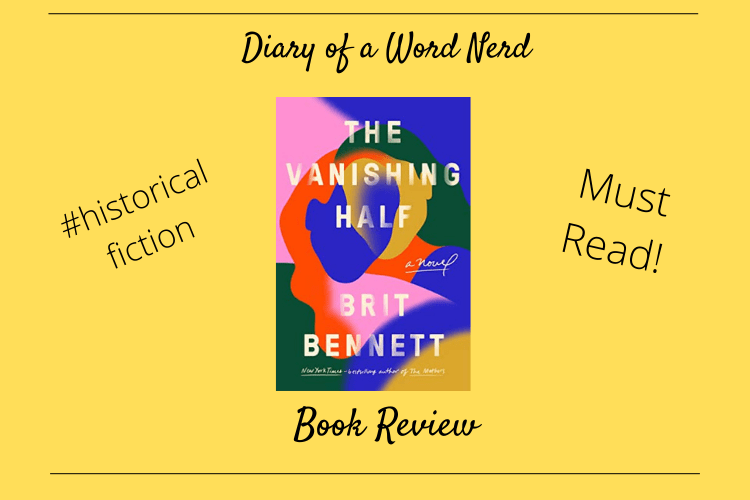
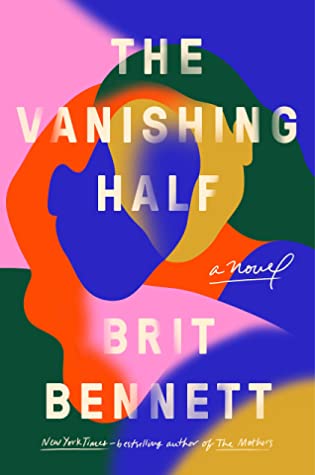
Cover of The Vanishing Half

When my daughter and a librarian friend recommend the same book, I know it’s got to be good. And The Vanishing Half by Brit Bennett is. I’d even say it’s great. Bennet tells an interesting story that explores the influence of race, family, and personal history on identity.

Everyone who lives in Mallard, Louisiana has fair skin but is still black, and therefore still subject to the prejudice of 1950s America. When they are just 16, identical twins Stella and Desiree Vignes disappear from Mallard without explanation. Years later, when Desiree returns to Mallard with a very dark skinned daughter, the people from her hometown wonder where’s she’s been, why is her child SO DARK, and where is her sister, Stella? Only later will they learn how Stella abandoned her family and her history for “freedom”.

I listened to the audiobook, which was well done. My fellow book club members thoroughly enjoyed The Vanishing Half, saying they couldn’t put it down, and it had them thinking about the characters for days after they finished reading. The Vanishing Half won the Goodreads Choice Award for Historical Fiction in 2020.

What I liked

The prose of The Vanishing Half is beautiful and accessible. Bennett doesn’t follow a chronological timeline, but collapses the years to share important events in the life of each main character, jumping around from the 1950s to the 1990s.

The characters are interesting and multidimensional, and although the main focus of the novel is the disconnect between the twin sisters after one vanishes, all of the main characters in the story have a “half” that has vanished or that they hide. Two of my favorite characters are marginalized black men, one a former convict and one transgender, who would most likely be shunned by society but are two of the most loyal, loving, and compassionate characters in the entire novel.

The Vanishing Half explores themes of finding oneself and defining oneself in relation to family, history, race, and sexual identity. Some characters are transgender or practice cross dressing, and their stories blended in beautifully with the themes of the novel. I am not black or transgender, but reading this book helped me understand, just a little more, how it might feel if I was.

What I didn’t like

Not much. Some reviewers, as well as some of my fellow book clubbers, thought the ending left too much unresolved. But I thought the novel ended as it should, leaving us with some answers and even more questions about how we define ourselves and what is most important to us.

Recommendation

I highly recommend The Vanishing Half in print or audio.

Have you read The Vanishing Half or Brit Bennet’s other novel, The Mothers? If so, what did you think?

Thanks for getting nerdy with me!
Jason Reynolds shares wise advice about kids and books

Puppy wants to know why we stopped.

You know someone has said something amazing when you have to stop walking the puppy, make the puppy sit, and jot down a quote in your notes app. That happened to me this morning while I listened to the TED Radio Hour podcast featuring Jason Reynolds talking about “The Antidote to Hopelessness.” This man LOVES kids, and he has some pretty profound things to say about them.

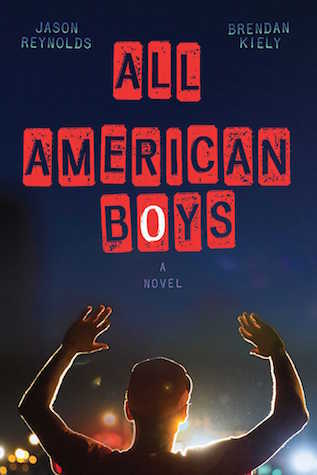
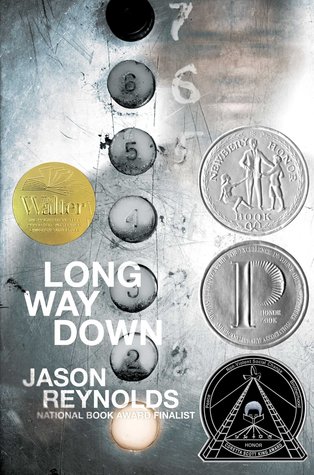
Wait, do you know who Jason Reynolds is? He’s just been appointed the National Ambassador for Young People’s Literature for the THIRD time in a row. He’s the author of many award winning books for kids and young adults, including All American Boys, (which I LOVED) Ghost, and Long Way Down (a story told in verse about a ten minute elevator ride, which I also LOVED).

He is a 6’3″ black man, sporting dreadlocks, who visits children in schools not just to get them excited about reading but to assure them he understands them, he hears them, he sees them. He also has an awesome voice – literally and figuratively. Let me share some of the awesome things he says with that voice.

Reynolds started writing books at a young age. He self-published some books in his teens, and after college, he took off for New York to break into the publishing world. But it wasn’t until his late 20s, with the publication of When I Was the Greatest in 2014 and then All American Boys in 2015, that Reynolds’ work got noticed.

During the TED Radio Hour interview with host Manuosh Zomorodi , Reynolds talked about how kids handle the challenges of life. He said they move on not because, like adults, they have responsibilities like paying the bills or taking care of family. They move on because they appreciate life and humor. “They are always willing to make a joke,” he said, noting that was an important lesson for the rest of us. “I love jokes, I love laughing. Kids always make time for laughing, and we adults should do the same.” Reynolds said he can’t be “childish”, but he strives to be “childlike”.

Sage advice.

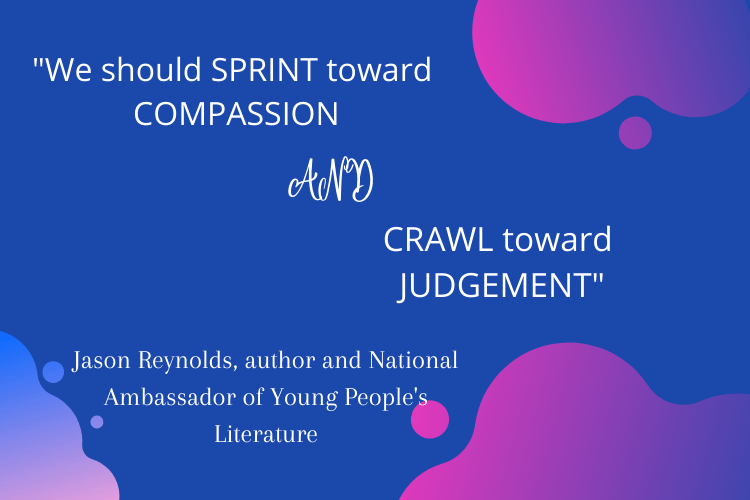
One of my favorite quotes from the podcast, the one that I had to write down, was,

We should sprint toward compassion and crawl toward judgement.”

Jason Reynolds, on the TED Radio Hour

The podcast also shared a clip of Reynolds talking to kids during a school visit, and he said,

Excellence is a habit, not something you turn on and turn off. You will either be excellent or you won’t. Remember that.”

Jason Reynolds

I’m thankful and happy Jason Reynolds is using his amazing voice to connect with kids of all kinds and get them excited about reading. I’m also glad he’s sharing his wisdom with the rest of us. We need more voices like his. Learn more about Jason Reynolds at his website. There is also a video of a conversation with him featured during this week’s National Book Festival sponsored by the Library of Congress.

Have you read any of Jason Reynolds’ books or heard him speak? What did you think?

Thanks for getting nerdy with me!
Reading nook ideas for the busy bibliophile

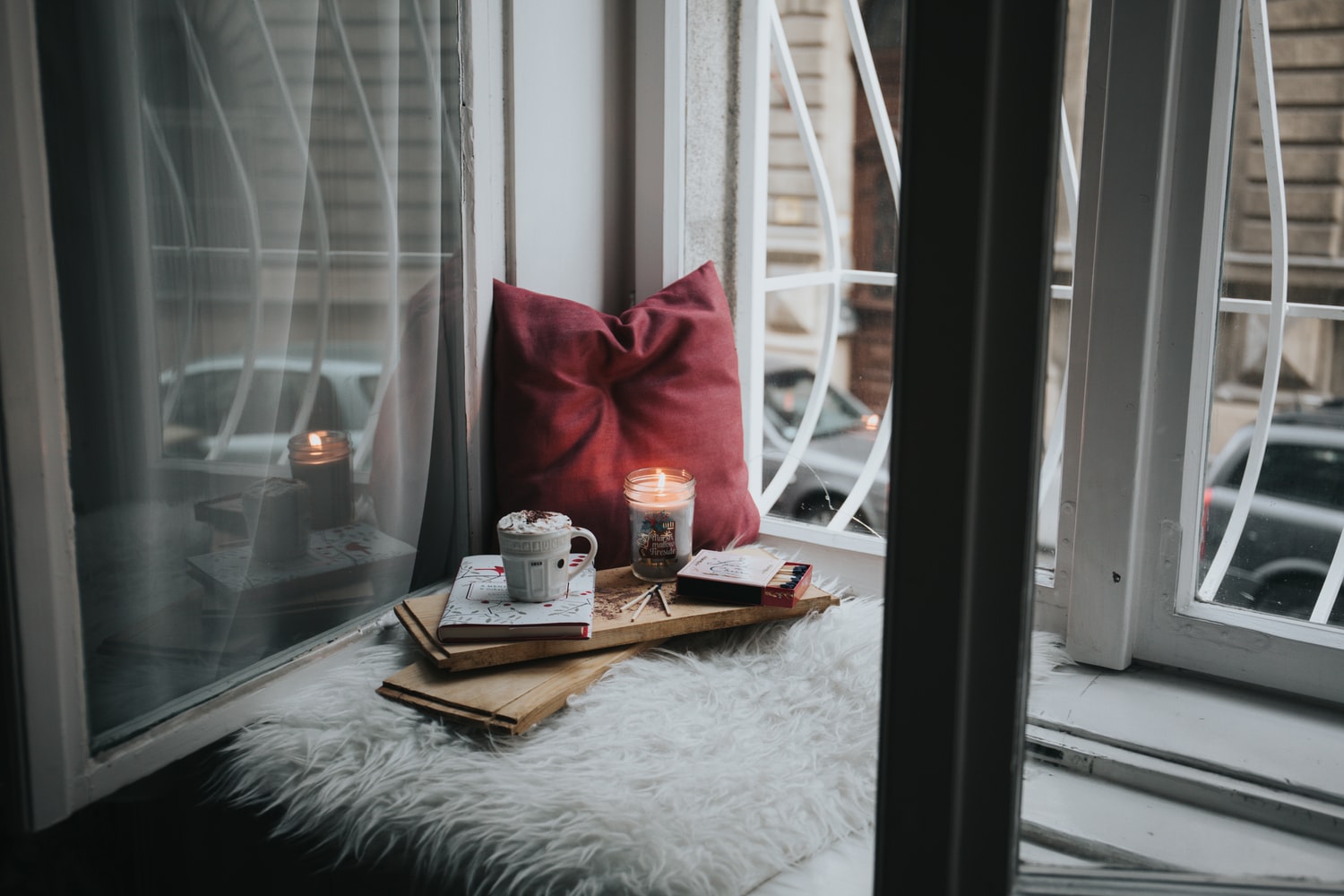
Image source

Looking for book nook ideas? Enjoy this guest post from Claire Silverberg with some clever tips! ~WN

If there is one thing we’ve learned recently, it’s that having a separate space for work and leisure can really make the difference in our time off. It can be hard to find time for reading in our busy lives, but having a dedicated reading space can help. Here are some quick ways to create your very own reading nook so that you always have the perfect spot to settle into a story.

Make it a Family Affair

Do you already have the perfect reading nook spot in mind but find yourself often interrupted by the kids when trying to relax? Here’s a fun way to keep them busy, so you can finally get lost in that novel! Consider using a reading chart for your little ones. It’ll persuade them to make some quiet time for reading and also helps keep them motivated!

You can download this weekly reading chart here!

Ideas for a Small Space

The most daunting part about creating a reading nook is thinking about where you can find space in your home. This is going to be different for everyone! If you have an empty corner in your bedroom or living room, all you need is a cozy chair and a lamp to get your reading marathon started. 

Finding yourself in dire need of inspiration? Window seats (or adding a bench to a bare window) are a great start! Consider a part-time nook by stacking some books next to your couch or even making some space in your closet for blankets and pillows. String lights can really up your game here and create the perfect ambiance.

Another option, if you’ve already got some fellow readers in your household, is to decorate the space like a fictional place in a favorite book! Is everyone a fan of Harry Potter or The Hobbit? Check out this fantasy-inspired reading nook idea and more from Angi.com

Hopefully these tips inspired you to create your literary safe haven? Until next time, happy reading!

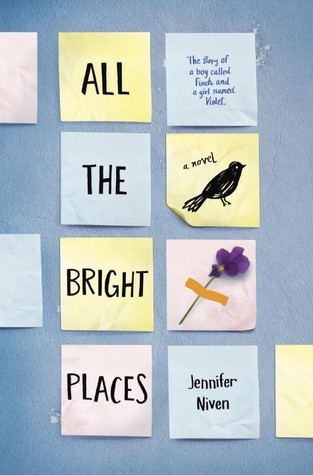
Why you must read All the Bright Places

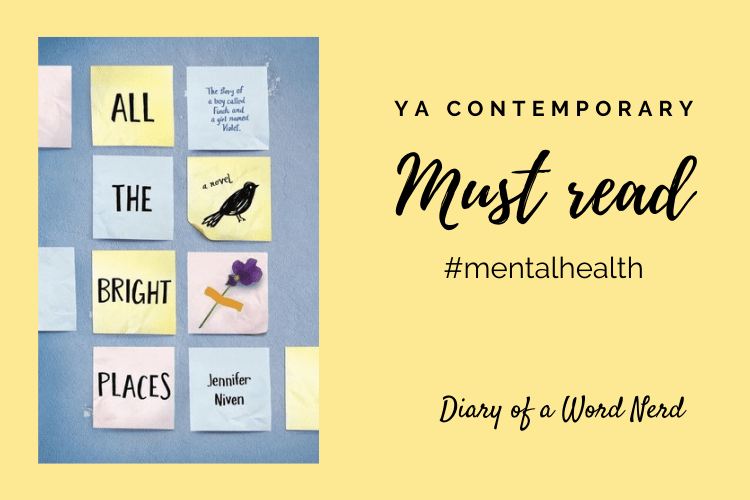
Book review All the Bright Places

Theodore Finch constantly contemplates ways to die. Yet, after he finds Violet Markey perched on the edge on the bell tower of his high school, he spends the next several months encouraging her to live. Will Finch convince Violet that life is worth living? More importantly, will he convince himself?

All the Bright Places is an older YA contemporary that won the Goodreads Choice Award in 2015. However, as we are still in the throes of the pandemic, and still reckoning with an increased awareness of mental health needs, All the Bright Places is an important read for our time. It explores depression and anxiety in compassionate yet real terms. If you are feeling depressed, you might want to hold off on this book. However, if you know someone who might struggle with depression, anxiety, or bipolar disorder, I consider it a must read.

The Premise

Theodore Finch’s classmates call him a freak. He’s prone to outbursts of anger and disappearing for long stretches of time. Finch is tired of everyone thinking he’s weird. He’s also tired of the strange forgetfulness and fatigue that sometimes overtakes him. He’s pretty much given up on life, until he meets Violet Markey.

Violet used to hang out with the popular kids and date the most coveted boy at school. She also used to have an older sister. But ever since a deadly car accident that took her sister away, Violet hasn’t felt normal, and she’s not sure she ever will.

After Finch stops Violet from throwing herself off the school bell tower, he won’t leave her alone. He seeks her out on Facebook and chooses her for his partner for a geography class project. Together, they embark on “wonderings” around the state of Indiana, looking for the remarkable in the every day. And slowly, but surely, Finch works his way into Violet’s life. But how long can he stay there?

What I liked

All the Bright Places thoughtfully explores depression, anxiety, the social challenges of high school, and first love. It’s characters are complicated and believable, and I came to adore Finch and his very strange ways. Bright Places does a good job of portraying depression both from the point of view of one struggling with this mental health challenge as well as someone trying to help. I’ve experienced mild depression, and I developed a greater understanding of more severe symptoms. The book also does a good job of depicting different levels of anxiety and depression. Violet’s symptoms are situational or reactive; Finch’s are chemical and much more serious.

What I didn’t like

At first, I didn’t like Finch. I found him a little strange and off putting. I think Jennifer Niven, the author of All the Bright Places, wanted it that way. As I got to know Finch, I gained greater appreciation for him, and I think that’s one of the powerful themes of the book – the value of making time to truly know the people around us, whether they are in our classes or in our own families.

Recommendation

If you are interested in reading/ learning more about depression and anxiety, I highly recommend this book. Warning: the Goodreads blurb for All the Bright Places describes it as heart-wrenching and compares it to The Fault in Our Stars. With good reason.

Have you read All the Bright Places? What did you think? Can you recommend other good books that explore mental health issues? I can also suggest Mosquitoland and Turtles All the Way Down.

Thanks for getting nerdy with me!