
What you need to know about The Bluest Eye

The Bluest Eye, by the Nobel Prize winning author Toni Morrison, has been on the top of banned and challenged book lists for years. According to the American Library Association, it is frequently challenged because it depicts child sexual abuse and is considered sexually explicit. It was recently challenged at my children’s high school, so I took the opportunity to review the novel. I believe before you can properly discuss or make a decision about a book, you should acquaint yourself with it. Ideally, you should read it. Let me get you acquainted with Toni Morrison and The Bluest Eye.

About Toni Morrison

I’ve read other books by Morrison, including Paradise, Song of Soloman, and the first part of Beloved. I am always impressed and moved by her work. She powerfully wields language to convey history, emotion, and pain. Her prose often feels poetic. My favorite Morrison book, in fact one of my all time favorite books, is Paradise because of its multilayered themes and intricate descriptions. I have read it three times, and I still don’t think I’m getting everything that’s packed in there.

Morrison was born in 1931 in Lorain, Ohio. (Incidentally, this is where The Bluest Eye is set.) She read voraciously as a child, and in 1949 she enrolled in Howard University, where she earned a BA in English. She then studied at Cornell to earn an M.A. in English. She worked as a college professor and as an editor in the New York publishing scene before writing her first novel, The Bluest Eye. She went on to publish several books, including Beloved, which won the Pulitzer Prize for fiction. In 1993, Morrison became the first Black woman to win the Nobel Prize in Literature. (Read more about Morrison at The National Women’s History Museum site. )

Throughout her life, Morrison experienced racial discrimination and segregation, and that heavily influenced her writing. Her words convey raw emotion, as well as immense intellect, and has won several awards.

The premise of The Bluest Eye
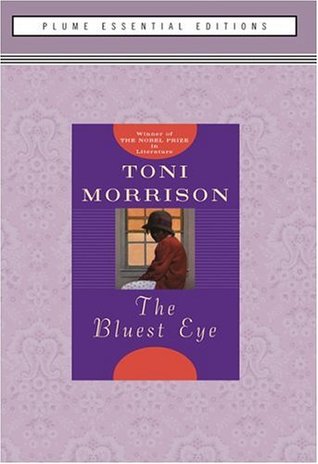
The Bluest Eye tells the story of Pecola Breedlove, an 11 year old black girl who prays for her eyes to turn blue so she can be like, and have all of the benefits of, blond haired, blue eyed girls. But Pecola doesn’t get what she wants, exactly. At the close of the book, the narrator says, “So it was. A little black girl yearns for the blue eyes of a little white girl, and the horror at the heart of her yearning is exceeded only by the evil of fulfillment.”

In the author’s note of the audio book edition of The Bluest Eye, Morrison says, “There can’t be anyone I’m sure, who doesn’t know what it’s like to be disliked, even rejected… most of us think of it as the stress minor or disabling, that is part of life as a human. When I began writing The Bluest Eye, I was interested in something else, not resistance to the contempt of others, ways to deflect it, but the far more tragic and disabling consequences of acceptance as legitimate, as self evident. There are some who collapse, silently, anonymously, with no voice to express or acknowledge it. They are invisible.” Pecola’s story is an attempt to “dramatize the devastation that even casual racial contempt can cause.”

Morrison created the character of Pecola because as a black girl, she represented the most vulnerable of society. Morrison says, “In exploring the social and domestic aggression that could cause a child to literally fall apart, I mounted a series of rejections, some routine, some exceptional, some monstrous, all the while trying hard to avoid complicity in the demonization process Pecola was subjected to. That is, I did not want to dehumanize the characters who trashed Pecola and contributed to her collapse. One problem was centering the weight of the novel’s inquiry on so delicate and vulnerable a character could smash her and lead readers into the comfort of pitying her rather than into an interrogation of themselves for the smashing.”

These are the words of someone, who, contrary to allegations, is not trying to harm children, but who is obviously very concerned with their well being. The author’s note also reflects a thoughtful and skillful approach to narrative and novel writing as well as a deep knowledge and concern for history, society, and human nature.

What I liked

The poetic language of The Bluest Eye grabbed me from the beginning. Here’s an example:

My daddy’s face is a study. Winter moves into it and presides there. His eyes become a cliff of snow threatening to avalanche; his eyebrows bend like black limbs of leafless trees.

Toni Morrison, THE BLUEST EYE

I also appreciate how Morrison illustrates the danger of accepting rejection as legitimate. She encourages us to stop ourselves and each other, especially children, from buying into self-loathing. Morrison achieves a tenuous balance of calling the reader to examine their attitudes without damning themselves in the process.

Morrision develops compelling characters around Pecola by delving into their personal histories and showing how their experience could frame their point of view. Her presentation of people as a complicated mix of suffering, joy, and desire reinforces her attempt to explore the dangers of assumption and judgement – against others or against oneself.

Despite her serious subject, Morrison manages to infuse some humor in The Bluest Eye. The narrator bickers with her sister in authentic, childish ways, and the narrator’s mother bemoans housework as I have often done myself.

What I didn’t like

Sometimes, The Bluest Eye gives detailed backstory on characters I don’t care about. It pulls me out of the story and distracts from my concern for Pecola and the themes Morrison is trying to address.

Potentially offensive material

The Bluest Eye does include incestuous rape, some references to child abuse, and some sex. However, the focus isn’t on physical description of the acts, but rather the social and emotional ramifications of them. They are not gratuitous but rather necessary and fit in with the novel’s themes.

Recommendation

If you are interested in reading about history, women’s issues, or racism, The Bluest Eye is definitely a good, if sobering, choice. It is one of Morrison’s shortest novels and will give you a feel for her writing skill and the themes she explores in many of her novels.

By the way, the committee assigned to evaluate the appropriateness of having The Bluest Eye in the school library voted to leave it there. 🙂

Have you read The Bluest Eye or any of Toni Morrison’s other books? What did you think?

Thanks for getting nerdy with me!

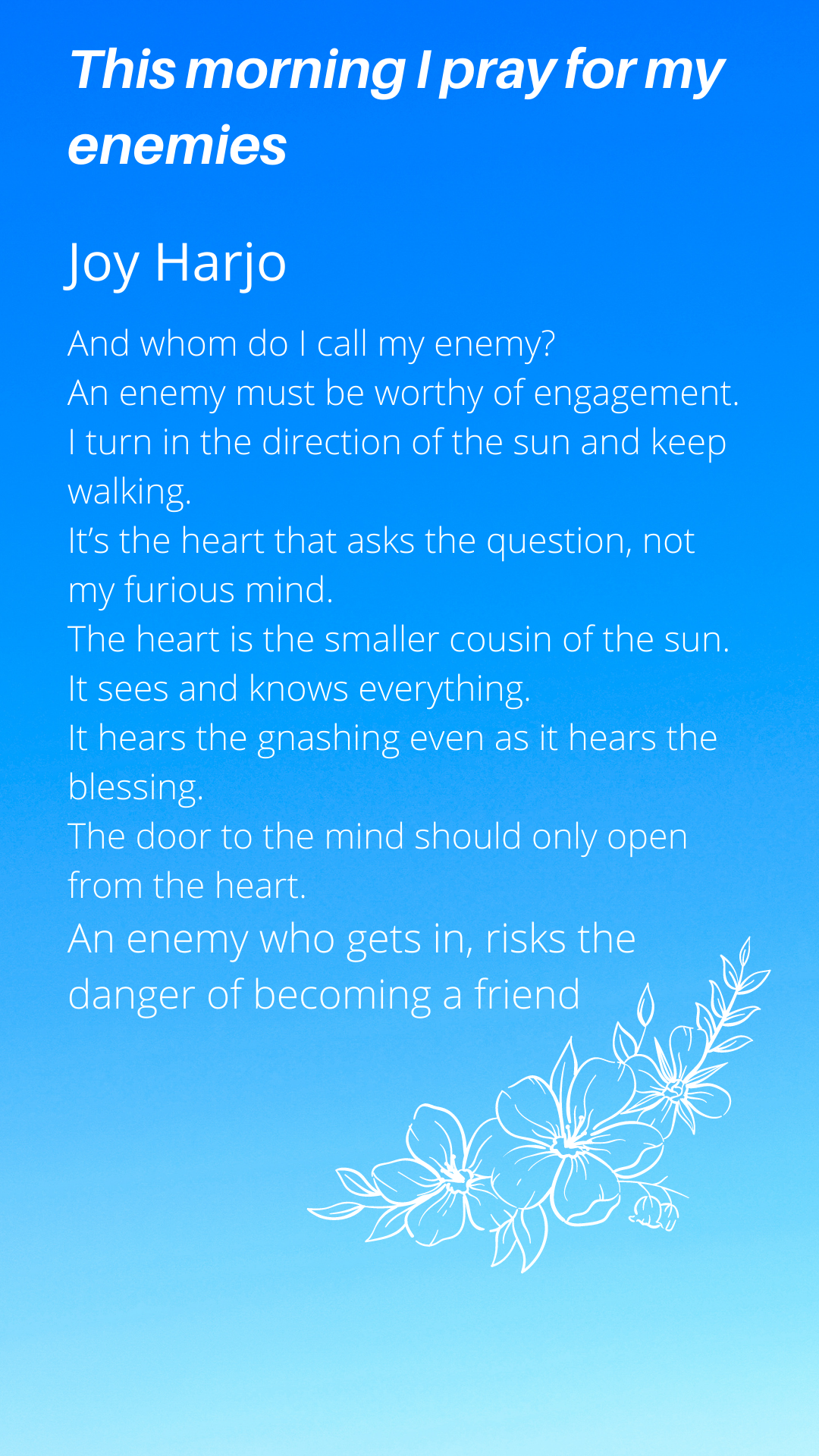
A great poem for your pocket 2022

Every year, The Academy of American Poets celebrates National Poetry Month during April, and each year they pick one day to especially encourage the reading of poems. This year, April 29 (today!) is Poem in Your Pocket Day. And I have a great poem by you.

It’s not long or intimidating or cryptic. (Many people shy away from poetry for fear of these things.) It is, like all good poetry, a collection of powerful words that provokes an image, an emotion, or a sensation, or all of the above. Its theme is extremely relevant for our time. The Academy of American Poets has several great poems featured on its website for poem in your pocket day, but I choose to celebrate this one.

Please share a favorite poem of your own in the comments below, or on social media. Use the hashtag #PocketPoem to join the fun!

Thanks for getting nerdy with me!

What you need to know about Pickleball

April is National Pickleball Month!

I first became aware of pickleball when friends returned from vacation raving about how much they enjoyed playing pickleball for the first time. They dubbed it “tennis for the middle aged athlete.” 🙂 Then my good friend Jo told me she has switched from playing volley ball to pickleball at least twice a week! Recently, when I tried to buy a dampener for my son’s tennis racquet, pickleball equipment took up much of the space on the tennis aisle. Finally, just this morning I heard the hosts of Make Me Smart discussing how pickleball got its name, and that pushed this Word Nerd over the edge.

So now you have it: a quick and dirty overview of one of the fastest growing sports in the USA and around the world.

Brief history of pickleball

Pickleball started on Bainbridge Island, near Seattle, Washington in 1965. A congressman and a successful businessman wanted to create a game to keep their families occupied while the men played golf. The game was intended to be fun and easy for anyone to play – kids and adults alike. Players used table tennis paddles to hit a perforated plastic ball across a net on an old badminton court. The ball bounced well on the asphalt surface, so they lowered the net to 36 inches, and the game was born.

In 1972, a corporation was created to protect the sport, and in 1976, the first known tournament in the world was held at South Center Athletic Club in Tukwila, Washington. It’s been growing ever since.

Why is it called pickleball?

There are two different “legends” around the unusual name of this sport. Neither one has anything to do with pickles. One suggests that Joan Pritchard, the wife of one of pickleball’s founders Joel Pritchard, started calling the game pickleball because it combines different sports, the way the pickle boat in crew combines oarsman from different boats. (The pickle boat is made up of leftovers after all the other boats have been filled.)

Another theory is the game was named after the Pritchard’s dog Pickles, who would chase the ball and run with it, but people who know the family say the dog joined the family after pickleball was invented.

Basic rules

Pickleball is played on a badminton sized court marked by two service areas on each side, as well as a seven foot no volley area running adjacent to the net on each side. Players use pickleball paddles make of wood or high tech aerospace materials and a small ball similar to a wiffle ball. Serves are done underhand, and the ball must bounce once before a player can volley it to the other side. This eliminates the focus on power that often dominates tennis and keeps the ball in play longer.

I have never actually played pickleball, but I am definitely intrigued. Anything that keeps me moving and having fun with family and friends is a win.

To learn more about pickleball, visit:

Have you played pickleball? What do you like or dislike about it?

Thanks for getting nerdy with me!
How to build bridges

I was waiting in line outside of a Bank of America branch mentally preparing to clean out my father’s safe deposit box. He had recently died, and I was in the throes of managing everything that comes with the death of a loved one. Tears came easily those days. I stood in my fragile state on the sidewalk in line behind three people, all of us wearing masks and spaced six feet apart, waiting for the branch to open.

While we watched, a man walked from the parking lot to the front of the line and looked through the tinted glass door into the building. He glanced at the posted hours of operation, and planted himself at the front of the line. A man ahead of me in line called to the man at the door. “Hey, you need to wait in line like the rest of us.” The man at the door turned and yelled, “I have an appointment” followed by several expletives.

“It doesn’t matter, you need to wait in line,” the man in front of me said. The man at the door narrowed his eyes and approached the man in line. “You don’t know who you are dealing with. I will kill you, man. Don’t mess with me.”

I have several silly anxieties – fear of heights, fear of closed in places, fear of snakes. But in that moment, my legs shook with terror. Hate and anger seeped from the men’s bodies and heated the air around us. A third man got in the middle of the confrontation and tried to calm things down. “It’s not that deep, ya’ll,” he said. I was grateful for his attempts to find peace. I was also terrified for him.

His reasonable words didn’t help. The two men continued to exchange threats until bank employees opened the doors to let customers in. I kept a safe distance from the arguing men, although at least three times, I heard the man from the door shout death threats to the man who had been waiting in line. The situation finally resolved when the angry man from the door was ushered off to a cubicle and the man from the line was helped at a teller window.

A bank employee gave me access to my father’s safe deposit box and escorted me to a private room for viewing its contents. I closed myself in the room and sobbed, for the loss of my dad, for my fear, for the tension between those two strangers.

We need common ground

We live in a world where hostility, anger, and aggression color our rhetoric and interactions. So many times, I think to myself, how do we move forward from this? How do we get past all of the hate and posturing?

Fortunately, I’m not alone. I see articles and podcasts with titles like “Finding Common Ground” and take courage. Once, our pastor, Lon Tobin, issued homework during his sermon: find someone who you don’t know or agree with and have a conversation with them. Not to prove or persuade them to see things your way, but just to appreciate the complicated person sitting next to you.

If only we could issue nationwide homework.

The media –social and print and broadcast- wants us to see people in one dimension at extreme ends of a hypothetical spectrum. If we believe what the media sells, people are either smart or totally idiotic. They are patriots or engaging in treason. They have high morals or they are heathens. That’s what sells. That’s what holds attention.  And that’s exactly what fosters conflict.

But that’s not who we really are. Instead, we each embody a complicated mix of failure and success, intelligence and foolishness, compassion and reason. We rarely fit neatly into any category, yet we’ve lost our ability to appreciate nuance.  To move forward, we must get that back.

How to create safe space

My college aged daughter has taken to using the phrase, “I tried to create space to have a discussion about this.” I love this idea of making space for differing opinions, for things that don’t get solved easily, for holding conflicting ideas in the same hand. We definitely need more space, but how do we create it?

When I try to see someone as a whole person, not a stereotype or derogatory nick name or political symbol, I think about what makes them human. What do we share? Admittedly, this is hard in a moment of conflict, but if we practice this when things aren’t tense, we will be more able to do so when they are.

What do we share?

First, we all have emotions, for better or worse. When someone displays anger or hostility, instead of getting defensive or reactive, we can think about what might cause the behavior. Anger and hostility often come from loss, and we can create safe space by acknowledging the wounds other people carry. We didn’t necessarily create them nor do we have to heal them, but we should recognize them. And remember that we carry our own wounds that sometimes manifest in ugly ways.

Which gets me to my next point. We are all flawed, physically and mentally. We all walk around in bodies that bring us joy and frustration. We can connect over illness, pain and limitations no matter our political affiliation or ethnic background. Our mortal bodies unite us.

We also have mental limitations. We are prone to misinterpretation and self-preservation. Our memory sometimes fails us, our emotions mar our judgement. We must accept this about ourselves, and, perhaps more importantly, about others.

Finally, we are all driven by love. We have friends and family we adore and respect. Maybe we are lonely and looking for love. Most of us know the acute pain of losing someone we care about. The entanglements of love are, fortunately and unfortunately, something we can all relate to.  And another good place to start connecting.

Join me in creating space!

Maybe if the two men outside of that Bank of America branch could have stopped and thought about the needs, emotions, flaws, hurts of the other person, and acknowledged their own, they would not jumped to threats and hostility. Maybe not.

I couldn’t control them, but I can control me. I can approach every interaction with appreciation for the human being across from me – a person with valid emotions, wounds, and an imperfect body and mind, just like me.

How are you managing the hostility around us these days? Share your insights in the comments.

Thanks for getting nerdy with me!
How to steer clear of misinformation and disinformation

I’ve talked about misinformation and disinformation before, but the war in Ukraine has revived my concern about how individuals, organizations, and governments can use false information to sway public opinion. I was saddened, but not surprised, to read an article in The New York Times which reported that many Ukrainian people cannot convince their relatives in Russia that a war is going on. The Russians, based on the information the Kremlin is feeding them, simply don’t believe Russia is attacking Ukraine and killing civilians. Disinformation clouds their vision of the truth.

Social media platforms acknowledge the issue of disinformation and are adding fact checkers and attaching warning labels to suspicious content. However, so much gets posted each day, it’s hard to filter through it all. And, social media platforms reward posts that attract attention and go viral quickly, so any attempts to stifle disinformation go against the natural drive of the social media business model.

Clearly, we cannot depend solely on social media sites to manage the problem of misinformation. We must prepare ourselves to spot bad information and combat it. But how?

Several interesting articles and podcasts have been published lately with great tips for recognizing and investigating disinformation. The short lesson: approach all posts with skepticism. But here are a few specific things you can do to limit the spread of bad information.

Slow down

Don’t share a post right away. Take a few minutes to fact check and see if it’s valid. Do not re-share the post until you are sure it is solid information from a reliable source. There are lots of ways to approach this.

Watch for emotional triggers

If a post makes a strong appeal to an emotional reaction, be suspicious. Ask yourself why the creator of the post wants to elicit an emotion from you (good or bad) instead of inform you.

Check the source

Look at who shared the post. If it’s a friend or relative who is not directly involved with the issue or does not have expertise in the issue, do not consider the information valid.

Track down the original source of the post and find out if the source has legitimate experience, education, or expertise in the topic. Remember that being well known does not make a person trustworthy. Some specific things to research:

  • Look up the website of the source to make sure it’s legit. (A URL like CNNfactz.org is a red flag.)
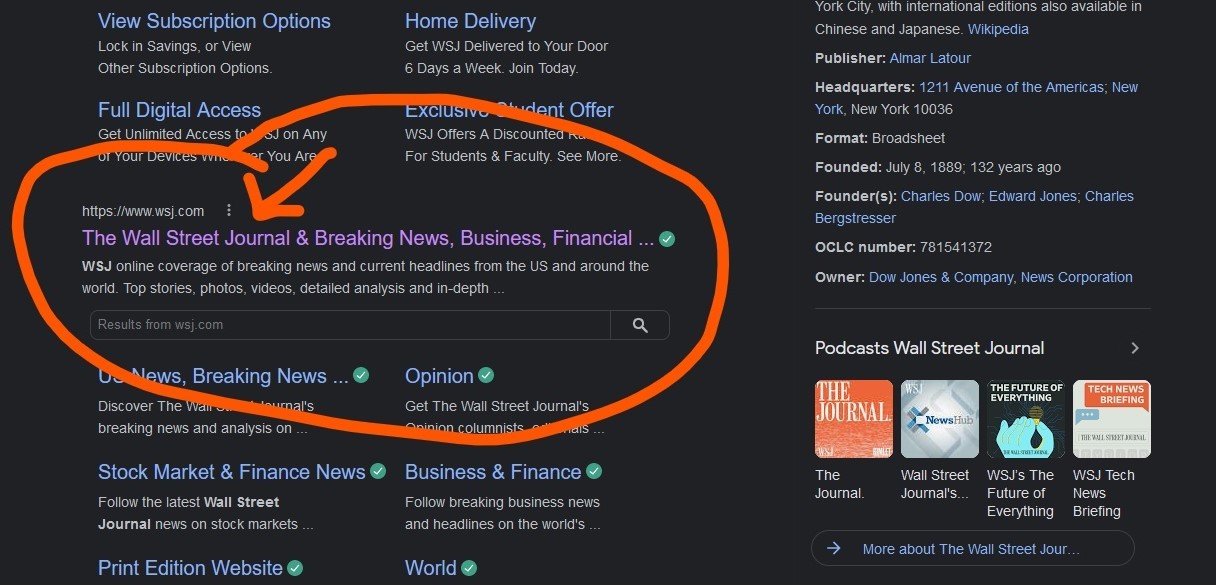
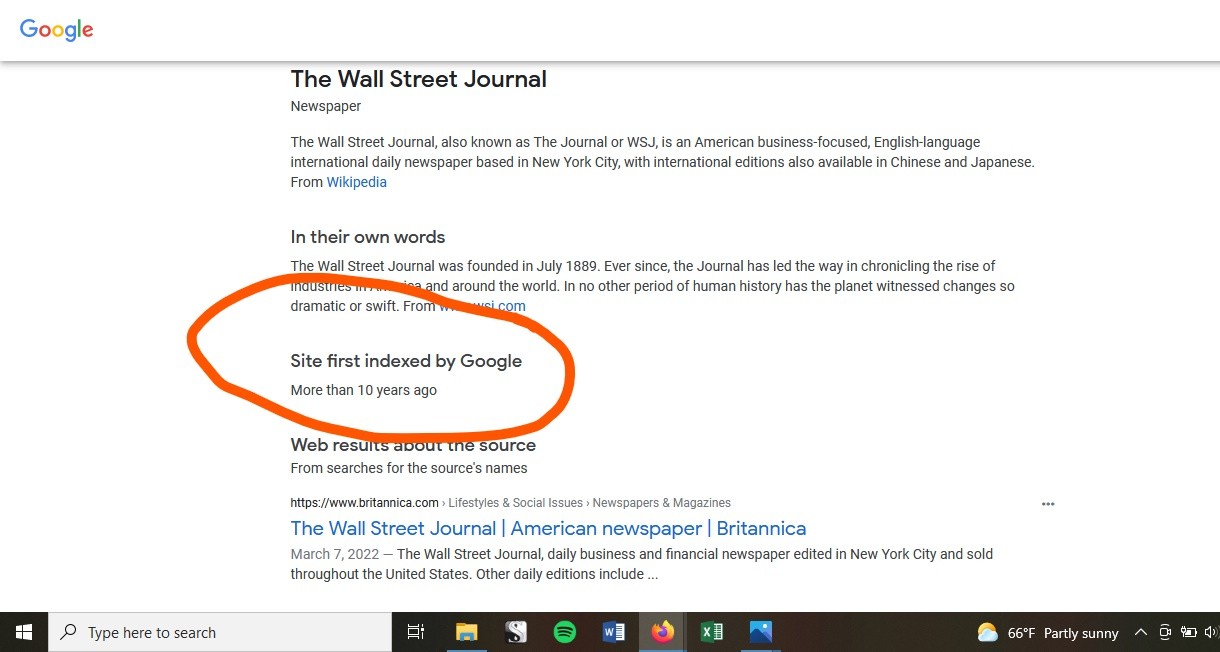
  • Enter the website address in a Google search. On the right side of the screen, Google will tell you who publishes the site, when it was founded, where it is located. Next, click on the three dots next to a website’s address to get more information about the source, like when the site was first indexed by Google search engines. For example, when I look at background information about The Wall Street Journal, I find that it was first indexed or recognized by Google search engines 10 years ago. Be cautious about organizations or accounts that have been recently established and/or have few followers.

Don’t believe it just because you see it

Do not believe every photo you see and remember that images can be doctored and edited. Or pulled from an event that happened ten years ago. Get background information on an image by using Google Image Search. Instead of entering a search term, click on the camera icon and either drag an image or paste the link for the photo into the search bar. Google will share facts about the photo, stories in which it has appeared, and similar photos. Also look for obvious signs of photo editing like missing shadows.

Again, don’t re-share until you are sure

While you do this background research, by all means, do NOT re-share the post. This will just promote more viral spread and get more questionable information to more people. Instead, take a screen shot of the post and ask a trusted authority (or a couple of them) for their opinion on the post.

Put things in context

Remember that one post, snippet, or article does not tell the whole story. Read widely, and from a variety of trusted sources, about a topic to gain better insight. Take the advice of St. Francis and Stephen Covey seriously: seek to understand before being understood.

More help…

If you would like to learn more about how to combat disinformation, check out “How to avoid falling for and spreading misinformation about Ukraine” from The Washington Post. You can also consult fact checking sites like The Washington Post Fact Checker, Snopes, or Politifact. Or this article from MIC.com about evaluating images. You can also listen to this episode of Make Me Smart from Marketplace:

How do you combat mis- and disinformation? Do you have other fact checking practices and sites to recommend?

Thanks for getting nerdy with me!
6 Steps to make a home library

Spring is time for cleaning and organizing! Check out these tips from my guest Jennifer Anderson on setting up your personal library.

When it comes to reading locations, there’s nothing better than a library in the comfort of your own home. 

A home library, also known as a private library, is a dedicated area for all your books right in your living space. It’s the perfect spot to store favorites from your personal collection and browse for new reads — all in one conveniently located, gorgeously decorated place.

The idea of creating a private library sounds incredible, but the process can feel a bit overwhelming for those just getting started. To make things easier, we compiled all the tips you need to learn how to make a home library. Continue reading to jumpstart the process and build your perfect, private library.

1 Count Your Collection

To figure out how much space you need for your home library, you’ll want to count your current book collection. It’s also a good idea to organize your books by genre, color of the spine, or some other category. 

After you divide your collection, you might even find that you want to bulk up certain categories by purchasing more books.

2 Look Into Locations

Now that you know how many books you have and how many you want, it’s time to find your home library location. To avoid temperature changes and pests, steer clear of outside-facing walls and kitchens. 

Instead, you’ll want to choose an underused location in your home, like an awkward corner area. The most important criteria is that the room should have a window to let in natural light.

3 Think About Budget 

Before purchasing anything for your home library, you should figure out how much money you’d like to spend. First, determine the prices of the books, shelves, lights, and seating you want for your space. 

Then, look into the costs of any additional reading nook ideas you’d like to incorporate. That way, when choosing your shelves and accessories, you’ll know exactly how much to spend. 

4 Choose Your Shelving

The shelving style you choose will depend on your needs and personal style. For example, built-in shelves are permanent fixtures attached to your space. Meanwhile, freestanding shelves are detachable pieces of furniture such as bookcases. 

Within these two types, you’ll need to choose between floating, corner, hanging, or adjustable shelves, each of which offers a unique look and purpose. 

5 Add the Decorations

The next step is to find the accessories that will make your library feel like home. Add artificial lighting with desk lamps and ring lights, and choose seating that will make you and your guests feel comfortable. 

If you want to spruce up your home library even more, try painting the shelves, adding wallpaper, or placing trinkets around the space to produce a color scheme of your choice.

6 Organize Your Books

Lastly, you’ll want to organize your books in a way that makes sense for your reading needs. Some popular ways to categorize books include sorting them alphabetically, chronologically, by color of the spine, or by genre. 

If you have kids, placing children’s books on lower shelves is a great way to raise strong readers by making their favorites accessible.

Once you follow these simple tips, you’ll be that much closer to creating your own private library. For more information and tips on making a home library, take a look at the infographic below.

Thank you Jennifer!