I am currently reading Mary Oliver’s collection of essays titled Upstream. They are about nature and creativity and claiming responsibility for this precious life you’ve been given.
In an early essay in the book called “Staying Alive,” Oliver says,
You must not ever stop being whimsical. And you must not, ever, give anyone else the responsibility for your life.
Mary Oliver
She drives this point home in another essay called, “Power and Time.” According to Oliver, creatives must spend their time not on the ordinary, the everyday. Our focus must be the extraordinary; we must be open and ready to catch moments of inspiration as they come. We must avoid the distractions of the world, and, most importantly, the distractions of our own minds.
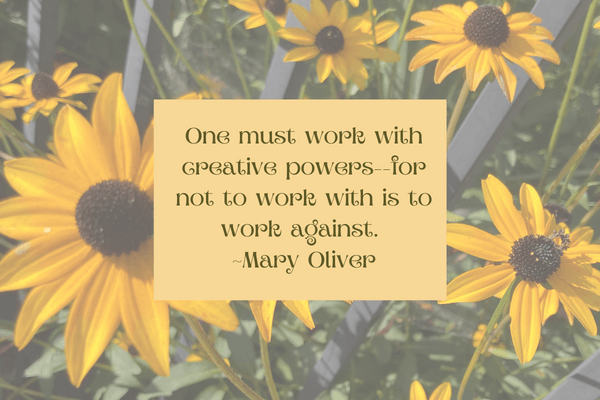
Oliver says that when she is paying attention to her creative work, “My responsibility is not to the ordinary or the timely… My loyalty is to the inner vision, whenever and howsoever it may arrive. The most regretful people on Earth are those who felt the call to creative work, who felt their own creative power restive and uprising, and gave to it neither power or time.”
That line hit me hard. I have not always been good about attending to my creative power. Thank you, Ms. Oliver, for reminding me to do so.
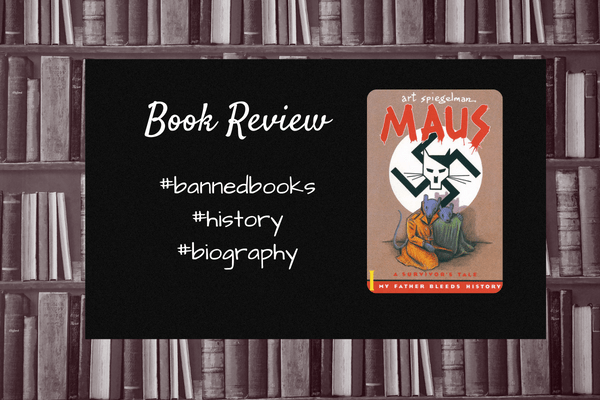
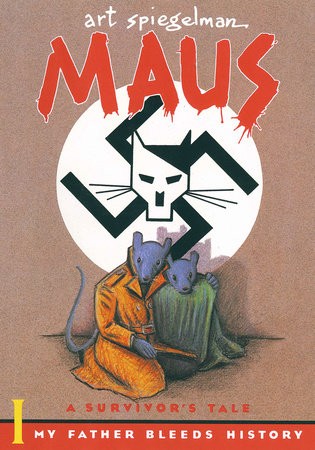
A graphic novel about the Holocaust might sound scary. But Art Spiegelman’s story about his father’s experiences during World War II uses mice to portray Jews and cats to portray Nazis. It is a clever way to bring history to life for a new generation of readers. Maus won the Pulitzer Prize in 1992 and has been used in social studies curriculum since the 1990s to teach students about the Holocaust.
The Wall Street Journal called Maus “the most affecting and successful narrative ever done about the Holocaust.” In Maus, artist Art Spiegelman gives us two compelling stories woven inside each other. The main story belongs to Spiegelman’s father, who suffered in the German occupation of Poland and was eventually sent to Auschwitz. But alongside that tale, Spiegelman tells the story of his difficult relationship with his aging father, who is stubborn and stingy. At one point, the author laments that by portraying his father accurately, he is making his father fit the “racist caricature of a miserly old Jew.” With blunt honestly, Maus tackles the difficulties of this world, from the horror of the concentration camps to the tragedy of aging and fraught family relationships.
What I liked
Maus uses humanoid animal characters and the graphic novel format to brings the Holocaust to life in a real but not frightening way. It describes violent acts, but isn’t explicit. The black and white comic figures are much less disturbing than the graphic images of corpses I saw in the movie Schindler’s List. (The scenes of the Germans moving bodies to be destroyed in the gas ovens literally made me feel faint.) Spiegelman has chosen a clever and non-threatening way to depict an important and terrible time in history. One that we need to remember.
I like how Spiegelman tells his story within the context of his own fraught relationship with his father. He truly struggled to portray a multifaceted person who deserves our sympathy and was also difficult to understand. Suffering in Auschwitz didn’t make his father particularly noble or saint like. He was a flawed human like everyone else. Spiegelman nails this juxtaposition quite well, and forces us all to think about how we must accept people in total, both the good and the difficult.
What I didn’t like
I am not a fan of the graphic novel format. I prefer more prose and deeper insight into character thoughts and motivations. However, I appreciate that for 21st century students and young adults, the graphic novel is an effective way to convey history. I’m surprised more authors aren’t seizing on this genre to tell more about our history.
Should Maus be banned?
No. No book should be. Maus was banned by the Tennessee school district and has been challenged elsewhere for violent content, profanity, and nudity. Spiegelman’s mother Anja committed suicide when Spiegelman was a teen. He depicts the suicide as a comic book within the story, showing his mother (as a mouse) lying naked in a bathtub. There are basic breast shapes with nipples on the mouse character of his mother. But it is a mouse.
There is some profanity. Nazis used profanity with their Jewish prisoners. Spiegelman uses profanity with his father, but it’s not prevalent in the book, and it’s not just there for shock value. When Spiegelman’s character swears at his father for burning diaries from the war, his father reprimands him, saying “even to your friends you shouldn’t talk like this.” Spiegelman’s character later apologizes. The profanity has context.
Maus also depicts the violent treatment of Jews by the cat character Nazis. There is kicking and beating, as well as a panel with characters that have been hanged. But again, they are mice. It’s not graphic. It’s not bloody.
But here’s the thing. Nazis did hang people and kill children. We need to know that. We need to remember that. And Spiegelman presents this truth in an appropriate way for tween and teen readers.
Know what else the Nazis did? They banned and burned books that didn’t conform to the ideology they were pushing. That’s something else to remember.
Recommendation
If you enjoy history, biography, or graphic novels, you should definitely read Maus and the second book in the series, Maus II. And if you believe that books unite us and censorship divides us, you should pay attention to the activity of your local government and school board and do all you can to ensure access to information and civil public discourse.
What banned book have you read and enjoyed lately?
As a self proclaimed word nerd and book blogger, it’s no surprise that I celebrate books and reading. If you have forgotten, or, heaven forbid, never embraced the idea that reading is important, let me give you a few things to ponder.
Benefits of reading
First, reading books about communities, places, and times other than what we know helps us learn about and understand other people. Reading can be an especially effective way to explore the world when combined with discussion in a safe place and when led by teachers or educated mentors who can guide discussion, challenge assumptions, and facilitate processing. Studies have shown that reading increases empathy.
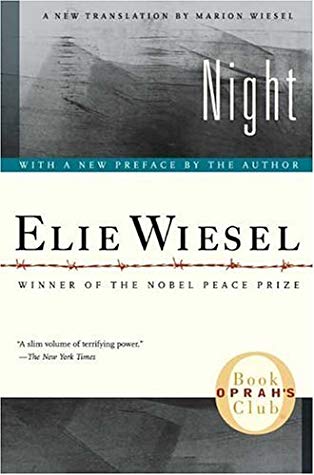
When I was a freshman in high school, my English class studied Night by Elie Wiesel. Wiesel’s account of his teenage years at Auschwitz made the reality and tragedy of Nazi concentration camps come alive in a way that my history textbook could not.
One judge championed the power of books to foster empathy in a Virginia court case in 2017. The judge required teens found guilty of painting Swastikas on an historic black schoolhouse to read a book a month for twelve months and write reports on what they learned. The students had to choose from a list of books, including Night by Elie Wiesel, I Know Why the Caged Bird Sings by Maya Angelou, and The Kite Runner by Khaled Hosseini. One of the teens later wrote in a report that he hadn’t understood the significance of swastikas until he read books from the list.
In addition to promoting empathy, reading books helps us explore complicated ideas. The best books examine meaningful themes like love, loss, independence, oppression, death, grief, heroism. John Green’s YA novel Looking for Alaska explores how people from different religious traditions explain and process grief. His novelThe Fault in Our Stars follows two teenagers with cancer who are contemplating what matters in life and what happens after death. The Charles Dickens classic A Tale of Two Cities, set during the Reign of Terror of the French Revolution, depicts how long standing oppression undermines humanity and society. Born a Crime, an autobiography by Trevor Noah, depicts the challenges of growing up as a mixed race child in South Africa during the aftermath of apartheid, state sanctioned racism. All of these books helped me broaden my understanding of being human.
Reading and discussing books also promotes critical thinking skills. Readers must learn to differentiate fact from opinion. They must understand the difference between literal and figurative language. And with enough experience, they will learn to perceive the message or question the author has woven into the text for consideration. In a democratic, free society, we need to be able to read about, think about, and discuss ideas. Reading books helps us do that.
Finally, and simply, reading cultivates imagination and offers escape. As a teen, I loved curling up under my covers with a good book to travel away from the tension that plagued my house. The Hobbit, a fantasy adventure by JRR Tolkien, whisked me away to a world characterized by bravery and strength. It was a welcome break from a home troubled by chronic illness and alcoholism.
Why some want to limit reading
For decades, people, often parents, have expressed concern about certain books. You can find detailed information about challenged and banned books at the website of the American Library Association. Concerns about books often center around the age appropriateness of materials. Typical reasons for challenges include profanity, sexual content, religious themes, or violence.
Another reason individuals or groups try to limit access to books is fear that particular titles will normalize behavior viewed by the challengers as unacceptable. For example, groups have targeted books with LGBTQ themes and characters because they don’t want children exposed to sexual behavior and ideas that are “out of the norm” or do not align with their personal or religious beliefs. There seems to be an assumption that if people, particularly children, read something, they will automatically accept and embrace it. This does not align with the idea that reading encourages critical thinking.
On September 16, the ALA released data about book banning so far in 2022. Between January 1 and August 31 this year there were 681 attempts to ban or restrict library resources, and 1,651 unique titles were targeted. These numbers break the records set in 2021. The ALA is particularly concerned because “more than 70 percent of the 681 attempts to restrict library resources targeted multiple titles. In the past, the vast majority of challenges to library resources only sought to remove or restrict a single book.” ALA President Lessa Kananiʻopua Pelayo-Lozada is worried about this trend.
“The unprecedented number of challenges we’re seeing already this year reflects coordinated, national efforts to silence marginalized or historically underrepresented voices and deprive all of us – young people, in particular – of the chance to explore a world beyond the confines of personal experience.”
ALA President Lessa Kananiʻopua Pelayo-Lozada.
The dangers of limiting access to books
I understand there are themes, concepts, or ideas that adults might want to protect children from. I was the mom who told my kids they couldn’t read the later Harry Potter books because I was worried the themes were too dark for my 1st and 3rd graders. (Fifteen years later, my kids still talk about this and why they believe it was unnecessary.) I also hid my copy of Looking for Alaska because I didn’t like the sexual themes or the provocative behavior of the main female character.
What I forgot in those years was that when I was in middle school, I devoured the Ken Follett spy novels I found on my parents’ bookshelf. Those had plenty of sex and violence, and yet, I made it to adulthood without acting like Follett’s lethal and unscrupulous spy, “The Needle”. The fear of immediate indoctrination assumes a small mind; the limiting of access to books promotes small thinking.
The negative consequences of banning books outweigh any desired benefits. Banning books does not promote critical thinking – it eliminates it. We all, especially children, need exposure to ideas to develop a balanced view of the world. The assumption that reading will lead to indoctrination is flawed and fearful. Ironically, forbidding certain books to cultivate a singular cultural narrative is just indoctrination in a different direction.
Also, limiting access to books means that a child who might benefit from reading about people who are different in any way- be it disabled, gay, depressed, anxious, oppressed- will continue to either misunderstand other people, or worse, feel isolated and wrong because they cannot find other people to relate to. Additionally, the uproar about certain titles has left teachers feeling scared and uncertain about what to teach in the classroom. Finally, the trend toward targeting large numbers of books that address a particular theme, for example racism or sexual identity, will affect what titles and topics will be published in the future.
All of these consequences promote silence. Not the discussion of ideas, not the development of empathy, not the ability to critically evaluate. In a country that values freedom, we cannot accept silence and fear. We must do all we can to promote discussion and respectful debate.
Graphic courtesy of The American Library Association ala.org
Learning more about books
The American Library Association is celebrating Banned Books Week from September 18-24 with the theme “Books unite us. Censorship divides us.” Visit the website or your local library to learn more about what books are being targeted and the effects of banning books.
Why do you think access to books should or should not be limited? Let’s have a discussion!
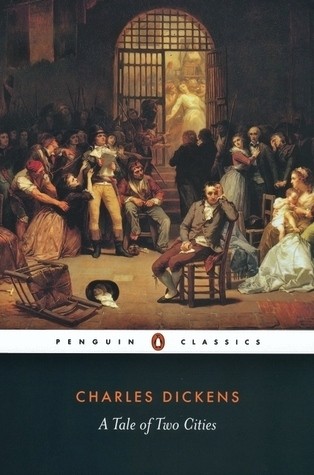
I’ve been wanting to read A Tale of Two Cities by Charles Dickens for a long time. My daughter raved about it, and, after visiting Paris and reading the historical fiction novel The Women of Chateau Lafayette, I had to learn more about The French Revolution. Dickens did not disappoint. He shed light not only on the dark days of The Reign of Terror, but also have relevance for our social structures and challenges in the 21st century.
I’ve read other pieces by Dickens, including Great Expectations [link] They tend to be DENSE. However, Dickens wrote A Tale of Two Cities as a series, with installments published at regular intervals. This format probably compelled him to write in shorter chapters with what we call in the writing business a “read on prompt” at the end of each segment. The result is a story with masterful pacing, fascinating character development, and genuine surprises.
Premise
The two cities in Dickens’ classic are London and Paris. The cast features an odd assembly of characters. The elderly Doctor Manette, recovering from years of unlawful imprisonment in the Bastille. Manette’s long estranged, loving daughter Lucie. Her fiery and devoted maid Ms. Pross. Throw in the ruthless devotee to the French Republic, Madame Defarge, and the savage “Lady Guillotine”, and you have the makings for a riveting story that highlights the very best and the very worst of human nature.
What I liked
Dickens uses personification, imagery, and irony to create a tense and intelligent environment for his story. In an early scene in the book, characters scramble to sip up red wined spilled on a cobblestone street. The spreading red liquid foreshadows the blood that will run in the streets of Paris during the Reign of Terror.
Dickens also does an excellent job of developing an ensemble cast. We learn so much about them – from their bristling hair to their troubling drinking habits. I found many of the characters compelling and interesting— something that distinguishes A Tale of Two Cities from most other classics I’ve read. (There just aren’t that many characters I LIKE in classics.)
The language and dialogue are poetic and literary without being unreachable. Dickens doesn’t over explain. He drops hints and lets the reader figure things out. Even though the story takes place during a terrible time in history, the observations and clever banter of the characters often made me laugh out loud.
Most importantly, and probably why this novel remains such an important book in the cannon of classic literature, A Tale of Two Cities gives thoughtful consideration to social class and the consequences of merciless oppression. Dickens demonstrates the very best and very worst ways men choose to treat their fellow men- not just what they do, but how they get there. The themes of A Tale of Two Cities are still relevant today as we come to terms with how we in America have treated marginalized populations for centuries. And what we should do about it moving forward.
Word nerd notes
I listened to audio book which featured a fantastic performance by Simon Callow. He places emphasis in just the right places to accentuate the humor and the horror of A Tale of Two Cities.
Do you have a classic you’d like to recommend? Read any other Dickens? What did you think?
“Stay woke.” “He’s woke.” “Stop the woke movement.” We’ve been hearing the word “woke” for a while. It’s often hashtagged on social media and has even made its way into Florida state legislation, but how many of us really understand what “woke” means or where it comes from? In my constant attempt to promote building bridges over building fires, the Word Nerd will share what she has learned about “woke.”
Definition
Woke, in its simplest terms, is the past tense of “wake.” But that’s not what Twitter is all excited about.
having or marked by an active awareness of systemic injustices and prejudices, especially those related to civil and human rights
aware of and actively attentive to important facts and issues (especially issues of racial and social justice)
Etymology
Woke has been used as a slang term in the United States, especially in Black English, for almost a century. It first appeared in a 1943 article of The Atlantic. The piece quoted a Black United Mine Workers official who used woke as a metaphor for social justice:
“Waking up is a damn sight harder than going to sleep, but we’ll stay woke up longer.”
The Atlantic, 1943
During the 1960s, the term meant “well informed”, but still in the sense of political awareness. Woke was often associated with The Civil Rights Movement. It appeared in the title of a New York Times article: “You’re woke if you dig it.”
Woke was used in the 1972 play by Berry Beckham “Garvey Lives!” about Black Nationalist Marcus Garvey. Beckham also used woke to mean social awareness. Here’s a quote from the play:
“I been sleeping all my life. And now that Mr. Garvey done woke me up, I’m gon stay woke. And I’m gon help him wake up other Black folk.”
from the 1972 play “Garvey Lives” by Berry Beckham
In 2008, singer Erykah Badu featured “woke” in the lyrics for her song “Master Teacher”. Here’s a bit of the chorus:
Even though you go through struggle and strife/ To keep a healthy life, I stay woke/ (I stay woke)
Everybody knows a black or a white there’s creatures in every shape and size/ Everybody/ (I stay woke)
The word woke gained popularity again in 2012 after the shooting of Trayvon Martin, an unarmed black man. In 2014, after more police shootings of unarmed black men, the Black Lives Matter movement embraced woke and used it as a call to action against injustice.
These days, woke can also be used to refer not only to racial injustice but also to describe awareness of sexism, anti-gay attitudes and policies, and white supremacy. On social media, many large brands have started using woke to appeal to younger audiences.
Conservative Republican Ron DeSantis, the governor of Florida, used the word when he introduced legislation called Stop the Wrongs to Our Kids and Employees (W.O.K.E.) Act. According to DeSantis’s website, the W.O.K.E. Act is a legislative proposal that will give businesses, employees, children and families tools to fight back against woke indoctrination. Explaining the bill on his site, DeSantis says, “We won’t allow Florida tax dollars to be spent teaching kids to hate our country or to hate each other.”
Some say the meaning of the word has been diluted, as it is now used facetiously or as a source of humor in memes. Black author and scholar Kaitlyn Greenidge recently noted on The Argument podcast, that the changing meaning of the word “woke” these days is yet another example of white dominant culture corrupting black language. Greenidge says she is frustrated with “the continual denigration of a word like woke.” She says Black people came up with the word woke to describe the experience of living in America as a black person. It’s been a tradition in Black culture for a long time. But she adds, “We also know, knowing that tradition, that it is also a tradition for white dominant cultures to come in and to corrupt our language and to turn it into something else. And that’s what’s happening here… that word is very seductive for a very large portion of white America to just sort of throw everywhere.”
Word Nerd observations on woke
First, I’m not sure how “awareness” translates to hate, but I realize many people share Mr. DeSantis’s view of “woke” ideology. Perhaps that could be a good conversation starter between two people truly willing to listen and understand each other.
Second, I find it interesting that “woke” basically kept the same meaning from the 1940s until the mid 2010s when… guess what? Social media started dominating our lives and big companies used it as a branding tactic. It is very interesting, if not disturbing, to watch how social media influences the popularity, meaning, and perception of words. It’s something we should all stay aware of.
And please, please, if you want to use a word, make sure before you do, that you know what it means and where it comes from by consulting reputable sources, like Dictionary.com and Merriam-Webster.com. I hope this post helps with at least one word.
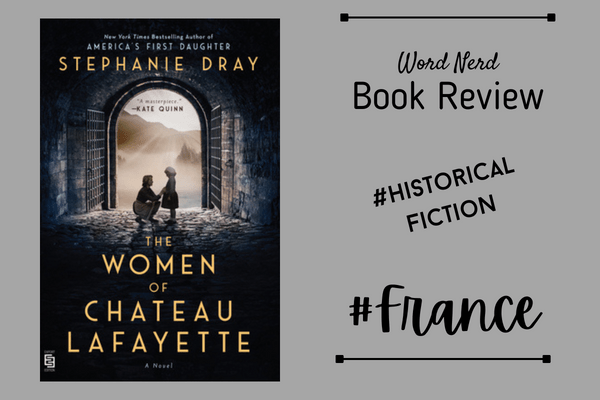
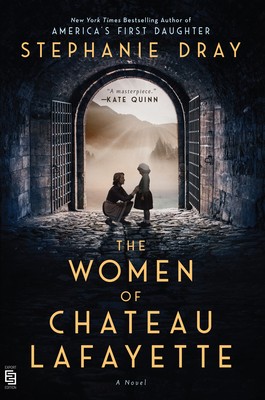
If you like historical fiction, have I got the book for you! The Women of Chateau Lafayette by Stephanie Dray follows the lives of three amazing women at three significant points in history: the French Revolution, World War I, and World War II. The women featured in each of the three interwoven narratives of the book are vastly different, and yet alike in one key way: they are STRONG!
The Premise of The Women of Chateau Lafayette
The Women of Chateau Lafayetteexplores how three women tackle the challenges of war and marriage. First we meet Marthe Simone, a fictional character from 1940 working as a teacher at Chavaniac-Lafayette, a home and hospital for orphans. As the Germans occupy France and dominate the daily life of the French people, Marthe finds herself pulled into the war and the resistance to it.
Dray also introduces readers to 18th century France and the historical figure Adrienne Lafayette, wife of the famous French hero General Lafayette. Dray portrays Adrienne as a devoted mother, a devout Catholic, and a faithful wife and political partner to her husband during the extremely turbulent times of The French Revolution. Finally, we meet the vivacious Beatrice Chanler, also based on a real person. Chanler is a New York socialite who channels her wealth and determination into helping the people of France as World War I breaks out.
What I liked about The Women of Chateau Lafayette
Each main character is multifaceted and fascinating, and I loved learning more about how each chose to handle the obstacles placed in front of her. I didn’t always agree with the decisions they made, but their stories made me think a lot about the role of women in the past as well as today. In every case, I admired the strength and determination of the women.
I also learned a lot about history that I somehow missed in high school and college. My book club lamented that more historical fiction isn’t used to teach history and make it more interesting to students. It has taken too long for me to understand the link between The American Revolution and The French Revolution. As someone who grew up near Mount Vernon (George Washington’s home) and Washington, D.C., I’ve often heard Lafayette’s name, but I certainly didn’t know much about his life, or anything about his extraordinary wife.
A story with three main characters and three different time settings might be confusing, but not in Dray’s experienced hands. Dray weaves together the narratives making it easy to see how the lives of these women relate to one another. The stories build upon each other and deepen the themes of the book.
Finally, The Women of Chateau Lafayette has a satisfying, although not perfect, ending. It feels bittersweet and realistic, showing how war damages people and how they choose to heal.
What I didn’t like about Chateau Lafayette
The book felt a little long, especially in the middle and towards the end, but it held my attention. he print version has 576 pages. The audio book is almost 24 hours long. I think it could have been trimmed without sacrificing important details and scenes.
Word nerd recommendation
If you enjoy historical fiction, you will love The Women of Chateau Lafayette. I dare say it’s also a good book for women’s studies or if you are interested in French language or culture. I was very happy I read it before a trip to France this summer.
I listened to the audio book. The performance featured different readers for the different women and helped keep them straight in my mind. It also helped to hear the French pronunciation of words. The narrator who reads Beatrice’s parts is especially effective at capturing her energy and humor.