
No Donnybrooks during the holidays, please

We had 12 out of town guests. Ten cousins who don’t see each other very often. A six pack of (the aptly named) In-Law Invasion Ale. Four pies. Three of my children, in various stages of launching, who came home for the holiday. One 16 pound turkey, and one fruit turkey. (I’ll explain later.) But NO Donnybrooks, thank goodness.
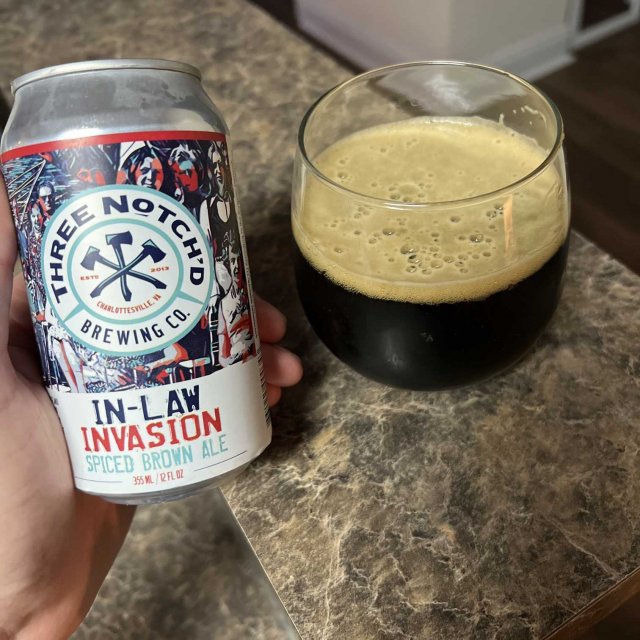
My oldest brought this for us!

Wait? You don’t know what a Donnybrook is? Well, neither did I, until my word nerd friend asked me, in light of the holiday chaos at my house,

Make it through Thanksgiving without any Donnybrooks?

Donnybrook is a fun word, isn’t it? Well, its etymology is too.

Donnybrook is often capitalized (even when not appearing at the beginning of a sentence.) It means a dispute, usually occurring in public, or an all out brawl. Donnybrook is actually a city near Dublin, Ireland that hosted an annual fair known for its many brawls. Things got so bad that the event was cancelled in 1855, but by then the use of the word Donnybrook to describe a ruckus had already been firmly planted in the vernacular. See this quote from the mid 19th century:

Some received severe blows from persons who wielded their sticks with such agility as to do no disgrace to a Donnybrook fair.

Commercial Advertiser [New York], 19 Oct. 1843

So there you have it! Over the Thanksgiving holiday, our family, all 19 of us, played lots of games (Code Names and Poetry for Neanderthals were favorites), shared lots of laughs and a few pitchers of sangria, but we did not have any Donnybrooks.

And back to that fruit turkey… It was what it sounds like:
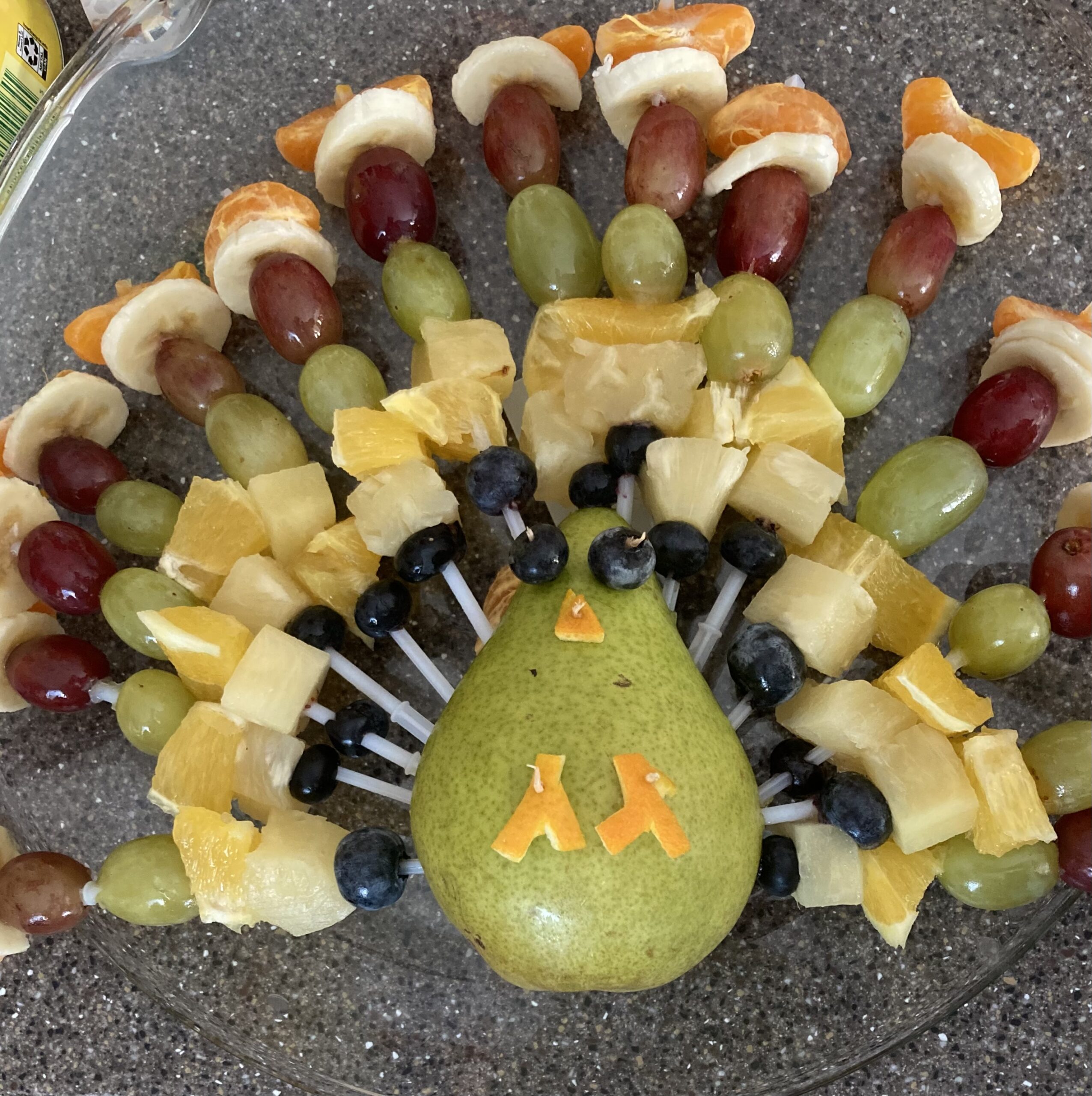
Photo of a turkey made from assorted fruits
Nana thought making a fruit turkey would be fun!

Thank you to Rohna for the inspiration, again, and to Merriam-Webster for the information!

Did you have any Donnybrooks over your holiday? What funny moments or near Donnybrooks did you experience?

Thanks for getting nerdy with me, and I wish you a Donnybrook free holiday season!

Five great “journey books’ for holiday travel

Wait- Thanksgiving is only a week away? How did this happen? Soon 18 family members will arrive at my home for meals, games, and happy hour. (Happy hour might start early on Thanksgiving Day.) 😉 I won’t be traveling for this holiday, but I know a lot of people will, either now, or in December, or both, so I want to share a few journey themed books perfect for holiday travel.

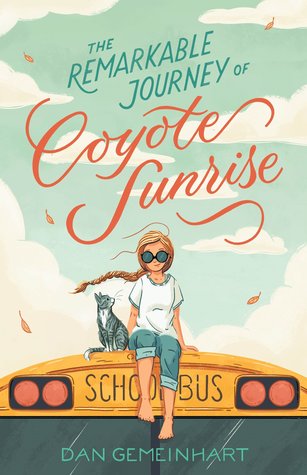
The Remarkable Journey of Coyote Sunrise

First up, The Remarkable Journey of Coyote Sunrise by Dan Gemeinhart. This fun little read is considered middle grade. Goodreads users also classify it as “family” and “adventure.” That means it’s perfect in the car for little ears and big ears too! (Note: I’m an adult who LOVES kid lit!)

The Premise of Coyote Sunrise

Ever since the sudden death of her Mom and two sisters five years ago, Coyote and her father, Rodeo, have been driving across the country in a old school bus turned mobile home. But when Coyote learns a park holding sacred memories of her family will be demolished, she wants to go home. Unfortunately, home is in Washington State, 3600 miles away. And, Coyote only has four days to get there. And, Rodeo can’t know where or why they are going.

What I liked

Coyote is a plucky, relatable main character with great voice. Her dad, Rodeo, is thoughtful and kind, yet flawed. He and Coyote manage their grief in very different ways, and that leads them on a collision course. Rodeo wants to forget, but Coyote wants to remember. Rodeo may drive the bus, but Coyote doesn’t back down.

Along the way to Washington state, Coyote and Rodeo pick up several interesting passengers, all looking for something different: true love, a new start, a place to feel safe. The novel successfully balances a fun and light tone with deeper themes about how to cope with loss and how to connect with people who are different. It also poses a significant question:” Is choosing happiness selfish?

What I didn’t like

While I enjoyed the journey motif, which compliments the plot nicely, the end felt a little drawn out. Also, at times Coyote and Rodeo’s folksy voices sound somewhat cliche (but, I listened to the audio book, and perhaps that was more performance than prose.) Overall, I enjoyed the audio book.

Word Nerd Recommendation

If you enjoy stories about family, chosen family, and acceptance, The Remarkable Journey of Coyote Sunrise is a perfect choice. It’s won several awards, including Flicker Tale Children’s Book Award for Middle Readers (2021), Truman Readers Award Nominee (2022), Goodreads Choice Award Nominee for Middle Grade & Children’s (2019), Rebecca Caudill Young Readers’ Book Award (2022)

Other great books for a journey

Coyote got me thinking about other books with a journey theme. Here are some I recommend:

  • Pony, by R.J. Palacio (author of Wonder). This middle grade historical fiction novel tells the story of a young boy on a quest to find his father. A ghost and a mysterious pony are his only guides. I enjoyed the audio book of this title too.
  • Paper Towns by John Green. (Do I really have to tell you who John Green is?) This young adult mystery follows Quentin as he tries to find his adventurous neighbor Margo who has suddenly disappeared. Note: Quentin has had a crush on her for years.
  • Mosquitoland by David Arnold. This young adult adventure follows Mim as she travels by Greyhound bus from her life with her father and stepmom in Mississippi to her mother in Ohio. Yes, I said Greyhound bus, so you can expect a colorful cast of characters.
  • The Lincoln Highway by Amor Towles. (author of A Gentleman in Moscow.) Adult historical fiction. I have not read this yet, but my book club really enjoyed it. Blurb from Goodreads: “Spanning just ten days and told from multiple points of view, Towles’s third novel will satisfy fans of his multi-layered literary styling while providing them an array of new and richly imagined settings, characters, and themes.”

Those are my ideas. I’ve gotta go clean. What books can you recommend for travel?

Thanks for getting nerdy with me!

Why we must create enough space to hold paradox

Whew, election week is wrapping up, so hopefully, we can look forward to less hostile rhetoric about over-simplified issues. Because the truth is, no matter what the media, in all of its toxic forms, tells us, issues are not black and white. Almost every person, every issue, every problem, holds paradox.

We have a strong tendency to shove aspects of our lives into clearly defined spaces. Things are wrong or right. People are good or bad. Social media and the press, in their mad desire to attract and keep our attention, don’t want to make the time or space to discuss the intricacies and complications of issues.

But that doesn’t mean it can’t happen. We can decide to embrace paradox, to hold conflicting facts and opinions at the same time.

Instead of approaching life from an “either/or” and “this or that” mentality, imagine what could happen if we all did a better job of thinking, “yes, but” or “not only, but also”, or “what if?” I’m guessing if we spent less time categorizing and more time exercising curiosity, this world would be a happier, more peaceful, more accepting place.

I’m super into the Kelly Corrigan Wonders podcast these days. Kelly is tackling issues like this, searching for ways to be better and explore “what could be.” In one of her recent episodes, she interviewed Dr. Clara Oropeza, an English professor at Santa Barbara City College, to talk about the value of critical thinking that is attained through reading literature. It’s part of her “Live from College” series in which she is traveling to campuses around the country to figure out the value of a liberal arts education.

Toward the end of the interview, as the two women discussed the value of being able to embrace complicated, paradoxical issues, Dr. Oropeza quoted the writer Maxine Hong Kingston (author of The Woman Warrior.)

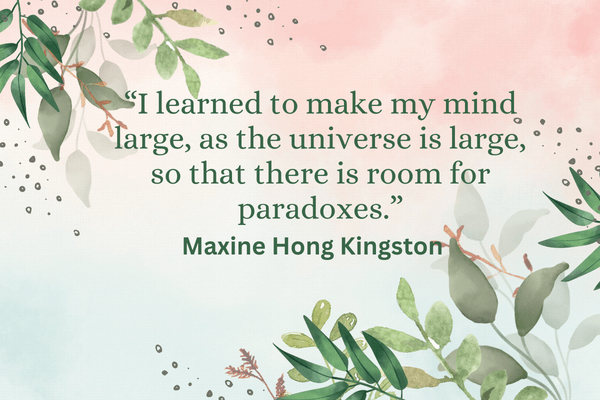
I learned to make my mind large, as the universe is large, so that there is room for paradoxes.

Maxine Hong Kingston

Wow. Isn’t that fantastic?

Have a great weekend everyone, and may you learn to make your mind large and allow room for paradox.

Thanks for getting nerdy with me!

Why you must pay attention to local government

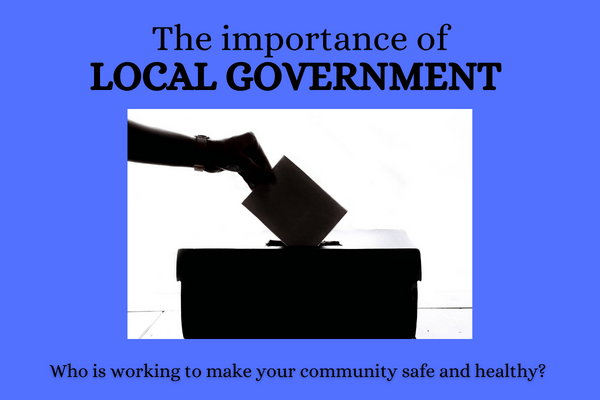
Person placing ballot in ballot box with text :The importance of local government

Do you know who pays the police officers who protect your community? Or provides the money and plans to update critical infrastructure like public water and roads where you live? Or who funds the local school system?

In other words, do you pay attention to the government officials who affect your daily life?

The media likes to focus on Washington. The politicians up there are more interesting, or at least that’s what Twitter and the big newspapers would like us to believe. Yet reading stories and hearing sound bites of lawmakers calling each other names does little to convince us that the government works for our benefit.

In fact, some experts connect the rise in extremist groups and political violence to the helplessness many people feel about what is happening in our country. We hear so much about how locked up Congress is we think nothing we do, by voting or otherwise, will positively impact our lives. Some of us are growing frustrated and desperate. Hence, the uptick in violent rhetoric.

When we find ourselves getting upset about the latest national debate, we should remember what we have access to and influence upon: local government.  Our local councils and boards have significant impact on our daily lives, but sadly, few of us choose to pay attention. According to a 2018 Johns Hopkins University study of 1500 people, many Americans lack basic civic knowledge. For example, 25% of people interviewed for the study didn’t know if federal or state government was in charge of law enforcement or which governmental bodies make and enforce zoning laws. Benjamin Ginsberg, a professor of politics at Johns Hopkins, said about the results of the study, “Lack of attention could lead not just to an uninformed public, but to an environment where special interest politics and corruption flourish.”

Lack of attention could lead not just to an uninformed public, but to an environment where special interest politics and corruption flourish.”

Benjamin Ginsberg, Professor of politics at Johns Hopkins University

If that’s not a call to action, I’m not sure what is.

Most of the time, local government focuses on helping people in a community live safe and healthy lives.  But sometimes, there are bad players who act in self-serving ways. What is your local and state government doing to improve your life? What do you need to be concerned about? You won’t know unless you pay attention.

As Election Day approaches, I encourage you to pay attention to your local government. Use resources like your county or state election sites to find out who is running for what office. Do a little research on the candidates to try and determine who has the best qualities to represent and serve your area. To learn more about your locality’s ballot, visit Ballotpedia or your county website.

Outside of election seasons, we still need to pay attention to and support what our local governments are doing for our communities.  How are they planning their budgets? Are they updating infrastructure? How are they supporting education?  

Please note that “paying attention to and supporting” does not translate to complaining. It means staying informed about the issues and figuring out how we, as members of a community, can contribute to solutions. Let’s stop wasting our energy and time getting angry about overly simplified national trigger issues. Let’s work with local government to make our communities healthy, happy places to thrive.

How do you stay informed about what your local government is doing? Do you plan to vote on November 8? I hope so!

Thanks for getting civic minded with me!

Wisdom from my 16 year old

We were sitting in the school parking lot, 8am on a foggy October morning. My son occupied the driver’s seat because he’s got his learner’s now, and we are doing the whole he drives to school and we switch in the parking lot bit. He had pulled out his N95 mask to put on before entering the school building. His thumb played at the edge of the folded mask, but he couldn’t pull the sides apart.

I leaned closer to him. “Maybe try another spot and it will be easier.”

He turned his incredulous 16 year old eyes upon me. “I’ve got it, Mom.”

And sure enough, a few seconds later, he pulled the mask open. Before he left the car, and I switched to the driver’s side, he paused. “You know Mom, I made an interesting observation during English MACC practice the other day.”

“Yes?”

“The word ‘mothering’ is just one letter away from ‘smothering’.”

Ouch. The truth hurts.

However, this is child number four, the last one at home. After parenting for over 20 years, I’m getting better at listening, better at being curious about and processing the things my kids say before I respond. It’s been a long, hard road to humility, and I’m not finished, but I’m making progress. Because of that progress, I could say to my kid, “You know what, that’s a good point. We mean well, but sometimes moms tip over into overbearing.”

“Or smothering,” he added.

“Right. I’ll try to remember that in the future.”

He nodded. Before he left the car, I said, “But buddy, I hope you appreciate that I’m way better about smothering than I used to be, and you’re reaping the benefits of that, as number four.” Just ask number one, I thought, but didn’t say.

He shrugged. “Yeah, I can see that.”

We get along pretty well, me and number four. Things are quite chill with just three of us at home now. Which is a good thing, because I’m tired. However, with age comes not only fatigue, but some wisdom. I’m thankful that all of my years of working on respectful, honest communication within my family could pay off on a random October morning. My son spoke to me thoughtfully, and I responded thoughtfully. No yelling, no sarcasm, no hurt.

I’m not saying all that stuff won’t pop up another day. I’ve been doing this gig long enough to know that nothing is ever off the table, and we all, kids and parents, have low days. Those are the days it’s hard to remember that mothering is one small squiggly letter away from smothering.

But I will do my best.

What wisdom can you share, either as a child or a parent? This Word Nerd wants to know!

Thanks for getting nerdy with me!

What you need to know about filter bubbles

Ever heard someone use the term “cyber bubble?” How about “filter bubble?” Even more important, have you ever considered that you exist in a “filter bubble?”

Well, I’m here today to tell you that you DO. So do I. And we all need to start popping our filter bubbles. Now.

An important term to recognize: Filter Bubble

Internet activist Eli Pariser coined the term “Filter Bubble over a decade ago. According to Pariser, filter bubbles exist because search engines and social media platforms use algorithms to personalize the information we see. That seriously limits our vision of the world. While having a personalized internet experience can be nice, that means the Internet is showing us what it thinks we want to see, or what it wants us to see. It is not showing us what we need to see. And what we need to see is the whole picture. Not just the picture we agree with or are comfortable with. We need to engage with ideas and information that contradict what we already think. And to do that, we need to get outside of our filter bubble.

Another term to know: confirmation bias

According to Psychology Today, confirmation bias happens when we seek out information to justify our stance on something. Because of this, we tend to find information that backs up our ideas. This partially explains why people will believe fake news – because it supports what they already believe or want to believe.

When people would like a certain idea or concept to be true, they end up believing it to be true. They are motivated by wishful thinking. This error leads the individual to stop gathering information when the evidence gathered so far confirms the views or prejudices one would like to be true.

Psychology Today website

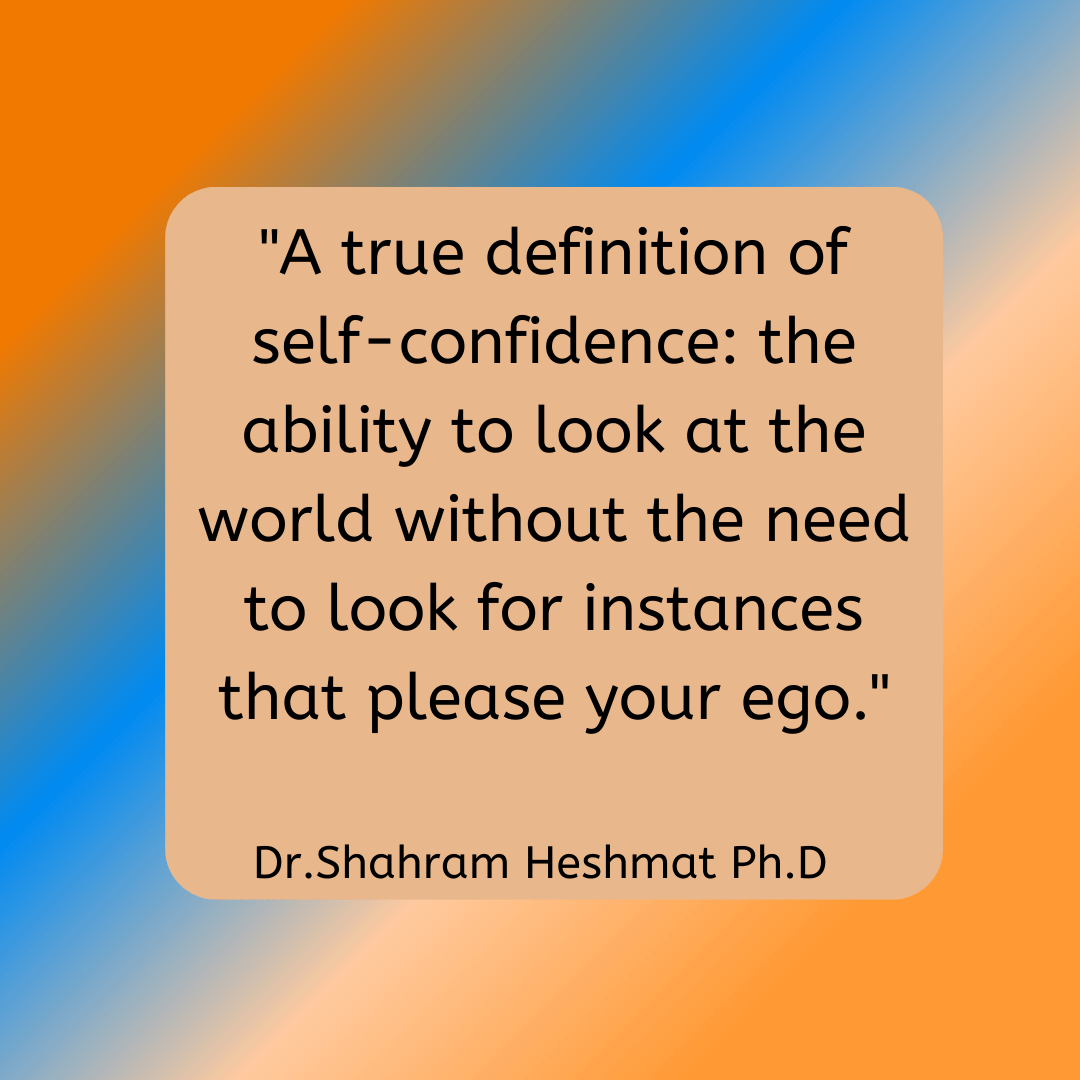
Dr.Shahram Heshmat Ph.D suggests that a great way to combat bias and filter is to look for information that proves your idea wrong. He says, “This is perhaps a true definition of self-confidence: the ability to look at the world without the need to look for instances that please your ego.”

Simmons University has more suggestions for combating filter bubbles, including:

  • Use the search engine Duck, Duck, Go which does not store your search data and therefore does not affect your search results like algorithm driven models
  • Check out the site All Sides to get more balanced news.
  • Read articles and follow podcasts that present differing opinions and information on the same subject. I’m a fan of The Argument, a podcast hosted by Jane Coasten that usually features debates between at least two people who have different viewpoints on the same subject. Not only does it give me valuable ideas to consider, it also serves as a model for respectful discussion.

Why it’s important to know and understand filter bubbles and bias

I realize the concept of bias isn’t a huge revelation for many of you. But consider this: Eli Parisier gave his TED Talk in 2011. Way back then he was warning us about the dangers of bias, and we (and the media companies) didn’t do much about it. Eleven years later, we find ourselves in a very hostile and tribal social climate that is dysfunctional at best. To function as an effective democracy, we must be able to discuss different ideas. We must explore and accept multiple possibilities about what might work best for the people of our country. We cannot control what happens in Congress, but we can control what happens in our own homes and our own minds.

We must fight our natural tendency toward bias, and we need to get out of our individual filter bubbles as soon as possible. You probably knew you had a propensity for bias, now you have a way to name it. And do something about it. We can and must take control of the content we consume to be responsible citizens and consumers of media.

What things do you do to avoid the filter bubble and confirmation bias?

Thanks for getting nerdy with me!