
Why Demon Copperhead is worth the Pulitzer Prize attention

I moved to Wythe County, Virginia 22 years ago. I live on a farm about an hour away from the coal fields of Lee County, where Barbara Kingsolver set her latest novel Demon Copperhead. I’m firmly entrenched in Appalachian and southwest Virginia culture, and while I like to think I’ve learned a lot about the people of the Virginia mountains, Demon Copperhead taught me even more. In writing Copperhead, Kingsolver (author of another influential book for me, The Poisonwood Bible) aspired to create the “great American Appalachian novel.” I think she succeeded, and I’m not the only one. Demon Copperhead was a Goodreads Choice Award nominee for 2022 and was recently awarded the Pulitzer Prize.

The Premise
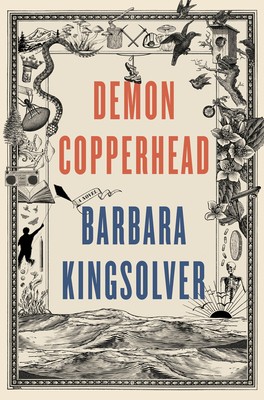
Demon Copperhead is a close re-write of David Copperfield, Charles Dickens’ autobiographical novel about a young man navigating institutional poverty. Both books explore the role of class and upbringing, but Kingsolver hits on particularly modern challenges, including the pitfalls of foster care and the influence of the opiate marketing machine on the people of southwest Virginia.

Set in the 1990s, Kingsolver’s novel follows Demon, a boy born on the floor of a single wide trailer to a mother plagued by drug addiction and bad choices. Demon eventually lands in the foster care system, finding himself living with people who often do not care about him, just the check he brings in and the cheap labor he can provide. While bouncing through foster homes, Demon encounters a rotating crew of social workers and learns at a young age how to numb his pain with drugs.

Demon painfully and vividly describes his embarrassment at school, branded as poorest of the poor and a foster. He often talks about an unmet hunger gnawing at his soul, and he resents the “city folk” who have used and abandoned the people of Lee County and rural places like it. He sketches comic book super heroes who come to save the people of his community. Once he gets to high school, Demon earns some respect in the cherished lights of the high school football field, but an injury sidelines his athletic promise and threatens to ruin his life.

What I liked

The prose. Specifically, Demon’s voice. Although Demon Copperhead has lots of dark moments, Demon’s voice carries the novel. He is witty, observant, and unapologetic. A review on Goodreads called Demon’s voice “unauthentic.” I must disagree. I hear echoes of Demon’s words in conversations at my local Walmart, greetings at the Farmer’s Market, and discussions of local gossip, politics, and sports.

Demon Copperhead brought to light much I hadn’t yet grasped about the the people and culture of Appalachia. Lee County, the book’s setting, sits at the far west edge of Virginia, with Kentucky on its western border and Tennessee to its south. This community has long been manipulated by outside powers. The coal industry took advantage of the natural resources of the mountains, leaving the people with black dust in their lungs and little financial gain to show for their hard work. Then, the opioid industry exploited the pain and suffering of the Appalachian people. Like so many issues today, opioid addiction is a complicated problem. Kingsolver’s writing brings the multiple facets of addiction into the light.

Even though Demon faces significant challenges, he finds friends and role models to help him navigate his troubles. The novel shows how the good intentions and efforts of just a few people in Demon’s life have a lasting influence on his choices, and subsequently, his survival.

Demon finds comfort and solace in nature, and the novel highlights one of the region’s best assets: its natural beauty. The rolling mountains of Appalachia, green in summer and vibrant in fall, truly inspire awe and wonder. Many mornings I walk my dogs down the quiet country road by my farm and smile with joy at the beauty and texture of the land that surrounds me.
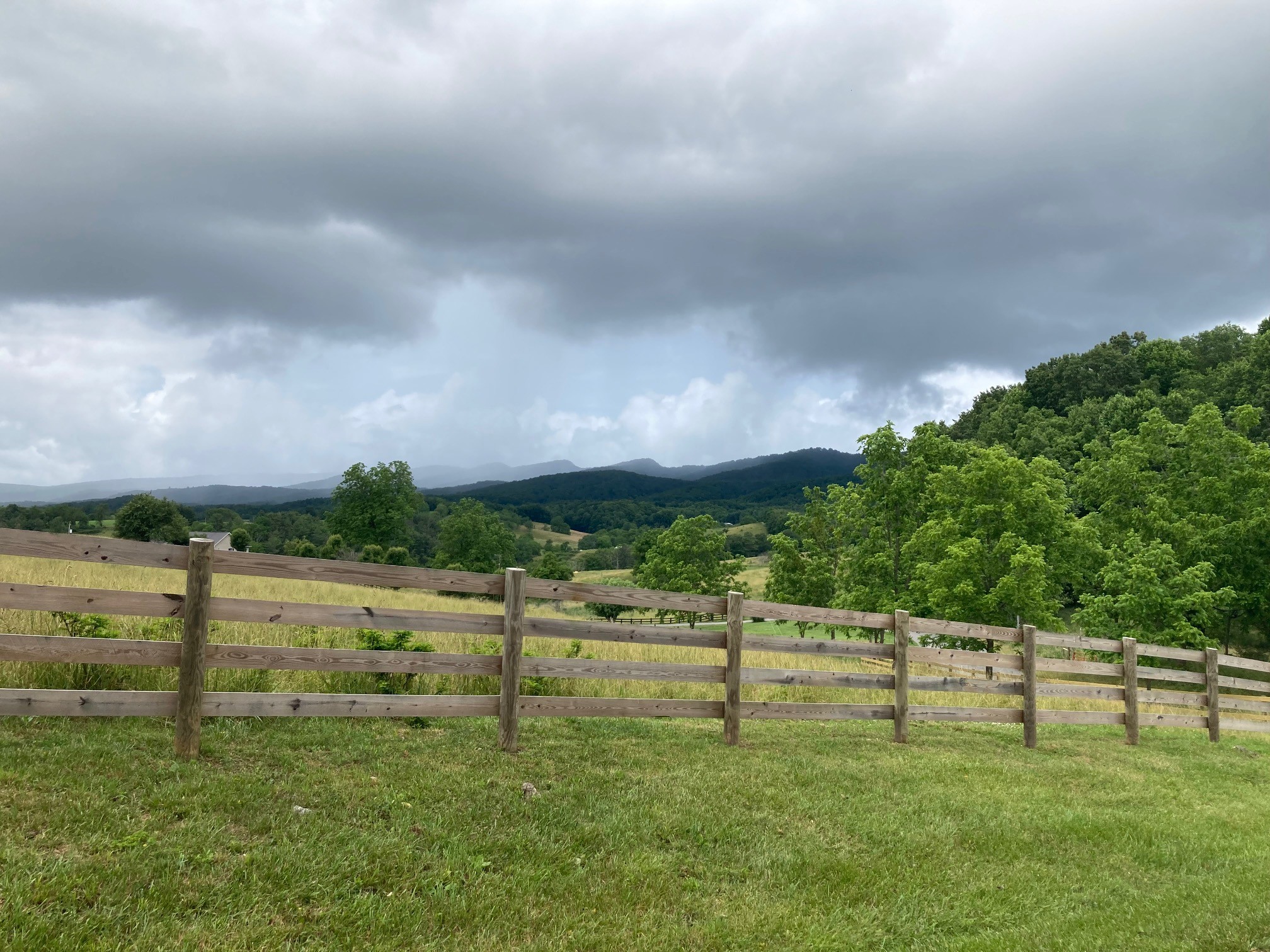
One of the many gorgeous views near my home in southwest Virginia.

When I was in college, I brought my roommate, a native of a small town on the southern Virginia border, to the booming explosion of Northern Virginia, where I grew up. When the first of hundreds of condo and office buildings broke the horizon as we traveled east on Route 66, my friend grabbed my arm and gasped. She had never seen so much development that went on for so long. Kingsolver does a great job of capturing this shock and horror of city living.

When visiting Atlanta, Demon says:

Hundreds of people passed by outside, hugging their coats around them, looking at their feet walking fast. I wondered what they were taking for the brain alarm bell that goes off in a place like this, where not one thing you see is alive, except more people, everything else being dead: bricks, cement, and steel. No morning songs but car horns and jackhammers, all the mountains of steel beam construction. And this, June informed us, was the good part of the town.

Demon Copperhead, Barbara Kingsolver

What I didn’t like

The story dragged for me at times. While Demon is an engaging hero, and I always pulled for him, I would have appreciated a tighter plot. Demon Copperhead is truly a character study, not just of Demon, but of the culture and morale of a people often disrespected and undervalued by “the powers that be.” With 546 pages and some heavy topics, Demon Copperhead demands a serious reading commitment. And while the dark themes can depress you, I encourage you to push through to the end. There is light at the end of Demon’s journey.  

Word Nerd Recommendation

If you like historical fiction, learning about different cultures, or examining the various pieces of a societal problem like addiction, I encourage you to read Demon Copperhead. FYI, Kingsolver is fun to follow on Instagram.

Have you read Demon Copperhead? What did you think? Can you recommend other novels that gave you insight into a culture or social dilemma?

Thanks for getting nerdy with me!

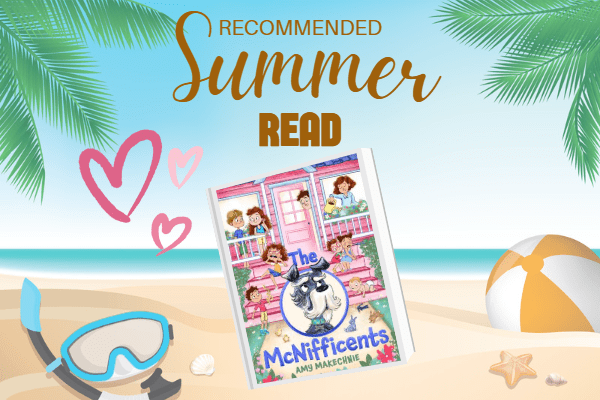
A great family summer read for you!

Summer is FINALLY here! I’m looking forward to kayaking, paddle boarding, walking my dogs, and growing yummy veggies in my garden. I also plan to rest from all of that activity with lots of relaxing reading on my screened in porch. And while I always like to learn from my reading, in the summer I enjoy funny, light books to compliment the relaxing “vibe” of the season, as my kids would say. This year, I have a great family friendly and funny read for you. It’s the latest release from author Amy Makechnie, and it’s called The McNifficents.

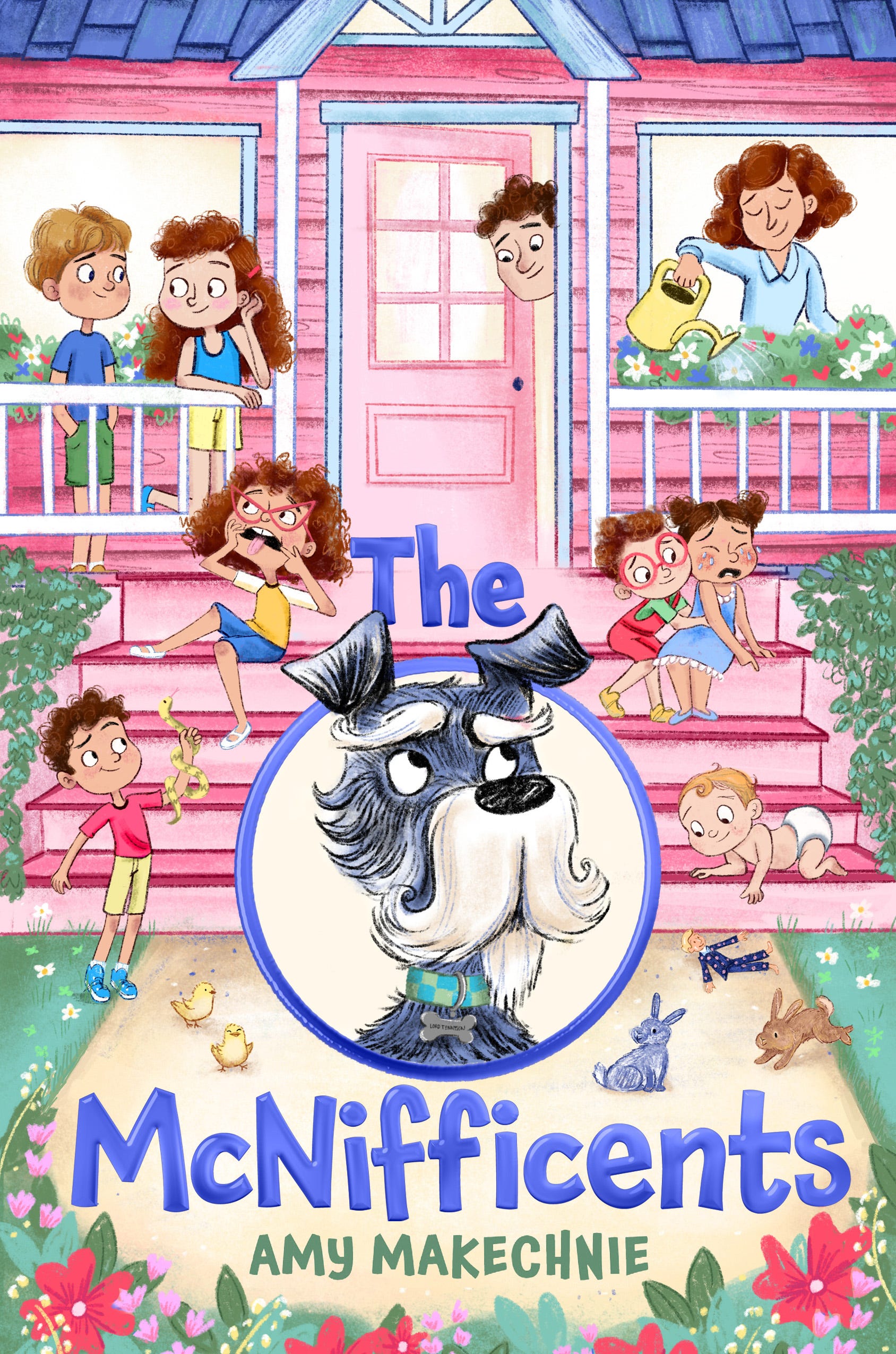
Amy Makechnie has a lot of kids. Four, to be exact. (Who would do something so crazy? 🙂 ) She also owns schnauzers (at least two that I’m aware of) and coached flocks of wily children on a soccer pitch. So she’s got a good handle on dogs and kids. She shares that experience in her upcoming release, The McNifficents. It will hit bookstores June 20, 2023.

Amy captures the chaos of a large family with humor and insight. She created eight main characters for this middle grade contemporary, and each one shines with his or her own personality. Here’s a summary of the cast from Amy’s Substack newsletter:

  • Lord Tennyson, distinguished miniature schnauzer and the children’s nanny
  • Annie, age 13, the oldest and most responsible McNiff; can be…boss boss
  • Mary, aka, “Naughty Mary”, age 11; modeled directly after my mother’s childhood
  • Ezra, age 9, finding his voice…and a snake; chaos ensues
  • Pearl, age 6, sweet and timid; finding her courage!
  • Tate, age 4, idolizes Pearl; speaks with the most darling lisp
  • Sweetums, age 18 months. Sand thrower, tail puller, goodness it’s lucky she’s cute
  • Mr. McNiff, fastidious drama teacher; sings and tap dances his way through life
  • Mrs. McNiff aka “Honey” her self-preservation is gardening and chemistry. She has a vague recollection that there are six children home for the summer.

As you can guess from this list, the kids need a nanny, and Lord Tennyson takes his job very seriously.

Tenny steals the show in The McNifficents, which is saying something! (Note the large cast of characters above.) He’s got class and a big heart and a strong desire to eat birds. The juxtaposition of him wishing for a tuxedo while fighting his urge to maul a chicken is just one of the many ways Amy captures humor and tension in this delightful story.

Family can be complicated. Sometimes personalities clash, and living in harmony feels impossible. But with the right mindset, and some nudging from a wise old dog, even the rowdiest kids can pull together to get a job done. And that’s just what the McNifficents do, led by the fearless Lord Tennyson. Along the way, they learn a lot about forgiveness, grace, and the overwhelming power of canine instincts. Kid powered hi jinks and even a threatening pack of wolves keep the story rolling to the closing pages.

I also parent a flock of children and own a small dog with peculiar tendencies, Amy’s story nails the complications and joys of living in a large family and often had me laughing out loud. I highly recommend this book for middle grade readers of any age. It would make great read aloud book for family quiet time after a day at the pool or the beach.

The McNifficents will release June 20, 2023. You can preorder it on Amazon, Barnes and Noble, and Bookshop.

Find out more about Amy at her website and Substack. Also, check out my reviews of Amy’s previously published books, Ten Thousand Tries and The Unforgettable Guinevere St. Clair.

Share a great summer read in the comments. What’s your favorite summer reading spot? A porch? A hammock?

Thanks for getting nerdy with me!
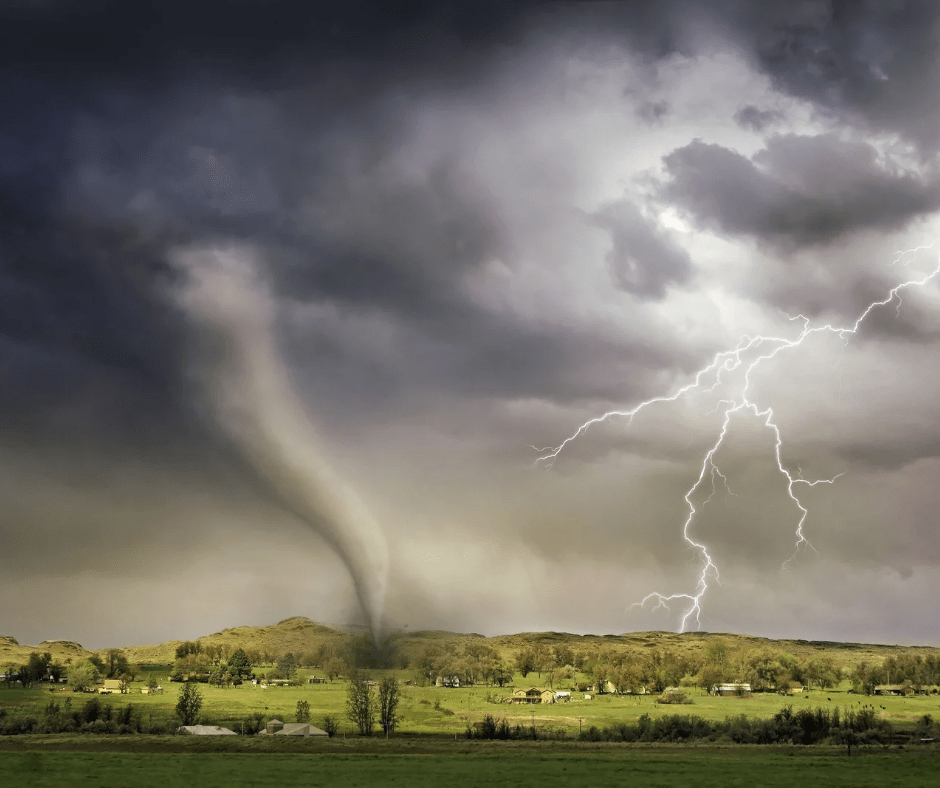
What’s more serious: a watch or a warning?

storm clouds with post title

A few weeks ago, we called my in-laws, a Sunday tradition. They were under a tornado warning and told us to call back. My mother in law was waiting out the warning in a closet under the stairs. My father in law was apparently standing by the windows watching the storm. Yikes! Luckily, no tornadoes touched down. But the episode prompted a question I’ve asked many times in my life: What’s worse? A storm watch or a warning?

Summer has started. Hurricane season officially runs from June 1 to November 30, and this year, I’m going in more educated. See this article from NOAA (National Oceanic and Atmospheric Administration) to see predictions for hurricanes in 2023. And, use the following story from me to remember how to respond to storm watches and warnings this summer.

A story to help you remember

Let’s picture Addie, a life guard up in her chair on a bright June day. Sunshine warms her shoulders, and the smell of her coconut scented sunscreen wafts up to her nose. (Don’t forget the sunscreen!) A gaggle of teen boys tumbles into the pool, stirring up splashes and punctuating the air with shouts. They toss a Nerf football around, then start a flip challenge, jumping off the side of the pool demonstrating various acrobatic moves.

The first, less serious action Addie takes is to WATCH the boys. She keeps her eyes on them, knowing that the conditions are right for something dangerous to happen. Water plus a group of young men without fully developed brains could equal trouble. They continue to rough house and then one of the boys decides to do a flip and dive head first into the water, even though there is paint on the pool deck saying “No Diving.”

Addie blows her whistle and gives the young man a WARNING. She has observed dangerous activity and is taking action to prevent harm.

Watch vs Warning Explained

According to the National Weather Service:

  • WATCH – A watch means there is risk of hazardous weather, but its occurrence, location or timing is still uncertain. Bad weather is possible, and people should prepare.
  • WARNING- A warning means that bad weather is imminent or occurring. People need to take action to prevent damage to life or property.

Now, hopefully you are ready for the summer storm season.

It’s summer! Finally time to get outside! What words or phrases about weather or the great outdoors trip you up?

I’m updating my subscription model to make it easier for you to stay connected with Word Nerdy tips. If you would like to receive my posts and occasional updates, sign up using the form in the side bar or click the button below.

Thanks for getting nerdy with me!

Know your holidays: Memorial Day and Labor Day celebrate sacrifice

Flag with Memorial Day: Remember and Honor

Every year, Memorial Day and Labor Day roll around, and while some of us get to enjoy a day off from work on these holidays, many of us don’t understand the meaning or purpose behind these uniquely American celebrations. (Husband was surprised and delighted when I reminded him the other night that he had a three day weekend coming up.) Quite frankly, I didn’t have a deep understanding of the significance. But now, The Word Nerd can help you appreciate these holidays.

The background on Memorial Day

According to History.com, Memorial Day was originally celebrated as Decoration Day. It started in the years after the American Civil War. So many people died during the Civil War that the country needed to establish national cemeteries. By the late 1860s, many people practiced a spring time tradition of visiting these cemeteries to decorate the graves of loved ones and say prayers for them. The tradition of remembering people who lost their lives in military service continued across the country.

No one knows if or where Memorial Day started specifically, but in 1966 the federal government declared Waterloo, NY as the birthplace of Memorial Day. It did not become an official US holiday with a consistent date until 1971. It always occurs on the last Monday in May, and many Americans observe the holiday by visiting cemeteries or memorials and participating in parades. It is also considered the unofficial start to summer. Cue the pool openings and cook outs!

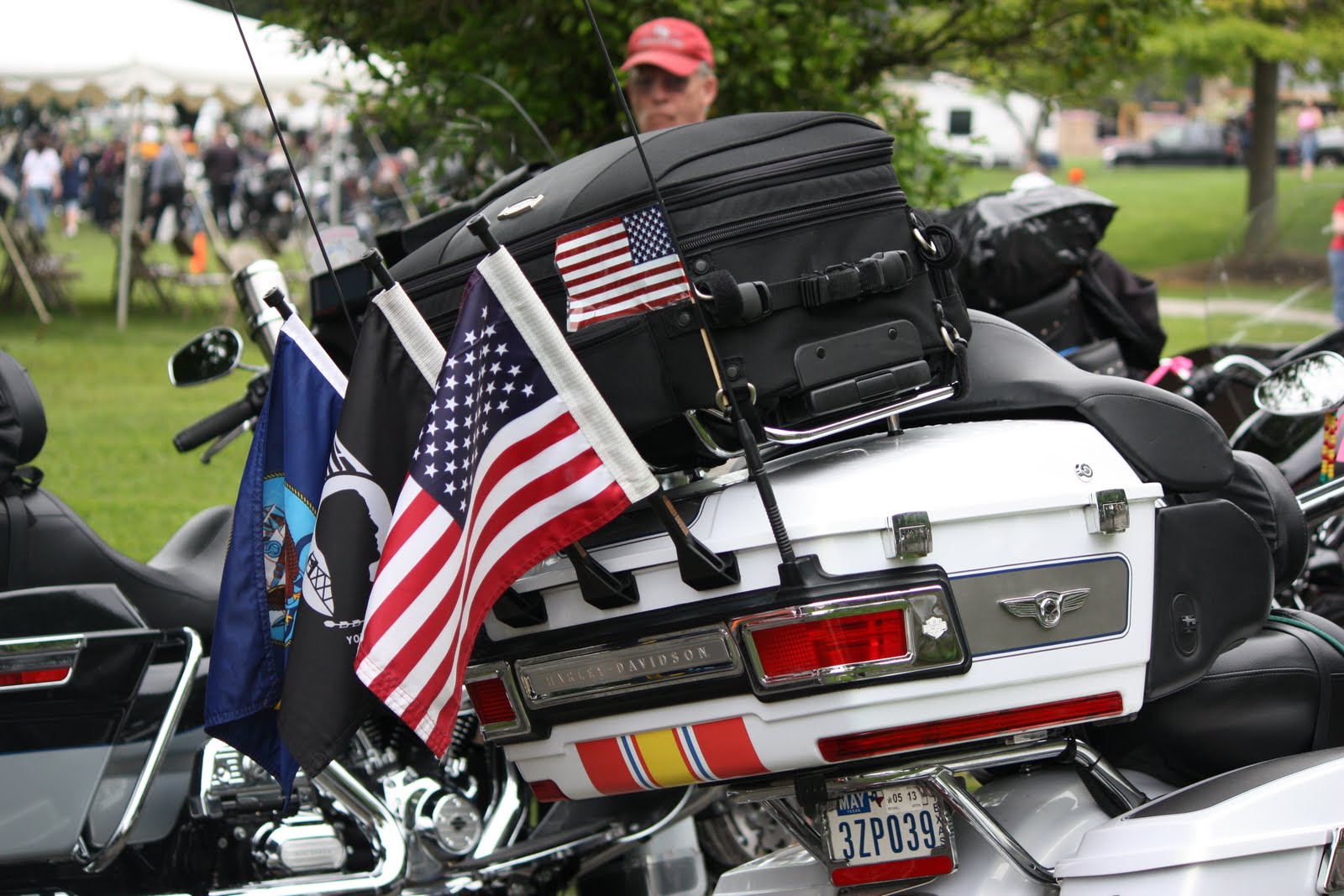
Riders fill our local park at the end of each May on their way to DC.

In our town, every year riders heading for the Vietnam Memorial in D.C. stop for a visit. It’s called Run for the Wall.

I remember Memorial Day because way back in 1998, husband and I went to the theater around Memorial Day to watch Saving Private Ryan, a film about D-Day. I had to step out during the opening 30 minutes. It’s a brutal depiction of the storming of Normandy Beach, but an eloquent reminder of what people have sacrificed to keep freedom alive in our country and across the world.

Every year at 3pm local time, people pause for a moment of silence on Memorial Day. I did not know this but will start recognizing it this year.

The background on Labor Day

Labor Day also traces its roots to the late 19th century. It came about as a reaction to the Industrial Revolution. During the late 1800s, factory work replaced agricultural work, and many people worked 12 hour shifts, seven days a week, often in terrible conditions. Think poor ventilation, few breaks, and little sanitation. Even children as young as 5 or 6 worked in mills under these conditions. The poor and immigrants often had it the worst.

These poor conditions prompted the development of Labor Unions to demand better wages and working hours. Union members organized strikes and rallies to demand better treatment from employers. Sometimes things got violent, like during the Haymarket Riot and Pullman Strike in Chicago. On September 5, 1882, 10,000 employees took unpaid time off to march from City Hall to Union Square in New York City. This is considered the first Labor Day parade.

The idea of a “workingman’s holiday” caught on in industrial centers around the country and was celebrated on the first Monday of September. The federal government didn’t initially embrace this idea, but in 1894, President Grover Cleveland finally made Labor Day a legal holiday to commemorate the contributions of America’s workers.

How we can celebrate the holidays now

In a sense, both of these holidays commemorate the sacrifice and danger others endured in order to help people live better lives. This year, instead of seeing these holidays as merely a break from work or a reason to eat more burgers and banana pudding, I suggest we use the days to contemplate how we can practice a spirit of sacrifice modeled by previous generations.

Word Nerd Note: In a curious coincidence, I gave birth to my first child on a Memorial Day Monday. I gave birth to my last child on a Labor Day Monday. (Oh, yes, the Labor Day jokes still abound.)

How do you celebrate Memorial Day and Labor Day, if at all?

Thanks for getting nerdy with me!
You are doing a great job, Moms!

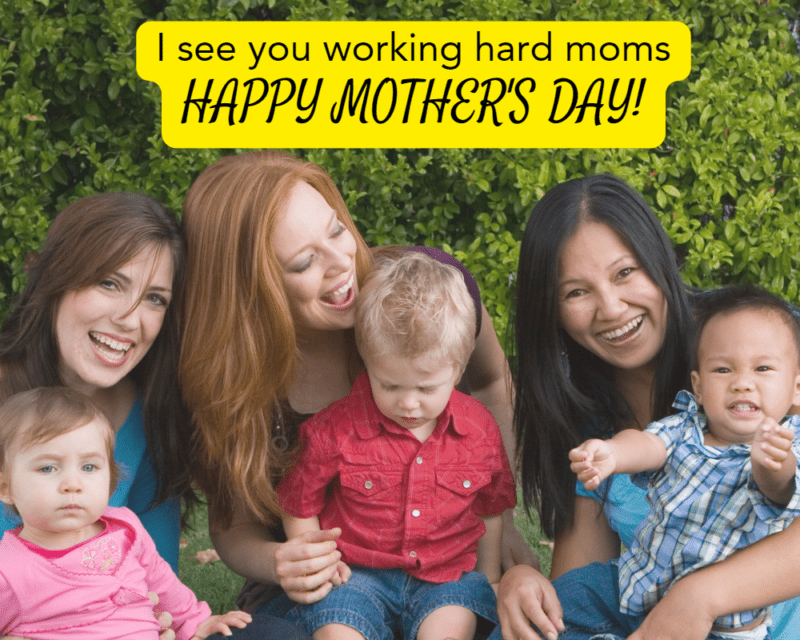
Moms holding small children

Last week, my friend and I met at the park to walk and vent. In the past several years, we’ve found that this kind of mental and emotional exercise helps us navigate the treacherous waters of raising young adults. Because, while shepherding 18+ year olds is physically easier than mothering young children, it’s mentally much harder.

As we sat on a park bench consoling each other, a woman walking by caught our attention. She pushed a stroller holding a toddler, had a small baby strapped to her chest, and held the leash of a mid-sized dog. I applauded her and called, “Good job, mama!” Because I’ve been in that physically demanding phase of motherhood. That phase when you think your brain is turning to mush because meal prep and laundry consume your existence. When you hardly have the time or energy to finish a thought much less entertain ideas about things like community, politics, or social justice. You’d just like a nap. And nothing attached to you.

My friend and I, the parents of seven children combined, remember the stroller days well. We reassured this mama walking by us that even though getting out of the house was exhausting, the change of scenery would ultimately do everyone good. At least for an hour.

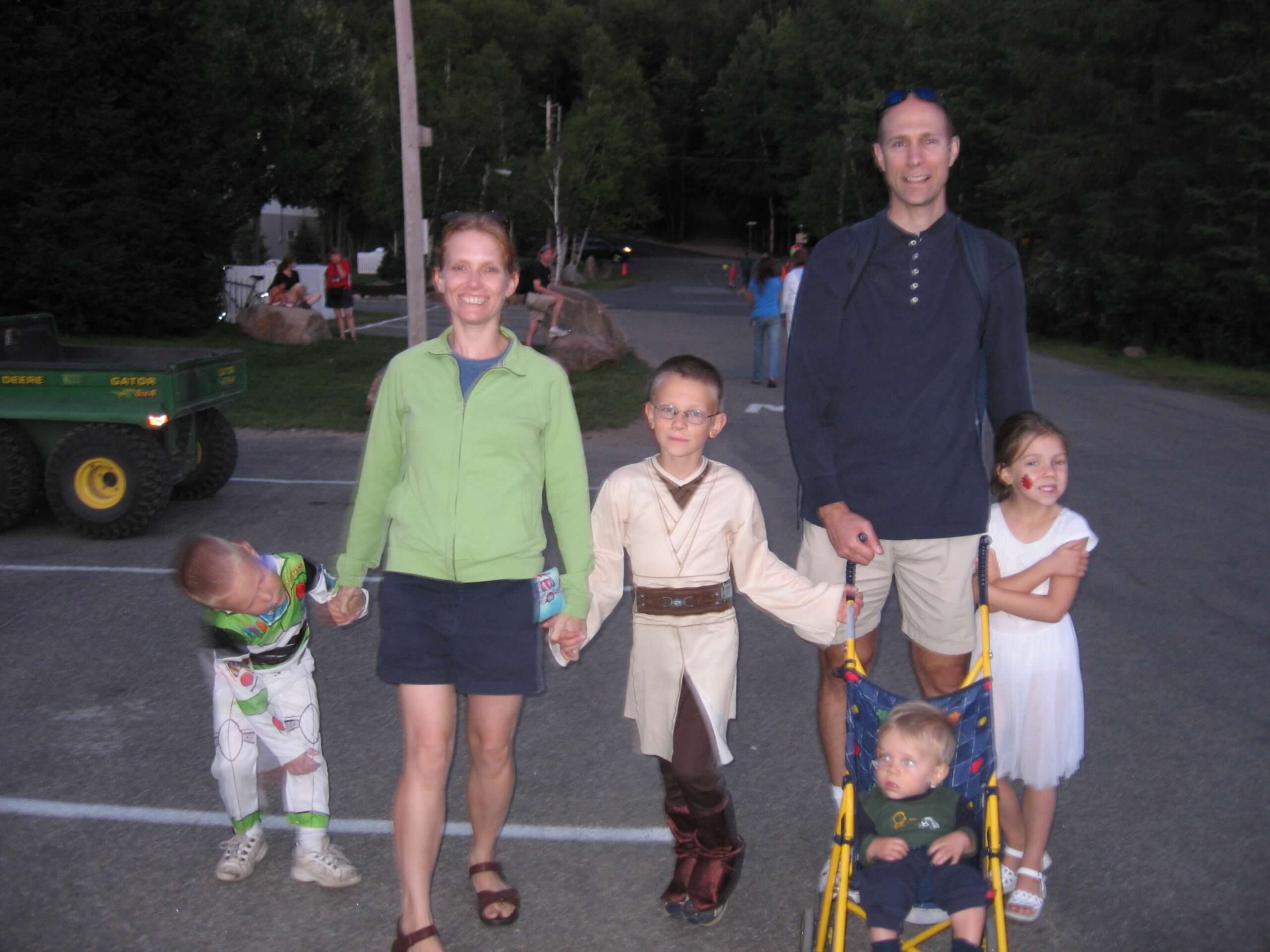
Family of six with a stroller
Stroller days. Please also note the child going “boneless.”

I’m past the phase of mothering small people. We long ago donated the booster seats and tossed the sippee cups. But in the process of escorting four babies through childhood into adolescence, I fell many times. I burned a child. I lost a child. I scared my children. I yelled at my children. Accidentally and without premeditation in all cases, but still. Not stellar moves. Motherhood has humbled me time and again with some ugly character revealing moments. Have I always been a patient person? No. Am I more patient now? Definitely. But there is still work to do. And I know I’m not alone.

Now I’m parenting “so close but not quite” adults, and the struggle continues in new and unexpected ways. I have enough time these days to complete thoughts. Actually, not only do I complete thoughts, I spin them over and over, round and round in my head, because the mental work of raising older children can bring you to your knees.  For years, I’ve had big control over major aspects of their lives: nutrition, sleep schedule, friends. Now, I’ve got none. I’m on the sideline, only coaching when invited to do so. For someone who tends toward control, this is hard. So often, I feel helpless. And at a loss.

In the past six years of parenting teens and young adults, I have said and done and allowed things I never thought I would. And every mother of teenagers and young adults I’ve confided in has experienced the same thing. In the cohort of moms I talk with, we’ve dealt with anxiety, eating disorders, physical injuries, chronic illness, cancer, depression, sexuality, gender identity, sexual assault, and social media. Besides all of this, we’ve had to tackle the age old, yet still elusive, task of teaching kids how to accept failure and hold tight to faith in a rapidly changing world.

It exhausts me.  And I have, and have always had, a supportive husband, financial stability, and a work life balance I choose. How many mothers do?

As we approach Mother’s Day, I would like to applaud mothers in all phases. And to reassure you that we all struggle and fall short. Even the ones who look like they have it together sometimes believe they are drowning. Mothering is one of the most rewarding jobs I’ve ever held. It’s also the most humbling. Give yourself grace, celebrate small victories, and embrace in your core that there is no one right way to mother. We are all stumbling along, doing our best. We need to surround ourselves with other mothers of all ages who readily say, “I see what you’re doing, and I support you.”

Mom and three kids
I often referred to my family as a circus. Here, please see exhibit A.

Happy Mother’s Day moms. Now, go get that nap.

Thanks for getting nerdy with me!
For love of introverts: one book and three words

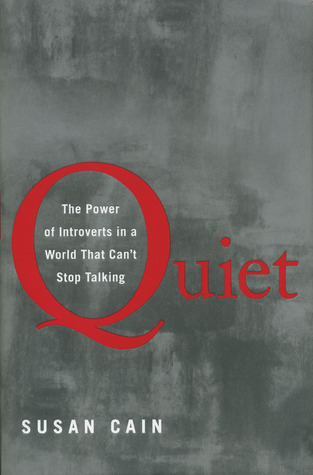
In my immediate family of six, I classify at least three of my people as introverts. They dislike small talk (in some cases talk in general), enjoy time alone, and find social situations with large numbers of people exhausting. They often come off to people who don’t know them as aloof, cold, or even arrogant. And sadly, I didn’t fully appreciate my introverts until I read the book Quiet: The Power of Introverts in a World That Can’t Stop Talking by Susan Cain. In fact, after reading just a few chapters of the book, I recall looking at my then 14 year old, the oldest child, and saying, “I’m so sorry.” I also had to apologize to husband.

A great book for QUIET people

Cover of the book Quiet by Susan Cain

Quiet explains introverted tendencies and, even better, touts the value introverts bring to our culture. In a world that gives most attention to the loud and charismatic extroverts, introverts go unnoticed and unappreciated. Introverts might not know how to, or like to, work a room, but they do know how to work on problems. Without introverts, we would not have the inventions and technology and literature we celebrate today.

In one of the first chapters, Cain offers a quick, non-scientific 20 question quiz to assess where readers fit on the introvert/ extrovert continuum. My husband and one son answered almost all 20 questions as introverts. My daughter and I fell in the middle, answering about half as introverts and half as extroverts. That makes us ambiverts. Aren’t we special?

I often give this book to people who might not yet appreciate introverts, especially ones in their family. I recently gave it to a friend at church who has one quiet child; the rest of the family, including my friend, embody full on extroversion. I’m hoping Quiet will help them all appreciate the reserved loner among them.

Words about introverts

Introverts are often misunderstood. To bring some better understanding to this important personality tendency, let’s take a closer look at some words for introversion.

Introvert: from Latin intrō- + vertere “to turn” (noun); a reserved or shy person who enjoys spending time alone. Interestingly, the verb introvert was used before the noun, starting in the 17th century, and meant “to turn inward or in upon itself.” The adjective “introverted” also predates the noun and has always been used to describe a person “possessing a reserved or shy nature typically with an inclination to solitude.”

Taciturn is a fun word from Middle French tacite, and Latin tacitus meaning silent. Taciturn, an adjective, means temperamentally disinclined to talk. Lots of classical authors, such as the Bronte sisters, Jane Austen, and Herman Melville, liked to use taciturn in their work. I would say husband is definitely taciturn.

Unclubbable is new to me, and I plan to start using it immediately. It’s more interesting and less negative than “unsocial” or “antisocial.” Unclubbable is an adjective meaning having or showing a disinclination for social activity. It was coined in the 18th century by Samuel Johnson, who published The Dictionary of the English Language in 1755. Johnson used the term to describe a friend who refused to frequent a literary club Johnson established with artist Joshua Reynolds in 1764. So, in this case, clubbable has nothing to do with violent action but rather a tendency to appear in a social setting. From now on, I’m going to refer to hubby as “unclubbable” and see what reaction I get. 🙂

Learn more interesting words about introverts at Merriam-Webster.

Do you know and love introverts? How to you describe them?

Thanks for getting nerdy with me!