

My fun new word: “Ersatz”

My end of summer read has been Little Bee by Chris Cleave, which, thankfully, moves much faster than Great Expectations.  Indeed, it contains tragic violence, profound commentary on Western civilization, and plenty of words to stretch my vocabulary.

During a scene in the book, Sarah, one of the narrators, fixes herself a gin and tonic.  (She’s just heard a horrific story, and she needs that G &T.)  Unfortunately, she doesn’t have any real lemons to use, so makes do with a “little squirt of plasticky juice from the Jif lemon in the fridge.”  Later she says,

I finished my G & T and winced at the taste of the ersatz lemon.

Any word with a “z” in it provokes my interest, and although I could guess its meaning, I wanted to know its origin.


ersatz \’e(Ə)r- säts\ adj, from German ersatz noun meaning substitute; being an unusually artificial and inferior substitute or imitation
I think that’s the first word we’ve had with Germanic etymology!
Word Nerd Workout:  Think of a particularly unsatisfying substitute in your life, and write a sentence using ersatz.  Here’s mine:

The ersatz flavor of a “Skinny Cow” ice cream sandwich does not satisfy my husband’s craving for a sweet indulgence after dinner.


Julia

What Have You Done for Your Library Lately?

I’ve said before that I cannot live without books.  You know what follows that?  I cannot live without my library.
I thought I was a good library patron.  My family visits the library weekly, and we usually walk out of there with a (reusable, made from recycled materials) grocery bag FULL of books.  I joined the “Friends of the Library” and donate gently used books for sales and circulation.
But last month, I found out how much more I could do. 
Every summer the library has a Reading Program, but my family never signs up.  Too much work, too little time.  Besides, my kids love to read and don’t need prizes to motivate them.  But this year, when I explained this to the branch manager, Anita, she shook her head sadly and said, “That’s too bad, because we get funding based on participation in our reading programs.”
Well.  I dropped the overloaded shopping bag to the floor.  If it meant better funding, maybe we could manage.  
Anita went on to share some other interesting facts about our little library system in southwest Virginia, but I’m sure libraries everywhere face similar challenges. (See ilovelibraries.org for more information on how libraries suffer in this tough economic climate):
  • Funding for our library system has dropped significantly in the past five years; last year the budget had $13,000 less for materials- in a small budget, that’s a large proportion of funding
  • Library workers here get paid less than people who work at McDonalds
  • Libraries can use reading programs, or any other programs that generate statistics, to get better funding from state officials
  • The My Coke Rewards Program helps our local branch buy $1500 worth of periodicals each year; patrons just need to bring in their bottle caps/ rewards codes from 12 & 24 packs

Anita and her coworkers, (who get paid minimum wage, remember) spend lots of energy finding alternative sources for funding because they believe communities need libraries.  Many people who live in my county, one of the poorest in Virginia, don’t have money to buy a book, much less a computer.  They use the library to access news, entertainment, and even job applications, things many of us take for granted.   If only bookstores or online resources provided reading material, a fraction of our population would lose access to important information.  And that portion of our society is getting bigger and poorer.

Libraries offer more than books; they offer education, enrichment, and connection to the world.  click to tweet

So, I decided to try and do at least one more thing to help my library; my kids and I will be filling out reading logs this summer.   
Do you think that libraries deserve a little extra effort?  What can you do to support your local branch?  Share your thoughts in the comments below, and thanks for stopping by.
You can find more information about libraries at www.ilovelibraries.org and www.ala.org
You might also like:

Julia

Rosetta Stone: More Than a Language Learning Tool

Last Week’s Winners 
First, thanks to all of you who participated in the “Olympic Size Vocab Review” last week!  I got lots of great answers, which impressed me, because I have been staying up WAY TOO LATE to watch the Olympics, and sleep deprivation has clouded my thinking.  I’m glad it’s not affecting you all!  Two people got all of the quiz questions correct.  Congrats to:

  • Lara Britt of Writing Space.  Lara (aka Lori Tian Sailiata) blogs from Hawaii about fulfilling her dream of becoming a self-supported writer, blogger, and creative.  Visit her site for writing tips, personal stories, and insights from paradise.  
  • Amy Makechnie of MaisyMak.  Amy shares tales about mothering four children, as well as entertaining stories about running, writing, and great reads!  
Many of you were very close to getting all four answers correct, but two questions were tricky.  Remember that the antiquated definition of portmanteau is luggage, specifically a carrying bag.  And, the etymology of Olympics reads like a narrative of the Olympic torch relay:  Olympiad comes from Middle English -> Middle French   -> Latin -> Greek in reference to Olympia, the site of the ancient Olympic games.  Kudos to Lara for recognizing the -iad implied a time component (specifically four years).
This Week’s Word Nerd Note

I’m going to take a break this week from highlighting a new vocab word to share instead an interesting fact.  At the beginning of the summer, I considered ordering Rosetta Stone software to teach my children Spanish, hoping that we could keep our brains active with this program. Silly me, I thought that “Rosetta Stone” was named after the person who started the program.  My eldest son quickly corrected me.


“No Mom, it’s a stone from ancient Egypt.  It had to do with translations or something.”

Really?  Well, I Googled it.  According to The British Museum website, soldiers in Napoleon’s army found the Rosetta Stone while digging a fort near the town of el-Rashid (Rosetta).  The stone has a decree inscribed upon it in three different languages: hieroglyphic (used by the priests), demotic (native script), and Greek (the language of the administration).  Since it contains both Greek and hieroglyphs, the stone provides the key to understanding hieroglyphs in the modern age.  

And how did my son know this?  From reading Rick Riordian’s books.  Thank you, Mr. Riordan.  

What interesting information have you learned from a book lately?  Share your comments below!

Julia

Great Expectations: A Worthwhile Classic to Read

Most people I know indulge in guilty pleasure reading over the summer.  Romance and other fluff, or the latest in a young adult fantasy/adventure series.  But  what did I bring to the beach in July?


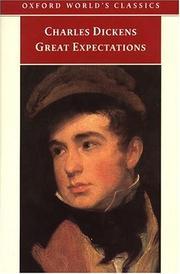
Great Expectations by Charles Dickens.  

When I pulled it out, I received quizzical looks.  One friend tilted her head, raised an eyebrow and asked,“Why are you reading that?”  She didn’t verbalize the other question clearly written on her face:  “Are you crazy?”

My initial answer was, “Because my book club picked it.”  But I couldn’t stop there, because by that time, I’d gotten half way through the book, and I actually liked Great Expectations.  Sure, I had to push through a dark period in the beginning, when the prose felt too dense, Pip seemed too whiney, and I struggled to find a single redeeming character in the novel.  For a few days, I had seriously considered abandoning the book for the John Green novel Paper Towns, which promised to be much more fun.  (You can always expect humor from John Green).  But I persisted, and I’m so glad.
Great Expectations turned out to have more than I expected: plot twists, life and death situations, intriguing characters!  And it was funny, in a subtle, smart way.  During an early description of a holiday dinner at Pip’s house, Dickens had me laughing out loud as Pip explained that he sat “squeezed in at an acute angle of the table-cloth, with the table in my chest, and the Pumblechookian elbow in my eye.”  (Pumblechook is the surname of an irritating character in Pip’s life).  I could clearly imagine a miserable little boy stuck at a formal dinner table with pretentious adults. 
Besides the humor, I found many attributes of exceptional writing that I’ve learned about, including interesting detail, snappy dialogue, and great characterization.  Read this description of an escaped convict:

A man who had been soaked in water, and smothered in mud, and lamed by stones, and cut by flints, and stung by nettles and torn by briars; who limped and shivered and glared and growled; and whose teeth chattered in his head as he seized me by the chin. 

Yes, it’s a run on sentence, but it paints a picture, doesn’t it?

Finally, and most importantly, a great book forces us to think about the essential truths of our existence, and Great Expectations does that.  Dickens questions the value of societal labels and the importance of money:  in his novel, a poor, simple man holds the most wisdom, while a wealthy woman burns in her own bitterness.  Dickens champions loyalty and compassion, and his characters suffer for their pride, jealousy, and insecurities.  The lessons from the novel have as much validity today as they did in the 19thcentury. 

So if you are the kind of person who likes to think and doesn’t shrink from a challenge, I recommend that you pick up this worthwhile classic, and pay attention.  Amid the verbose prose, Dickens has some very compelling things to say. 
What are some worthwhile classics that you have read?  If you have read Great Expectations, what did you think of it?  Share your thoughts in the comments below, and thanks for stopping by!  
Other book reviews you might like: 

Julia

July Vocabulary Review: Olympic Size!

It’s the end of the month, time again to review the vocabulary that we’ve learned during the previous weeks!

In honor of the Olympic games, this month’s quiz is slightly longer, to push your word nerd thinking to the limit.  (Hey, if Ryan Lochte can sprint 100m in each stroke to win gold in the 400 IM, surely you can answer 5 little questions, right?)


Word Nerd Workout:

  1. Which choice below best fits the modern use of portmanteau?
    1. customs inspector
    2. fantabulous
    3. wine from a specific region in France
  2. Which choice below best fits the antiquated use of portmanteau?
    1. luggage
    2. drunkard
    3. ship
  3. If you were taking a tour through the English countryside, you would want your guide to be:
    1. petulant
    2. obsequious
    3. sagacious
  4. Fill in the blank:  auspicious : propitious :: winsome : _____________
  5. Bonus short answer:  Explain the etymology (origin) of the word “olympiad”.  
Next week I’ll share link love, tweets, and Facebook posts about  anyone who gets all five answers correct!
Good luck, and thanks for stopping by!

Julia

Improving Vocab on the Beach

Sunset at Camp of the Woods

On a good afternoon at Camp of the Woods, the adults relax under the beach tent and read while the kids splash in the lake.  During this year’s trip, some of my companions were reading mysteries while I pushed through Great Expectations, the *ultimate* beach book. 

During this blissful time of reading and edification, my friend’s father looked up from his paperback, an inspirational non-fiction book, and said, “This guy describes his secretary as winsome.  Doesn’t that mean whiny?  That’s not very flattering.”
The lucky man didn’t know he had a word nerd sitting next to him!  “Oh no, that’s a complement!” I exclaimed before I grabbed my phone and started Googling my next vocabulary word.  Everyone else shared their definitions of winsome:  winning, fairy like, attractive. 
Siri and the iPhone offered this:  “appealing in appearance or character”. 
My friend Elizabeth shook her head.  “That doesn’t quite catch it.”
So here is the expanded definition, from Webster’s:

Winsome \’win-sƏm\ adj from Old English wynsum, wynn = joy; generally pleasing and engaging, often because of a childlike charm and innocence; cheerful

I think Elizabeth will like this better.

Word Nerd Workout:  Think of someone we all should know- a celebrity, or book or movie character, who is winsome and write a sentence about that person, using the adjective winsome.   If that’s too hard, just think of someone you know and write the sentence.

Example:  In To Kill a Mockingbird, the winsome Scout Finch captures the hearts of readers with an engaging combination of pluck and naivete.


Your turn!  Leave your ideas in the comments below.

Other Word Nerdy words you might like:
portmanteau
obsequious

Julia