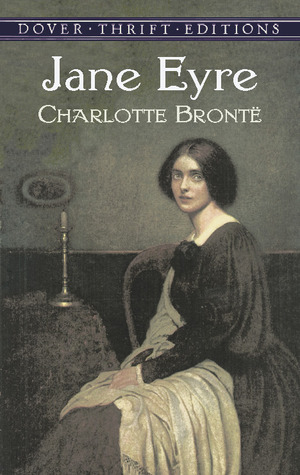
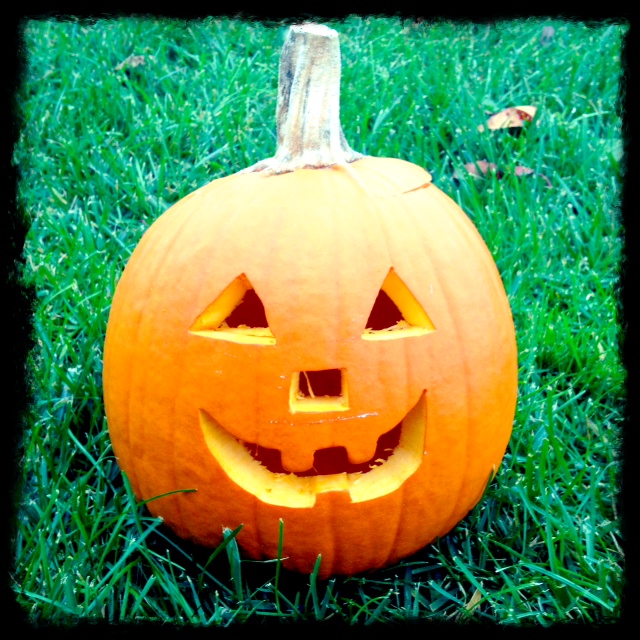
Vocabulary from Jane Eyre: Vapid

Last Week’s Winner

So many of you were close on last week’s vocabulary challenge– one answer away from perfection.  But I only had one winner (aha!  I said I’d make October’s quiz harder!)  Congratulations to:

Lara Britt of Writing Space.  Lara (aka Lori Tian Sailiata) blogs from Hawaii.  Visit her site for writing tips, fascinating personal stories, and insights from paradise.  

Good luck with NaNo, Lori!  And congrats on your second win here!

The answers to last week’s quiz

  1. Expurgated = offensive content removed
  2. Scout Finch is definitely more perspicacious (having acute mental discernment) than either Ron Weasley or Pip.
  3. The analogy required a synonym for obdurate: stubborn, inflexible, unyielding, etc.
  • Bonus: October is the tenth month, instead of the eighth, because during changes to the Roman calendar, the start of the year moved to January from March, and months were added.  For more juicy details, see the full post on why October is the Tenth Month.

This week’s new word

I’m currently reading Jane Eyre, and I can find at least one word on EACH PAGE of the novel that I need to look up.  My note cards have gotten full!  (My friend Crystal read the ebook and could look everything up quickly on her Kindle dictionary!  Smart girl.)
So today, I present the first of many vocab words that Charlotte Bronte has brought to my attention:

[Sophie] was not of a descriptive or narrative turn, and generally gave such vapid and confused answers as were calculated rather to check than encourage inquiry.

vapid \’va-pəd,’ vā-pəd\ adj, from Latin vapidus flat tasting; lacking liveliness, tang, briskness, or force; uninteresting
I also recently saw this adjective used in a movie review and thought, I need to get a handle on this word.

Word Nerd Workout

Use vapid in a sentence; try to write about a character, book, or movie that fits “vapid.”  For example,

Since film critics called New Year’s Eve a vapid and unimaginative parade of popular stars, I rented This Means War from Redbox instead.

Other Word Nerdy Words

Note: I include links to all my word nerdy words, so you don’t ever have to go look something up- just click the link.  Or visit my Word Nerd Vocabulary page.  I’ve already spent precious minutes tracking down definitions- save yourself some time!
Julia

Where to Find Great Writing Tips

Chances are, if you’re a word nerd like me, you not only enjoy reading, but you also like writing!  Since National Novel Writing Month has started, I wanted to share some writerly information today.

During NaNoWriMo, thousands of writers vow to pen an entire novel in one month!  I’m not participating this year, but if you’re interested, you can find more information at the official NaNoWriMo site.

If you’re writing for NaNo or on your own time frame, let me introduce you to some wonderful people…

Helpful Writing Blogs

Since I spend so much of my time as transportation supervisor, laundry manager, and nutritional director for five robust personalities, I cannot spend my days reading 1000 word posts on the craft of writing.  I prefer posts from bloggers who are: personable, informative, encouraging, and above all, succinct!  Over the past year, I have found the following bloggers, who offer wonderful content with these expectations in mind.  Check ‘em out:
Best of luck with your writing!

And since I like to write…

My blogging buddy Amy has “tagged” me for “The Next Big Thing.”  So in this writerly post I’ll briefly share some information about my current WIP (work in progress).
What is the working title of your book? 
Redefined.  That’s its third name.
Where did the idea for the book come from?    
My experiences as a teenager caring for my chronically ill mother.  My current observations of life in a small town.  The idea that sometimes to be true to yourself, you  have to stand up to the people closest to you, and trust that they will still love you.
    
What genre does your book fall under?
Young adult 
Which actors would you choose to play your characters in a movie rendition of the book?
If and when the book ever gets published, all the actors I have in mind will be in their 30s.  Not good.
 
What is the one sentence synopsis of your book?
Cat Tierney has always done the right thing, including caring for her ailing mother and respecting her father’s strict mandates, until Adam Jordan moves to town.
Will your book be self-published or represented by an agency?  
I’m going to try the agency route first. 
How long did it take to write the first draft and may we see an intro? 
One year.  At least.
Dianne and Marcy graciously posted the first page of Redefined for critique for their “First Impressions” series at In HighSpirits (Dianne) and  Mainewoods (Marcy).  Please read and critique for yourself.  I love input!  You may also want to submit your own work; Dianne and Marcy are both published authors and give great feedback.  
What other books would you compare the story to? 
The Truth About Forever, by Sarah Dessen
Who or what inspired you to write this book?  
After I read the Twilight series and learned that Stephenie Meyer wrote her books as a stay at home mom of three young boys, I thought, “What a great idea!  I want to use my brain and creativity like that.”  So I told my husband I wanted to write a book, and he, as always, encouraged me.
What else might pique the reader’s interest?  
A boy with penetrating blue eyes, photography, star gazing, Shakespeare, and a near fatal collision with a tractor trailer.
  

Now I’ll tag five other Word Nerds to share about their Next Big Thing:

Laura Howard 
Emily McGee
Jennifer Chow
Muddy Kinzer
Alvarado Frazier

Rules of The Next Big Thing:

*Use this format for your post
*Answer the ten questions about your current WIP
*Tag five other writers/bloggers and add their links so we can hop over and meet them

Which writing blogs do you like to follow?  Would you like to share information about your WIP?  Thanks for stopping by.

Julia
How Good is Your Vocabulary?

I cannot recall a Halloween when snow was falling in Virginia.  But thanks to the “Super Storm”, I’m huddled up inside, watching white flakes fly past the window, and considering how to best bundle up Darth Vader and Luke Skywalker for Trick or Treating!  Hope you are safe and warm where you are.

The end of October means it’s time for another vocabulary review.  Everyone who answers all three questions correctly will receive “link love” from me, as well as shout outs on Facebook and Twitter about your word nerd excellence.  Good luck!

Word Nerd Quiz

  1. How would an expurgated edition of Mark Twain’s Huckleberry Finn differ from the original version?
    1. It wouldn’t have illustrations.
    2. All offensive content would have been removed.
    3. New passages, based on Twain’s notes, would have been added.
  2. Which one of the following characters would you describe as perspicacious
    1. Scout Finch, from To Kill a Mockingbird
    2. Ron Weasley, from Harry Potter
    3. Pip, from Great Expectations
  3. Fill in the blank to complete this analogy:  inexorable:relentless::obdurate: ____________.
  4. Bonus!  In as few words as possible, why is October the 10th month of the year, instead of the eighth?  (you know, Oct= 8)

Julia

What Does Dystopian Mean, Anyway?

When I describe the premise of books like The Hunger Games or The Giver to my friends, I use the adjective “dystopian”.  And even with all of the hype surrounding Suzanne Collins’ popular books, that term still makes people wrinkle their brows and say, “What?”  So let me roll up my word nerdy sleeves and explain.

Dystopia = the opposite of utopia

Sir Thomas More, way back in the 16th century, introduced the idea of utopia : a place of social perfection.  The term dystopia takes More’s unrealistic ideal and flips it on its head.  Remember that the prefix “dys” means difficult or bad, as in dysfunction, dyslexia, and dysentery.  So, in dystopian fiction, we find a society, often of the future, crippled by at least one horrible, inherent flaw.
Dystopian books tackle themes about government, politics, religion, or technology in a hypothetical setting.  They often explore the delicate balance between what’s best for the individual versus what’s best for society as a whole. 

Dystopian literature isn’t new

Dystopian books appeared well before The Hunger Games.  According to Wikipedia, the term was first used in the British House of Commons in 1868 when John Stuart Mill spoke to the assembly about the faults of the English government’s land policy in Ireland. 
During the 20thcentury, several authors explored dystopian themes.  Some examples:
  • 1984 by George Orwell
  • Brave New Worldby Aldous Huxley
  • Fahrenheit 451 by Ray Bradbury
  • Atlas Shrugged by Ayn Rand
  • The Giver by Lois Lowry

Dystopian literature addresses moral issues without being didactic 

Dystopian books challenge us to thoughtfully consider what’s important, both for ourselves and society as a whole.  A good dystopian piece might take a current idea or practice and push it to extremes, forcing people to think, would this way of life really work better?

For example, in Ally Condie’s Matched, the government chooses everything for its citizens in order to optimize productivity- that includes food, occupation, and spouse.  Type two diabetes and obesity would definitely NOT be a problem in Condie’s world, but, at what price?
Many dystopian titles target young adult readers, giving teenagers great material to ponder as they form their opinions about religion, politics, and society.  I’ve enjoyed discussing controversial issues from The Giverwith my kids, and I hope that we will have more great conversations as they read the other books listed in this post.

Current popular dystopian reads

Here is a list of popular dystopian books from Goodreads; click the link to learn more about these and other books:  

  • The Hunger Games by Suzanne Collins
  • Matched by Ally Condie
  • Divergent by Veronica Roth
  • The Maze Runner by James Dashner
  • The City of Ember by Jeanne DuPrau
  • Ship Breaker Paolo Bacigalupi
  • The Host by Stephenie Meyer
What does the term “dystopian” mean to you, and can you recommend any books that fit the category?  Thanks for adding to the discussion.

You might also like


Julia

What Does Obdurate Mean?

A few weeks ago, in her review of Stephen King’s book 11/22/63, Amy Makechnie mentioned a great word nerd word: obdurate.  Specifically, she quoted King:

“The past is obdurate.  It doesn’t like to change.” 

Thank you Mr. King, and Amy.  Now, let’s learn some more…
Obdurate \’äb-d(y)ə-rət\ adj, from Latin obdurare, to harden;  hardened in feelings, unyielding, resistant to persuasion.
I know some obdurate people, do you?  Frustrating, aren’t they?

Word Nerd Workout

It’s different this time, so read carefully.  Think of some antonyms for obdurate.  Share them in the comments.
Thanks for stopping by!
Other fun word nerd words:

Julia

Why Parents (including me) Prefer Reading Print Books with Their Children

My youngest child started kindergarten this year, and now he’s bringing home easy readers in a royal blue book sack each night.  The books work on high frequency words and read like this:  Look at the horse; Look at the cow; Look at the pig.
“We need to read tonight, Mommy,” my son says with pride.  He can’t wait to be like his older siblings.
Our fall schedule has us constantly running, but I make sure I carve out time to sit down with my youngest and open a book or two.  He crawls into my lap.  We discuss the pictures, and he touches the words as he says them.
It just wouldn’t be the same with an e-book.

Parents and Kids Prefer Reading Print Books Together

At DigitalBookWorld.com you can read about a study recently done by the Joan Ganz Cooney Center in New York that found that 75% of iPad owners still preferred to read print books with their kids.  Fifty percent of the kids surveyed said they preferred print books when reading with parents.  There’s just something about sitting together and actually turning pages that appeals to us, and here are some reasons why:
  • Reading together is quality one on one time for parents and kids
  • Reading print books continues a tradition: I read print books to my kids because I remember my parents reading with me; hopefully my children will have fond memories of reading with me and will also choose to read print books to their kids
  • It’s easy to give print books to children as gifts
  • E-books have distracting content, like games, that pull children out of the act of reading

But e-books are gaining popularity

I realize that publishing is going through big changes.  Digital media is here to stay, and e-books have their benefits.
  • New reading apps are coming out for iPad
  • Companies are offering new digital reading platforms with fewer distracting games
  • E-books are more convenient to carry when traveling
  • Busy parents like giving their kid an e-book to read, especially since many have a “sound out the word” feature

But I still prefer print, and here’s why

Do you know which book that is?

Part of learning to read is learning about the books themselves- the binding,  pages, and slick covers.  Young readers need these tangible cues for the complete experience.  They also need large, vibrant pictures to go along with text.  I want them to see Eric Carle’s vibrant collages or Mo Willems’ mix of photos and illustrations in full size, on a printed page.  

I admit, I have to make a conscious effort to put that royal blue sack in the van before I take the kids to piano lessons.  It would be much more convenient to pull up a book on my iPhone.
But parenting isn’t about convenience.  It’s about choosing to be present to our children when they need us.  Making the effort, turning the pages, carrying the blue sack.  (Click to tweet if you agree)
  
So, go get a print book and read to a child.  I think you’ll both enjoy it.  
Which book format do you prefer to read with children and why?  Thanks for adding to the discussion.

You might also like:

Julia