November’s Word Nerd Workout

The road outside my farm. All the leaves are gone now.

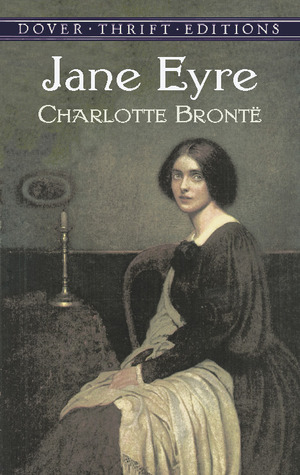
I hope you had a wonderful holiday weekend!  Since it’s the end of the month, it’s time again to review the word nerdy words I have shared with you over the past few weeks from the novel Jane Eyre.  Anyone who answers all three questions correctly will earn link love from me here and on Twitter, Facebook, and Google +.

Are you ready?

Word Nerd Workout

  1. What does vapid mean?
    1. stimulating
    2. insipid
    3. empty
  2. Which word is the best ANTONYM for torpid?
    1. inspiring
    2. fluid
    3. energetic
  3. Complete the analogy
    1. acumen:inability::perspicacious: ___________
Good luck, and leave your answers in the reply box below.  Thank you so much Charlotte Bronte for all of these awesome words!
Note: Next month, I will join in on Bermuda Onion’s Wonderful Words Wednesday meme.  Same great word nerdy words, just posted on Wednesday instead of Tuesday.


My Favorite Banned Book: Fahrenheit 451

Banned Books Week graphic

Please welcome my guest Emily McGee as she helps me continue my series on dystopian literature.  Emily blogs about her traveling adventures over at One Trailing Spouse; take a peak at her informative, humorous stories and pictures.   I recommend her posts on how she almost got robbed and her review of Kenyan instructions for using a toilet.  Take it away Emily…
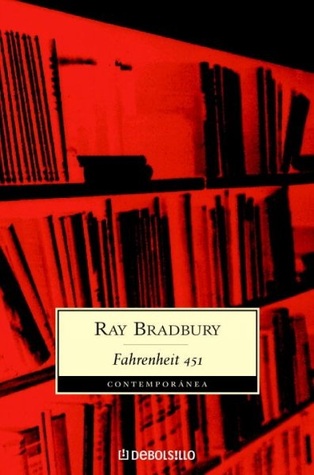
When I taught middle and high school English, one of my favorite books to read with students was Fahrenheit 451 by Ray Bradbury.

Fahrenheit 451 was much more accessible than most of the other books in our curriculum.  Most of my students could read it independently.  It’s also quite short, which motivated some of my more reluctant readers.  But best of all, it had once been banned, which gave it the extra layer of intrigue to captivate my students’ interest.

In my mind, Fahrenheit 451 is such a joy to read because it’s the quintessential banned book.  It’s a banned book about book banning (and book burning).  My students loved the irony.

 The Premise

Fahrenheit 451 takes place in a dystopian world where people no longer read books, have meaningful relationships, or think independently.  It’s immediately clear that no one is happy, but no one seems to realize how truly unhappy they are.

The book follows the story of Guy Montag. Guy is a fireman in a society where firemen don’t put out fires, they start them.  Guy and his team burn books.

But after a chance meeting with a girl who doesn’t fit into this society, Guy starts to rethink his career, his marriage, and his life.  He begins hoarding books and reading them.  He starts to question the society he lives in.

Why It’s Still Relevant Today

Even though Bradbury wrote Fahrenheit 451 in 1953, the book is still so relevant today.  For example, my students were able to make connections about people’s dependence on technology, seen both in the book and today.  I really enjoyed watching discussions where students were able to use the book as a lens to examine how much time they spent listening to an iPod or sitting in front of a screen.  Students were even able to talk about the consequences, both good and bad, of all this technology use.

Students also enjoyed learning about why books are banned and seeing a list of banned and challenged books.  Many of their favorite books from childhood were on the list, including The Harry Potter series, the Captain Underpants series, and the Gossip Girl series.

The book also helped my classes think more critically about power, control, and the government’s role in our lives.  We had great discussions about why the government in Fahrenheit 451 wanted a complacent, non-reading society.  We also talked about what values are at stake when individuals and societies are in conflict.

 Who Should Read It

Fahrenheit 451 is a great book for discussion. I recommend it for book clubs, classrooms, or to read and discuss with your child/teen.  It’s rich with symbolism and I think almost everyone would get more from the book by talking about it with others.  If you’re new to banned books, it’s accessible to read, and in my opinion, not at all scandalous or offensive.  It’s also easy to find at used book stores and online.

Emily has lived in Africa, the South Pacific, and three states in four years. She pays the bills by writing for various educational companies, but she’s happiest when writing fiction. Emily and her husband live life on the go, and they just got back to the U.S. after spending five months in Nairobi, Kenya. Emily writes about travel and life as a trailing spouse at One Trailing Spouse.

More Vocabulary with Jane Eyre: Acumen

On to the next great word from Jane Eyre; I’ve seen this one a lot, and I had to finally look it up.

Near the end of the novel, Jane spends time with a very driven young man named St. John.  (And if my instinct, based on a scene from the movie Four Weddings and a Funeral, is right, we pronounce that “Sinjun”, right, my British friends?)

At one point, St.John quizzes Jane on a sensitive topic, but she resists his questioning.

But when St. John had mused a few moments, he recommenced, as imperturbably, and with as much acumen as ever.


Is it only me, or do you see three word nerdy words in that sentence?  Let’s focus on one right now.

  • acumen \ə-‘kyü-mən, ‘ak-yə-mən\ noun, from Latin acumen, literally, a point; keenness and depth of perception, discernment, or discrimination, especially in practical matters

Word Nerd Workout

Think of a person, real or fictional, who demonstrates acumen.  Tell us about him or her in your reply.

My example:  At critical moments in the story, Jane Eyre uses acumen, and not emotional reaction, to make critical decisions about her life.  This gives her great appeal as a character.

How to Survive the Thanksgiving Road Trip

Will you be traveling for Thanksgiving?  Hopping in a car or van with several other people to spend hours together in a confined space?  If so, are you anticipating some conflict?

I am.

The Problem

My husband and I will drive to Tennessee with our four lovely, yet noisy and independent minded, children.  My new Honda minivan has all of the swanky upgrades – the sunroof, the Bluetooth, and the cool box.  But it’s missing the most important feature: a sound proof glass barrier between the driver’s area and the rest of the van.  You know, like the ones you find in limousines?

We could keep the kids quiet by letting them play on electronic gadgets the entire trip.  Right now, they love a game called Mine Craft.  In it, they search for resources, build homes, and fight off monsters.  They can play across devices, so at least they are interacting with each other, but still, can’t we find something more thought-provoking?

The Solution

When you have reached that point, when you can’t tolerate the tension/arguing/boredom any longer, grab your smart phone and surf to the website www.sporcle.com.  There, you will  find “mentally stimulating diversions”  in several categories, like geography, entertainment, movies, and, most importantly to word nerds, literature.

Choose a trivia quiz that appeals to you and your road trip companions.  Some options from the literature section include:

  • Lord of the Rings or IKEA– Determine if a name is from LOTR or the Scandinavian store (hilarious)
  • Harry Potter: Last Words– Name the characters who spoke the listed quote (sniffle)
  • Literary Lovers– Name a literary figure’s famous lover.  (This one is tough; it includes easy ones like Juliet as well more obscure characters like Lady Rowena, Marius Pontmercy, and Bathsheba Everdene.)
  • Children’s Book Characters– name the character shown (great for younger players)
  • Hunger Games Name Game– determine if the name listed is actually a character from the trilogy (there are a ton of names!)

And guess what?  All of the quizzes are timed.  No pressure.

I can’t wait to play the LOTR/IKEA one, as I am a Tolkien fanatic, enthusiastically looking forward to The Hobbit’s release next month.  My husband isn’t good with names, so I actually have a chance of beating him at something.  But, my twelve-year-old son just read through all the Tolkien books again… GAME ON!

Happy travels, if applicable, and have a wonderful holiday.

Do you have a favorite road trip survival technique that you’d like to share?


More Vocabulary from Jane Eyre: Torpid

As I said last week, besides being a wonderful read, Jane Eyre has given me plenty of vocabulary words to learn about!

In the middle of the novel, Jane takes a position as a teacher for a rural school.  Upon first meeting her students, Jane says about them:

Wholly untaught, with faculties quite torpid, they seemed to me hopelessly dull.

Don’t judge Jane for saying this; she learns, with time, how capable her students really are.

Now, let’s learn something too!


torpid \’tȯr-pəd\ adj, from Latin torpidus, torpere to be stiff or numb; having lost motion or power of exertion; sluggish in acting or functioning

Word Nerd Workout

Use torpid in a sentence.  My example:

  • The dose of NyQuil quickly rendered my mind torpid and useless for finishing the edits.
Your turn!  Leave a sentence in the reply section below.  This one’s tough, isn’t it?

Other Word Nerdy Words

winsome, vapid


The Giver: A Great Introduction to Dystopian Literature

Up until last month, no one in my house had read The Giver, by Lois Lowry.  No one.  Very unusual for a house full of book lovers.
Since we spend many hours on the road commuting to sports practice in a nearby town, I decided we should use that time to listen to The Giver together.  And it was so much more beneficial than everyone staring at electronic devices for 90 minutes.  

The Premise

At the opening of The Giver we meet Jonas, a boy eagerly anticipating The Ceremony of Twelve.  At this ceremony, the Elders of his Community will give all the 12 year olds their Assignment, or adult occupation.   The Elders choose the Assignment for each Community member based on several years of observation.  Jonas can’t wait to learn his.
But The Ceremony changes Jonas’s life in unexpected ways.  He isn’t named a Nurturer, or Instructor, or Caretaker.  Instead, he is called to be the Receiver, the one person responsible for holding all of the Community’s memories.  Jonas immediately starts to worry.

Now, for the first time in his twelve years of life, Jonas felt separate, different.

His fears escalate when he reads the guidelines for his Assignment, which include:
  • From this moment, you are prohibited from dream –telling.
  • Except for illness or injury unrelated to your training, do not apply for medication.
  • You are not permitted to apply for release.
  • You may lie.

Wouldn’t you worry too?

What Works Well

Remember that by definition, a dystopian society has at least one inherent, horrible flaw.  Lowry builds tension and interest by slowly revealing multiple problems with Jonas’s Community, which was founded on the principle of “Same”.   All irritating irregularities have been removed.  The people exist in a peaceful environment of competence, politeness, and security. 
At a great price.  Yet they don’t realize it.
As Jonas gains memories from his trainer, The Giver, he learns about everything, and everyone, that has been sacrificed to maintain the stability of Same.  With each memory he receives, Jonas moves closer to a difficult decision: should he do the right thing, or the safe thing?  
Jonas’s dilemma, and his reaction to the knowledge he receives, sparked great discussion with my kids, aged 6-12.  I asked them things like:
  • What do you like about Jonas’s community?
  • What is missing?
  • What would you do if you were in Jonas’s place?
  • What is something you would like to change in our community?
  • How can “sameness” be a bad thing?

Words of Caution

Very little violence occurs in The Giver, except that people deemed no longer valuable to the Community are “released”, and that includes children.  Late in the book, we finally learn for sure what “released” means, as Jonas witnesses the lethal injection of a baby.  My kids listened in stunned silence, and afterward, I hit pause so we could process together.
We all truly enjoyed this book, and I highly recommend it, but the ending disappointed me.  Too many loose strings.  On the positive side, that led to more discussion.  I’d love to share my daughter’s interpretation of the ending, but I hate to spoil the book.  E-mail me after you read it, and we’ll talk.
There are three more books considered to be “companions” to The Giver

Can you recommend a dystopian book appropriate for younger readers?  If you have read The Giver, what did you like/dislike about it?

Julia