
Another Reason Why Reading is Good For Your Brain

Even though my friend Caroline is an avid reader and enjoys classics (she suggested our book club read Great Expectations last year), she avoids Jane Austen novels.  They feel like work to her.

Do you struggle with Jane Austen as well?  I came across an interesting story last month that might persuade you to pick up Pride and Prejudice.

The New World of Literary Neuroscience

NPR featured a story on the work of Natalie Phillips, a professor of 18th  century English literature at Michigan State University.  Ms. Phillips studies cognitive approaches to narrative; more specifically, she’s looking at how Enlightenment ideas shaped 18th century literature, and if literature in turn influenced theories about cognition.

Sounds deep, doesn’t it?  Basically, Phillips wants to know more about how our brains work while we concentrate, and if 18th century authors, like Jane Austen, incorporated scientific theory about cognition into their writing.  For example, Phillips has hypothesized that Austen made Elizabeth Bennett, the heroine of Pride and Prejudice, bright, but also very distractable, based on theories about cognition at the time.

To further explore the link between cognition and literature, Phillips ran a study to see how people’s brains behaved while reading Austen.  She asked her participants to read while lying in an MRI machine.  Sometimes subjects were directed to skim, and at other times they were asked to read analytically.  Researchers monitored several things during the trials, including:

  • brain activity
  • eye movement across the page
  • breathing
  • heart rate  
Phillips  expected to see changes in the attention centers of the brain when comparing close versus casual reading.  However, results showed activity throughout the brain when readers altered their concentration on the narrative.  Most surprisingly, the centers of the brain involved in motion and touch were activated during close reading, as if participants had actually placed themselves into the story!  
Does that ever happen to you?  Do you sometimes get so totally absorbed in a book that you feel like you’re living in the world with the characters?  Ms. Phillips only tested brain activity while subjects read Austen, but I wonder if we would find the same results with other authors.  A new field is emerging, called “Literary Neuroscience,” and it’s exploring things like the effect of metaphors on the sensory areas of the brain.

The Good News for Word Nerds

Why did I share this?  Because it gives word nerds everywhere more ammo for defending our bookish habits.  Not only does reading improve our vocabulary, but it also may be stimulating our minds in unexpected ways.  I can’t wait to learn more about how reading affects our cognitive abilities!

I also won’t feel guilty anymore about getting lost in a story when I should be doing a comparatively menial chore.  I’m generating important brain waves!  (Of course, I need to remember this when my children tune me out to pour over the pages of their latest book.)

And finally, for readers like Caroline who struggle with Austen, perhaps now you’ll think that the effort might be worth it and give P & P another try.

How do you feel about Jane Austen’s work?  Can you share any other research about how reading affects the brain?


November’s Word Nerd Workout

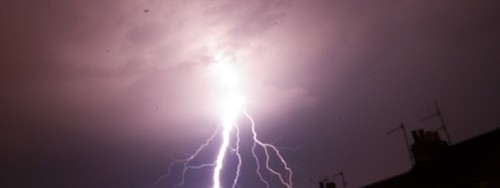
The road outside my farm. All the leaves are gone now.

I hope you had a wonderful holiday weekend!  Since it’s the end of the month, it’s time again to review the word nerdy words I have shared with you over the past few weeks from the novel Jane Eyre.  Anyone who answers all three questions correctly will earn link love from me here and on Twitter, Facebook, and Google +.

Are you ready?

Word Nerd Workout

  1. What does vapid mean?
    1. stimulating
    2. insipid
    3. empty
  2. Which word is the best ANTONYM for torpid?
    1. inspiring
    2. fluid
    3. energetic
  3. Complete the analogy
    1. acumen:inability::perspicacious: ___________
Good luck, and leave your answers in the reply box below.  Thank you so much Charlotte Bronte for all of these awesome words!
Note: Next month, I will join in on Bermuda Onion’s Wonderful Words Wednesday meme.  Same great word nerdy words, just posted on Wednesday instead of Tuesday.


My Favorite Banned Book: Fahrenheit 451

Banned Books Week graphic

Please welcome my guest Emily McGee as she helps me continue my series on dystopian literature.  Emily blogs about her traveling adventures over at One Trailing Spouse; take a peak at her informative, humorous stories and pictures.   I recommend her posts on how she almost got robbed and her review of Kenyan instructions for using a toilet.  Take it away Emily…

When I taught middle and high school English, one of my favorite books to read with students was Fahrenheit 451 by Ray Bradbury.

Fahrenheit 451 was much more accessible than most of the other books in our curriculum.  Most of my students could read it independently.  It’s also quite short, which motivated some of my more reluctant readers.  But best of all, it had once been banned, which gave it the extra layer of intrigue to captivate my students’ interest.

In my mind, Fahrenheit 451 is such a joy to read because it’s the quintessential banned book.  It’s a banned book about book banning (and book burning).  My students loved the irony.

 The Premise

Fahrenheit 451 takes place in a dystopian world where people no longer read books, have meaningful relationships, or think independently.  It’s immediately clear that no one is happy, but no one seems to realize how truly unhappy they are.

The book follows the story of Guy Montag. Guy is a fireman in a society where firemen don’t put out fires, they start them.  Guy and his team burn books.

But after a chance meeting with a girl who doesn’t fit into this society, Guy starts to rethink his career, his marriage, and his life.  He begins hoarding books and reading them.  He starts to question the society he lives in.

Why It’s Still Relevant Today

Even though Bradbury wrote Fahrenheit 451 in 1953, the book is still so relevant today.  For example, my students were able to make connections about people’s dependence on technology, seen both in the book and today.  I really enjoyed watching discussions where students were able to use the book as a lens to examine how much time they spent listening to an iPod or sitting in front of a screen.  Students were even able to talk about the consequences, both good and bad, of all this technology use.

Students also enjoyed learning about why books are banned and seeing a list of banned and challenged books.  Many of their favorite books from childhood were on the list, including The Harry Potter series, the Captain Underpants series, and the Gossip Girl series.

The book also helped my classes think more critically about power, control, and the government’s role in our lives.  We had great discussions about why the government in Fahrenheit 451 wanted a complacent, non-reading society.  We also talked about what values are at stake when individuals and societies are in conflict.

 Who Should Read It

Fahrenheit 451 is a great book for discussion. I recommend it for book clubs, classrooms, or to read and discuss with your child/teen.  It’s rich with symbolism and I think almost everyone would get more from the book by talking about it with others.  If you’re new to banned books, it’s accessible to read, and in my opinion, not at all scandalous or offensive.  It’s also easy to find at used book stores and online.

Emily has lived in Africa, the South Pacific, and three states in four years. She pays the bills by writing for various educational companies, but she’s happiest when writing fiction. Emily and her husband live life on the go, and they just got back to the U.S. after spending five months in Nairobi, Kenya. Emily writes about travel and life as a trailing spouse at One Trailing Spouse.

More Vocabulary with Jane Eyre: Acumen

On to the next great word from Jane Eyre; I’ve seen this one a lot, and I had to finally look it up.

Near the end of the novel, Jane spends time with a very driven young man named St. John.  (And if my instinct, based on a scene from the movie Four Weddings and a Funeral, is right, we pronounce that “Sinjun”, right, my British friends?)

At one point, St.John quizzes Jane on a sensitive topic, but she resists his questioning.

But when St. John had mused a few moments, he recommenced, as imperturbably, and with as much acumen as ever.


Is it only me, or do you see three word nerdy words in that sentence?  Let’s focus on one right now.

  • acumen \ə-‘kyü-mən, ‘ak-yə-mən\ noun, from Latin acumen, literally, a point; keenness and depth of perception, discernment, or discrimination, especially in practical matters

Word Nerd Workout

Think of a person, real or fictional, who demonstrates acumen.  Tell us about him or her in your reply.

My example:  At critical moments in the story, Jane Eyre uses acumen, and not emotional reaction, to make critical decisions about her life.  This gives her great appeal as a character.

How to Survive the Thanksgiving Road Trip

Will you be traveling for Thanksgiving?  Hopping in a car or van with several other people to spend hours together in a confined space?  If so, are you anticipating some conflict?

I am.

The Problem

My husband and I will drive to Tennessee with our four lovely, yet noisy and independent minded, children.  My new Honda minivan has all of the swanky upgrades – the sunroof, the Bluetooth, and the cool box.  But it’s missing the most important feature: a sound proof glass barrier between the driver’s area and the rest of the van.  You know, like the ones you find in limousines?

We could keep the kids quiet by letting them play on electronic gadgets the entire trip.  Right now, they love a game called Mine Craft.  In it, they search for resources, build homes, and fight off monsters.  They can play across devices, so at least they are interacting with each other, but still, can’t we find something more thought-provoking?

The Solution

When you have reached that point, when you can’t tolerate the tension/arguing/boredom any longer, grab your smart phone and surf to the website www.sporcle.com.  There, you will  find “mentally stimulating diversions”  in several categories, like geography, entertainment, movies, and, most importantly to word nerds, literature.

Choose a trivia quiz that appeals to you and your road trip companions.  Some options from the literature section include:

  • Lord of the Rings or IKEA– Determine if a name is from LOTR or the Scandinavian store (hilarious)
  • Harry Potter: Last Words– Name the characters who spoke the listed quote (sniffle)
  • Literary Lovers– Name a literary figure’s famous lover.  (This one is tough; it includes easy ones like Juliet as well more obscure characters like Lady Rowena, Marius Pontmercy, and Bathsheba Everdene.)
  • Children’s Book Characters– name the character shown (great for younger players)
  • Hunger Games Name Game– determine if the name listed is actually a character from the trilogy (there are a ton of names!)

And guess what?  All of the quizzes are timed.  No pressure.

I can’t wait to play the LOTR/IKEA one, as I am a Tolkien fanatic, enthusiastically looking forward to The Hobbit’s release next month.  My husband isn’t good with names, so I actually have a chance of beating him at something.  But, my twelve-year-old son just read through all the Tolkien books again… GAME ON!

Happy travels, if applicable, and have a wonderful holiday.

Do you have a favorite road trip survival technique that you’d like to share?


More Vocabulary from Jane Eyre: Torpid

As I said last week, besides being a wonderful read, Jane Eyre has given me plenty of vocabulary words to learn about!

In the middle of the novel, Jane takes a position as a teacher for a rural school.  Upon first meeting her students, Jane says about them:

Wholly untaught, with faculties quite torpid, they seemed to me hopelessly dull.

Don’t judge Jane for saying this; she learns, with time, how capable her students really are.

Now, let’s learn something too!


torpid \’tȯr-pəd\ adj, from Latin torpidus, torpere to be stiff or numb; having lost motion or power of exertion; sluggish in acting or functioning

Word Nerd Workout

Use torpid in a sentence.  My example:

  • The dose of NyQuil quickly rendered my mind torpid and useless for finishing the edits.
Your turn!  Leave a sentence in the reply section below.  This one’s tough, isn’t it?

Other Word Nerdy Words

winsome, vapid