

What Does Misanthropy Mean?

wondrous memeWelcome to Wondrous Words Wednesday, hosted by Kathy at Bermudaonion.net.  Word nerdy bloggers use this meme to share interesting words they’ve come across in their reading.  It’s a great way to learn some new vocab!

My entry this week comes from my current read, The Language of Flowers, by Vanessa Diffenbaugh.  It tells the story of Victoria, who has spent her childhood shuffling through foster homes, one more abusive than the next.  When I started reading, I worried the book would be too dark.  But I’m a few chapters in, enjoying Diffenbaugh’s style, and learning interesting facts about flowers.  (Did you know yellow roses stand for infidelity?)

One of the many thistles on my farm; note the prickles!
Thistles on my farm; note the prickles!

As the novel opens, Victoria turns eighteen and is “emancipated” from the foster care system. She’s penniless, homeless, and cares for nothing, except her flowers.  She uses them to communicate with other people.

For most of a decade I’d spent every spare moment memorizing the meanings and scientific descriptions of individual flowers, but the knowledge went mostly unutilized.  I used the same flowers again and again: a bouquet of marigold, grief; a bucket of thistle, misanthropy; a pinch of dried basil, hate.

Misanthropy fits the prickly weed and Victoria’s jaded character.

misanthropy \mi-‘san-thrə-pē\ noun, from Greek misein- to hate + anthropos man; hatred or distrust of mankind

Motivated by extreme misanthropy, Victoria refused the young man’s gift.

Word Nerd Workout

Can you think of another character who epitomizes misanthropy?

Julia
How to Improve Vocabulary with Latin Roots

harry potterConfessions of a Word Nerd

I’m going to reveal the extent of my word nerdiness here.   Did you, like me, marvel at how well J.K Rowling chose the names for some of her Harry Potter characters based on their meanings?  For example, Malfoy.  “Mal” means “bad” in Latin, and was that family bad.  Or how about “Voldemort”?  “Mort” means “death”.  Perfect!


As I mentioned in my post on loquacious, my tenth grade English teacher made us learn Latin roots to prepare for the SATs, and I’m so glad he did.  Even if I don’t know a word that I come across in my reading, often I can pick out the Latin roots and guess its meaning.

For example, if I don’t know what interlocutor means, but I do know that “inter” means “between” and “loqui” means speak, I can guess that an interlocutor is one who speaks between people.  The actual definition: one who takes part in dialogue or conversation.

By learning several Latin roots, you can know the definitions of many more words.  But how to learn the roots?

Word RootsGreat resources

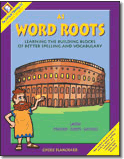
Often when you look up a word, you can also find the etymology.  Do this enough, and Latin roots will become familiar.  However, if you want to take a more systematic approach, or you want to teach your children this awesome vocabulary tool, I recommend a workbook series called Word Roots that is published by The Critical Thinking Company.

The Word Roots workbooks demonstrate how to break words down into prefixes, roots, and suffixes.  They also teach tons of Latin roots, such as viv- (life), veri- (truth),  cogi (know).  The series is recommended for fifth graders up.  You can buy the series as paperback books (about $16 each) or just get the software ($43 for the downloadable version).  I have the first book, but with four children, I’m thinking the software might be a good idea…

You can also order flashcards at about $16 a set.  However, I’m a firm believer in “interacting with material”, so if we need flashcards, the kids can make ’em (and probably learn more in the process.)

Yay!  Yet another activity for summer enrichment.  Perhaps my son should work through this series before he continues with the 1100 Words You Need To Know book I got him.

Just the other day, one of my favorite teachers at my kids’ school accused me of being a “lexiphile”.  Of course, that word doesn’t actually exist, but do you know what she meant?

Do you know your Latin roots?  What other resources can you recommend for boosting vocabulary?

Thanks for sharing in the nerdiness today!

Julia

What Does Loquacious Mean?

What does loquacious mean?

wondrous memeWelcome to Wondrous Word Wednesday, hosted by Kathy at Bermudaonion.net.  It’s a great way to learn new words!  My word today comes from fond memories of school…

I’ve always had a problem with excessive verbosity.  In second grade, I got a Valentine candy heart with the inscription:  

U Talk Too Much

My teacher glanced at it over my shoulder, laughed, and said, “You should take that home and frame it!”

The gabby habit continued into high school.  Early in my junior year, after my English teacher scolded me for chatting in class, he dubbed me, “Babbles Vanderwal; Babs for short.”

The nick name stuck.

When that same teacher assigned us each a Latin root to prepare for presentation to the class (for SAT prep), he gave me, appropriately, loqui.

loquacious \lō-‘kwā-shəs\ adj; from Latin loquac- to speak; full of excessive talk; given to fluent or excessive talk

My introverted husband steered clear of the loquacious woman standing near the appetizers.

Word Nerd Workout

Complete the analogy, which includes a review of some previous word nerd words!

loquacious: garrulous :: laconic : _______________

There is more than one correct answer.

Tell me, are you loquacious too?  😉

Thanks for getting nerdy with me!

What Is Steampunk, Anyway?

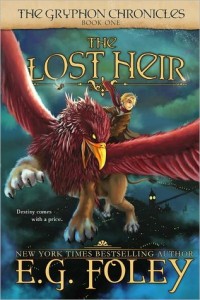
the lost heirBefore we left on vacation, my son wanted to download a new book to his Kindle.  Like a good Word Nerd Mama, I read the description first.  (See my post on The Maze Runner to learn what happened when I wasn’t such a good mama.)

The book in question, The Lost Heir, is the first volume in a new fantasy series by E. G. Foley.  Amazon describes it as a “historical fantasy adventure with a hint of steampunk.”

My son looked at me and asked,  “What is steampunk?”

The husband chimed in from across the room.  “Steampunk?”

Several months ago, a friend tried to explain steampunk as “the world if electronic or digital technology never happened.”  But when I used that line with my family, I got a lot of raised eyebrows.  And so a Google search ensued.

Steampunk = a complicated term

Steampunk can describe many different things: literature, design, or a philosophy.  It usually includes 19th century elements (think steam power and the beginning of the industrial revolution) with a deconstruction of accepted history (that’s the punk).  After reading several articles on the subject, I’ve generated a list of basic steampunk characteristics:

  • set back in time, but with advanced machines; usually involves an “alternative history”
  • OR set in an post-apocalyptic future,  with renewed emphasis on steam power
  • supernatural elements (sometimes)
  • cool contraptions and gadgets, usually powered by steam or springs (“retro technology”)
  • Victorian style with hints of technology and adventure
  • an emphasis on creativity, self-reliance, and adventure 

You can find steampunk most often in science fiction, “speculative fiction”, and fantasy, but it’s making it’s way into other genres, like romance.

Examples of Steampunk

Wikipedia says that the term was first used in the late 1980’s, but we can trace steampunk influence as far back as the 19th century authors Jules Verne (Around the World in Eighty Days), H.G. Wells (The Time Machine), and Mary Shelley (Frankenstein).

I’ve never heard of most of the modern books identified as steampunk, but here are some examples:

  • The Difference Engine by William Gibson and Bruce Sterling
  • Infernal Devices by K.W. Jeter
  • Leviathan by Scott Westerfeld
  • The League of Extraordinary Gentleman, Vol. 1 by Alan Moore


sherlock holmesA few movies come up in the discussion of steampunk, and these mean more to me:

  • Wild, Wild West, with Will Smith
  • Sherlock Holmes, with Robert Downey, Jr.  (I love the S.H. movies for the music and the great chemistry between Holmes and Watson; my 13-year-old son likes the gadgets and the fighting!)


For a more in-depth explanation of steampunk, see this great article on steampunk.com, as well as the rest of the site!

How do you describe steampunk?  Can you suggest any other books or movies that fit the steampunk image?  

Thanks for stopping by!

Julia 

What Does Gambit Mean?

Wondrous Words Wednesday

wondrous memeWelcome to Wondrous Words Wednesday, an awesome meme for boosting your vocabulary!  To find more interesting words, visit  Kathy at bermudaonion.net!

My entry today comes from Pastor Alistair Begg, who was speaking at Camp of the Woods when I vacationed there.  In his lesson on the Gospels, Mr. Begg said that Nicodemus used an “opening gambit” to draw Jesus into a conversation.


Surely I was the only nerd in the audience pulling up her dictionary app to look up gambit!

gambit \’gam- bət\ noun, from Italian gambetto, the act of tripping someone, meaning:

  1. a chess opening in which a player risks one or more minor pieces to gain an advantage in position 
  2. a remark intended to start a conversation
  3. a calculated move

Clearly, Mr. Begg was referring to definition #2, but #3 sounds much more fun.

The journalist used the interview with Mr. Prescott as a gambit to obtain access to his impressive collection of luxury sports cars.

Word Nerd Note

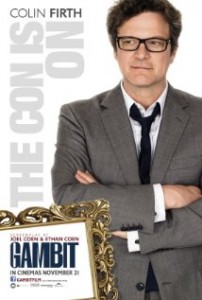
GambitIn 2012, Colin Firth starred in the movie Gambit as a disgruntled employee who tries to con his abusive boss.  (I’ve never heard of it, have you?)  Also, Gambit is the name of a Marvel Comic Book Superhero who can mentally control kinetic energy and excels at card throwing and hand to hand combat.

Word Nerd Workout

Think of a synonym for gambit.   My example: ploy.  Another great example, and one of my favorite words: shenanigan.  Now it’s your turn!  Leave your ideas in the comments, and thanks for getting nerdy with me today!

Julia 


Why You Should Read Liar and Spy

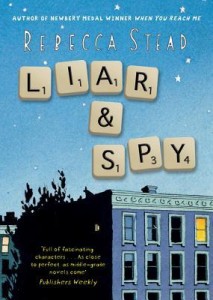
Liar and SpyA few weeks ago, I posted the nominees and winners of the Children’s Choice Book Awards for 2013.  Liar and Spy by Rebecca Stead made the Fifth To Sixth Grade Finalists list, and after finishing the novel, I can understand why.

The Premise

Georges, the s is silent, struggles with typical middle school issues, such as annoying bullies and the persistent feeling that he doesn’t fit in anywhere.  His father, an architect, has recently lost his job, and Georges and his parents have moved to an apartment in Brooklyn.  There Georges meets Safer, a boy his age who is unique in many ways, especially because he’s a self-proclaimed spy.  Safer wants Georges to help him with a “mission”.

Why It’s So Good

Liar and Spy pulls you in with quirky characters and snappy dialogue.  Here’s a snippet. In this scene, Safer, the “spy”, is teaching Georges how to break into an apartment using a credit card.

“You’ve done this before?” I guess I finally know how Safer left me that note under my pillow.
Safer looks at me scornfully. “Of course.”
Maybe Safer has no conscience at all.
“I’m not sure we should do this,” I say. Because I’m sure we shouldn’t do this.
“It’s normal to be a little scared, Georges.”
“I’m not scared.” Though it has crossed my mind that a person could go to jail for the kind of thing that Safer is planning.

Seurat painting
An example of Seurat’s work

Besides wit, Liar and Spy also has depth.  The novel includes thoughtful commentary on life and adversity, as well as a few motifs.  For example, throughout the book, Georges mentions a print by Georges Seurat, his namesake, that hangs in his living room.  Georges relates the tiny little dots of the pointillist painting to events in his life; they all add up to create a bigger picture.  There is  good stuff going on, and Stead packs a few surprises into the ending that will have you thinking about the book long after you close the cover.

Liar and Spy is great summer reading for the older elementary / middle school crowd.  My 13-year-old enjoyed it and agreed with me that it was like “John Green for younger readers”.  (Meaning it has the same intelligence and wit without the young adult content.)  On our recent road trip, my family started listening to Stead’s best-selling novel, When You Reach Me.  My eleven year old has read it and says it’s awesome.  Unfortunately, I don’t like the narrator of the audio book (too whiny) and the story bounces around a lot.  I might finish it in “traditional” form.

Have you read Liar and Spy or any other of Stead’s novels?  Can you share another middle grade summer reading recommendation?  

Thanks for sharing!

Julia