Why Reading Literary Fiction Improves Social Skills

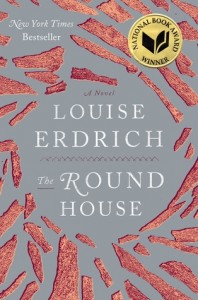
The Round House

I love to find proof that reading is good for your brain. A new study suggests that reading literary fiction can improve one’s ability to interpret the emotional state of other people.

Pretty cool, huh?  Word nerds are so perceptive.

The difference between literary fiction and genre fiction

Let me clarify some terms.

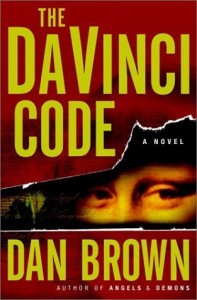
Genre fiction describes books that fall into easily recognized categories: mystery, thriller,DaVinci Code romance, etc.  Usually, genre books emphasize plot over character development. These are the “page turners” one can find on best seller lists by authors like James Patterson, John Grisham, and Gillian Flynn. Think The Firm  or The DaVinci Code. 
In contrast, literary fiction emphasizes the internal life of characters and is usually described as “thought-provoking,” or “challenging.”  Some examples of literary fiction include Peace Like a River or The Round House. Books selected for the National Book Award and other honors usually fall under literary fiction.  These books have themes, motifs and symbolism that word nerds like me love to analyze and discuss.  This is where my English major blood shows.

Note:  In the current publishing climate, the lines between literary fiction and genre fiction are getting blurry.  For the study, literary fiction pieces were taking from National Book Award nominees; genre fiction samples came from the Amazon best seller list.

The study

Two researchers from The New School for Social Research did a study to see how reading literary fiction affected participants’ “Theory of MInd”– the social skill of understanding the mental state of others.

Participants in the study were divided into three groups.  Each group read pieces from one of three categories: genre fiction, literary fiction, and non-fiction.  Afterward, the participants took tests to evaluate their “Theory of Mind” abilities, and the people who read literary fiction performed best on the tests.

The researchers surmised that since literary fiction requires readers to engage intellectually with the material, it stimulates better cognition and perception.

What does this mean for word nerds?

The press release from The New School for Social Research didn’t say how many people participated in the study or exactly which evaluation tools were used.  Even if these results aren’t conclusive, I love that they demonstrate how reading can do more than just entertain.  I’ve always thought that books improve our ability to relate to others and to experience the world around us.  Now there’s a bit of evidence to  prove it.
The Book Thief

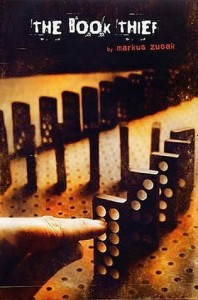
I enjoy all kinds of books: classics, literary fiction, and genre.  (OK, I admit that I struggle with non-fiction.) Usually, I prefer novels that get me thinking. This great line from The Book Thief, by Markus Zusak, has stuck with me for days:

People observe the colors of a day only at its beginnings and ends, but to me it’s quite clear that a day merges through a multitude of shades and intonations, with each passing moment.

Wow.  These words have inspired me to look for the colors of my days.  I’m not sure if The Book Thief counts as literary fiction, but it has definitely engaged my brain.  That’s what matters.


What kind of books do you like to read: literary, genre, or non-fiction?  Do you think that one type of book stimulates your mind better than others?  Why?  Or do you even care?

Thanks for stopping by!

Julia
 

What is Conurbation?

Wondrous Words Wednesday

wondrous memeReady to learn a new word with me?  Visit Kathy at Bermudaonion.net for links to find more interesting words via the Wondrous Words Wednesday meme.

This weekend I drove my son to a soccer tournament in Cary, N.C., a suburb of Raleigh. On the way we passed through several cities: Winston-Salem, Greensboro, Durham.  I noticed that along I-40, one city blurred into the next; there weren’t many wide green spaces to distinguish the metro areas.

Imagine my pleasure when Merriam-Webster sent a most appropriate word of the day to my inbox to describe this phenomenon: conurbation.

conurbation \kah-ner-‘bay-shun\ noun; from the Latin con together + urbs city; an aggregation or continuous network of urban communities

This word was coined by the Scottish biologist/sociologist Sir Patrick Geddes for his book on urban planning called Cities in Evolution.

Word Nerd Workout

I also have seen conurbation in northern Virginia; the suburbs of D.C. now spread all the way to Fredericksburg, a town one hour south of the Nation’s Capital.  Where do you see conurbation, and do you have a synonym for this word?

My example: suburban sprawl.

For the truly nerdy, my use of “the Nation’s Capital” above is an example of what literary device?  (hint: review from a few weeks ago!)

Thanks for getting nerdy with me today!

Julia 

What I Love About Eleanor and Park

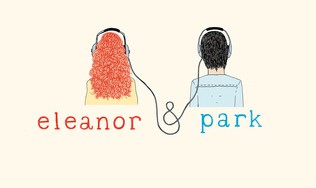
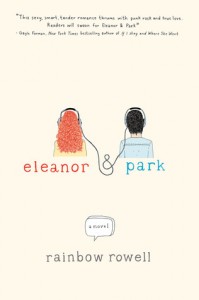
eleanor and parkFirst love overwhelms you. Park Sheridan learns that the hard way.

In the YA novel Eleanor and Park, by Rainbow Rowell, two misfits  bond over comic books and alternative music.

The story opens with Park’s point of view in August 1986.  Park survives the treacherous landscape of high school without too much difficulty, mostly because he dated the popular “Tina” in sixth grade and his dad is “from the neighborhood.” That gives him enough “social currency” that the jocks in the back of the bus ignore him.

Until Eleanor gets on the bus.


Here’s what Park thinks of Eleanor when he first sees her:

Not just new- but big and awkward.  With crazy hair, bright red on top of curly.  And she was dressed like… like she wanted people to look at her… half a dozen weird necklaces hanging around her neck and scarves wrapped around her wrists.  She reminded Park of a scarecrow or one of the trouble dolls that his mom kept on her dresser.  Like something that wouldn’t survive in the wild.

But soon Park will learn how strong Eleanor is.  When nobody else on the bus gives Eleanor a seat, Park scoots over. And then…

Park turned toward the Plexiglas window and waited for a world of suck to hit the fan.


What I liked about Eleanor and Park

  1. Rowell tells the story via the alternating and distinct viewpoints of Eleanor and Park. Eleanor’s jaded sarcasm contrasts nicely with Park’s subdued awkwardness.  I liked seeing how their thoughts differ from what they actually say.  The dynamic works well.
  2. Eleanor and Park are thoughtful, compelling characters.  Park patiently negotiates Eleanor’s prickly barriers until he reaches her vibrant core.
  3. Eleanor doesn’t get adequate food, clothing, or,  most importantly, love, from her home.  Her stepfather drinks too much, and his mood swings poison the atmosphere in the tiny house. Rowell’s description of the family dysfunction felt real and chilling.
  4. E & P captures the intensity and awkwardness of many “firsts”- first touch, first hand holding, first kiss.  I was in the skin of each character, stressing along with them.
  5. Rowell says a lot in few words.  She has mastered the art of “show, don’t tell.”

A few caveats

Eleanor and Park, like first love, is intense, but sometimes the book was too melodramatic, even for YA fiction.  For example, the first hand holding episode goes on for three pages.

Seriously.  Three.

It’s strictly a love story.  The characters are original and interesting, and Eleanor courageously deals with a horrid home life, but there aren’t many BIG IDEAS.  Except that first love can break your heart.  And that being different is OK.

My recommendation

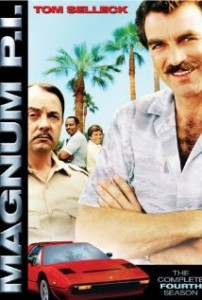
Magnum PIIf you enjoy contemporary YA with quirky characters and sarcastic humor, you’ll like Eleanor and Park.  Another bonus: all the pop culture references from the 1980’s, my teenage years. I’m hoping that modern YA readers appreciate the significance of Magnum P.I. and The Smiths.

I actually listened to this book instead of reading it, and the audio version is awesome. Two readers capture the unique voices of Eleanor and Park well.

Have you read Eleanor and Park or other books by Rainbow Rowell?  What did you think?  Can you recommend another book about first love?

Thanks for stopping by!

Julia 


What is a Tessellation?

wondrous memeWelcome to Wondrous Words Wednesday, an awesome meme in which bloggers share new words they’ve learned.  Check out Kathy’s blog at Bermudaonion.net for links to interesting words.


My word today comes from my son’s geometry class.

Tessellation

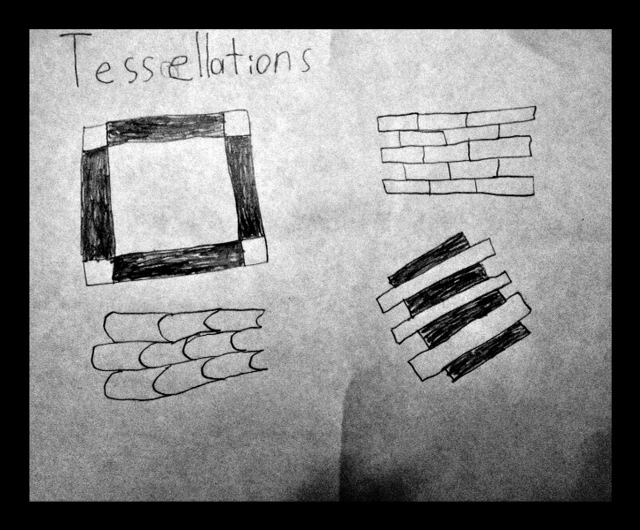
Tessellation \te-sə-‘lā-shən\ noun from Latin tessellare to pave; a covering of an infinite geometric plane without gaps or overlaps by congruent plane figures of one type or a few types

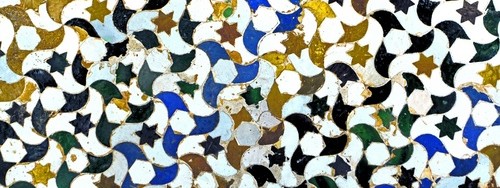
Brick walls and tiled floors are everyday examples of tessellations.  Of course, they can be much more interesting.  To see some cool tessellations, visit the website of artist M.C. Escher.

To learn more about tessellations and tips for how to create your own, check out tessellations.org.  It’s a(kid friendly) website where you can find project ideas for the winter break; tessellations are the perfect blend of math and art!

Another tessellation

Word Nerd Workout

Wouldn’t it be cool if you could easily create a tessellation and share it with me in the comments?  I guess that’s more “arty” than “wordy”.  Don’t worry, I don’t expect any of you to take the time to do that.  Visit the tessellation site instead.

Have you ever heard of tessellations?  Have you ever made one yourself? 

Thanks for stopping by!

Julia 


How Books Create Childhood Memories: Madeline

MadelineDo you recognize these words?

In an old house in Paris,

That was covered in vines,

Lived twelve little girls,

In two straight lines.

Do you remember what comes next?

Isn’t it awesome how books can create childhood memories?


I  loved Madeline when I was a child.  The year I was five, we lived near my grandmother, aka “Oma,” while my father served in the Army in Korea.  I distinctly remember Oma taking me to the public library and reading Madeline books with me.  The story with the appendicitis surgery really sticks out in my memory.

It’s great how the words of a book can pull me back in time.  If I concentrate, I can still hear Oma’s voice reading the rhyming lines; I can still see her short fingers turning the slick pages. My kids know Madeline too- I have carried on the tradition, always with Oma in the back of my mind. Honestly, I didn’t realize that a new author had taken over the series, but he seems to do a fine job.

MadelineNext year, Madeline will be 75 (yikes! this makes me feel old), but she’s still got new books coming out.  In October 2013, John Bemelmans Marciano, Ludwig Bemelmans’ grandson, released a new Madeline story called Madeline and the Old House in Paris.  He has written three other Madeline books before this one.  He talked to NPR about why Madeline is such an enduring character.

Bemelmans attributes Madeline’s longevity to several factors:

  1. Her spunk.  Only a brave girl could say “Pooh, pooh” to a lion at the zoo!
  2. She and her schoolmates live in a world where parents don’t exist.  Madeline has freedom and takes care of herself, something kids crave.
  3. The rhymes.

In the NPR interview, Bemelmans shares some funny insights into his grandfather’s work, which was complicated by the fact that he spoke several different languages and lived all over Europe.  Check out the story.

Many thanks to the Bemelmans men for creating and developing a character (especially a GIRL!) who ventures out in the world without fear.  (We could even call her dauntless.)

And thanks to all the authors who have given us childhood moments to treasure.

What is one of your favorite books from childhood?  Do you have a fond memory about reading as a child?  Can you share a few favorite lines?

Another favorite line of mine:

… he sailed in and out of days, and almost over a week, to the place where…”

Who knows that book?

Thanks for stopping by!

Julia


Factions Vocabulary from Divergent

wondrous memeWelcome to Wondrous Words Wednesday, a chance to meet other word nerds and improve your vocabulary at the same time!  Awesome!  Stop by bermudaonion.net to find more cool words.

My contribution this week comes from the dystopian YA novel Divergent, by Veronica Roth.  I just started reading it; I know, I’m so behind.  The third book in the series, Allegent,  just came out, and my husband has already started it on his Kindle.

In the world of Divergent, everyone is divided into five factions.  When you reach adulthood, you choose your faction and commit to it forever.  Veronica Roth chose interesting names for her factions, and although I could glean basic definitions for each group, I decided some word nerd sleuthing was in order.  I’m glad I took the time: some of the meanings and etymology were interesting, and not what I expected.

DivergentThe Five Factions and Their Definitions

  1. Abnegation \ab-ni-‘gā-shən\ noun from Latin abnegare to refute, ab + negare to deny; self-denial
  2. Amity \’am-ət-ē\ noun, from Latin amicus, friend; friendship, especially friendly relations between nations.  Think amiable, or, for those of you who know Spanish, amiga!  Before I looked it up, I missed the “friend” meaning and just thought “nice.”
  3. Candor \’kan-dər\ noun from Latin candidus bright, white and candēre, to shine or glow; 1) whiteness, brilliance, or unstained purity; 2) fairness, 3) unreserved, honest 4) (archaic) kindliness.  The “brilliance” bit surprised me, as did “kindliness”, but that is an archaic use.  Many of the “Candor” in Divergent seem blunt more than “brilliant”.
  4. Dauntless \’dont-ləs\ adj from Latin domitare to tame; daunt = to cow or subdue; dauntless means fearless, undaunted.  I liked the “unable to subdue” meaning here.
  5. Erudite \’er-(y)ə-dīt\ adj from Latin eruditus, instruct; fr e + rudis, rude; possessing or displaying extensive knowledge acquired chiefly from books.  The “rude” etymology implies a haughty tone.

By the way, divergent means differing from a standard, or deviant.

Word Nerd Workout

Choose your faction!  Fortunately, I won’t ask you to slice your palm open with a knife or leave your family forever, but I would like you explain your choice.  I think it would be cool to learn more about you.

My choice?  Although erudite is tempting, I pick amity.  I really like it when everyone gets along. I would NEVER choose dauntless- I’m afraid of heights, hate violence, and cannot throw a punch.

Your turn!  Thanks for sharing.

Julia