
Tress by Sanderson offers an imaginative world and a strong female lead

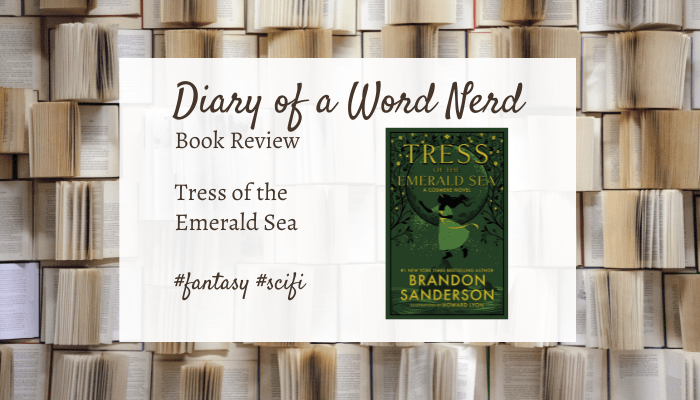
Book Review graphic for Tress of the Emerald Sea by B Sanderson

If you love fantasy adventure with a touch of satire, a la The Princess Bride, then I’ve got a book for you- Tress of the Emerald Sea by Brandon Sanderson. My kids love Sanderson and his epic fantasy series, including The Stormlight Archives and Mistborn. I’ve tackled the first two Stormlight novels (1000+ pages each) and was ready to try Tress once I learned Sanderson modeled it after The Princess Bride.
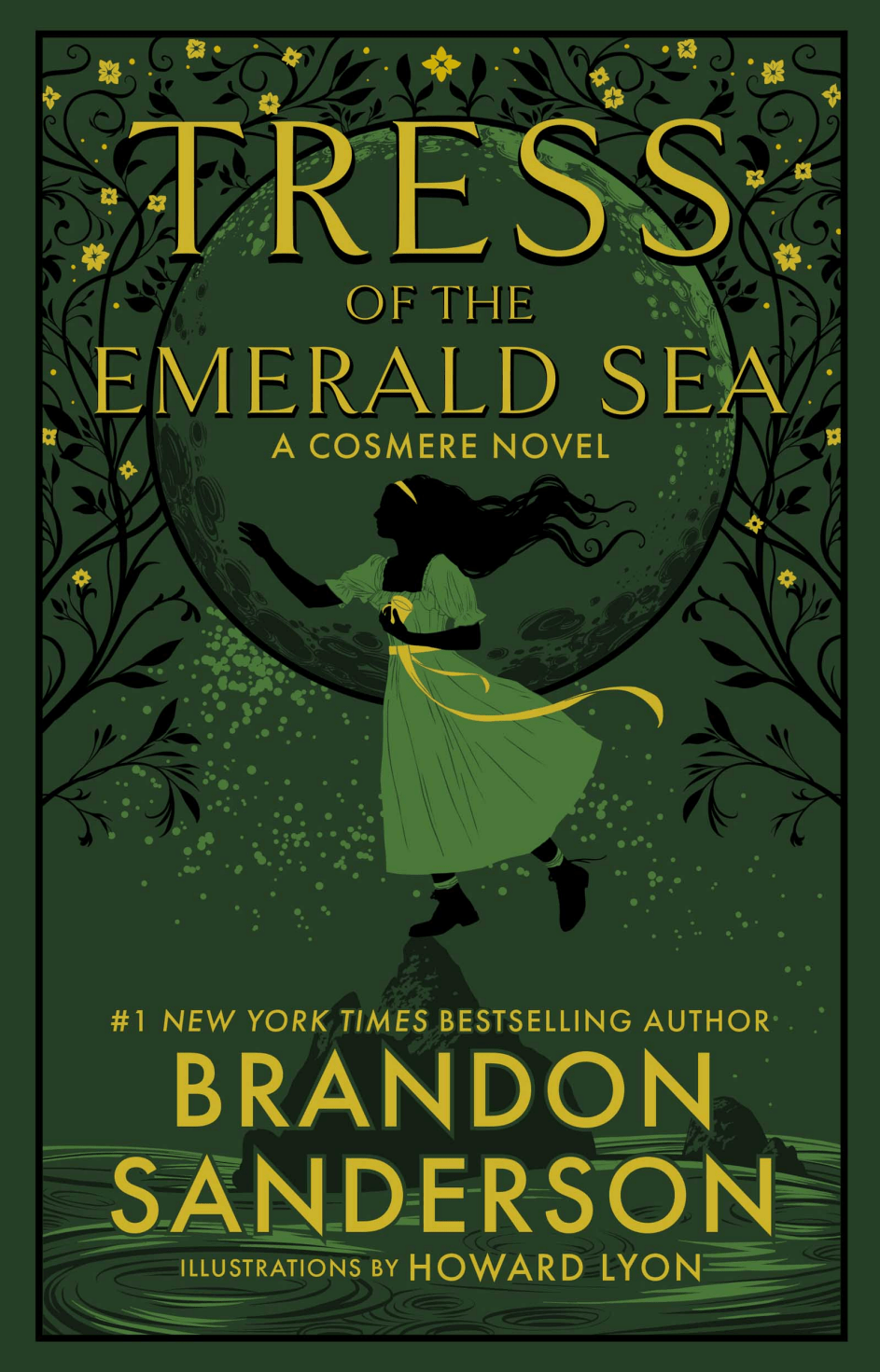
Tress’s backstory intrigued me. Initially, Sanderson wrote it in secret for his wife. He says in the book’s postscript, “I wanted something that was just for me and for my wife. Something I could share with her, and not worry about deadlines or expectations. I just wanted to write, free of business constraints or fan expectations.”

Business constraints have been bothering Sanderson of late. He shared a little about it on the podcast he used to cohost, Writing Excuses. After years of publishing fantasy, Sanderson wanted to explore science fiction. But his traditional publishing house discouraged him from tackling a new genre, since every new genre requires new marketing and promotion campaigns, which increases costs for the publishers.

The highly successful Sanderson decided to try a different path. He launched his own publisher, Dragonsteel Entertainment, and in the spring of 2022, he dropped a video announcing an ambitious Kickstarter campaign. He offered readers access to four “secret novels” he wrote during the pandemic. The campaign offered several tiers of support for a range of products, from e books to hard copy novels to swag boxes with a different theme each month.

Sanderson launched the campaign looking for $1 million in funding. In 24 hours, he had $15.4 million. By the end of the campaign, the Kickstarter raised $41 million. Can we say, wow?! (Read more about the Kickstarter in USA Today.)

At our house, we went with a cheaper option: ebooks and swag. However, my oldest son- gainfully employed and an avid Sanderson fan- went “high tier” and got beautifully printed books, including Tress. The illustrations are gorgeous and foil imprints make the cover shine.

As an aspiring author, I have watched this phase of Sanderson’s career carefully. He offers some interesting ideas to authors frustrated by the selectivity and slow pace of traditional publishing. Inspired by his courage and creativity, I dove into Tress, really wanting to like it.

In the end, I gave it 3/5 stars.

Premise

Tress of the Emerald Sea takes place on a magical planet with very unusual geography. It’s so complicated, I think it’s easiest to explain with quotes from the book. Tress’s planet is surrounded by twelve moons that drop spores onto the land.

“The spores filled the world’s oceans, creating vast seas not of water, but of alien dust. Ships sailed that dust like ships sail water here… The spores were only dangerous if you got them wet… The least bit of water would cause the spores to sprout explosively…”

The type of spore dictates the type of sprouting – green spores sprout huge vines, crimson spores sprout deadly sharp spines. There are six types of spores in all.

In this dangerous world, the heroine of the novel, Tress, disguises herself so she can board a ship, search the spore seas for her love, and rescue him. Tress of the Emerald Sea was nominated for a Goodreads Choice Award in Fantasy for 2023.

What I liked

Tress is smart, brave, and selfless. She uses her wits to take down bad guys, and she cares about the people she encounters on her adventures. In his author’s notes, Sanderson shares one thing his wife didn’t like about the movie The Princess Bride was the fact that Princess Buttercup doesn’t do anything. She’s a hapless victim, always depending on Westley to save her. Sanderson wanted to create a character who takes action. And in Tress, he did.

He also created an incredibly imaginative world that provides significant dangers and obstacles for his heroine. My kids love Sanderson for his world building, and he shows off his extensive imagination in Tress.

I also enjoyed one of the main themes of the book: the importance of personal growth and change. Tress evolves during her Hero’s Journey, and her character arc comes to a satisfying conclusion. However, I had to force myself to get to that conclusion.

What I didn’t like

Confession: fantasy and sci fi aren’t my favorites. Additionally, I find Sanderson’s work in these genres particularly overwhelming. There are many details to keep up with, so many that they distract me from the characters and plot. Perhaps because the dangers felt so foreign or unrealistic, they didn’t hold my attention.

Also, Sanderson uses a character named Hoid to narrate the story. Hoid, shifty and unreliable, pops in and out of many of Sanderson’s novels. He reminds me of Loki from the Marvel Universe. Through Hoid, Sanderson tries to give the narration a whimsical tone, but often, Hoid’s ramblings and direct addresses to the reader pulled me out of the story.

For example, in the quote above describing the spores, Hoid says,

“Ships sailed that dust like ships sail water here, and you should not find that so unusual. How many other planets have you visited? Perhaps they all sail oceans of pollen and your home is the freakish one.”

As Hoid narrates, he injects bits of philosophy and wisdom which often felt too didactic or “on the nose.” For example,

Enjoy memories, yes, but don’t be a slave to who you wish you once had been. Those memories aren’t alive. You are.

I love it when novels get me to think about themes like memory and strength, but I don’t like it when they preach to me. Tress, or rather, Hoid, does that a lot.

Recommendation

If you love fantasy and sci fi, check out Tress of the Emerald Sea. If you like books with gorgeous illustrations, definitely read a hard copy of Tress, (although my e book version included the illustrations).

Have you read Sanderson? Do you enjoy his writing? Are you familiar with other authors exploring new approaches to publishing? If so, please share in the comments.

Thanks for getting nerdy with me!

Inspired to make kindness the norm

Be Kind starburst graphic

Nine children sat in padded office chairs three sizes too big for them. The kids were lined up against a wood paneled wall, swiveling side to side in the tall black seats, their feet, in most cases, barely able to touch the floor.  A few waved nervously to adults in the watching audience. One twirled a section of her glitter-streaked hair around her index finger.  Such a setup could only mean one thing.

The County Spelling Bee.

For those of you who have never participated in a bee, or if too many decades have passed since your last experience, imagine yourself sitting with a group of your peers before an attentive audience. You are less than 12 years old and do not have the decades of wisdom and experience you do now.  You squirm in your seat and contemplate the task before you. During the bee, you will have to walk up to a microphone, listen for a word, pray it’s one you know, repeat the word, and then spell it, without the benefit of paper, pencil or autocorrect. If you are “lucky,” you will get to repeat this process several times.

If that doesn’t sound daunting enough, consider the complication of the microphone, sure to squeal with feedback at unpredictable moments. You step up to speak into its bumpy bulb, and with every sound you utter, you experience shock at the voice that echoes in the speakers. One that is too high, nasal, or raspy to be your own. The worst part: you must use the dreaded microphone so the judges can clearly hear your answer.

Yes, judges. A word that steals the spit from your mouth and twists your stomach into a pretzel.

A spelling bee is a valuable, but stressful, experience. Like any demanding situation, it can bring out the worst in any one of us. Insecurity and defensiveness might pop up without warning. But that didn’t happen at the bee I observed last week. Yes, kids were obviously nervous, taking frequent sips out of the bottles of water they kept at their feet. Yes, they released exasperated sighs when they heard the judges say, “I’m sorry, that’s incorrect.” Yes, they swiveled the chairs impatiently as the last spellers went through the final rounds of the bee.

But they also encouraged each other, giving high fives to spellers who missed words, offering smiles of reassurance. When the bee was down to two final spellers, the two remaining competitors went back and forth several times, spelling increasingly difficult words. Words that garnered gasps from the audience. For several rounds, neither boy could complete the task required to win the bee: spell two words correctly in a row.

But in all this tension, the mood remained positive, mostly because of the actions of one of the remaining spellers, a fifth grader. Every time his opponent spelled a word correctly, he gave an exuberant thumbs up. He seemed genuinely happy to see his opponent succeed. When the bee finally ended, and that same fifth grader won by correctly spelling two words, one of which was bubonic, he marched right up to his opponent and gave him a fist bump. Then he went down the line of office chairs, giving all the other participants a fist bump too.

We adults know that life is hard, that the stress of a spelling bee is nothing compared to the strain of paying bills on a tight budget, negotiating difficult work circumstances, or managing care of a sick family member. But maybe we would all fare better if we spent more time offering fist bumps in the “competition” of adulthood. A spelling bee may seem small to us, but the actions of that fifth grader were huge.

From February 11-17, The Random Acts of Kindness Foundation is celebrating Random Acts of Kindness Week. Let’s take a cue from the kids and #MakeKindnessTheNorm.

Thanks for being kind with me!

Finding hope in dreary February and March

Graphic: find hope in the dark months

The day comes to its end, and as the sun drops behind the mountains, my energy plummets as well. Darkness mutes the colors in my family room, and a chill settles in the kitchen. I light a candle, then two more, and plug in the string of acorn Christmas lights I have not yet put away. With a deep breath, and an ache in my shoulders, I summon the energy to make dinner.

This is January.

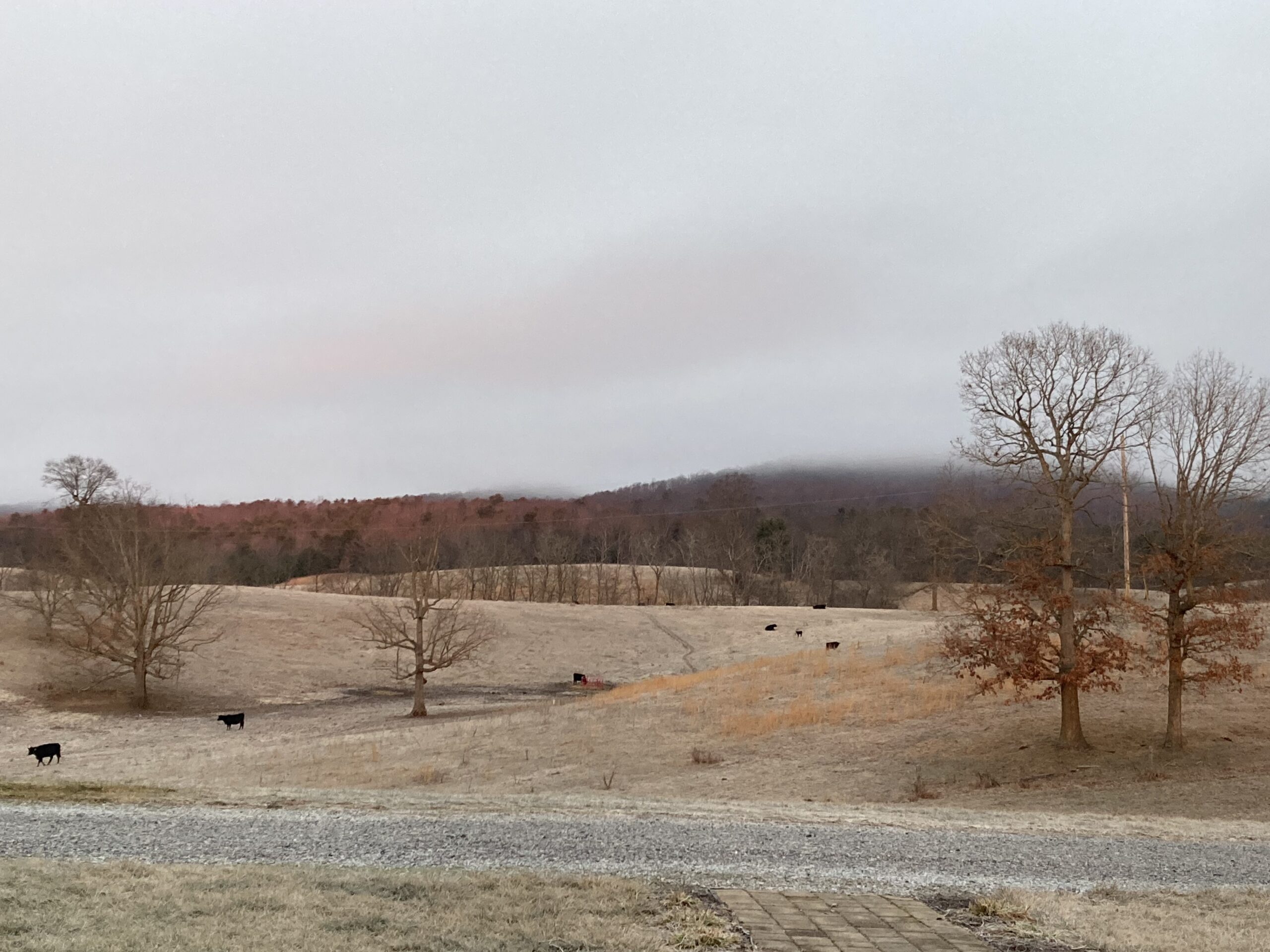
I’ve packed up the holidays, and the thrill of a fresh start fades as the first month of the year comes to a close. I dread this season. While the days grow longer, they still offer barely ten hours of light. Faded yellow grass covers the pastures outside my house, and wind gusts from the west, rattling the windows. By 6 o’clock in the evening, I want to crawl in bed. The fatigue will linger tomorrow morning, even if I get a good night of rest.

The view from my front porch

Yet, I console myself with some bright thoughts.

First, I am not alone. I have friends who also struggle during the winter. In fact, there is a clinical name for the depression and fatigue that haunts many people in the winter months: Seasonal Affective Disorder, or SAD for short. According to the National Library of Medicine, SAD affects up to 10% of Americans every year, and more women than men. Notably, it’s more common in northern states than southern. There are treatments available, including light therapy, drug therapy, and cognitive behavior therapy.

SAD shouldn’t be confused with winter blues. Many people experience stress and mood swings around the holidays, and a dark, rainy day can dampen anyone’s mood. SAD is a clinical diagnosis, characterized by depression that lasts over several months and recurs over multiple years. You can read more about it in this article from the New York Times, What to Know about Seasonal Depression.

Even if you don’t have SAD, winter months can be hard. Here are some things I do to keep my spirits up and my perspective positive during these dark, cold months.

  • Embrace the light. Weeks ago, I packed up Christmas, except for a line of acorn lights that runs across my mantle and the string of twinkling snowflakes extending across the archway between my family room and kitchen. Those stay out past Valentine’s Day. I plug them in each night by six, when the world outside grows dark. On rainy days, they stay on all day. I also love candles and am hoping to add DIY candle making to my growing list of hobbies. (If you have any tips, please share in the comments!) I’ve thought about getting a therapy light, like the one described in the NYT article above, however, so far this season I’m doing well with staving off symptoms. Some of my tricks include:
  • Read happy, hopeful books. This is not the time for Beloved, The Road, or The Book Thief. (All books I started and abandoned in winter because they were too dark.) Currently, Ross Gay’s essay collection Inciting Joy sits on my nightstand, ready for when I need his unique phrasing and brilliant observations to cheer me up. (I heard Ross speak at the Virginia Festival of the Book last March, and he is even more delightful in person!)
  • Spend some time outside each day, no matter the weather. Even 15 minutes helps. My three year old shepherd mix demands it, and so does my spirit. I’ve had to learn this lesson over and over again, but it’s finally sticking. Fresh air, even in the form of a brisk wind, wakes me up, clears my head, and improves my outlook. I’m fortunate to have the resources to heed the adage, “There is no bad weather, just bad clothing.” I have several pairs of lined pants, and the right hat covering my head makes even below freezing temps bearable, for a few minutes at least. I know not all people have this luxury, which makes me grateful, which also improves my mood.
  • I practice yoga several times a week. This gets me grounded in my body and able to create space for positive thoughts within it. I’m getting better at using breath to control my mental state, and this is a powerful tool, available to me all the time, in all the months, whether or not the wind tries to curl under my front door. I enjoy videos on You Tube from Yoga with Adriene, Gayle Jann, and Yoga TX.
  • Rethink winter. My son wrote a poem about his garden during the winter, and we discussed its theme: Everything needs time to rest and restore. The brittle stalks of dead pepper plants stand in soil that is resting and preparing to support seeds the next season. All life needs time to renew, and that applies to us humans as well. I’m learning to think of winter days as a blessing. If I want to spend most nights on the sofa reading, with a puppy curled up on my lap, that’s okay. There’s plenty to read and my body can rest while I nurture my mind. When warm weather arrives, I will have energy and knowledge to apply to the work that needs doing.

Winter comes each year, bringing short days and dark evenings, But when I consider it as a time of rest, a time to ground myself and nurture my needs, it becomes more bearable. Yes, I can go to bed at 8:30 with a book. Maybe that’s just what I need to be my best self come June.

Do you struggle with the winter blues or SAD? How do you manage? Share your responses in the comments. And if fatigue and depression are hampering your ability to function, seek professional help. I did, and it gave me tools to face each February and March with hope.

And please share your tips for DIY candle making! 🙂

Thanks for getting nerdy with me!

The Covenant of Water offers gorgeous prose & strong female leads

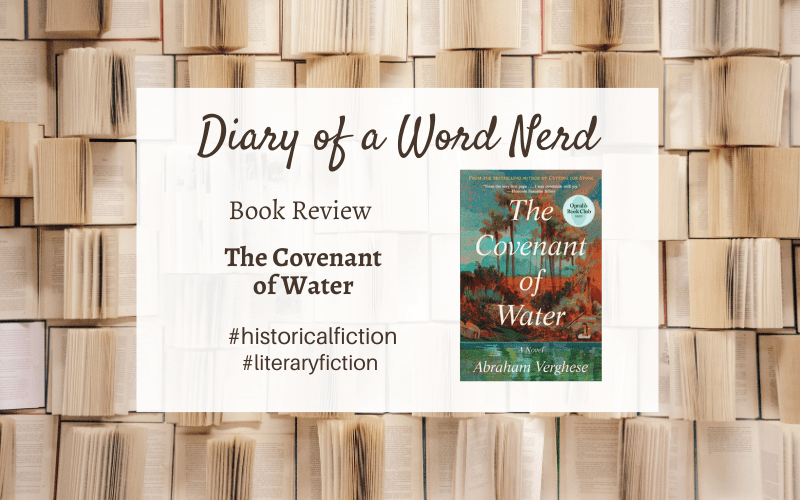
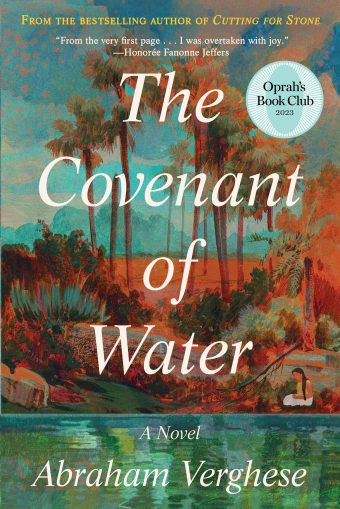
Book review graphic for The Covenant of Water

What would motivate me to tackle a 724 page novel? The recommendation of my mother-in-law, an avid reader with good taste. So, in the midst of holiday chaos, I started listening to the audio book of The Covenant of Water, written and narrated by Abraham Verghese. All 26 hours of it.

Finishing The Covenant of Water requires commitment, and now that I’m on the other side, I definitely think it could have been streamlined. But the writing is gorgeous, and the main characters intriguing, so I persevered to the end, and I’m glad I did.

Premise

The Covenant of Water covers over seventy years in the life of an Indian family living in Kerala, on India’s southwest coast. Starting in 1900 with a young girl leaving her home for an arranged marriage, the story covers three generations of interesting characters, a lot of them women. Covenant explores themes of faith, sacrifice, oppression, and family bonds. It also celebrates the practice of medicine and advances in the field during the 20th Century.

What I liked

Verghese writes gorgeous prose. The beauty of his words held me captive, even when the plot dragged a bit. Here’s a quote from the beginning of the book, when the matriarch (“Big Ammachi”) of the family considers the power of story as her granddaughter begs to learn more about her ancestors.

What the child clamors for is the story of their own family, of the widower’s house into which her grandmother married, a house full of mysteries. But such memories are woven from gossamer threads, time eats holes in the fabric, and these she [the grandmother and storyteller]must darn with myth and fable.

One of the main characters, Philipose, watches helpless as his best friend, a member of the pulayar, or servant caste, is rejected from the local school. The teacher says, “I’ll starve before I raise up children of the mud.” This scene follows:

At home, Philipose spills angry tears and tells his mother all. The world’s hypocrisy burns on his face. Big Ammachi holds her little boy and rocks him. She’s ashamed. The injustice he witnessed isn’t the Kaniyan’s [teacher’s] fault alone. Its roots are deep and so ancient that it feels like a law of nature, like rivers going to the sea. But the pain in those innocent eyes reminds her of what is so easy to forget. The caste system is an abomination. It is against everything in the Bible. Jesus chose poor fishermen and a tax collector as his disciples, and Paul said there is neither Jew nor Gentile, neither slave nor free, nor is there male and female, for you are all one in Christ Jesus. They are far from being all one.

I also liked the strong female characters in the book. Big Ammachi, (I think this name means “Big Mother”) develops from a young, scared 12 year old given away in an arranged marriage into the respected matriarch of a blossoming family. I loved Big Ammachi’s frequent, casual discussions with God, and how she turned to her faith in times of distress. She is a model of sacrifice and love. Her granddaughter, her namesake, travels far from home to study medicine and uncover the secret to her family’s mysterious medical malady, a fear of water and a history of drowning. The two share a close relationship, and an uncompromising sense of bravery.

Finally, like all good historical fiction, The Covenant of Water helped me understand some of India’s history and culture. I had no idea Catholics lived in India, but yes, a population in South India still exists today, tracing their lineage back to St. Thomas, the apostle who doubted Jesus after his Resurrection. I also learned more about leprosy, a disease poorly understood and a reason for social oppression, along with the caste system.

The Covenant of Water made clear, despite our knowledge of history and our advances in science and philosophy, that we humans embrace prejudice and oppression far too easily, across space and time.

And I haven’t even touched on the doctor from Glasgow.

What I didn’t like

Although the writing is gorgeous, the book felt long. Verghese gives a lot of time and attention to characters and plot lines that don’t contribute significantly to the main story. I’ve seen his plot described as “ambitious,” and I agree. I think the book could have been stronger, and would hold attention better, if Verghese focused his immense talent and intellect on a narrower plot and a smaller cast of characters.

Recommendation:

I listened to the audio book of The Covenant of Water, narrated by Verghese. His Indian pronunciation brought depth and context to the story. It was a great way to experience what felt like an oral history. Verghese’s voice conjured up the presence of an old grandfather, revealing family secrets on a warm day on India’s southwest coast.

You can find interesting illustrations, a summary, and a character list for The Covenant of Water at Verghese’s website.

If you enjoy historical fiction, you should try The Covenant of Water. Just brace yourself for a long read.

Have you read The Covenant of Water? Who was your favorite character? What did you think of the length?

Thanks for getting nerdy with me!
Vocabulary to kick off the new year!

I’m older every New Year, but that doesn’t stop me from delving into the language of young people. My own kids, the teens I coach, and hip podcasters keep me informed and curious about the ever changing world of slang. If you read my work, you must love learning about language too. So let’s kick off 2024 with a few words and phrases to keep you savvy in conversations at the work place or the coffee shop. (Or, around the dinner table with your kids.)

Rizz

Rizz was Oxford Dictionary’s Word of 2023. I heard my daughter use “rizz” early in 2023 and immediately requested an explanation. Rizz came up again at cross country practice this fall, when the kids had to explain to us “old” coaches what it meant to “rizz somebody up.”

Rizz = style, charm, or attractiveness; the ability to attract a romantic or sexual partner

Oxford Languages

According to Oxford, rizz gained popularity in 2023, especially after Tom Holland used the term in an interview. The actor stated, “I have no rizz whatsoever.” I think many ladies would argue with him on that.

Rizz is short for charisma. It’s fun to say and unusual for slang term since it comes from the middle of the word, not the beginning or the end. Users turn it into a verb by saying “rizz up”, which means to chat someone up or flirt with them. When my daughter used the word, she said, “I have rizz with the grandparents.” In that case, she meant she’s good at keeping a lively conversation going with older people, including her Nana and Grandpa. 😉

Stan

Have you ever heard of “stans” or has someone accused you of “stanning” something? Beware, being called a “stan” isn’t necessarily a compliment.

Stan (noun): an extremely or excessively enthusiastic and devoted fan [slang, often disparaging];
(verb) : to exhibit fandom to an extreme or excessive degree : to be an extremely devoted and enthusiastic fan of someone or something

Merriam Webster

According to Merriam Webster, “stan” first appeared in 2000, when the rap star Eminem released a song called “Stan” about just such an enthusiastic fan. I recently heard the term on the Hard Fork podcast and was surprised the slang had been around that long.

Out of pocket

No, this isn’t about your health care expenses. (I mean technically, yes, but not in slang world.) Kids these days use “out of pocket” to describe a statement, text, or comment that is strange, rude, unexpected, or inappropriate. At dinner last night, I shared a story from my college days about going to the gym with a male friend who told me we were going to “bench press until your breasts squirt milk.” My kids cringed. “That is an awful image,” they groaned. Husband said, “That guy said some out there stuff.” Our 21-year-old noted, “That’s what we would call, ‘Out of pocket.'”

Out of pocket can also mean, “unavailable” or “out of reach.” For an interesting dive into the origins of the different meanings of “out of pocket,” influenced by Black English and a 1908 O Henry short story, read Grammar Girl’s post on the 3 Meanings of Out of Pocket.

Omnibus

Ok, this word isn’t as much about hip slang as it is about politics and another looming government shut down. Omnibus has its roots in transportation, but today I’m interested in its meaning for legislation.

omnibus: (noun ): a usually automotive public vehicle designed to carry a large number of passengers; OR : a book containing reprints of a number of works (as of a single author or on a single subject)
(adjective): of, relating to, or providing for many things at once; OR : containing or including many items, such as an omnibus bill

Merriam Webster

Make Me Smart host Kimberly Adams recently mentioned the potential for an omnibus bill as Congress attempts to hammer out some budget agreements before January 19, 2024.

According to Merriam-Webster, the noun form of omnibus first appeared in the 1820s as a French word to describe long carriages that pulled people through the streets of Paris. The adjective omnibus derives from Latin, meaning “for all.” It could also reference the noun. Merriam Webster suggests using “omnibus” to describe a legislative bill could call up images of a bus filled with a lot of different people.

How about you? What interesting terms have you come across lately! Share your knowledge so we are all more word wise in 2024!

Thanks for getting nerdy with me!
Reflecting on The Good for 2024

Inspired by writer and artist Austin Kleon, I like to celebrate the turn of a new year by reflecting on all the good things that happened in the one I am finishing. I flip back through journals and photos on my phone to relive moments of joy and inspiration. I seek bright spots not only from my personal experience during the year, but also from the world in general. And I encourage you to do the same.

So here goes. Can you think of five good things that happened in your life in 2023?  If you need inspiration, here are some of mine:

  1. To help a friend, I started volunteering at Open Door Cafe, a local pay what you can restaurant that addresses food insecurity in our community. It ended up being a great way to learn more about our community, acquire skills, make new friends, and fill a need for service work. I look forward to working more in 2024!
  2. In the summer, we visited my husband’s aunt, a woman who has given her life to serving the Hispanic community of Green Bay, WI. Melanie exudes joy and generosity, and everywhere we went with her, we witnessed her positive influence on the people around her. Her obvious love of life inspired all of us.
  3. I won a tightly contested school board election. I’m grateful not only for the win, but also for the outpouring of support from friends, family,  and community members.
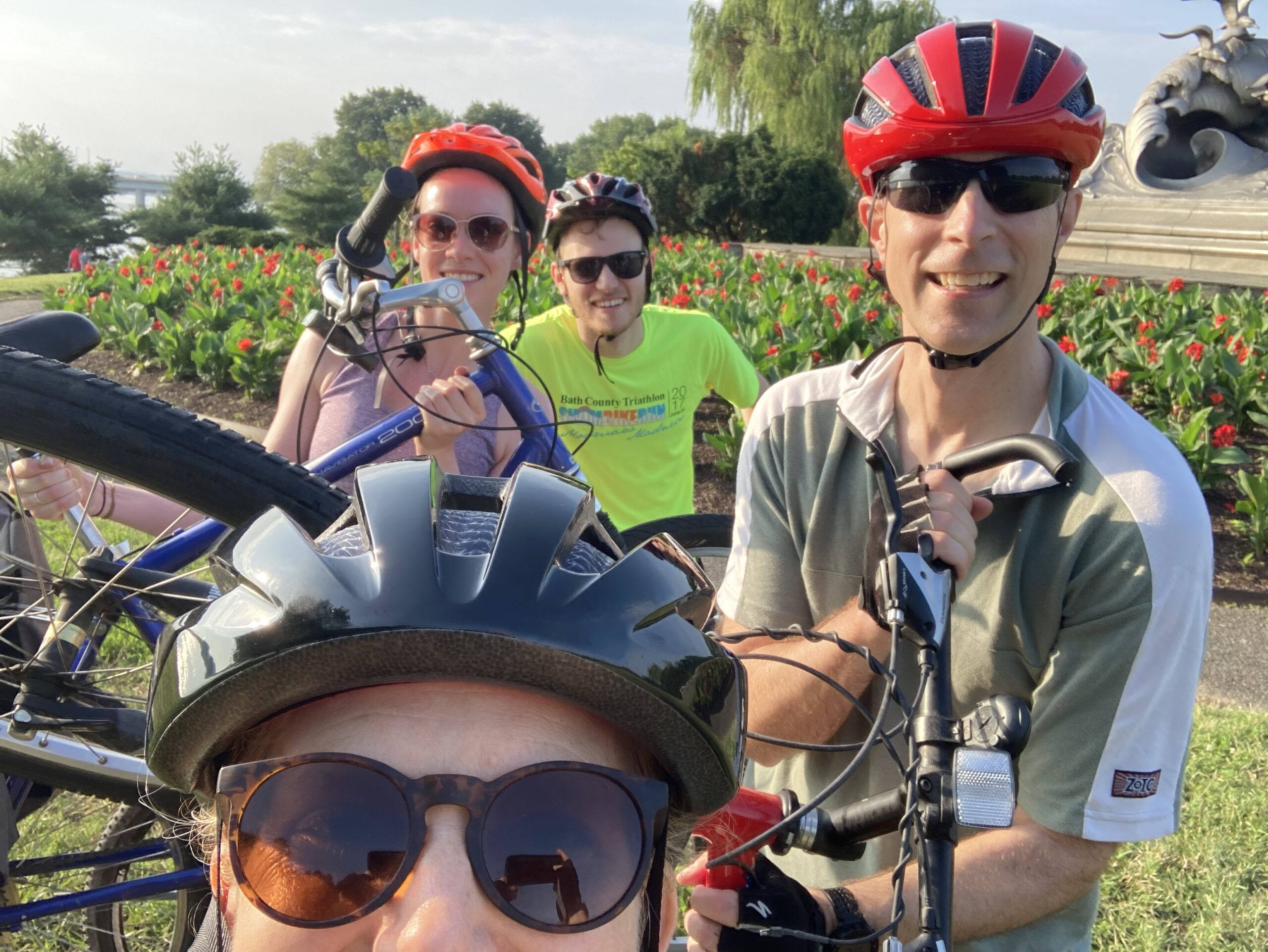
  4. My son moved to Alexandria, in Northern Virginia, and because of that, over the spring and summer we enjoyed visits filled with bike rides, museum wonderings, and excellent food. We also had multiple opportunities to reconnect with old friends.
A pit stop on a fun ride along the Mt. Vernon trail in NOVA.

How did you do with your list of good things? Did the ideas come quickly? Could you come up with at least five?

Let’s move on to the bigger picture. Can you think of five good things that happened in the world in 2023?  Things that were, objectively, in the eyes of most people, capital G Good. With a bit of mental digging, I came up with two thoughts. First, the exciting news that scientists have developed a successful treatment for sickle cell anemia, a disease that affects red blood cells and causes significant pain. I once treated a young patient who suffered from sickle cell anemia, and I am so happy that scientists have made this breakthrough.

Another good news story was about 35 year old man who has developed a following on Tik Tok by sharing candid videos of teaching himself to read. Oliver James graduated from high school without being able to read, and during his 20s he spent time in jail for firearms dealing. But he is turning his life around, and part of that includes inspiring others by sharing his honest and humble journey to literacy on Tik Tok.  Pretty cool! This story made the Word Nerd smile.

But after that, I couldn’t think of any more.

I consume a lot of news, and I like reading human interest stories, yet I struggled to think of another objectively “good thing” that happened in 2023. What is wrong with me? I’m sure good things happened, so why can’t I remember any? 

I’d like to blame something called “negativity bias.” This is a psychological term to describe our tendency to give more importance and weight to negative experiences than to positive or neutral ones. According to a 2019 article on Healthline.com, people have a stronger reaction to negative experiences.

Scientists think this is based on genes handed down from our ancestors. To survive, early humans had to pay attention to negative things, like predators and natural hazards. By avoiding those threats, they lived on to pass down their genes. So here we are in 2024, paying more attention to a random crime in the midwest than to stories about people serving the communities we live in.

With that in mind, I’m taking a new approach in 2024. I’m setting an intention to pay more attention to Good News stories. First, I’ll need to find them, and I can do that through sites like Reasons to Be Cheerful. Next, I can spend time thinking about them via journaling, sharing them on social media, and discussing them with friends and family. The more time I devote to Good News, the more likely I will be to remember it. And that will help me feel more hopeful and positive in general. Imagine what might happen if a lot of us did this.

How about you? Will you join me in my quest to seek out and ruminate on Good News this year? What habits do you practice to focus on The Good?

Thanks for getting nerdy with me!