I can’t deny it, fall is here. I’ve got beautiful red leaves on my driveway and must wear long pants when I walk the dogs each morning. But I want to give one last nod to summer with my Wondrous Words Wednesday word this week. It came up at a boat dock: smarmy.
Now, back to the lake. My friend Chris said she has to bleach the seats of her pontoon boat because they get “smarmy” under the cover, meaning they get moldy in the damp space without air circulation. For the record, I wasn’t the only one intrigued when she threw out the word “smarmy”. Of course, I looked it up.
Smarmy \’smär-mē\ adjective from English smarm, to gush or slobber
Marked by a smug, ingratiating false earnestness (a smarmy salesman)
Of low sleazy taste or quality (a smarmy adult bookstore)
Chris was surprised smarmy is actually a word, and these definitions don’t exactly fit her use, which I took to mean as “yucky”. I can see how “yucky” might come from the second meaning, but there is nothing about Chris or her boat that is sleazy.
Word Nerd Workout
Use smarmy in a sentence.
Priscilla dodged the smarmy man on the street corner who was selling watches from inside his coat pocket.
This time it was during a road trip, when I insisted upon DFT- device free time. I thought if I gave it an acronym, it would sound cooler. No luck.
You see, several things have caused me to worry that in this era of ever present entertainment via electronic devices my family isn’t daydreaming enough. Things like:
The hubby used to read before bed. Now he plays Dream League soccer on his iPhone while I read. Ok, sometimes he reads the news.
My eldest used to read books in the car during the commute to soccer practice. Now he plays Dream League soccer on his iPhone. Or checks Instagram for soccer videos.
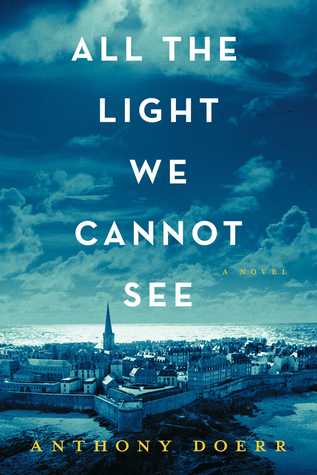
I’m currently reading All the Light We Cannot See. (Fantastic so far.) One of the main characters, a boy named Werner, is always tinkering, taking apart radios, seeking knowledge. Often, when my kids have free time, they want to play Xbox.
This is the most important: The Bored and Brilliant series on Note To Self. Host Manoush Zomorodi shares my concern that our society’s attachment to devices is crushing creativity. Instead of imagining, we’re placating our minds with pointless busy- ness. (Read: FB scrolling).
Note to Self created a multi-step challenge to encourage people to put down their phones and indulge in boredom. Exercises included a ban on picture taking (just experience the moment!) and deleting the most time consuming app on your phone. Manoush also recommended an app, called Moment, that monitors how often you unlock your phone and how much time you spend on it each day. Disturbing information, let me tell you.
With all this in mind, over the summer I developed my own Bored and Brilliant challenge: DFT. The idea is to get the devices out of all of our hands for a while so we can use our brains for a higher purpose than liking photos on Instagram. Know what happened during DFT? My kids scowled. But, they also interacted more with me and each other. Board games came out. Reading resumed.
I’ve also tried to create more tech margin for myself, which means only checking email and FB at certain times of day (over lunch, waiting at soccer practice) and protecting my time for reading, writing, and other noble pursuits.
However, all isn’t a perfect Word Nerd haven. The kids ALWAYS glare when I mention DFT. They clutch their little devices like Gollum clutches the One Ring. (another sign that they need separation). And too often, I forget to enact DFT (the goal was 2 hours every day this summer – didn’t happen). Or, I don’t have the energy to fight with them. Finally, there are fine details to negotiate, like is it OK for daughter to have her iPod during DFT if she’s just listening to music?
Sigh. As daughter often says, the struggle is real.
I’m comforted by knowing that I’m not the only one struggling with technology limits. Just this week, two of my blogging friends posted about the battle with the Internet and electronic devices. We all wrote about this topic without consulting each other. To me, that’s a clue this is serious business. For more perspectives on the technology dilemma visit
Give kids books on poop, gas, or burps and they laugh hysterically. Most adults scratch their heads at this scatological humor.
She goes on to explain that kids love scatological humor, and that if it gets them excited about books, we adults shouldn’t turn up our noses.
I agree with her, although I must admit that I’m thankful my kids didn’t need Captain Underpants to encourage reading. More importantly, I wanted to learn more about “scatological”.
If you’re interested in unusual words too, join the Wondrous Words Wednesday meme with Kathy of Bermuda Onion. Comment on words you find there, and add your own post to the mix. It’s fun, and a great way to expand your vocabulary.
Scatology \sca·tol·o·gy\ noun from the Greek skat-, skōr excrement; akin to Old English scearn dung, Latin muscerdae mouse droppings
Interest in obscene matters especially in literature
The biological study of excrement (especially for taxonomic purposes or the determination of diet)
I should have guessed this origin! I have heard animal excrement referred to as “scat”.
Word Nerd Workout
First, how do you feel the use of scatological humor in children’s books? Does humor based on bodily functions have a place in literature? Also, can you think of other examples of books that use scatological humor? The Artemis Fowl series has some scatological references that my boys enjoy, including a dwarf who tunnels by eating dirt and then experiences severe digestive repercussions.
It’s a Little Free Library, a symbol of ordinary people doing simple acts of service to accomplish extraordinary things.
The Story Behind Little Free Libraries
It all started in 2009 when Todd Bol built the first library, a miniature one room school-house, to honor his mother, a passionate teacher and reader. He placed books inside and stuck it out in the yard of his Hudson, WI home with a sign that said “free books”. His neighbors loved the idea, so he made more.
Soon, Rick Brooks of the University of Wisconsin at Madison joined Bol, and together they started a non-profit agency dedicated to establishing 2,510 Free Little Libraries around the world. Andrew Carnegie inspired their goal; the philanthropist established 2509 free public libraries around the turn of the 20th century.
By July 2015, over 30,000 Little Free Libraries were registered. Talk about exceeding expectations! The new goal: 50,000 by 2017.
Here’s the mission of Little Free Library:
To promote literacy and the love of reading by building free book exchanges worldwide and to build a sense of community as we share skills, creativity and wisdom across generations.
Anyone can sponsor a Little Free Library, from families and individuals to schools and community service groups. All it takes is:
an upfront investment to build the library and fill it with high quality books (the site sells kits for $1000); also $40 for a registration packet
consistent maintenance of the book selection and the library itself. Unfortunately, the weather and vandals damage the libraries
They are often placed in high need areas of communities, e.g. near food banks, domestic violence shelters, homeless shelters, and social service agencies, and in neighborhoods far from a public library.
They should not replace public libraries but serve as another outreach program to encourage reading and literacy. Many Little Free Libraries partner with local public libraries.
They are constructed of recycled material, and each library has its unique style, inspired by its community. You can build your own or order a kit.
Little Free Libraries run on an honor system; patrons don’t have to return the exact book they take, but they are encouraged to leave a replacement.
The libraries aren’t just about books, they’re about connection. Many Little Free Library stewards report that the libraries become community gathering places. People who never talked before are now standing around, discussing books.
The closest Free Little Library to me, in Bisset Park, Radford, VA
Honestly, I chose to write about Little Free Libraries because I found the one in a park and thought it was cool. But while I researched, an idea blossomed: “I should do this.” A map of Little Free Libraries in Virginia shows there are none within a thirty mile radius of my town, and in fact, most of southwest Virginia doesn’t have any Little Free Libraries. Yet, this is the poorest part of the state.
I seriously want to try. Not today, with four kids participating in five different sports and me barely keeping my chin above water. But in five years, yes. In the meantime, I’ll research. Talk to my friends at the public library, school libraries, and church. Figure out a good place to put one and find a community organization to help me sponsor it.
See if my kids want in, too.
Wanna join me?
To learn more about Little Free Libraries or to donate, please visit LittleFreeLibrary.org
Have you ever seen or used a Little Free Library? Would you consider sponsoring one in your community?
Our pastor was speaking about Christian behavior this Sunday, and as he quoted verses from the Bible decrying licentious behavior, he paused and asked, “Do you know what licentious means?”
At least two people in the congregation turned to look at me. One was my daughter. Apparently, I’m getting a rep, not for my behavior, but for my Word Nerdiness. Those people knew I’d be thinking, “Blog Post!”
If you’re interested in learning more about words, join the Wondrous Words Wednesday meme with Kathy of Bermuda Onion. Comment on words you find there, and add your own post to the mix. It’s fun, and a great way to expand your vocabulary.
I’m not going to include a picture for this word. I like to keep the blog family friendly. 😉
Licentious \lī-ˈsen(t)-shəs\ adjective from the Latin licentiosus, unrestrained
Lacking legal or moral restraint, especially with regard to sexual behavior
Marked by disregard for rules of correctness
Word Nerd Workout
We haven’t done an analogy in a while, and since my son will be taking the PSATs this fall, I think it’s time. (Of course, I’ve heard the PSAT has changed. Can anyone tell me if analogies are part of the new test? Thanks!)
Here we go:
I’m almost done with editing my novel for the ninth time, and one issue that keeps popping up is the “toward vs. towards” dilemma. Which one is correct? I’m happy to report that this grammar conundrum has a simple solution: it’s okay to use either.
According to Grammar Girl Mignon Fogarty and Dictionary.com (which sites the Chicago Manual of Style), the preferred use in American English is without the -s. The preferred form in British English includes the -s. This rule holds true for many directional words, like forward, backward, upward, and afterward.
In informal speaking or writing, either form is accepted. So I guess the best thing for me to do now is search for “towards” in my manuscript and make sure I take off the “s”. I’m guessing either form would be okay, as long as I’m consistent.
Are there any other word pairs that trip you up? Tell me about them, and I’ll tackle the trouble in a future post.